
Comparisons·
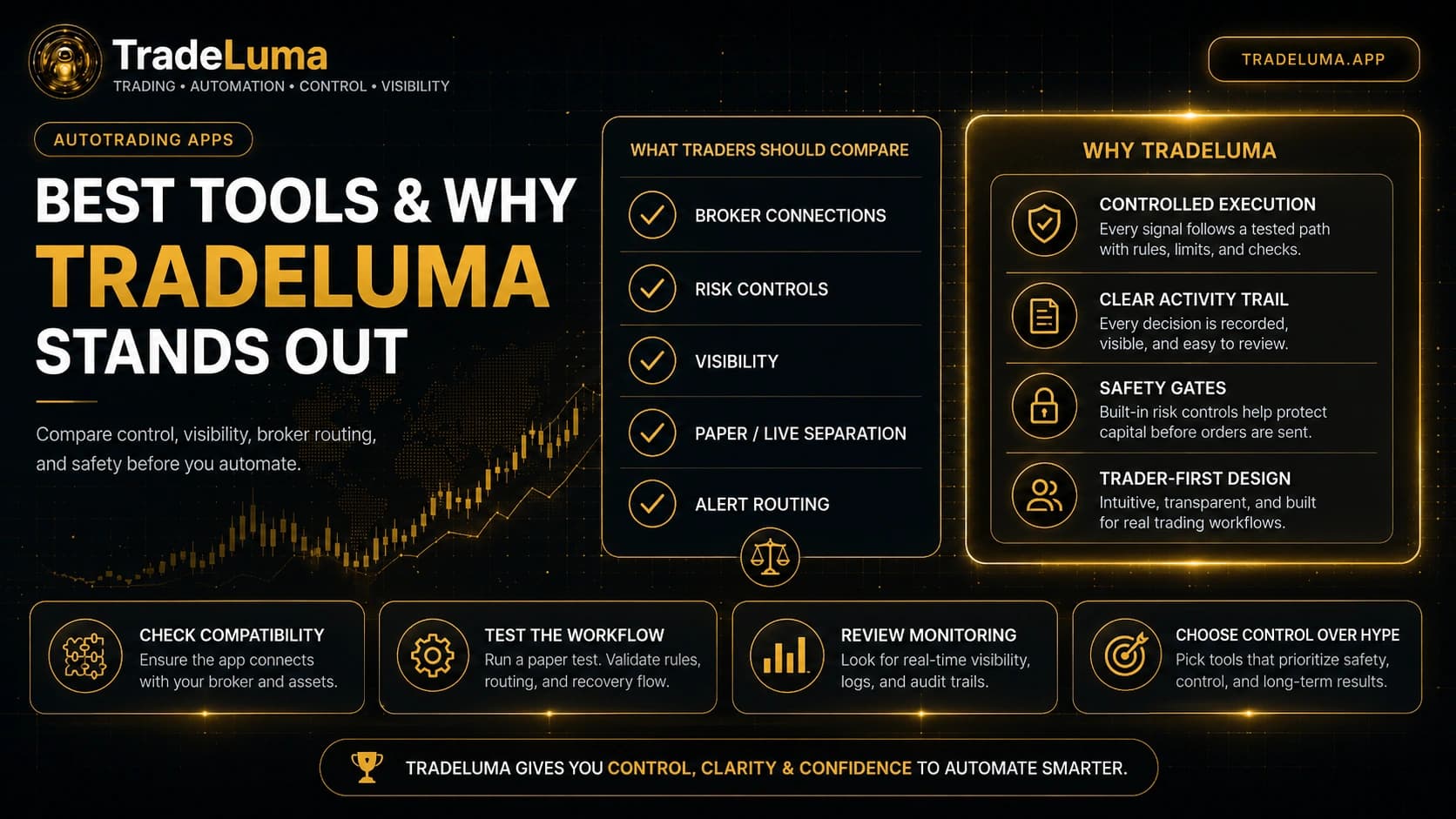
Best autotrading apps: what to compare and why TradeLuma stands out
Learn how to compare autotrading apps and why TradeLuma stands out for controlled execution, clear visibility, trader-first design, and built-in safety.
TradingView automation
Learn how TradingView alerts, webhooks, broker routing, strategy messages, symbol mapping, and execution controls fit together in an automated workflow.
TradingView can generate the signal, but a complete automation workflow still needs a secure receiver, a defined message format, broker mapping, risk checks, and order monitoring.
Most automation problems occur between the chart alert and the final broker state. Clear identifiers, duplicate handling, symbol mapping, and paper testing make that path easier to verify.
Start with a simple alert, prove the full paper workflow, then add strategy-specific fields and protections only after the basic signal-to-broker path is stable.
Start here
Learn how to compare autotrading apps and why TradeLuma stands out for controlled execution, clear visibility, trader-first design, and built-in safety.
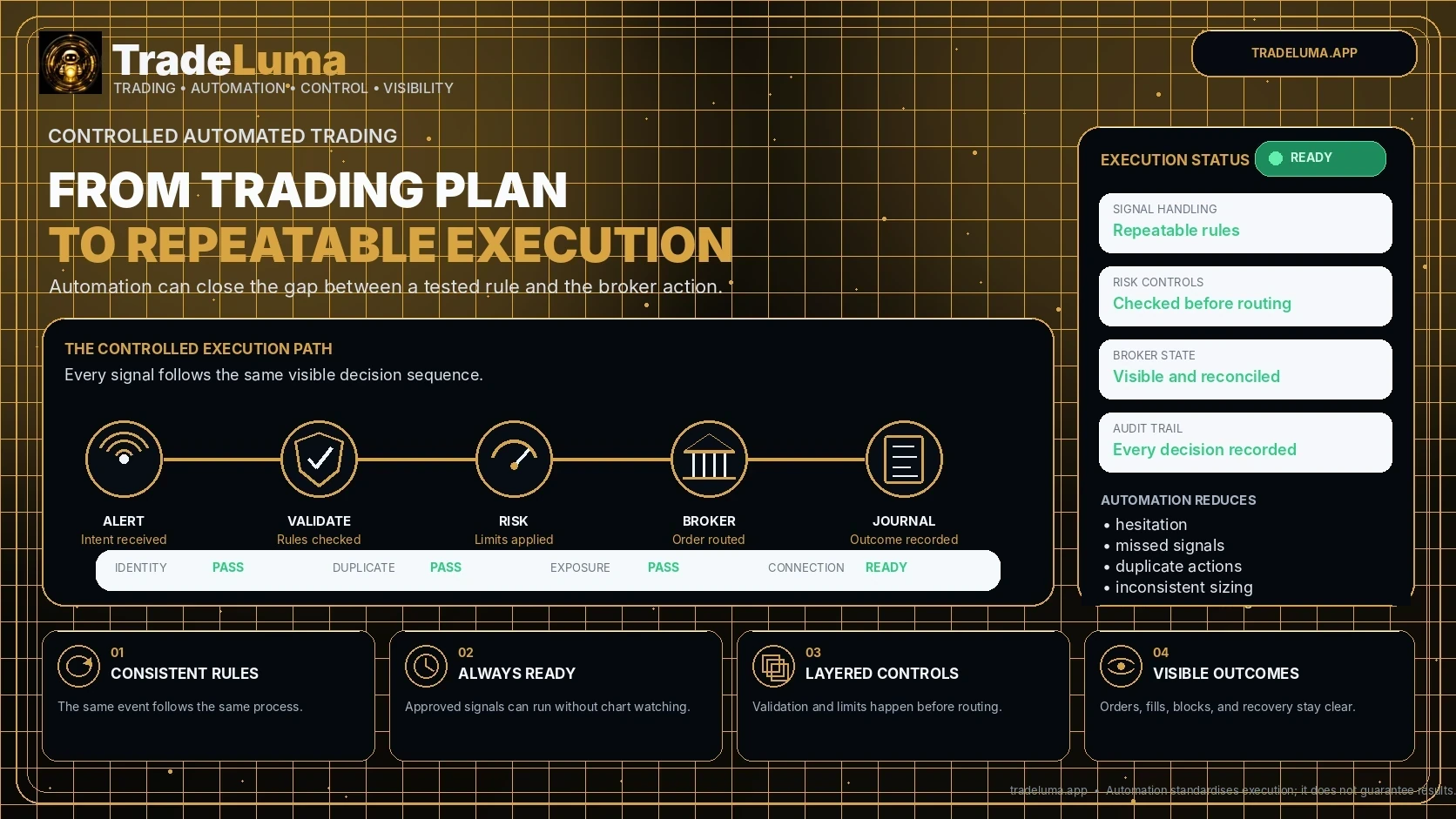
Learn how automated trading reduces hesitation, missed signals, duplicate orders, and inconsistent execution while preserving strategy and risk control.
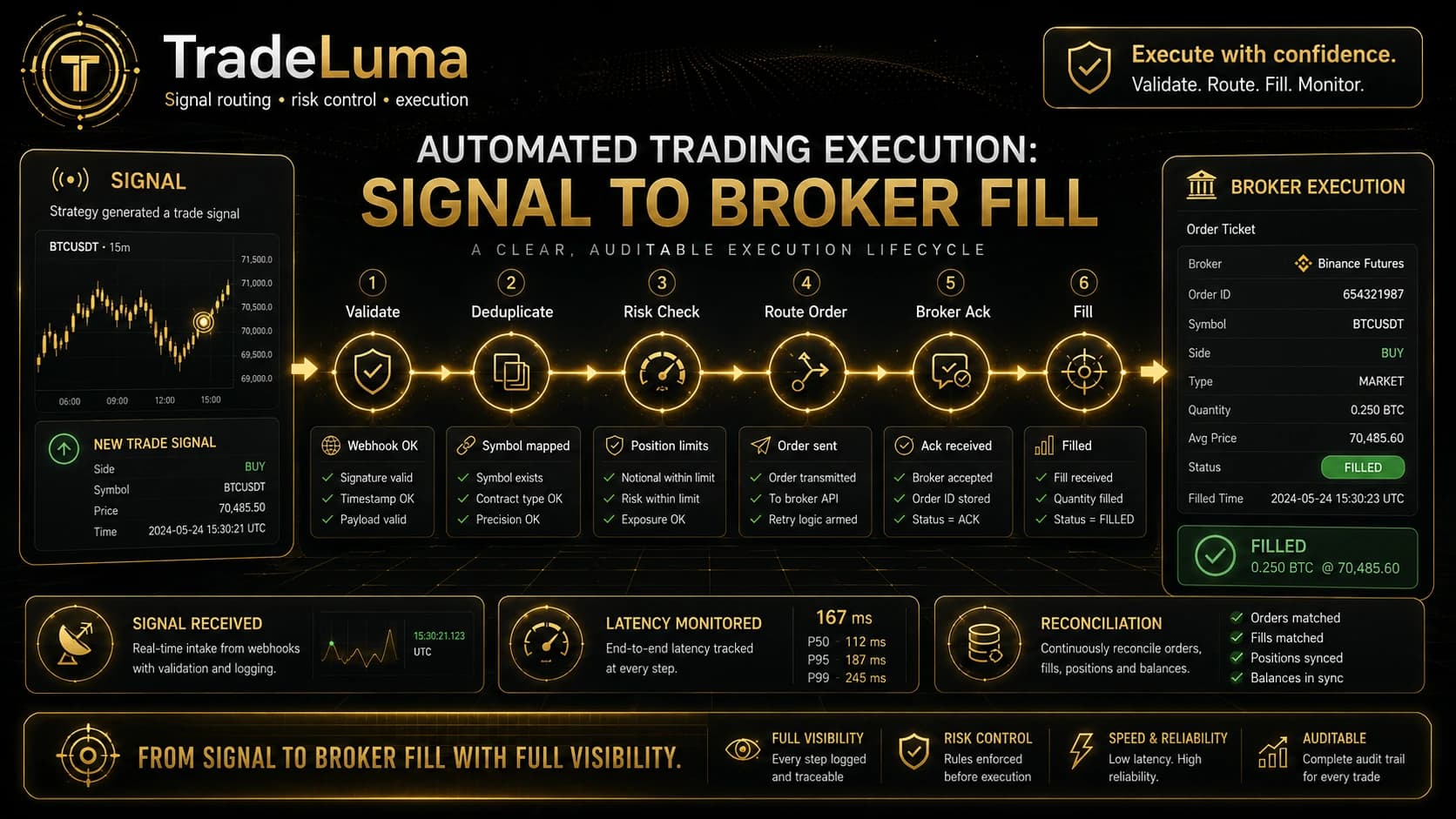
Follow the automated trading execution lifecycle from alert validation and duplicate control to broker submission, fills, reconciliation, and monitoring.
Full library
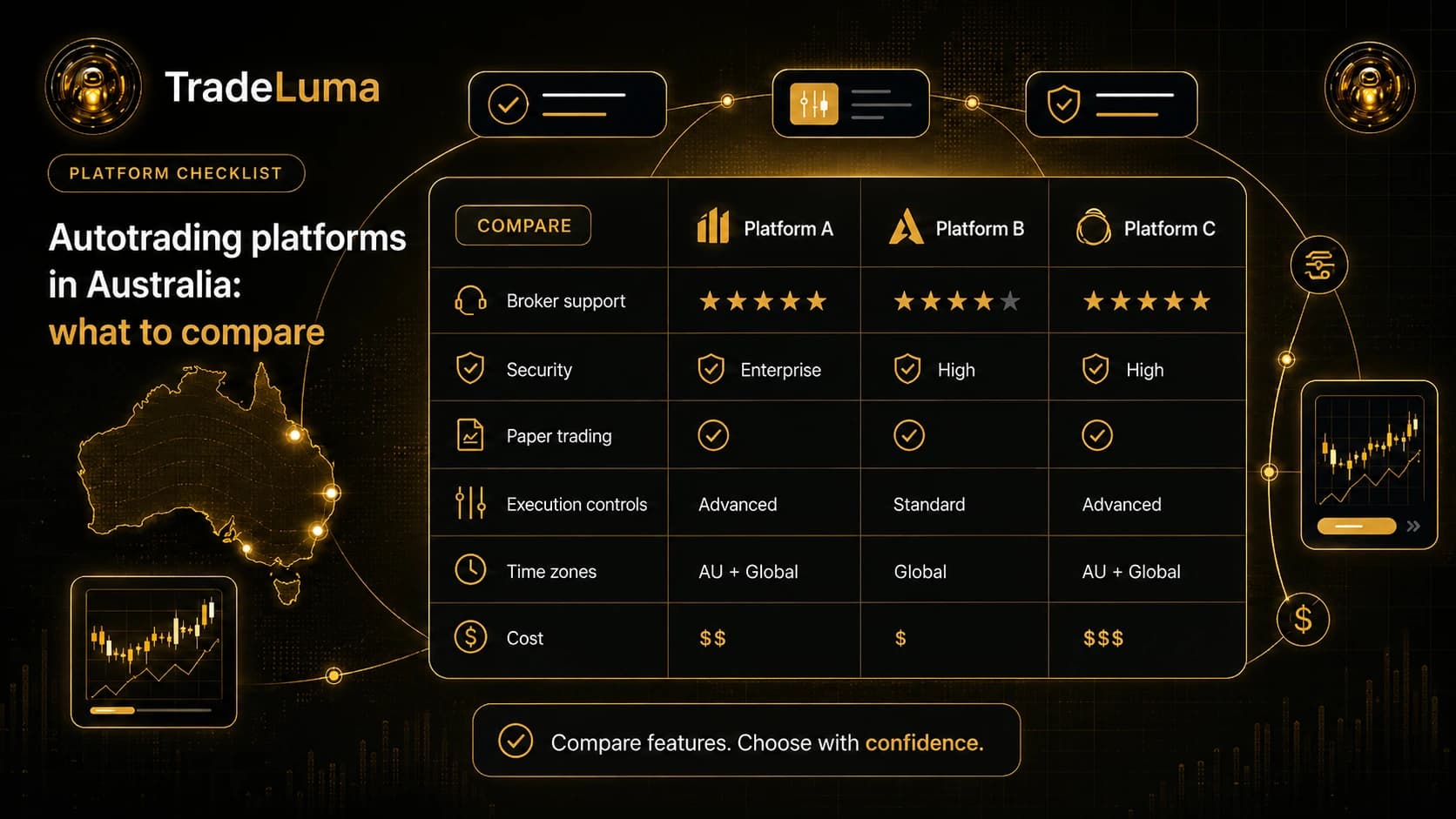
A practical checklist for Australian traders comparing autotrading platforms: broker support, time zones, paper testing, security, execution controls, and cost.
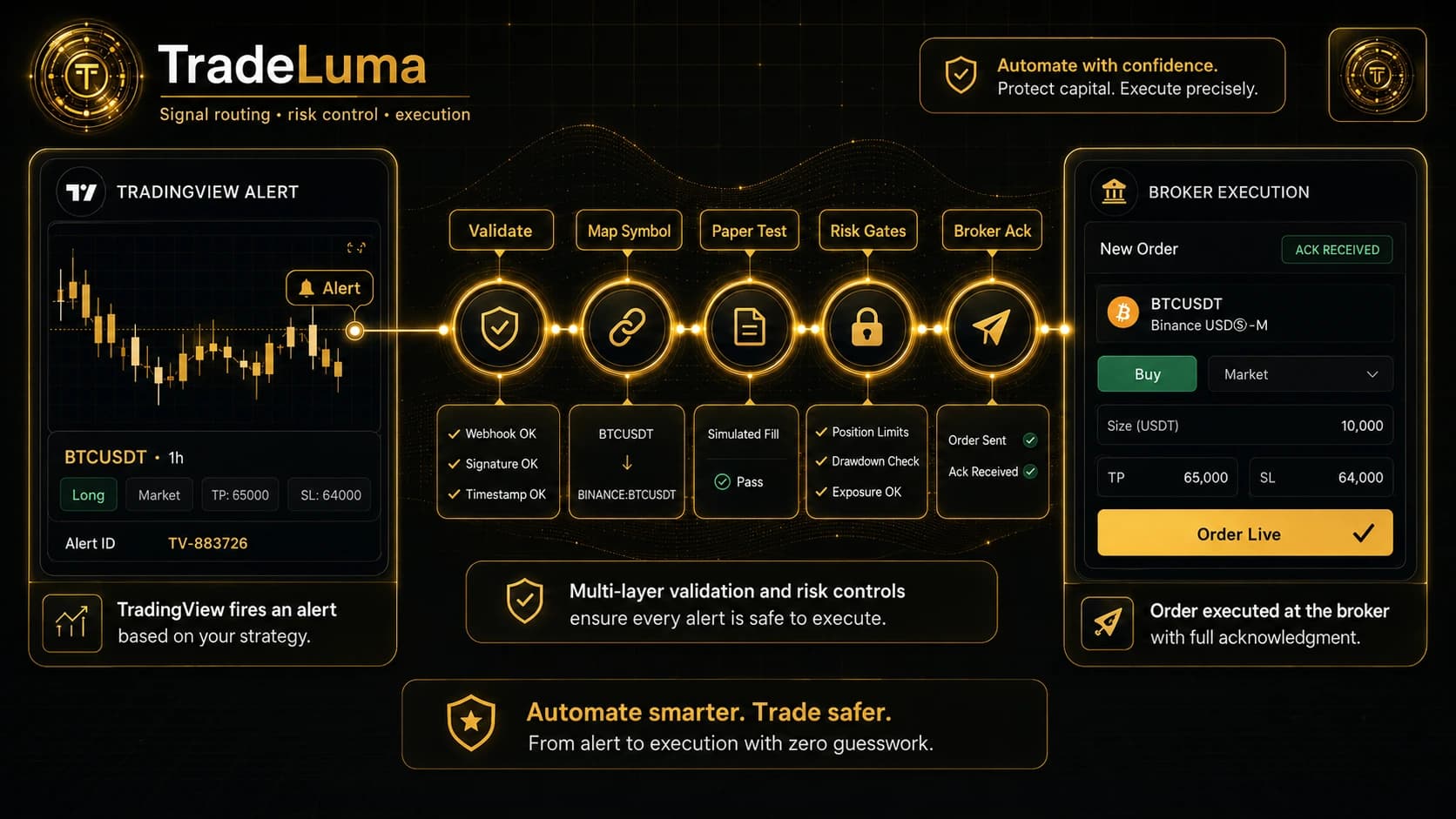
A practical TradingView automation guide covering webhook design, symbol mapping, paper testing, risk gates, broker acknowledgements, and recovery.
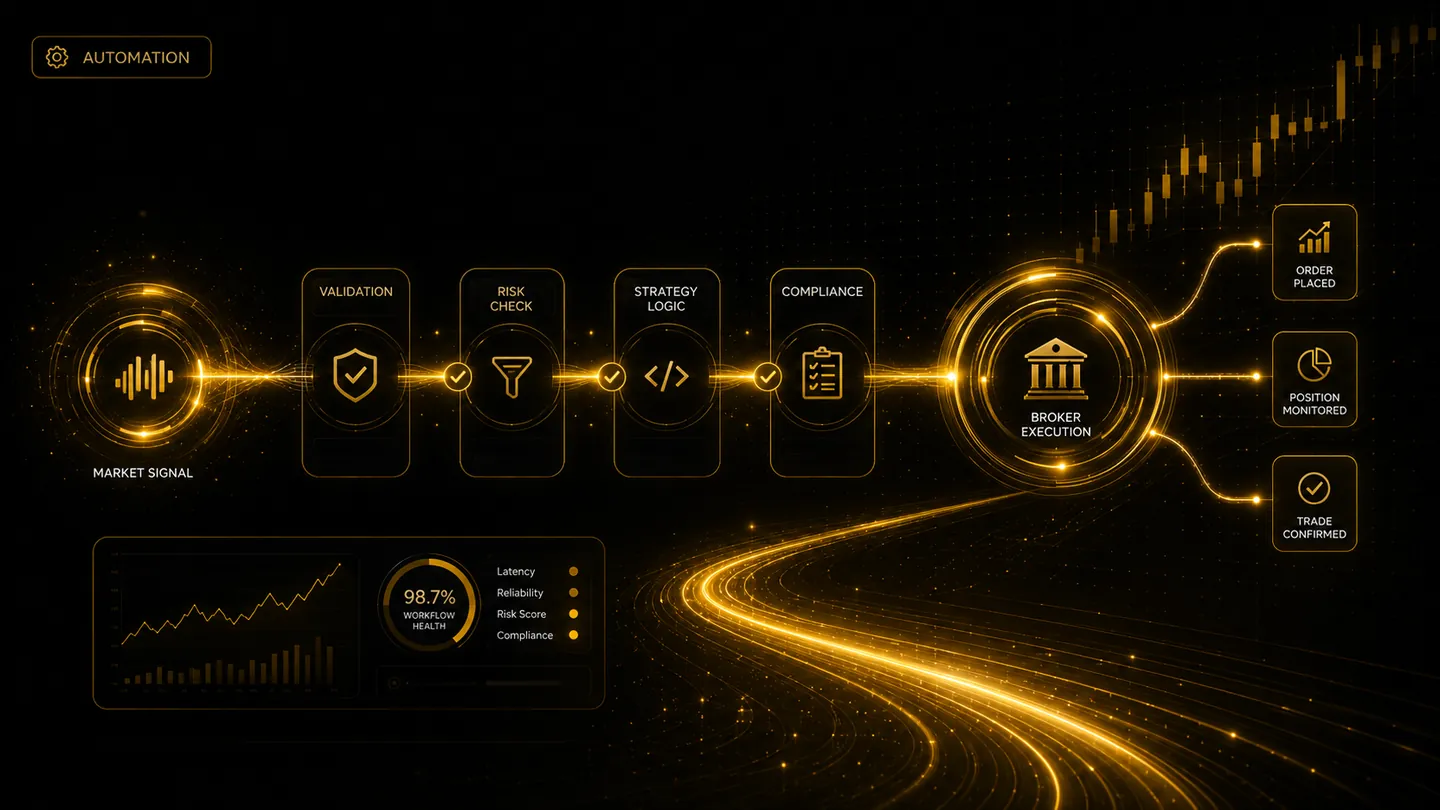
A complete educational framework for strategy rules, paper testing, secure alerts, risk limits, live approval, monitoring, and continuous review.

Protect automated trading workflows with secret management, signed requests, least privilege, rotation, rate limits, and careful logging.
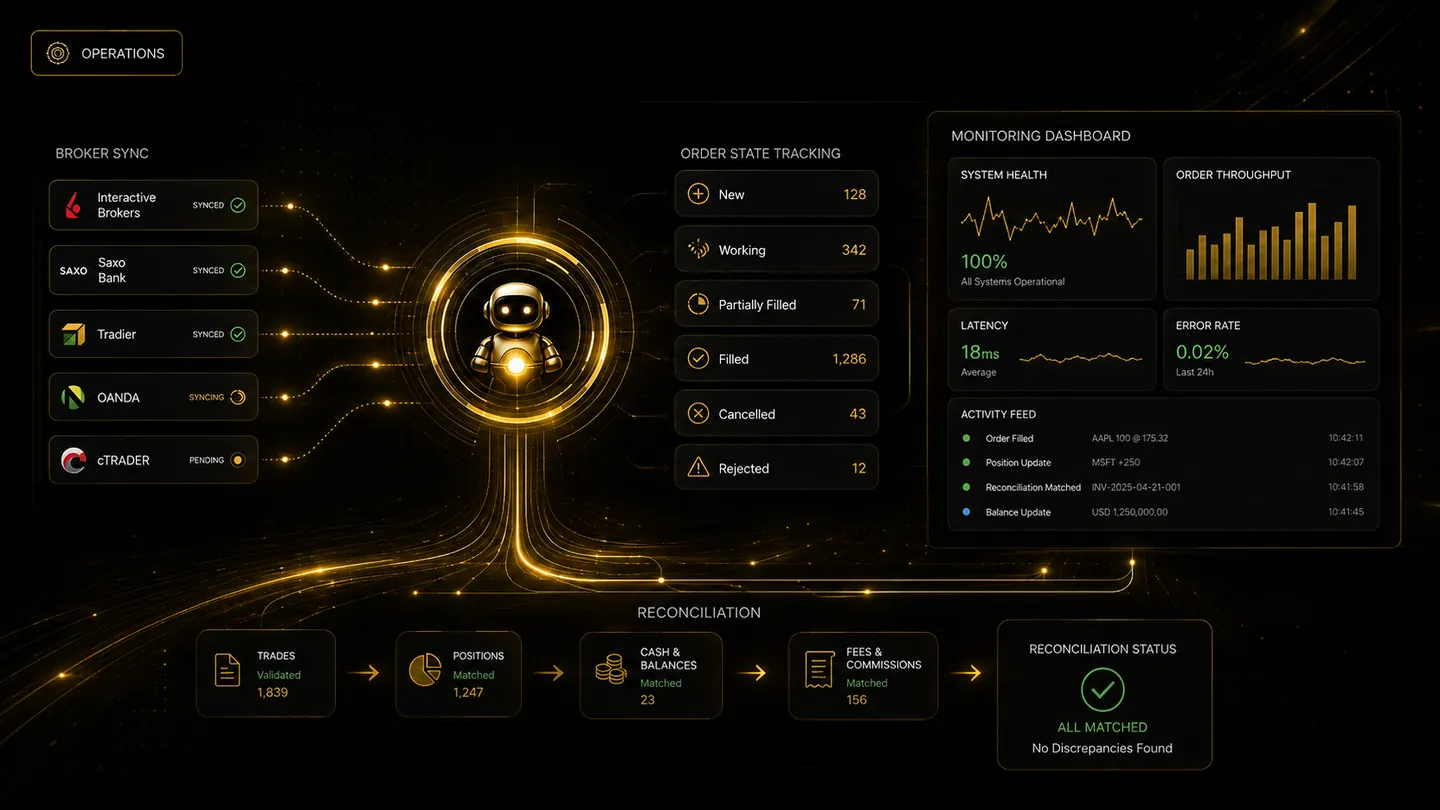
A practical guide to monitoring alerts, submitted orders, fills, rejections, positions, protective orders, and broker connection health.
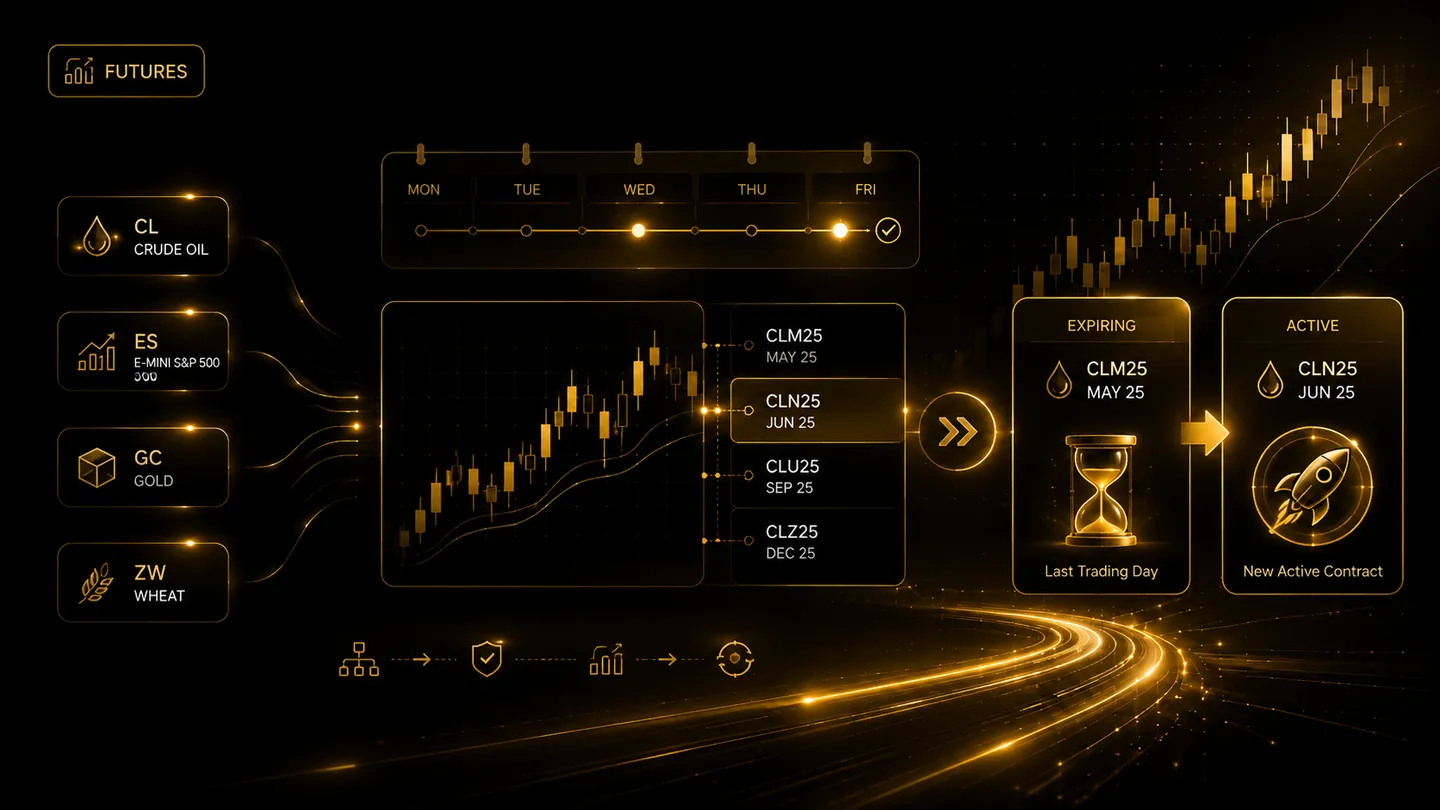
Understand why chart symbols such as continuous futures are useful for analysis but live orders require a specific broker-tradable contract.
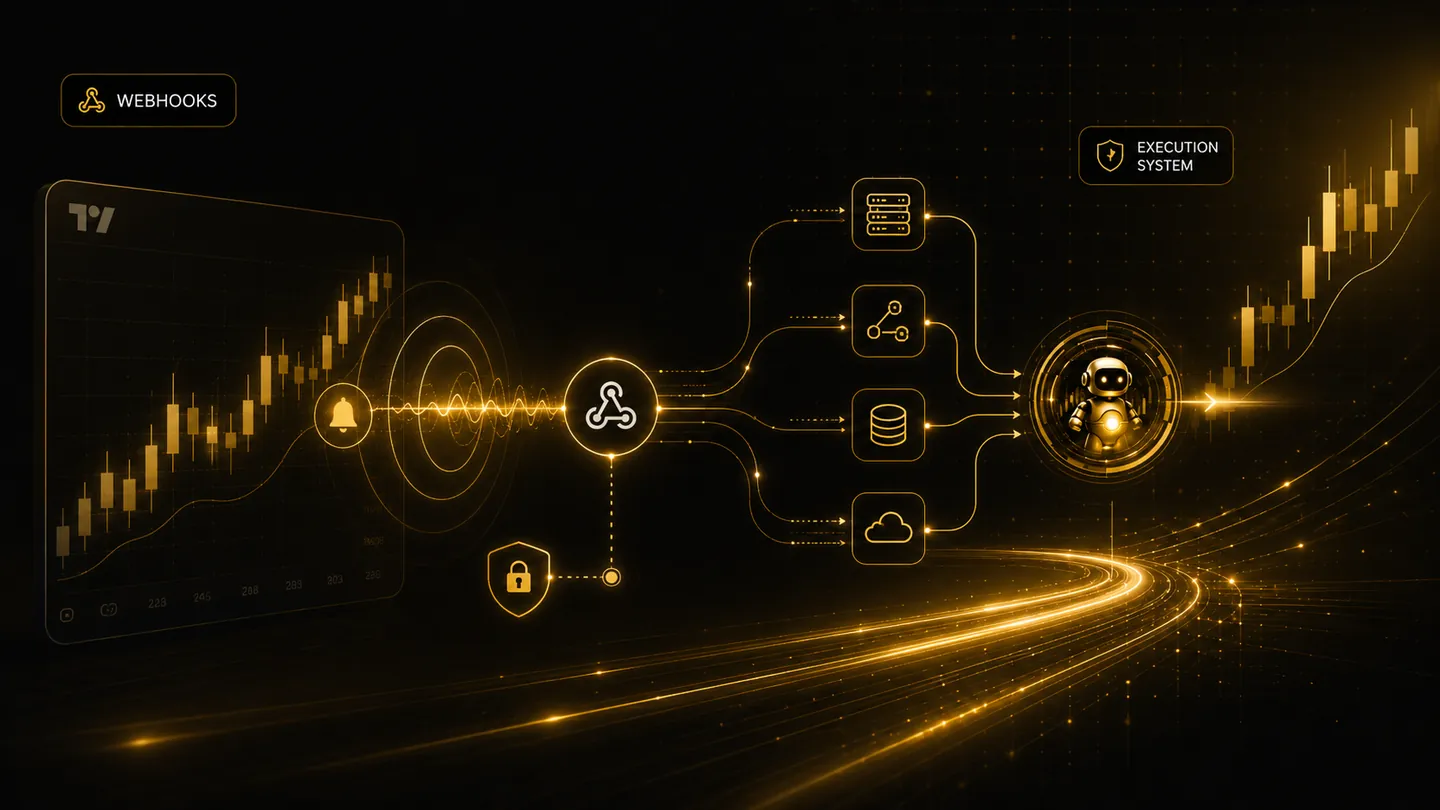
Learn the difference between a trading alert, webhook, bot, automation platform, and broker API—and how they fit together.
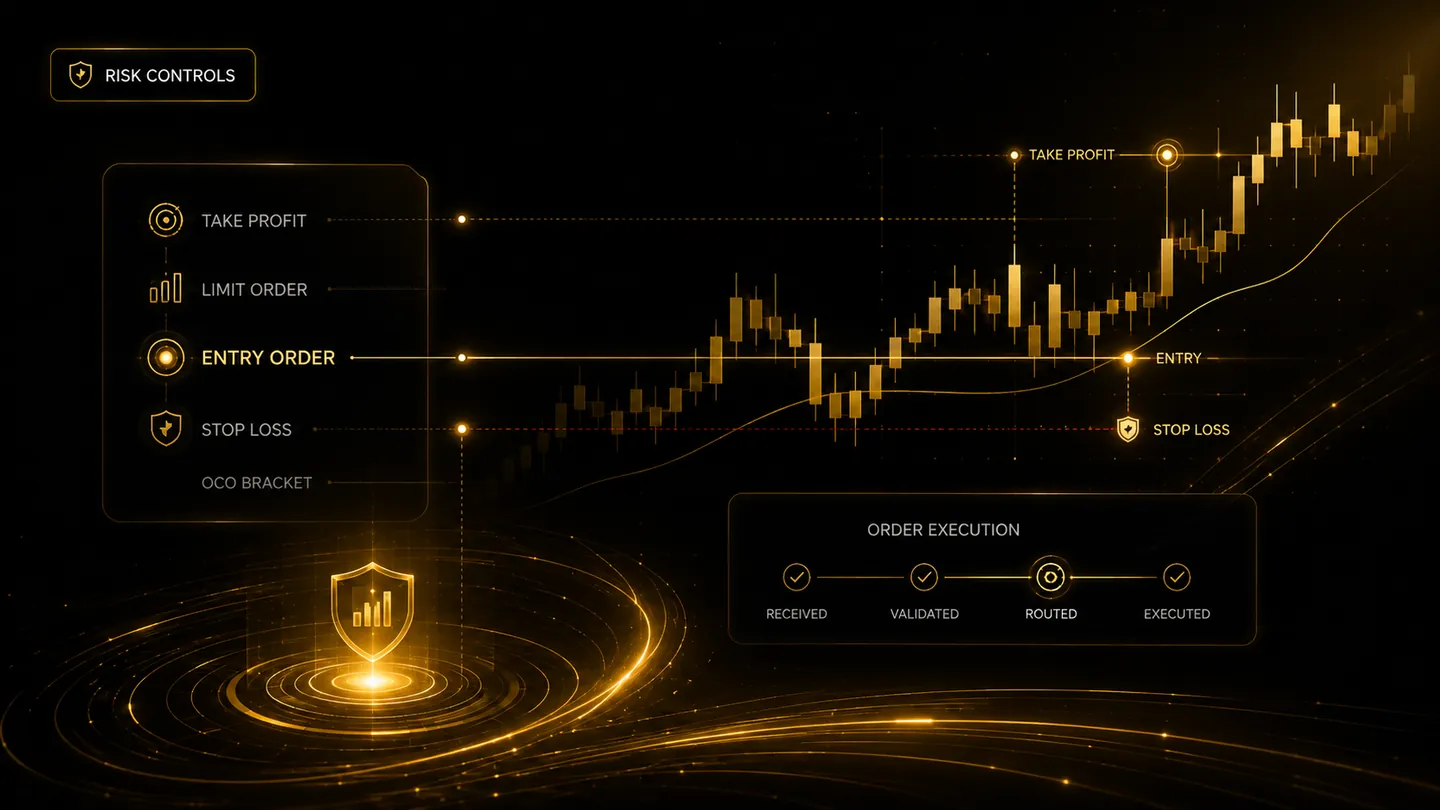
Repeated alerts can create repeated orders. Learn how duplicate protection helps protect automated trading workflows.
Understand parent orders, take-profit legs, stop-loss legs, and why bracket lifecycle control matters in automated trading.
Paper trading is not just practice. It is the safest way to test alerts, broker mapping, quantity logic, and order lifecycle before live automation.
Learn how TradingView webhook trading works, what a secure alert should contain, and how TradeLuma controls execution before orders reach a broker.