
Automation
How to build a responsible autotrading workflow from signal to broker
A complete educational framework for strategy rules, paper testing, secure alerts, risk limits, live approval, monitoring, and continuous review.
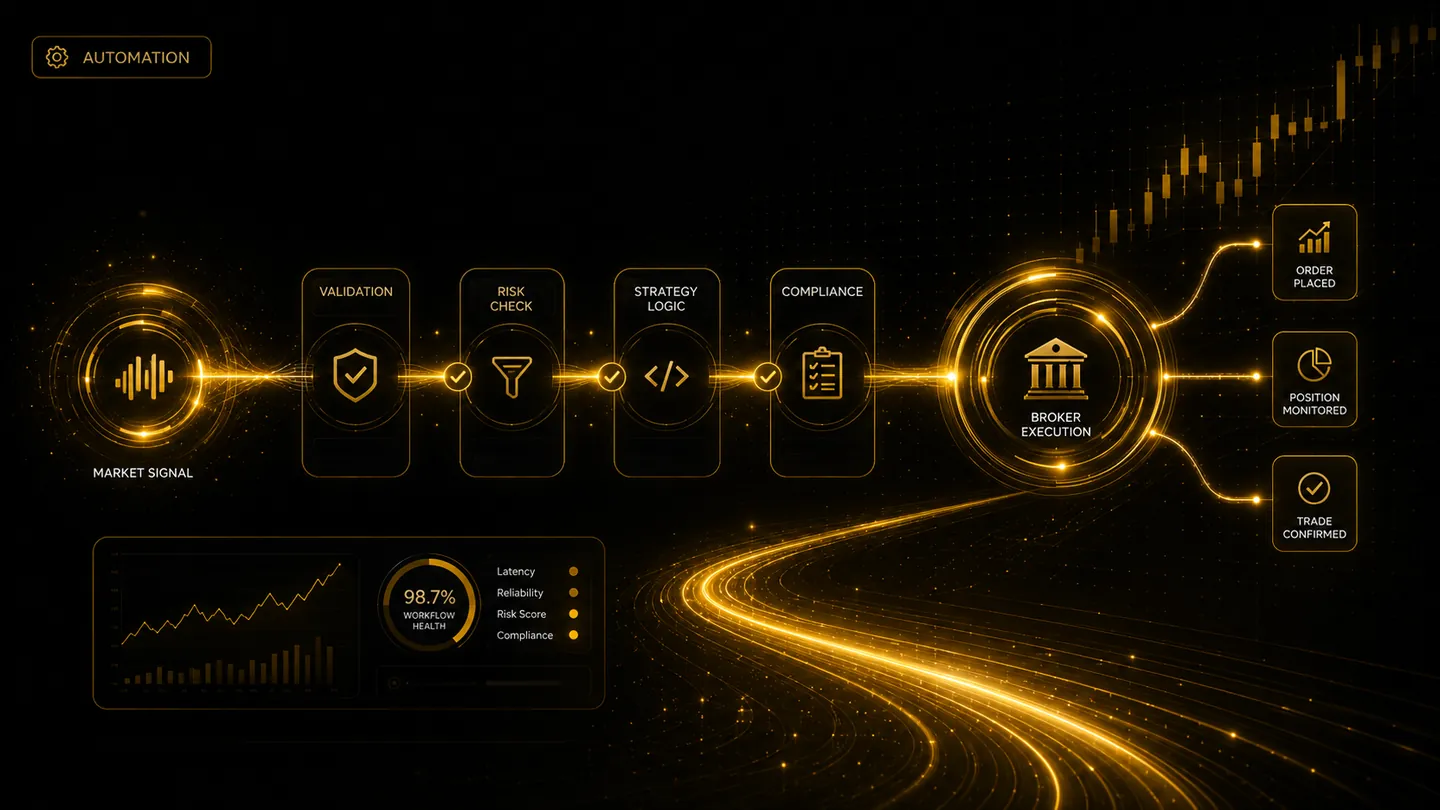
A responsible autotrading workflow is a controlled system, not a single bot or webhook. It begins with rules that can be explained, continues through realistic testing and secure execution, and remains supervised after live access is enabled. Every stage should reduce ambiguity and preserve evidence.
Start with a rule that can be audited
Write the entry, exit, position-sizing, session, and conflict rules in plain language before implementing them. Define what happens when data is missing, signals repeat, the market is closed, or the broker is unavailable.
Keep strategy generation separate from execution controls. A strategy may request a trade, but account rules should decide whether the instruction is permitted at that moment.
Build a paper execution pathway
Connect the real signal format to a paper broker workflow. Test exact symbols, quantities, order types, brackets, rejections, cancellations, duplicate alerts, session boundaries, and reconciliation.
Compare chart expectations with broker outcomes. Fix unexplained differences before adding complexity or considering live access.
Protect the live boundary
Live trading should require explicit user approval, an approved broker connection, healthy account status, strategy permission, quantity and exposure checks, and active platform controls. Paper and live credentials, queues, and settings should remain clearly separated.
Use secure webhook tokens, server-side secrets, rate limits, duplicate protection, and a kill switch that can block new risk without preventing necessary exits.
Monitor, reconcile, and improve
After submission, track broker acknowledgement, fills, cancellations, rejections, and unresolved states. Reconcile positions and working orders, especially after manual broker actions or connectivity interruptions.
Review the trading journal and operational metrics regularly. Changes should return to paper mode for testing. Automation is not a one-time setup; it is an ongoing process of verification, supervision, and controlled improvement.
Frequently asked questions
Can a responsible workflow eliminate trading risk?
No. It can reduce avoidable operational errors, but market loss, slippage, gaps, broker outages, software failures, and strategy failure remain possible.
What is the best first automated strategy?
A simple, well-understood, low-frequency workflow that can be fully tested in paper mode is usually easier to supervise than a complex strategy with many conditions.
Continue learning
Related TradeLuma guides
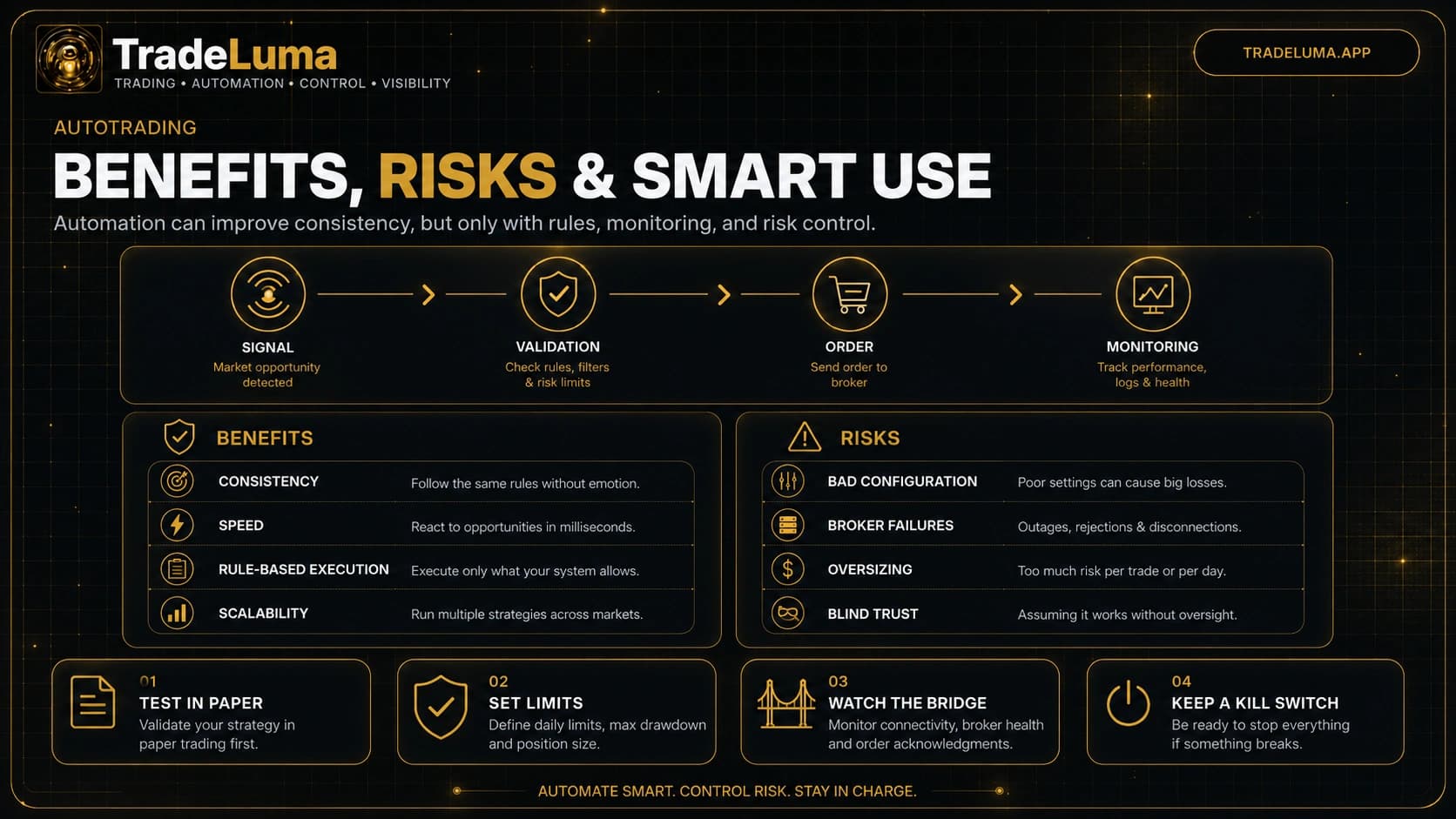
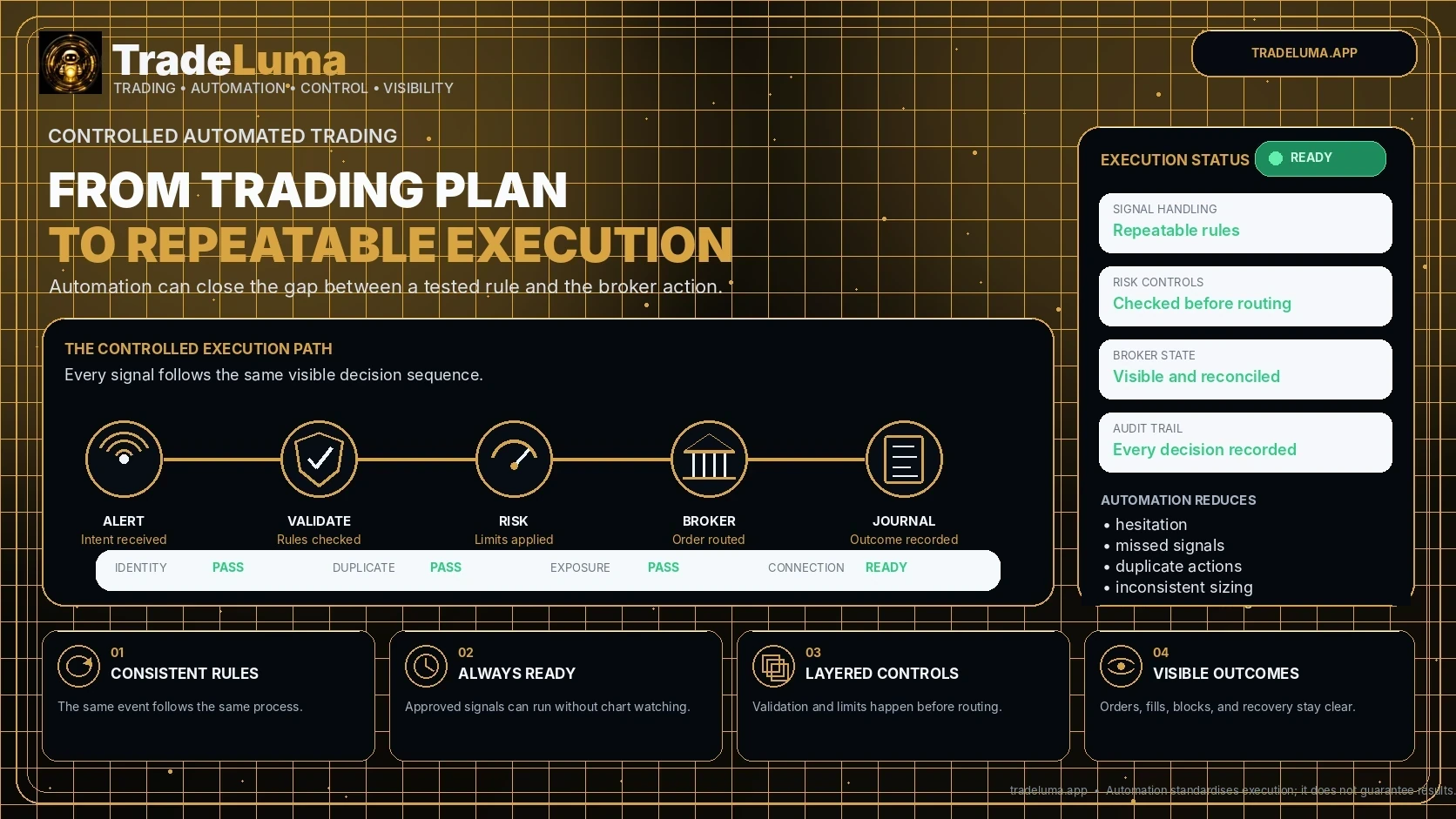
Build a controlled automation workflow with TradeLuma
Configure alerts, test in paper mode, apply execution controls, and follow broker outcomes from one workspace.