
Futures
Continuous futures charts vs tradable contracts: what automation must map correctly
Understand why chart symbols such as continuous futures are useful for analysis but live orders require a specific broker-tradable contract.
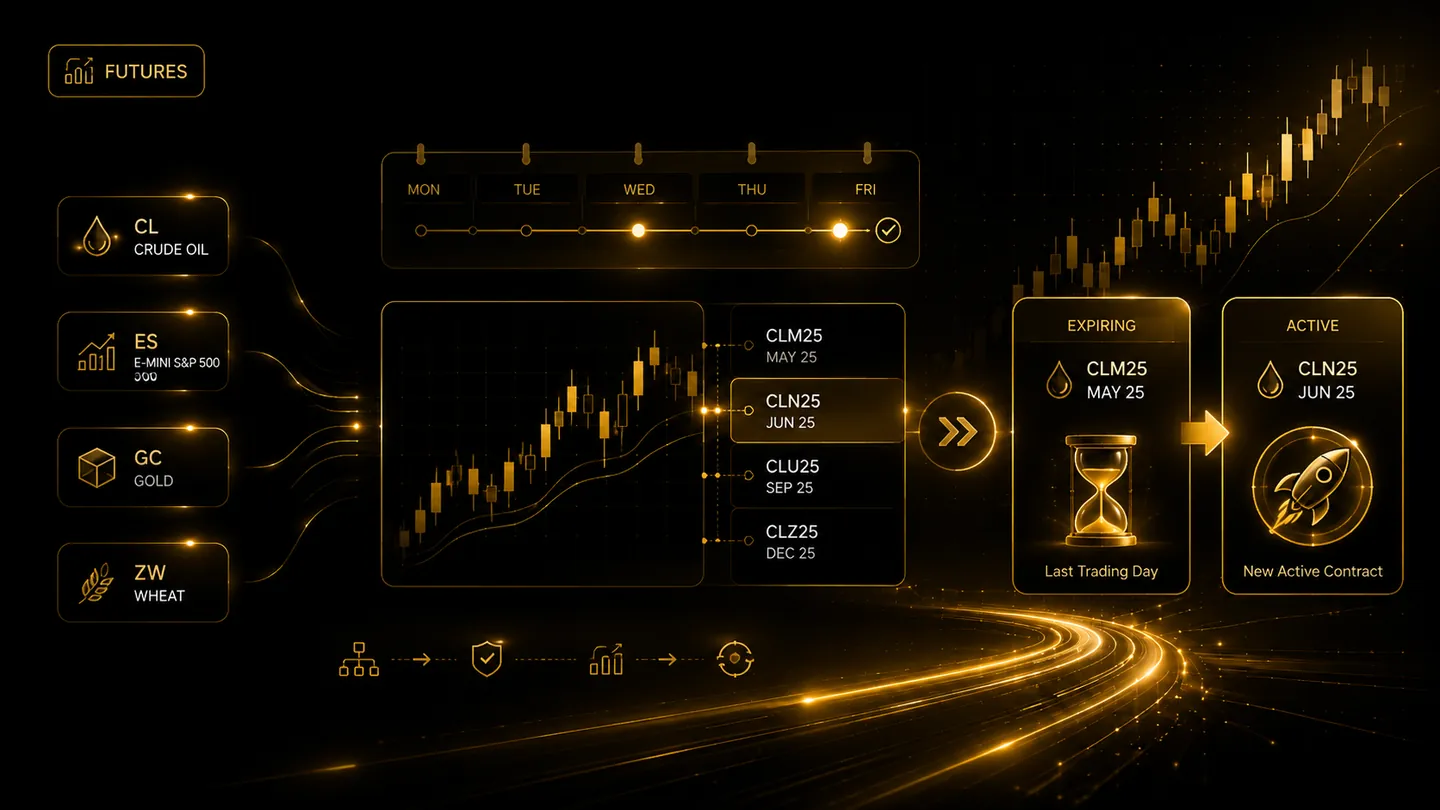
Continuous futures charts help traders study a market across multiple contract months. They are useful for indicators and backtests, but a continuous symbol is generally a charting construction rather than the exact contract a broker can buy or sell. Automated futures trading therefore needs explicit contract mapping.
Why continuous charts exist
Futures contracts expire. A chart that displayed only one contract would stop and require the trader to open the next month. Continuous charts join a sequence of contracts so price history can be viewed as one series.
Chart providers may use different rollover rules or back-adjustment methods. This means the historical prices, gaps, and indicator values can differ between providers even when they represent the same underlying market.
Why brokers need a specific contract
A broker order normally identifies an exchange, contract code, expiry month, year, and sometimes a local symbol. An instruction such as a generic gold or Nasdaq continuous symbol is not enough for reliable live routing.
An automation platform needs a mapping from the signal symbol to the current approved tradable contract. The mapping should be visible and should not change an open position without a deliberate rollover process.
What traders should test
Confirm the chart symbol, broker contract, multiplier, tick size, expiry, first-notice or delivery restrictions, and rollover date. Paper-test the new mapping before using it for live entries.
Backtests should also state which continuous series and adjustment method were used. A smooth back-adjusted chart may be useful for strategy research, but it does not reproduce every price available in the actual expiring contracts.
Frequently asked questions
Can a continuous futures symbol be sent directly to a broker?
Usually the execution workflow must translate it into a specific tradable contract. Broker behaviour and symbol formats vary, so the mapping should be confirmed explicitly.
Does rollover close an existing position automatically?
Not necessarily. Closing the expiring contract and opening the next contract is a trading action that may create costs, slippage, and tax consequences. It should not be assumed or hidden.
Continue learning
Related TradeLuma guides
Futures
Futures rollover and contract expiry: an automation guide
30 July 2026 · 10 min read
Risk Management
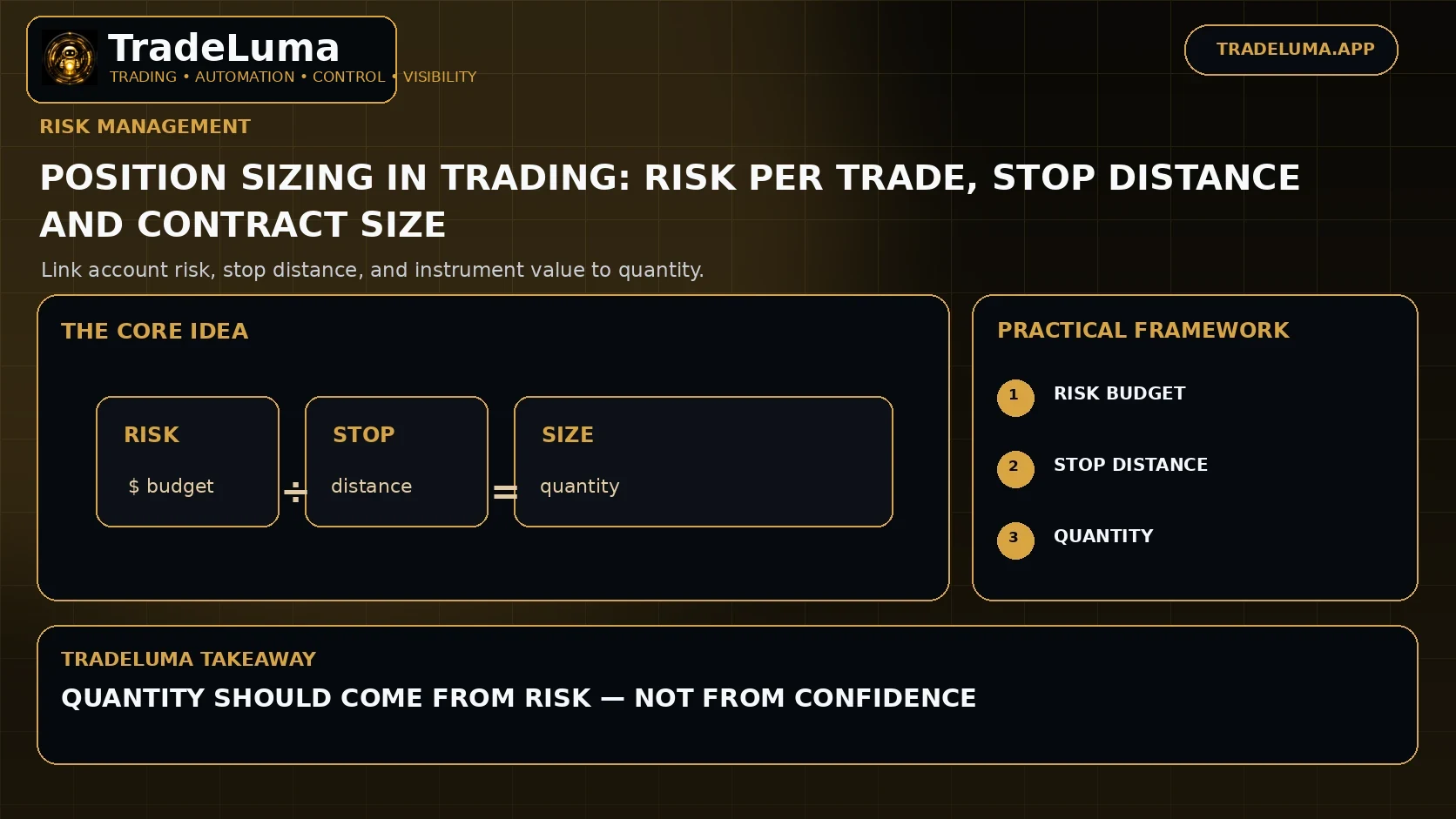
Position Sizing in Trading: Risk Per Trade, Stop Distance and Contract Size
5 Sept 2026 · 12 min read
Comparisons
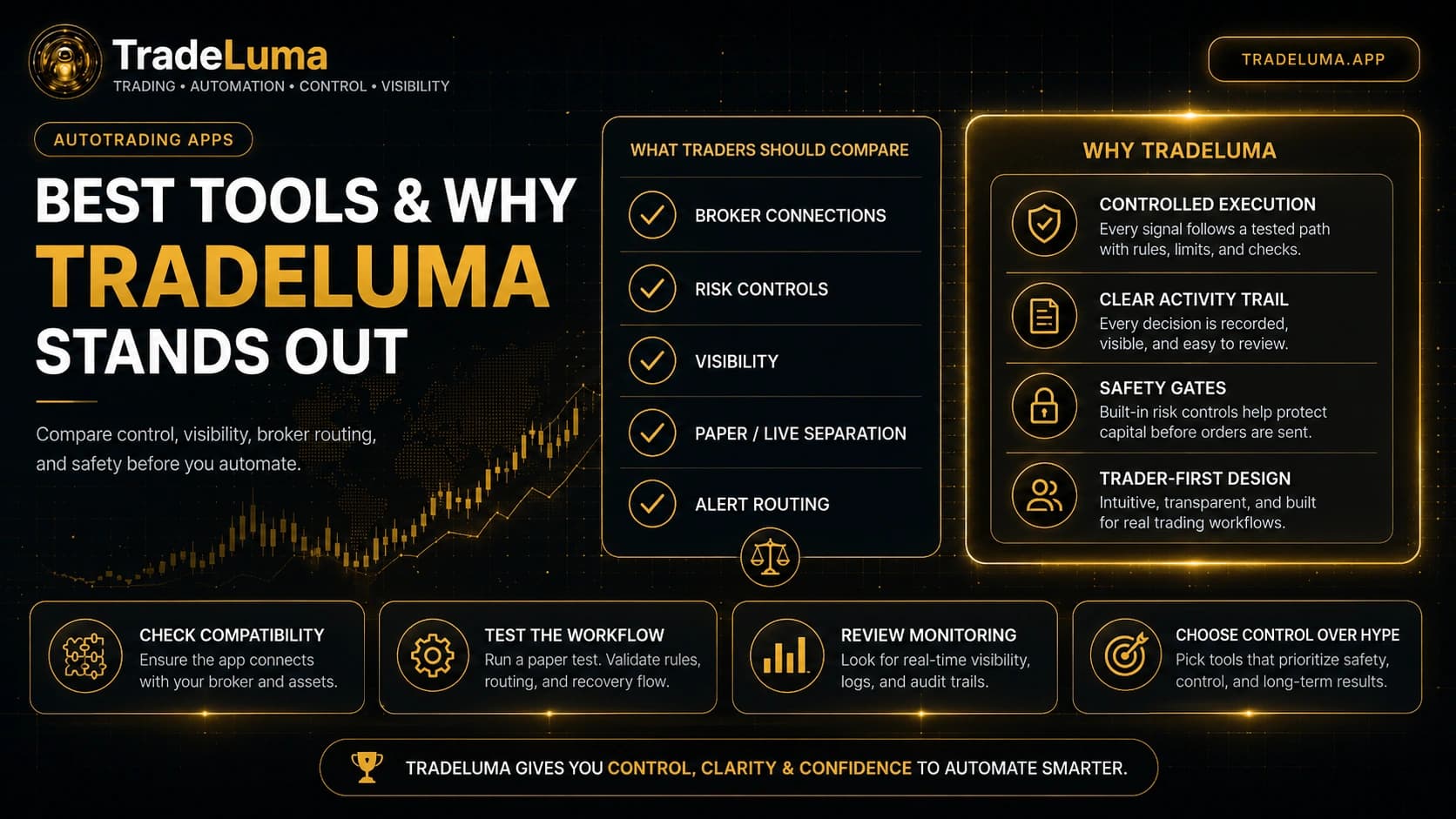
Best autotrading apps: what to compare and why TradeLuma stands out
8 Aug 2026 · 12 min read
Build a controlled automation workflow with TradeLuma
Configure alerts, test in paper mode, apply execution controls, and follow broker outcomes from one workspace.