
Security
Secure webhooks, API keys, and secrets in trading automation
Protect automated trading workflows with secret management, signed requests, least privilege, rotation, rate limits, and careful logging.

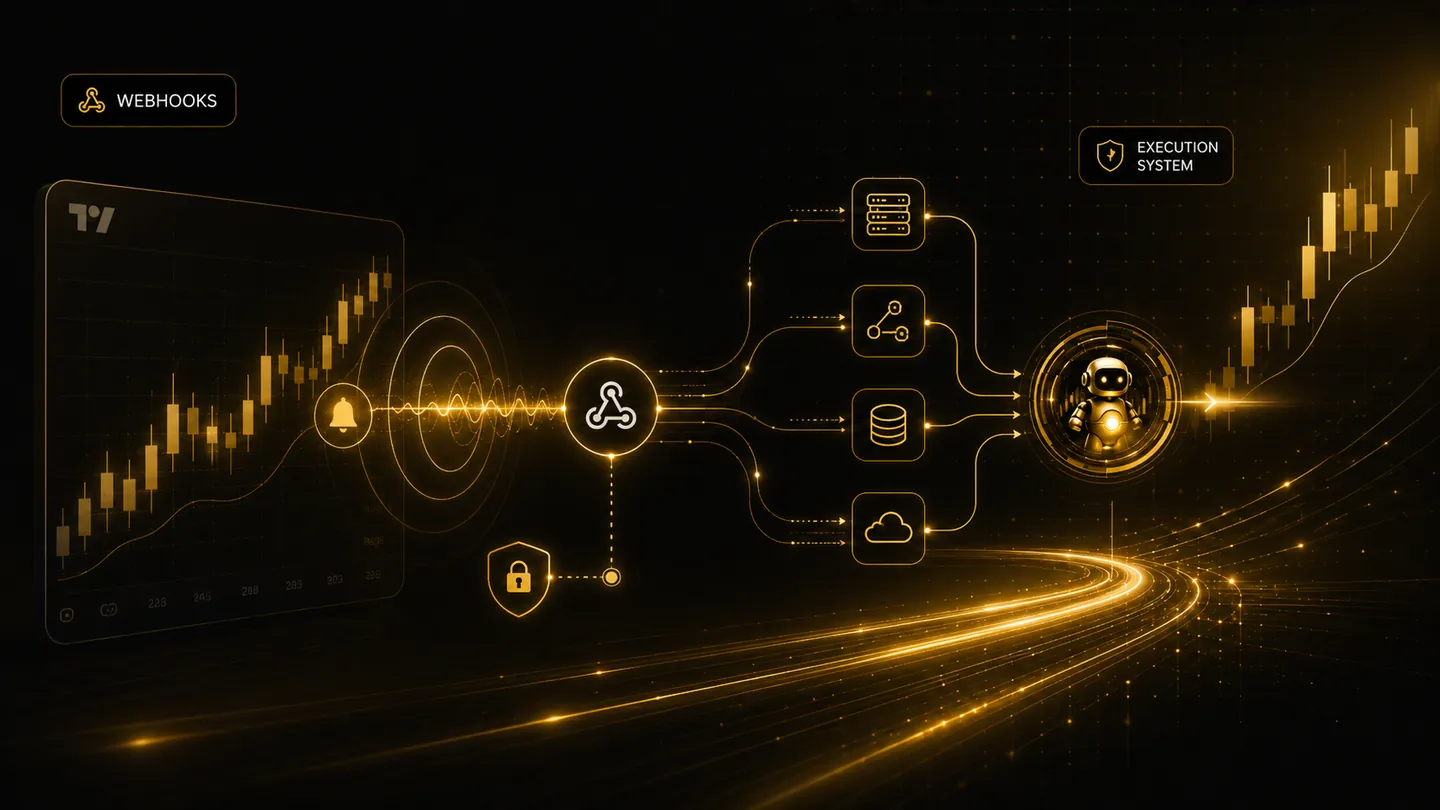
A trading webhook can request actions that affect a brokerage account, so its security should be treated like access to a sensitive system. A hidden URL alone is not a complete defence. Secure design combines authentication, least privilege, validation, monitoring, and the ability to revoke access quickly.
Keep secrets out of public places
Webhook tokens, API keys, private URLs, broker credentials, and signing secrets should not appear in source control, screenshots, public support posts, browser-visible code, or client-side environment variables.
Use server-side secret storage and separate credentials for development, paper, and live environments. Rotate a secret immediately if it may have been exposed.
Authenticate and validate every request
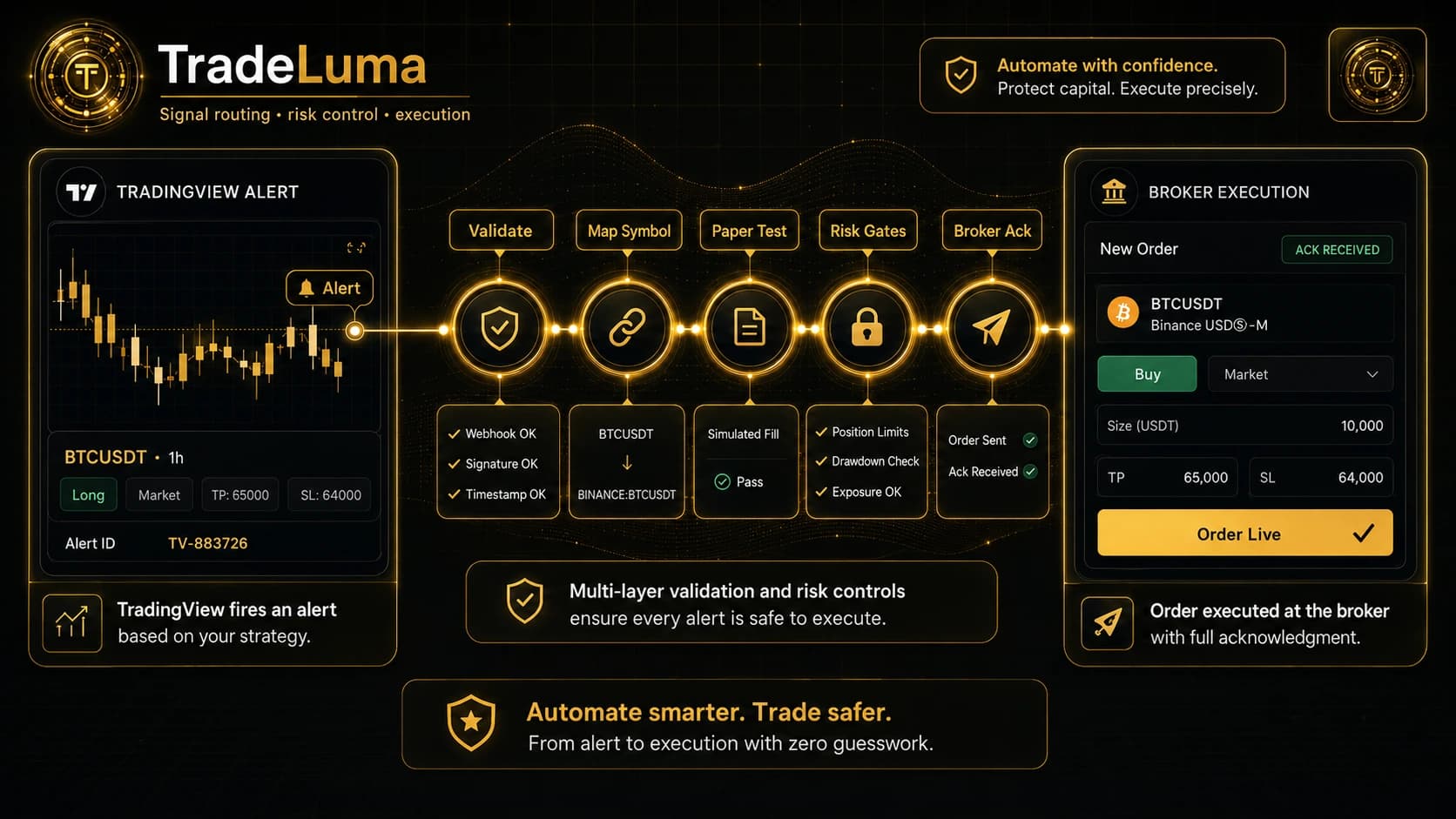
Signed requests, strong random tokens, timestamp checks, and replay protection help verify that a request is genuine and recent. The payload should also be validated against a strict schema.
Authentication answers who sent the message; authorisation answers what that sender may do. A valid webhook should still be blocked if the strategy, symbol, quantity, or live mode is not approved.
Limit damage and preserve evidence
Apply rate limits, duplicate protection, account-level limits, and live kill switches. Use least-privilege broker permissions where supported and avoid sharing one credential across unrelated users or environments.
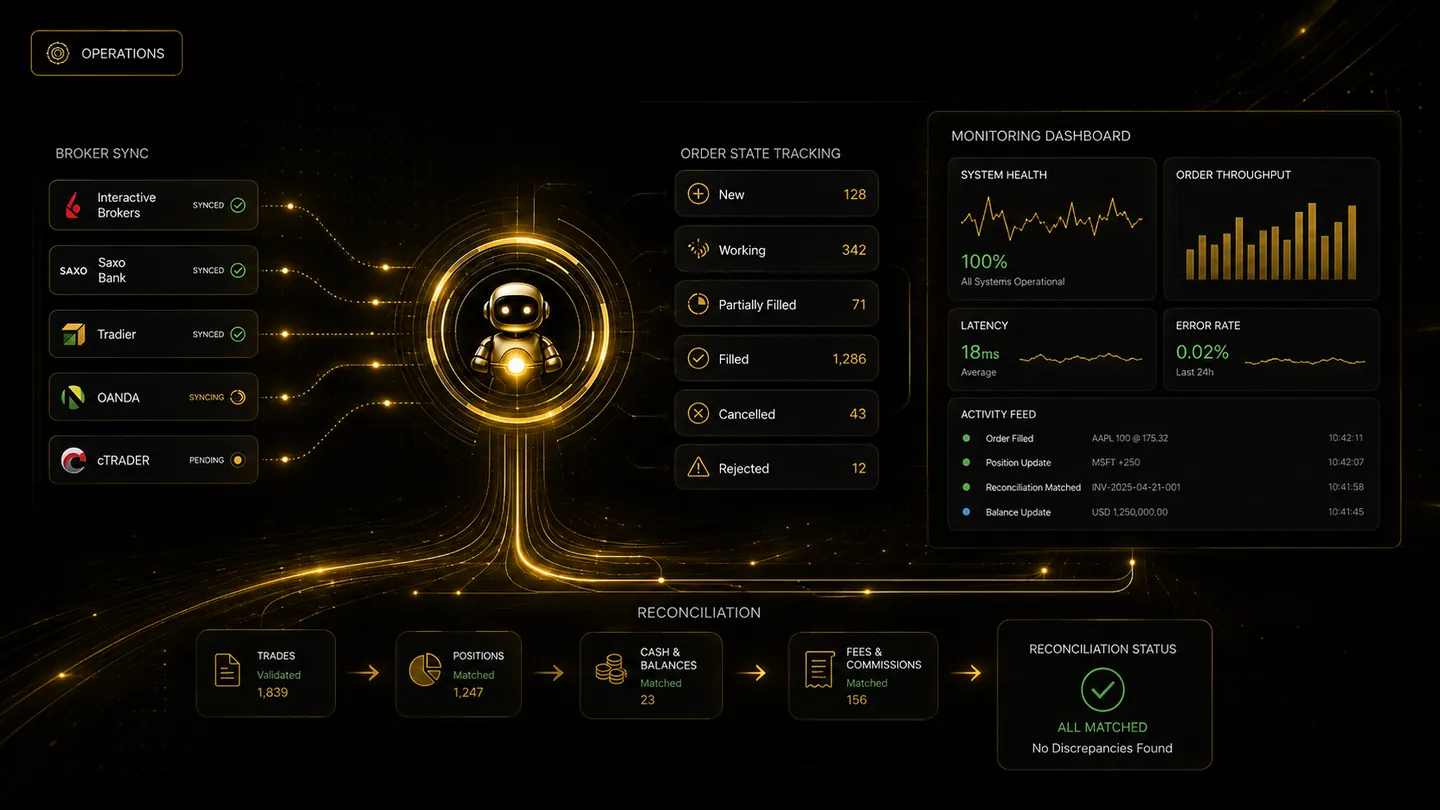
Logs should preserve event identifiers and decisions without printing full secrets or unnecessary personal data. Security alerts should distinguish repeated invalid requests from ordinary strategy blocks.
Frequently asked questions
Is an unlisted webhook URL secure enough?
No. It may reduce casual discovery, but strong random tokens, request validation, replay protection, limits, and revocation are still needed.
Should API keys be stored in the browser?
Sensitive broker or server API secrets should generally remain on trusted server infrastructure rather than being exposed to browser code.
Continue learning
Related TradeLuma guides
Build a controlled automation workflow with TradeLuma
Configure alerts, test in paper mode, apply execution controls, and follow broker outcomes from one workspace.