
Technology
Trading alerts, bots, webhooks, and broker APIs: what is the difference?
Learn the difference between a trading alert, webhook, bot, automation platform, and broker API—and how they fit together.
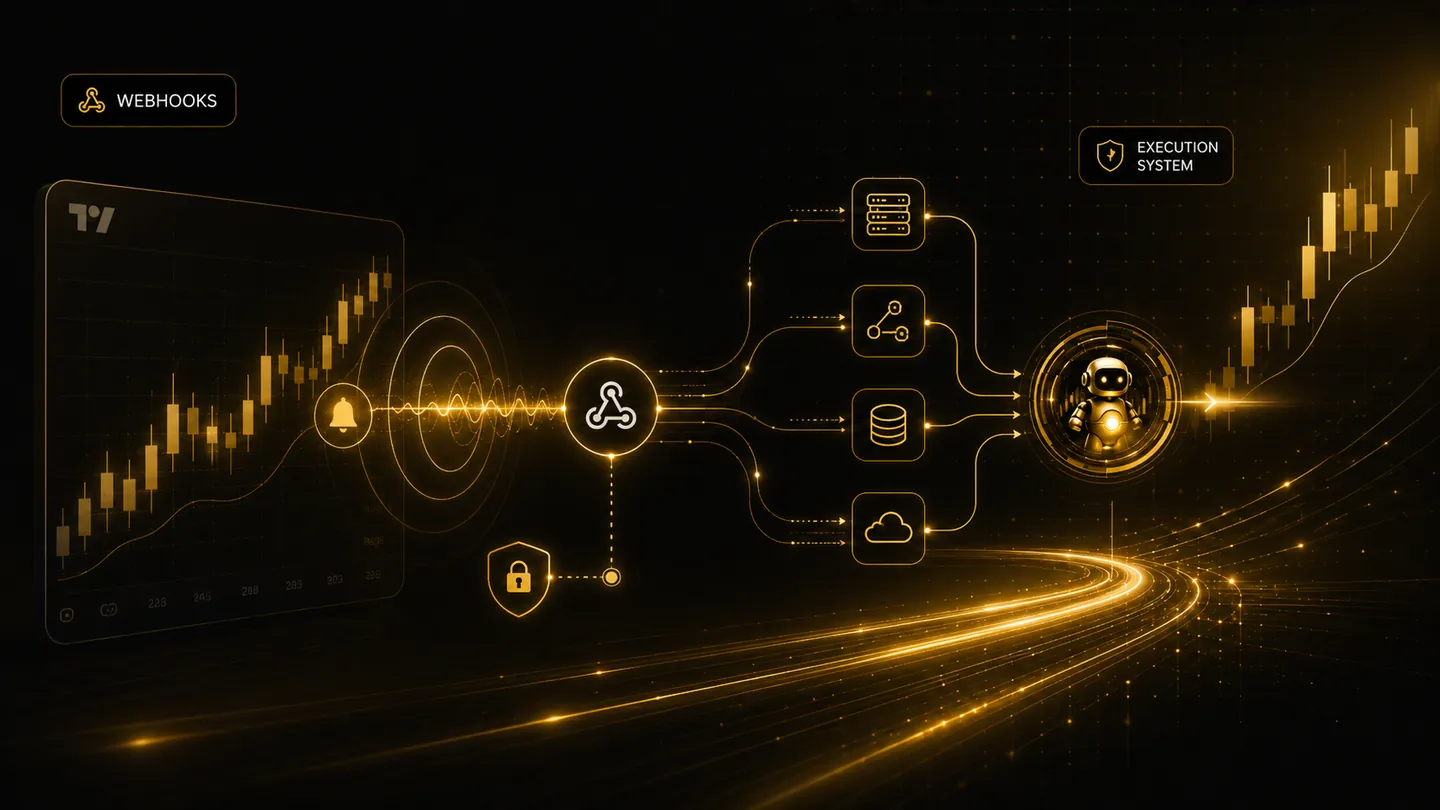
Trading technology uses several terms that are often mixed together. An alert is a message, a webhook is a delivery method, a bot is software that performs tasks, and a broker API is a controlled interface to a brokerage system. Understanding these roles makes it easier to design a workflow and diagnose problems.
An alert describes an event
A charting platform may create an alert when price crosses a level, an indicator changes state, or a strategy places a simulated order. The alert itself does not necessarily trade. It is simply a notification that a defined event occurred.
Alerts can be shown on screen, sent by email, delivered to a phone, or posted to a webhook URL. The message content determines whether another system can understand and act on it.
A webhook delivers the message
A webhook is an internet request sent from one service to another when an event occurs. In trading, it commonly carries fields such as strategy name, symbol, side, action, quantity, and a unique identifier.
A webhook receiver should authenticate the request, validate the payload, protect against duplicates, and reject instructions that do not match the user's approved settings. A webhook is not secure merely because the URL is difficult to guess.
Bots and broker APIs perform the work
A bot is a broad term for software that performs automated actions. It may generate signals, route orders, monitor status, or all three. A broker API is the interface the bot or platform uses to request account data and submit supported orders.
TradeLuma sits between user-directed alerts and supported broker workflows. Its role is to add structure, controls, tracking, and reconciliation rather than treating every incoming alert as an unconditional order.
Frequently asked questions
Is a TradingView strategy the same as a live trading bot?
No. A TradingView strategy can simulate trades and generate alerts, but live execution requires an external workflow and broker connection.
Can one webhook control several strategies?
Technically it may be possible, but strategy-specific webhooks and identifiers usually make permissions, debugging, and audit trails clearer.
Continue learning
Related TradeLuma guides
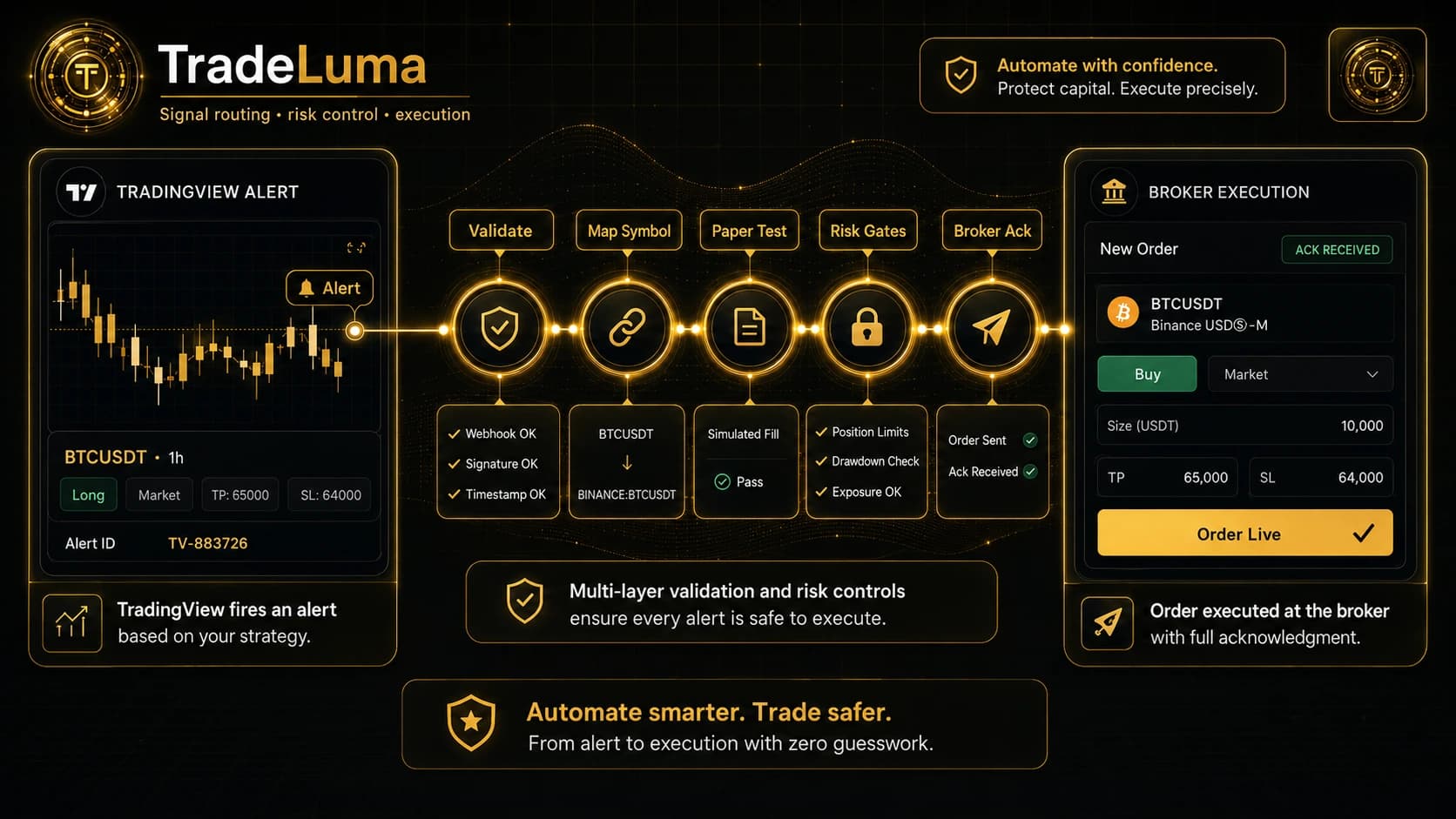
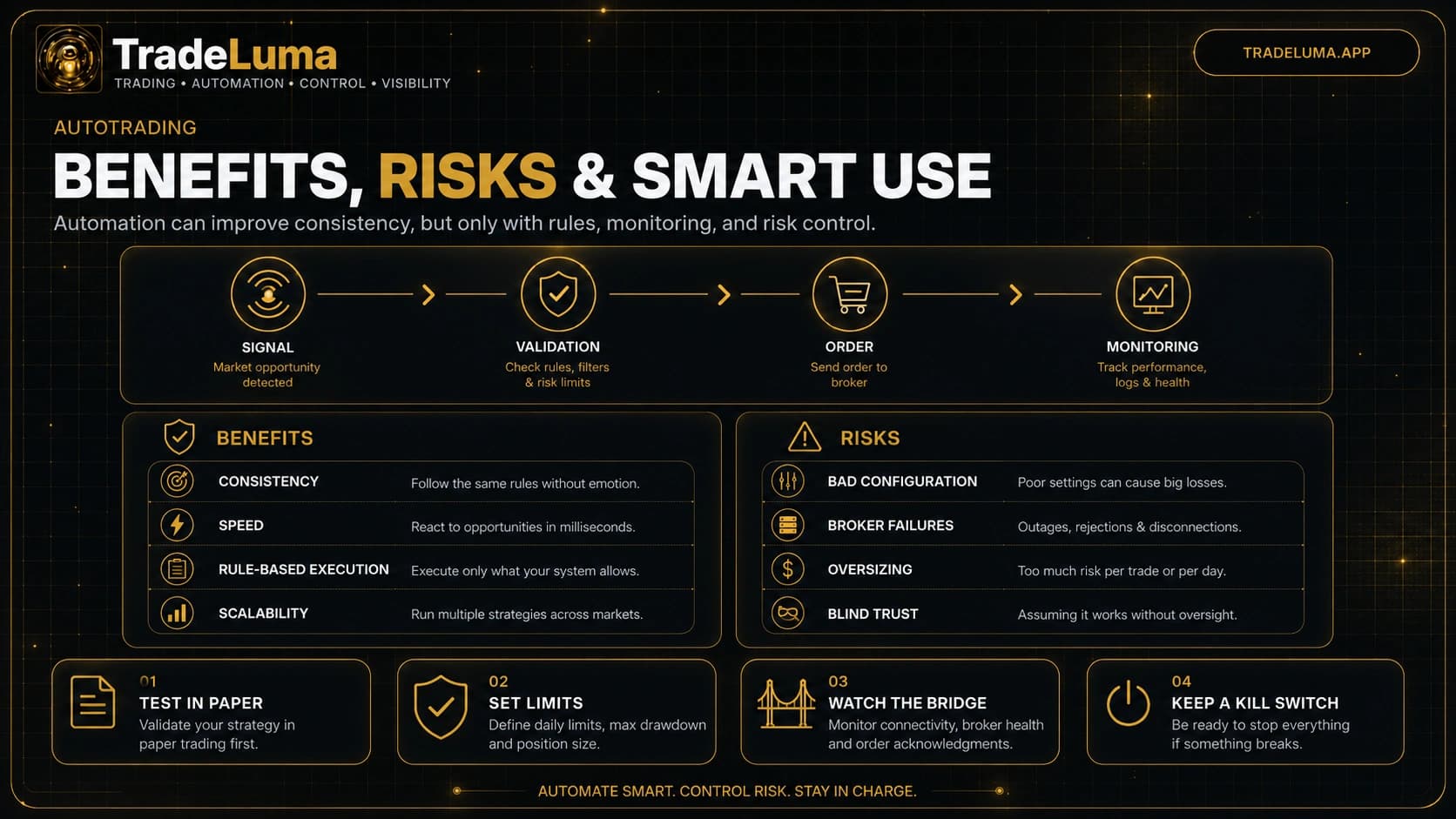
Build a controlled automation workflow with TradeLuma
Configure alerts, test in paper mode, apply execution controls, and follow broker outcomes from one workspace.