
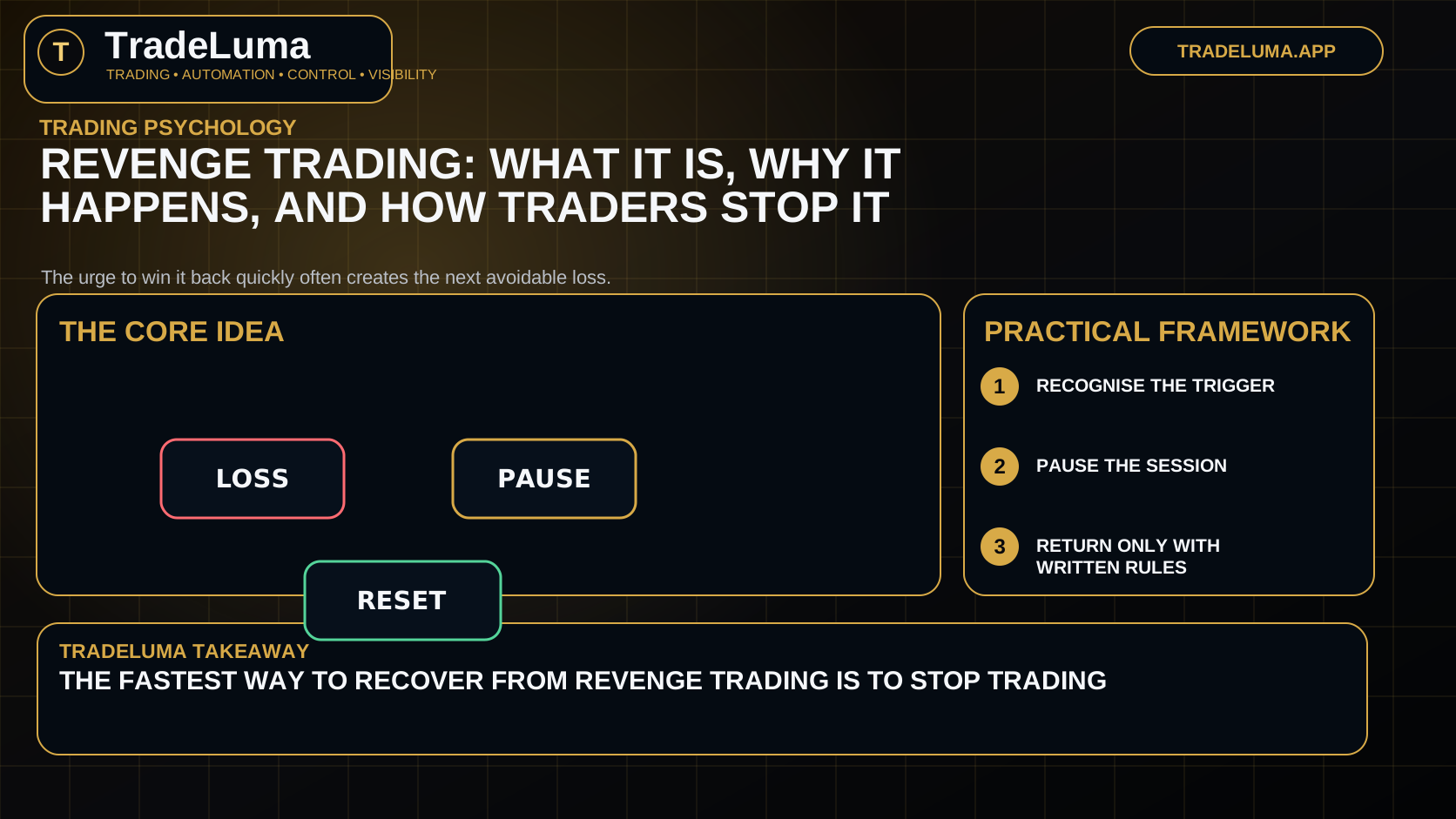
Trading Psychology·
Revenge trading: what it is, why it happens, and how traders stop it
A practical look at revenge trading, why it appears after losses, and the habits traders use to interrupt the cycle before it damages capital and discipline.
Trading psychology
Learn how trading psychology, discipline, journaling, routines, revenge trading, and written plans affect execution quality and consistency.
Trading psychology is not about eliminating emotion. It is about building a process that remains usable when uncertainty, losses, missed trades, and fast markets create pressure.
Many execution mistakes happen after the strategy has already produced a valid rule. Chasing, revenge trading, inconsistent sizing, and abandoning a plan can change the result more than the original signal.
Write the rules, define session stop conditions, journal decisions rather than only P&L, and use review data to separate a strategy problem from an execution problem.
Start here
A practical look at revenge trading, why it appears after losses, and the habits traders use to interrupt the cycle before it damages capital and discipline.
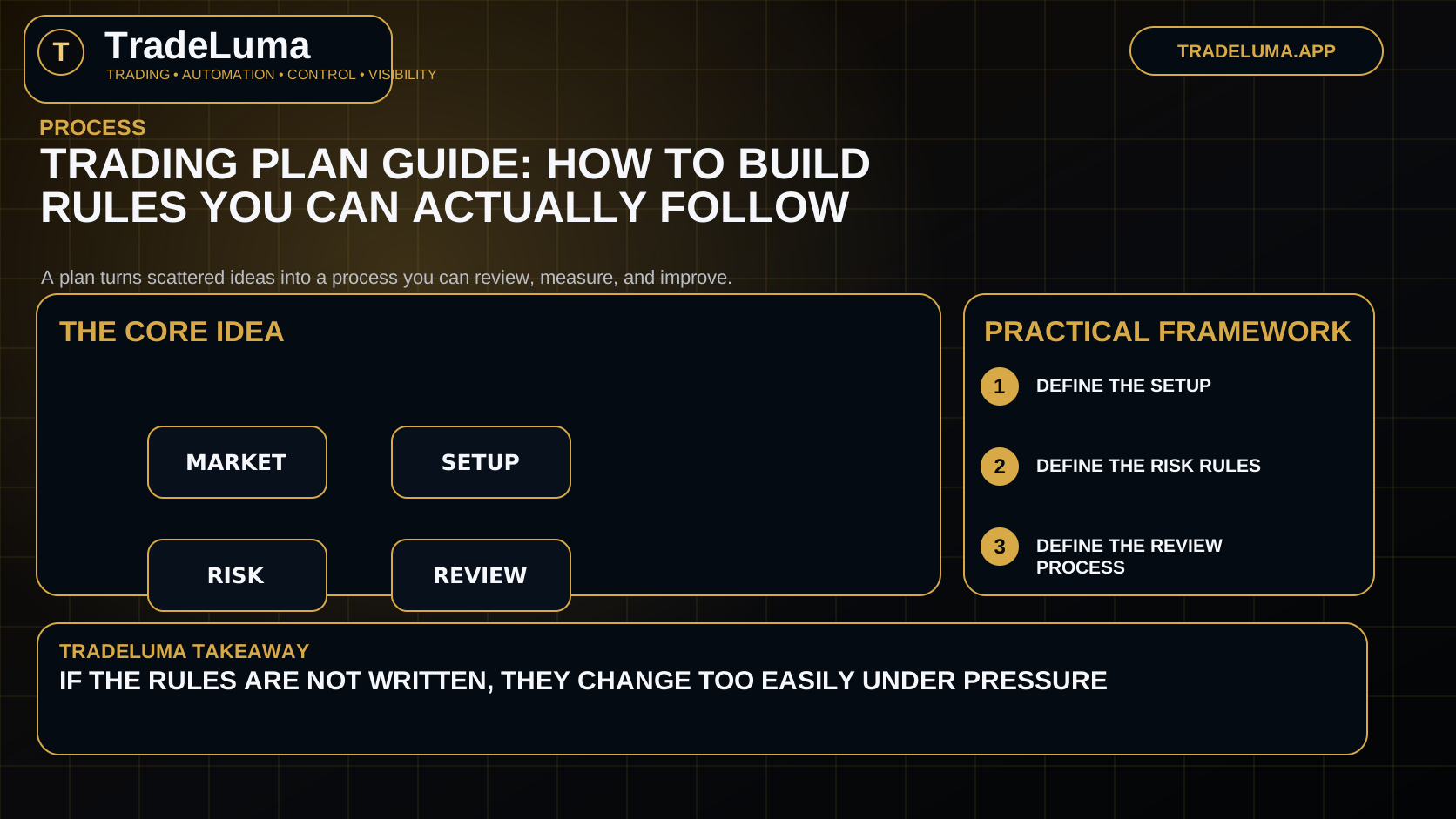
Learn what to include in a trading plan, why written rules matter, and how to turn ideas into a process that is easier to execute consistently.
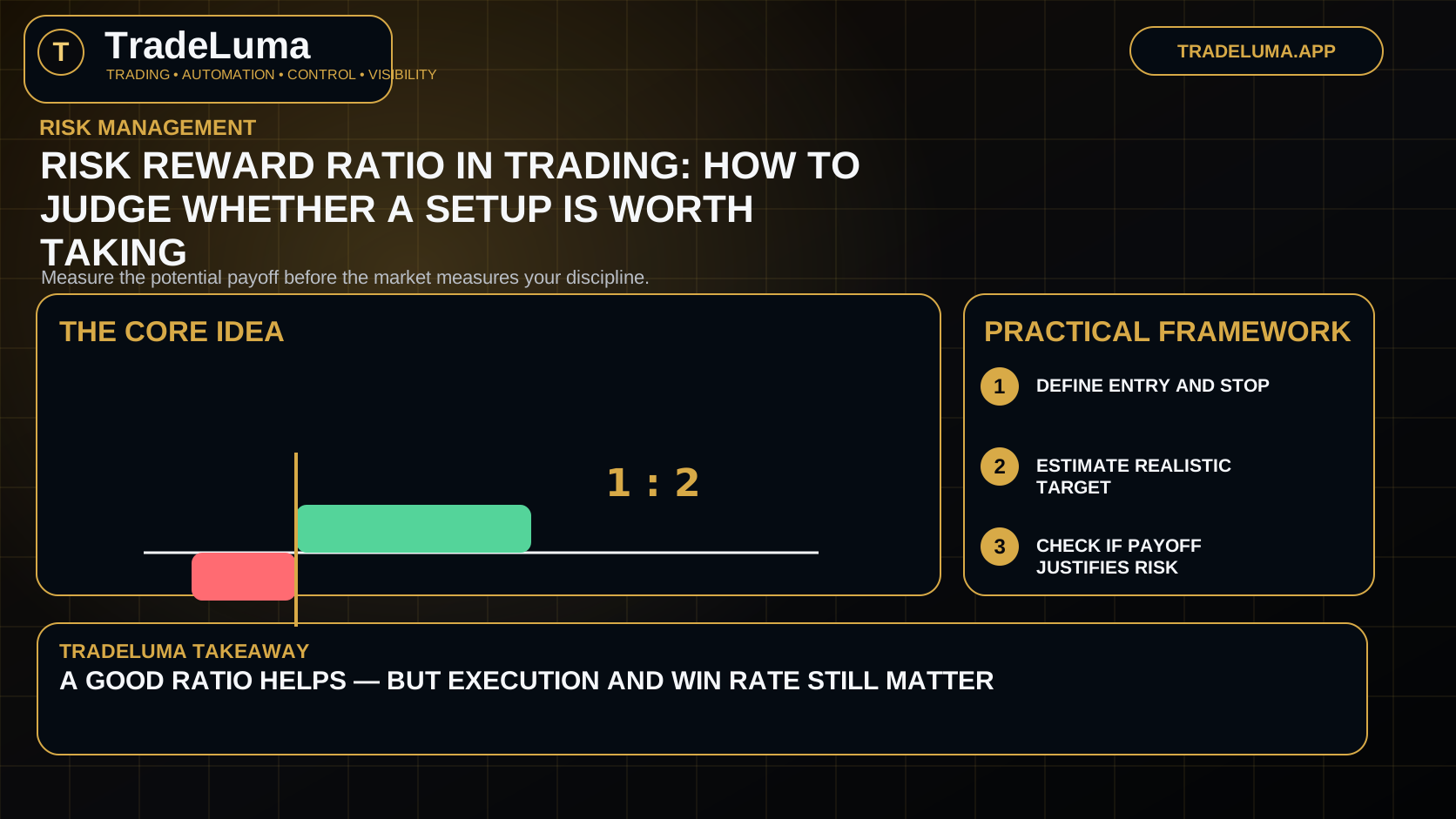
Understand risk reward ratio, how to calculate it, and why trade quality depends on both payoff structure and actual execution discipline.
Full library
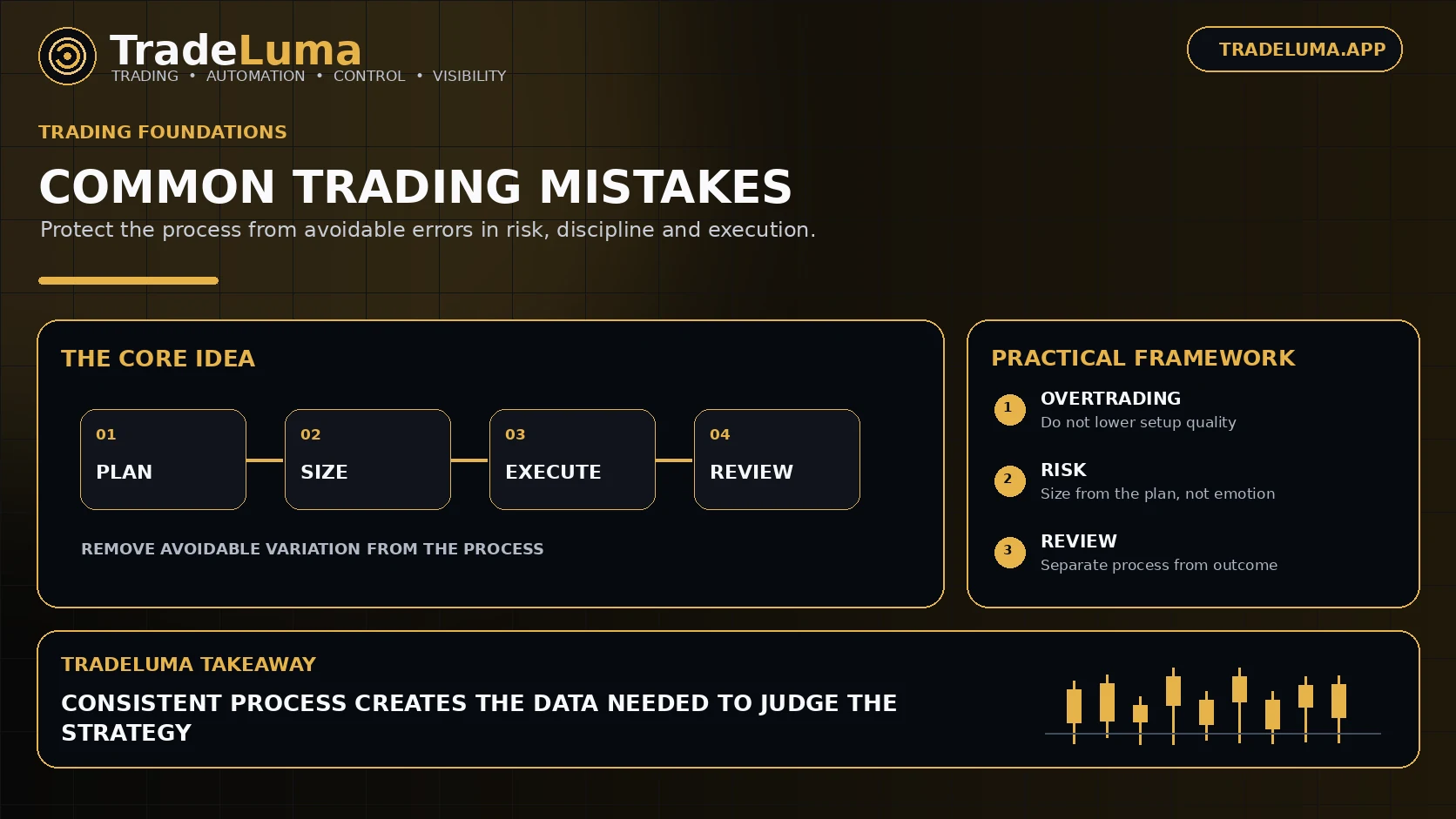
Review common trading mistakes including overtrading, revenge trading, oversized positions, moving stops, strategy hopping, poor testing, and ignoring costs.
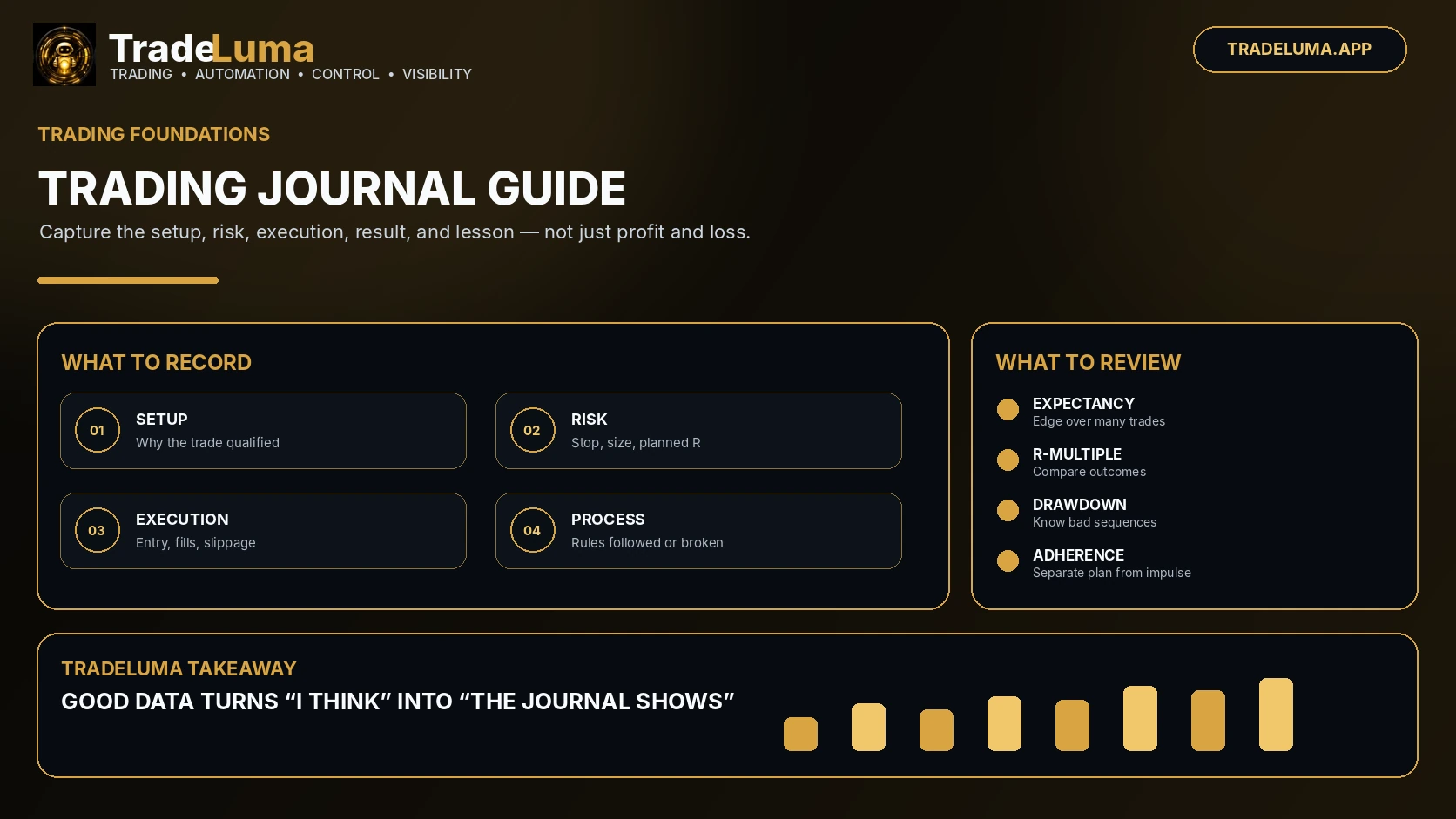
Learn what to record in a trading journal, which metrics to review, and how to turn setup, risk, execution, and trade history into better decisions.
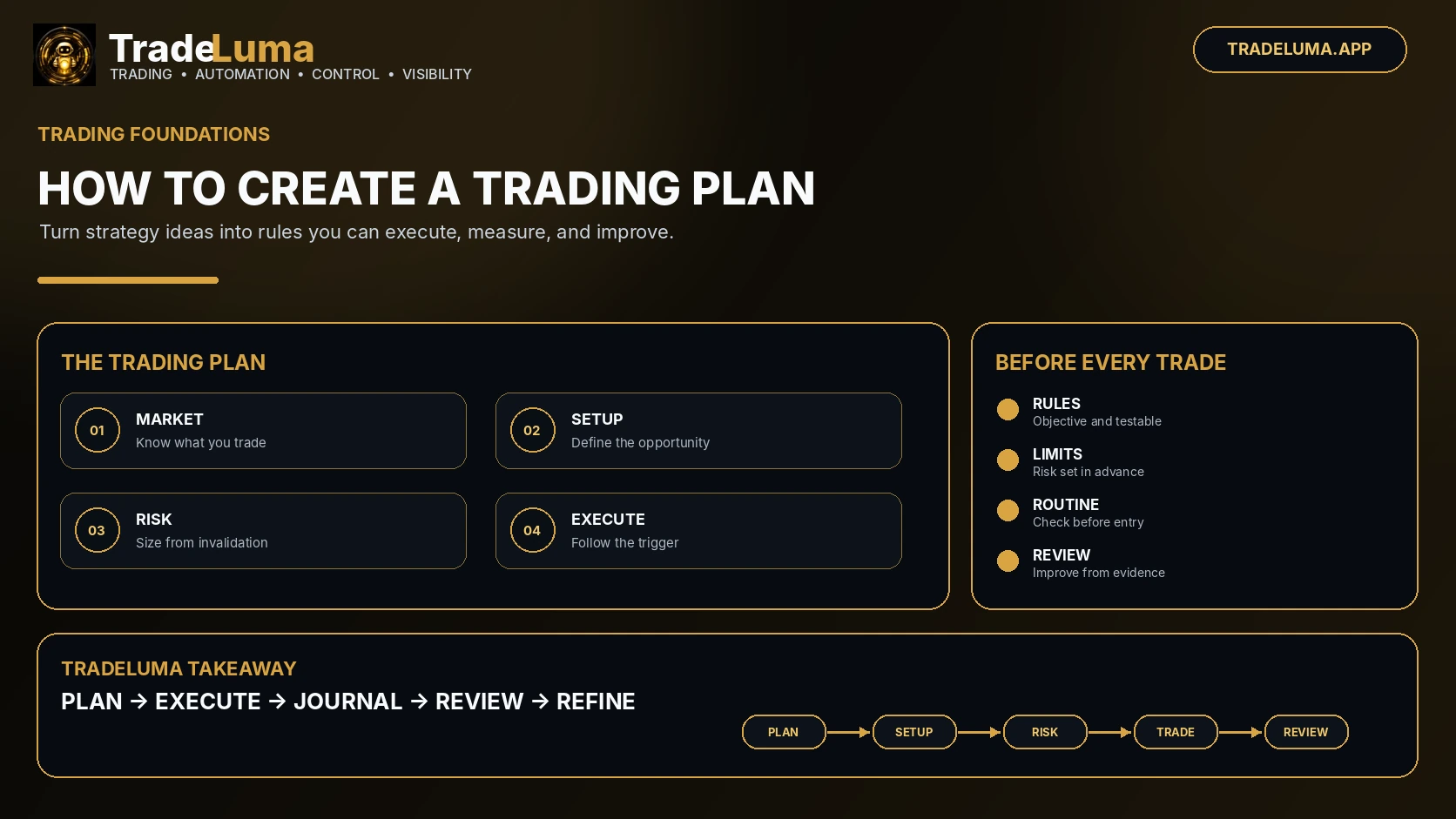
Learn how to create a trading plan with clear setup rules, risk limits, entry and exit criteria, daily routines, review steps, and a repeatable process.
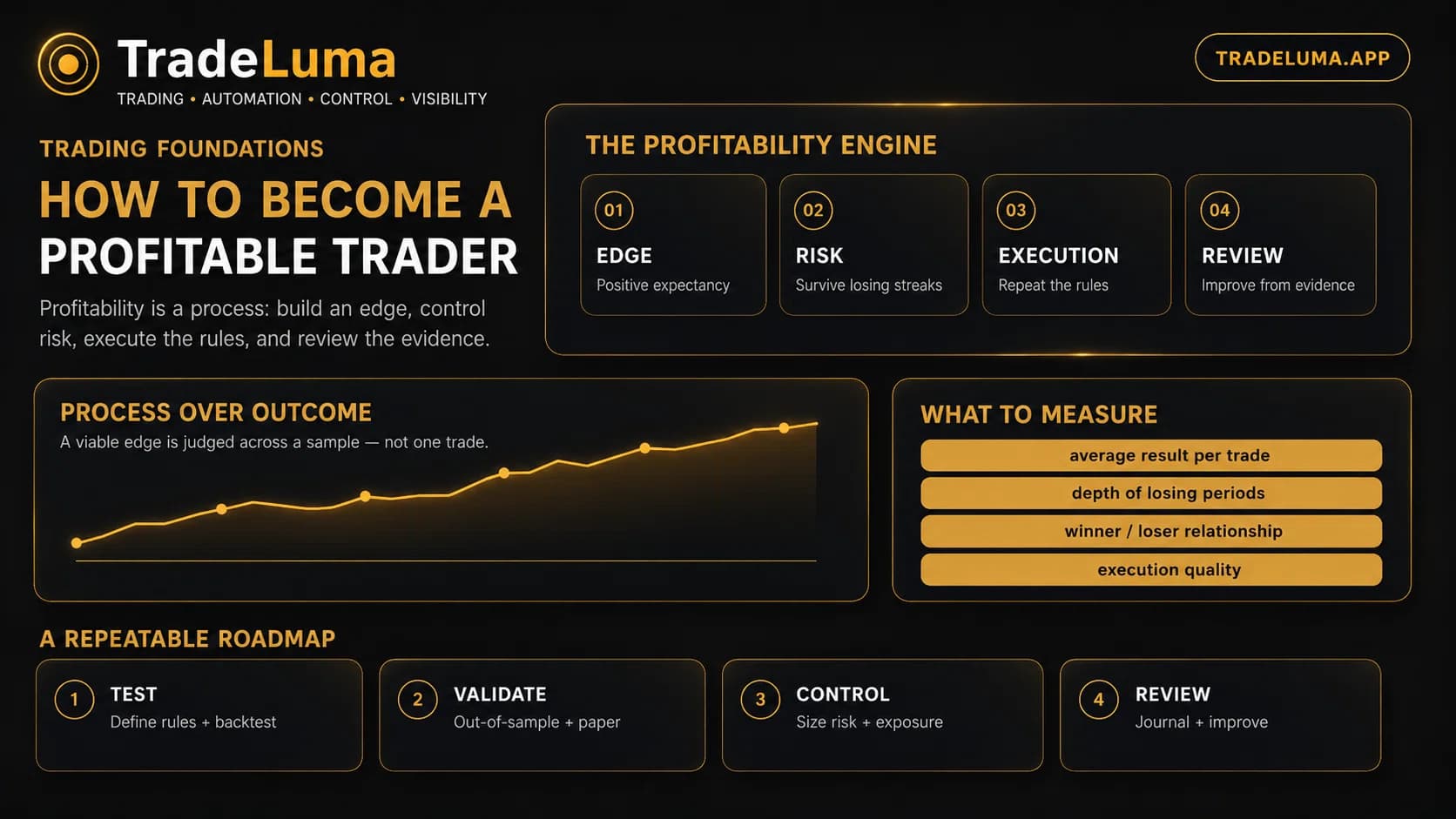
Learn what profitable trading actually requires: a tested edge, disciplined risk management, consistent execution, realistic expectations, and a repeatable review process.
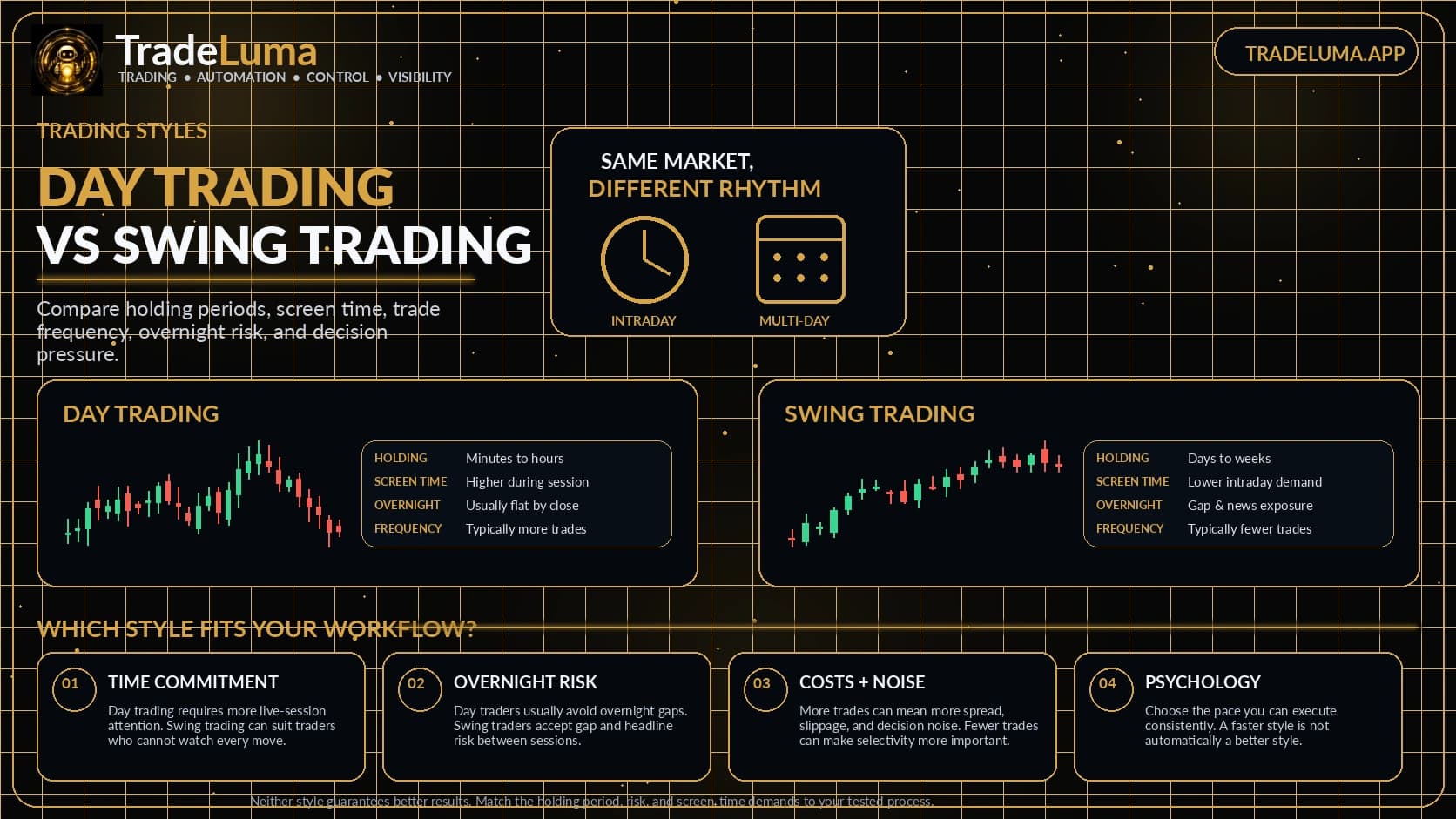
Compare day trading and swing trading by holding period, screen time, trade frequency, overnight risk, costs, psychology, and workflow demands.
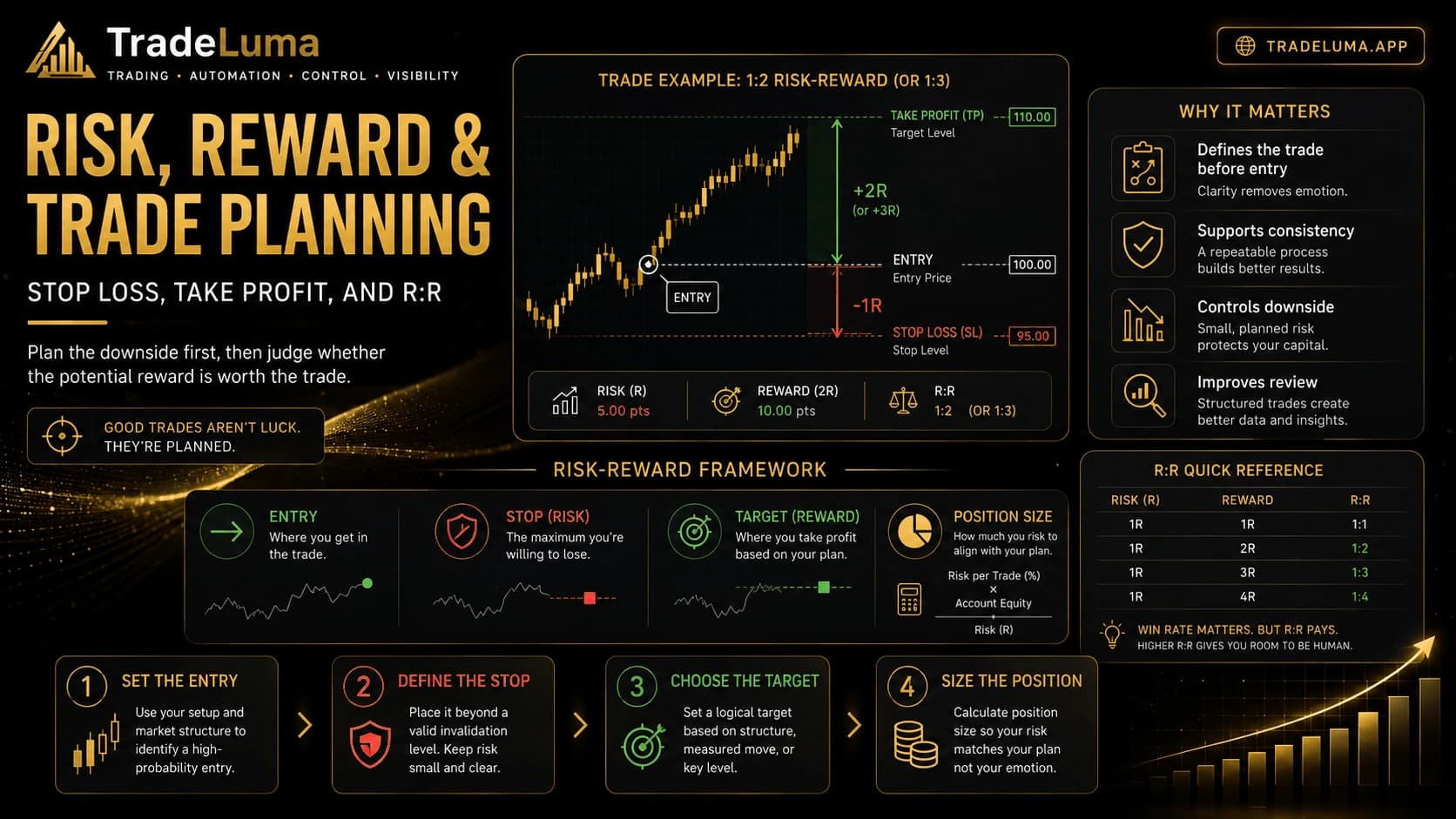
Learn how risk-reward ratio works, how traders use stop losses and take-profit targets, and why trade planning can improve consistency and review.
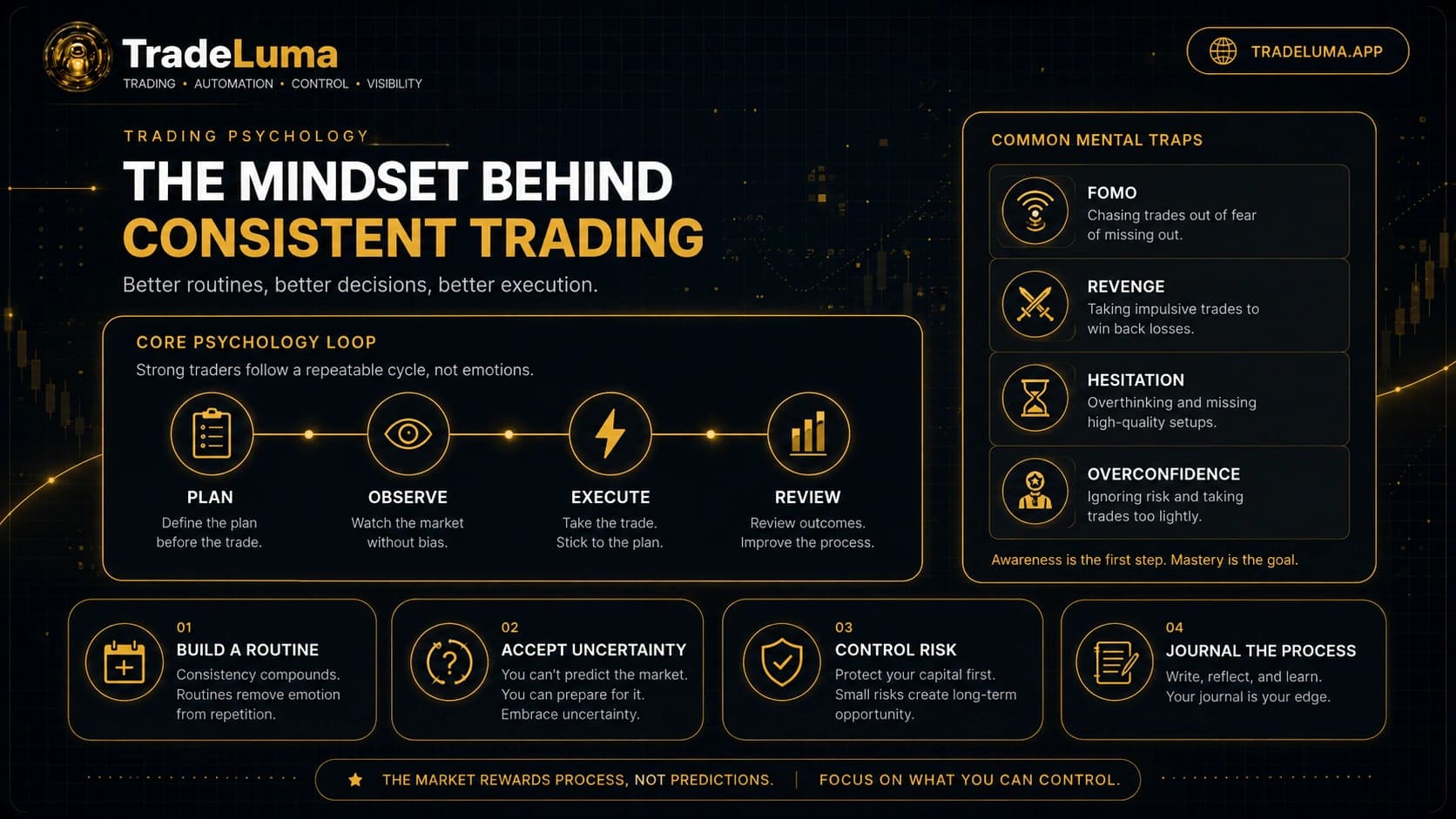
Discover how routines, self-awareness, and discipline improve trading psychology, reduce impulsive decisions, and support more consistent execution.
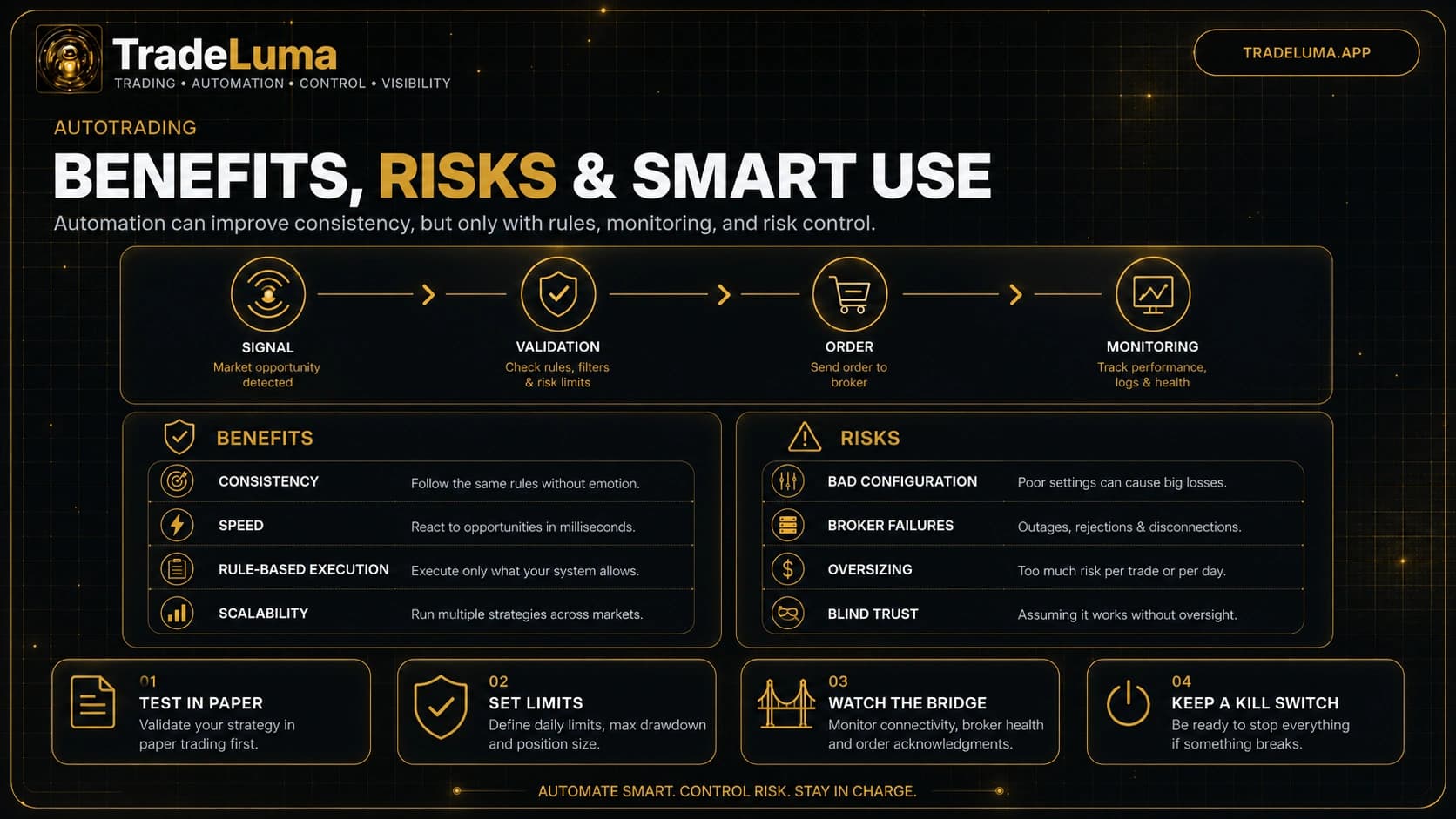
Explore the main benefits and risks of autotrading, from consistency and speed to configuration errors, broker failures, and the need for strong risk controls.
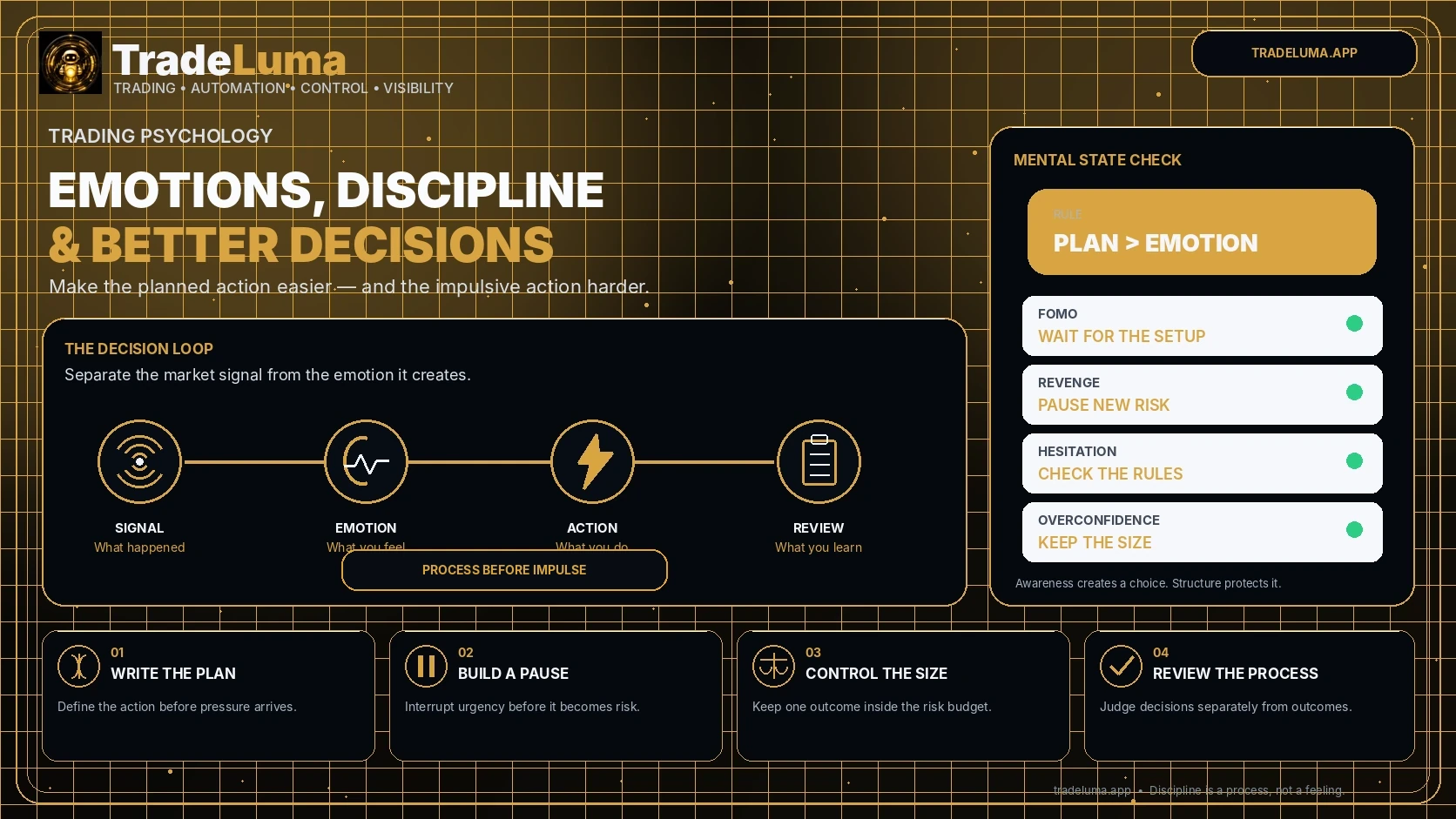
Learn how fear, greed, FOMO, revenge trading, overconfidence, and hesitation influence decisions—and how a repeatable process can reduce emotional mistakes.
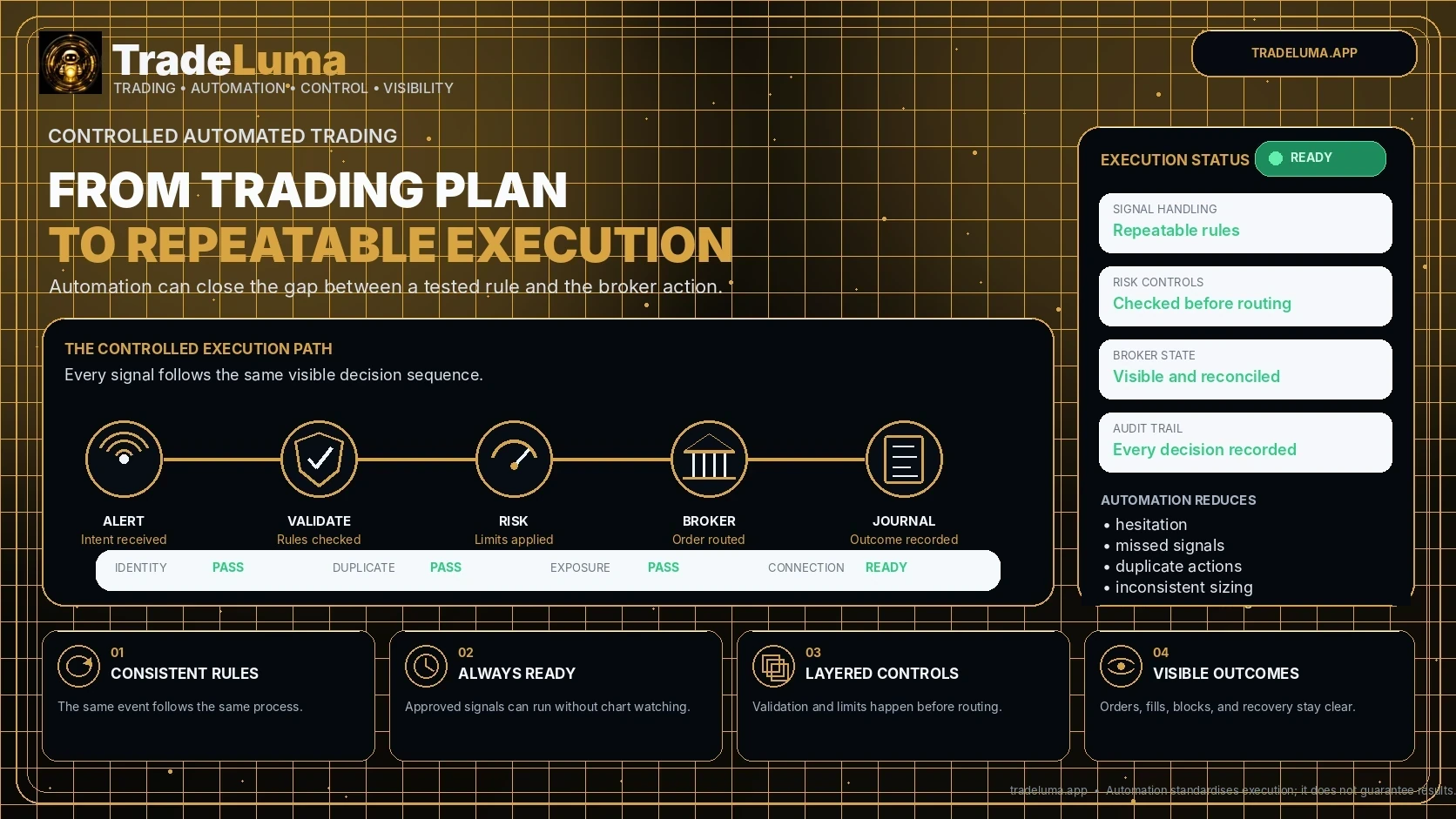
Learn how automated trading reduces hesitation, missed signals, duplicate orders, and inconsistent execution while preserving strategy and risk control.
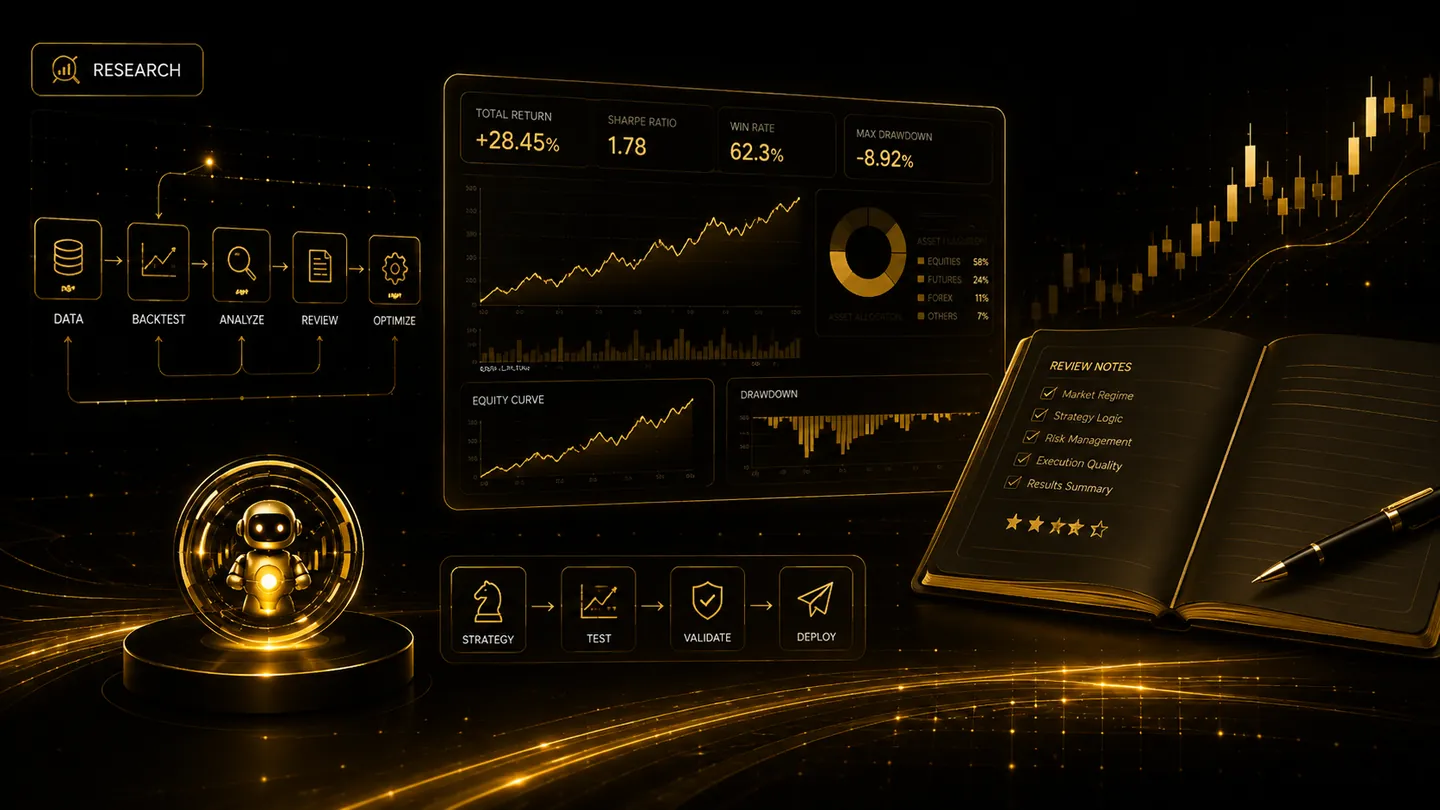
Create a useful trading journal by linking signals, orders, fills, costs, exits, screenshots, strategy versions, and review notes.
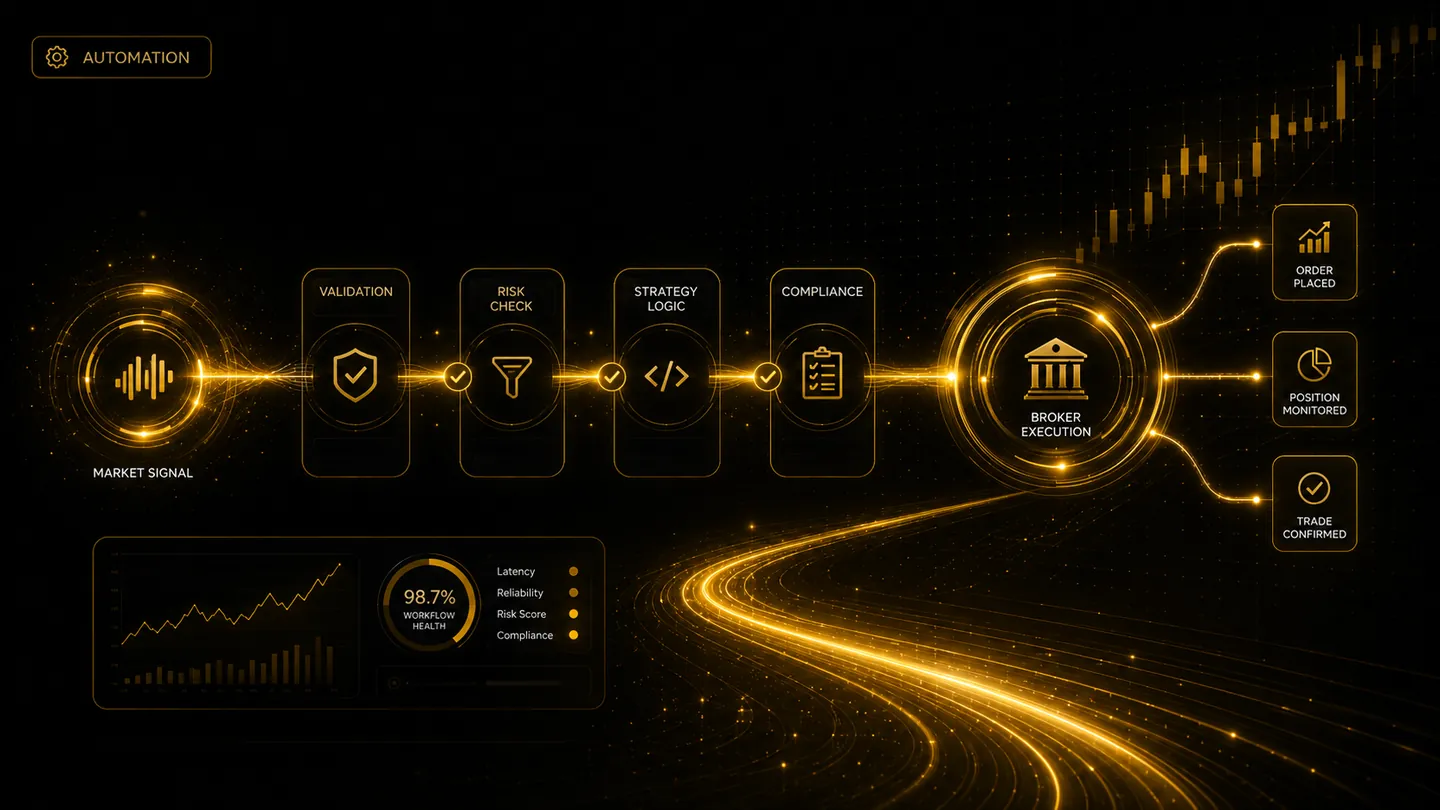
Compare manual and automated trading workflows, including consistency, discretion, monitoring, execution speed, and operational risk.
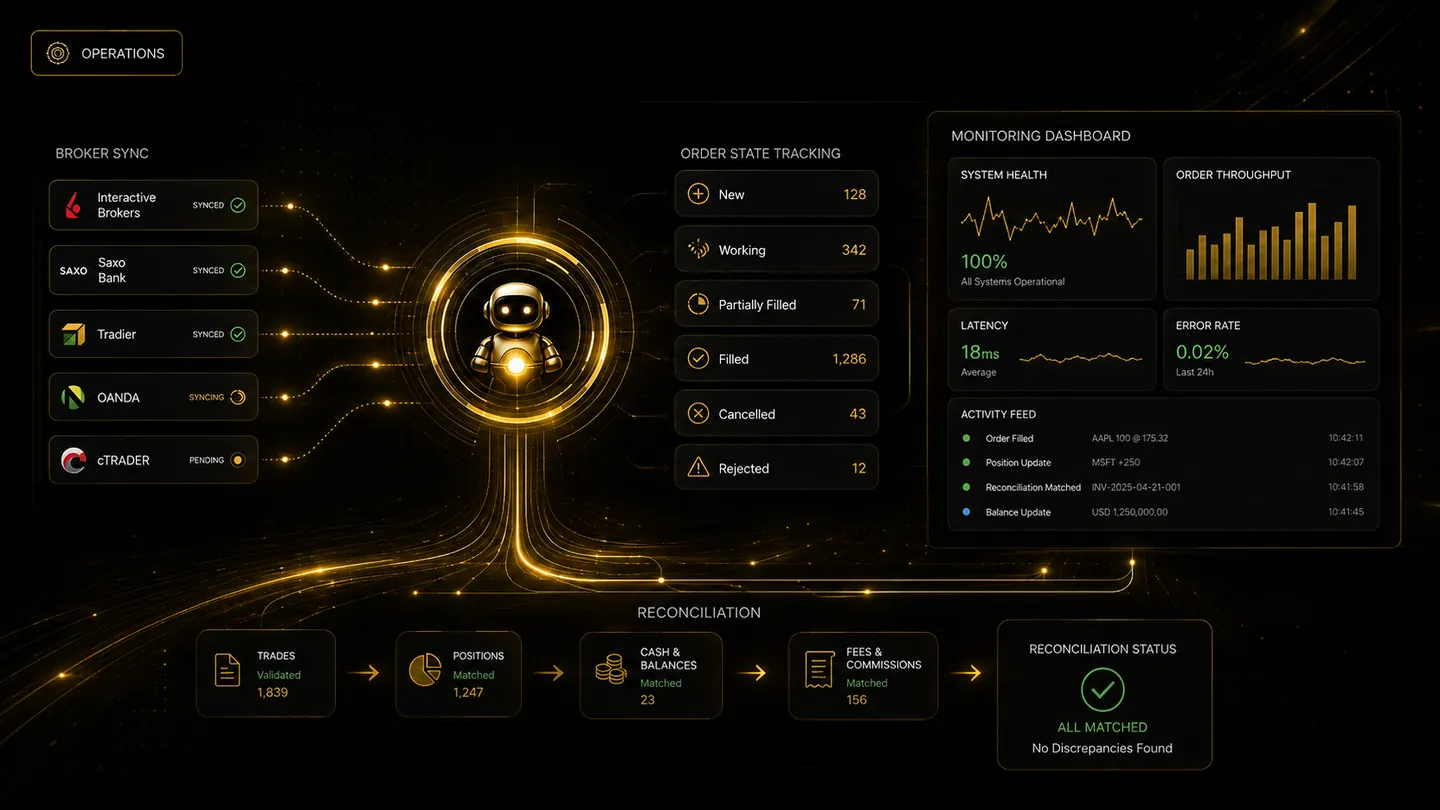
Learn how secure broker connections, user authorization, provider permissions, data freshness, and polling discipline support safer trading automation.