
Trading Foundations
Common Trading Mistakes to Avoid: Risk, Discipline and Execution
Review common trading mistakes including overtrading, revenge trading, oversized positions, moving stops, strategy hopping, poor testing, and ignoring costs.
On this page+
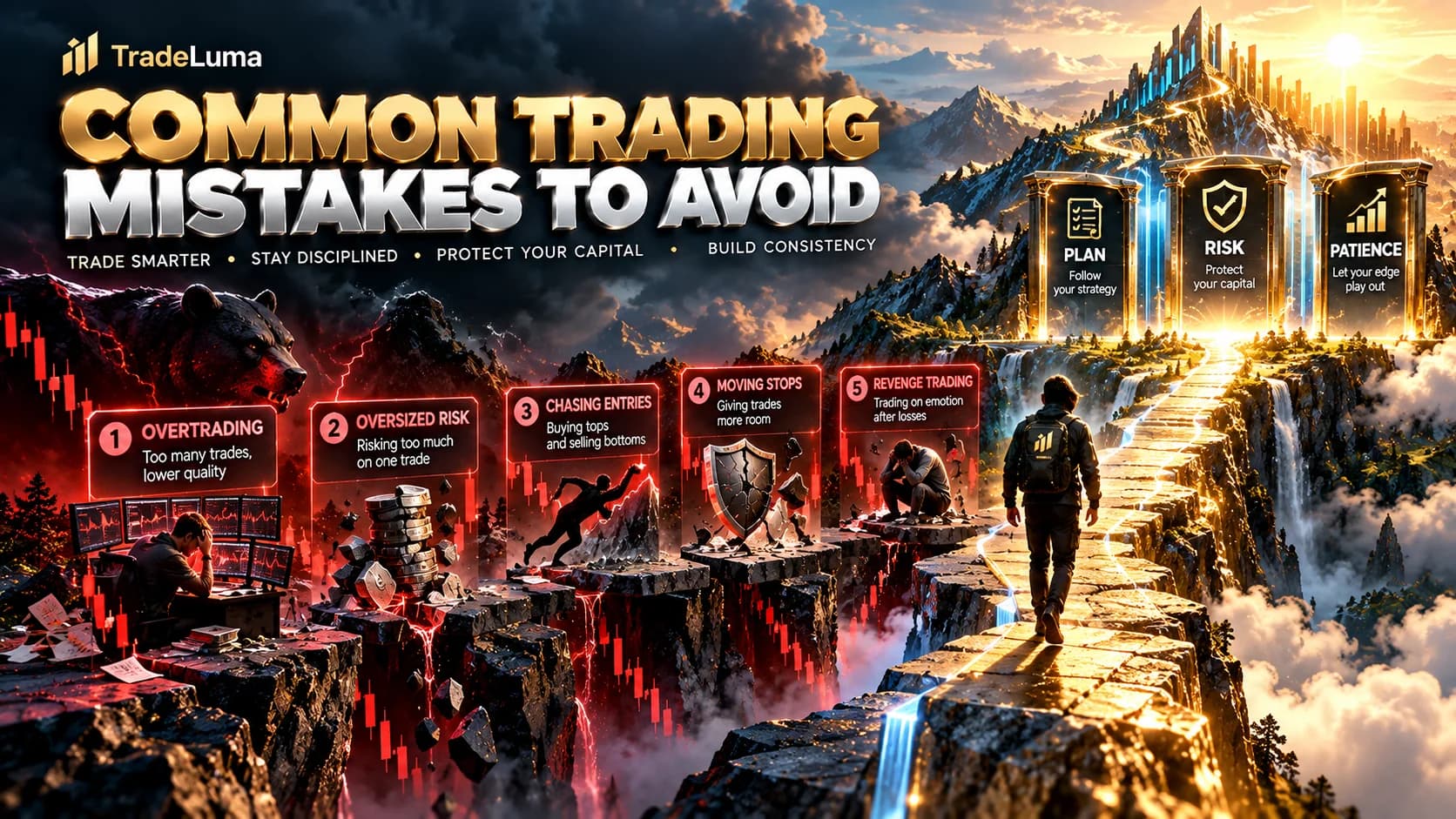
Many trading losses come from ordinary process errors rather than a lack of indicators: taking trades that do not meet the plan, risking too much, changing rules after a small losing streak, ignoring costs, or interfering with exits once money is at risk. Avoiding these mistakes does not guarantee profitability, but it makes strategy results easier to evaluate and reduces the chance that poor execution hides whether an edge exists. The most useful response is not a longer list of rules—it is a smaller set of rules that can actually be followed, measured, and reviewed.
Mistake 1: trading without a defined setup
If the entry conditions change from trade to trade, results cannot be compared meaningfully. A winning trade may come from luck and a losing trade may still be a valid execution of a good setup.
Write the setup, trigger, invalidation point, and exit before the trade. If a condition cannot be explained clearly, it will be difficult to execute consistently under pressure.
Mistake 2: risking too much on one trade
Large position size increases emotional pressure and makes normal losing streaks more damaging. A strategy with positive expectancy can still experience several losses in a row.
Define maximum risk per trade and maximum account exposure before entering. Position size should come from the risk limit and stop distance rather than from how confident the setup feels.
Mistake 3: moving the stop to avoid a loss
Widening a stop after entry changes the original risk calculation and often turns a planned small loss into an unplanned large one. The market has not become safer simply because the position is losing.
If the invalidation point genuinely needs to change, that rule should exist before entry and be tested. Otherwise, honour the original risk decision.
Mistake 4: overtrading and revenge trading
Overtrading can appear after boredom, fear of missing out, a strong winning streak, or a loss that creates an urge to recover money quickly. The common result is lower setup quality and higher total transaction costs.
Daily trade limits, setup checklists, cooldown rules, and maximum daily loss can provide external structure when emotions are most likely to change behaviour.
Mistake 5: strategy hopping
Switching systems after every short losing period prevents any strategy from being evaluated over a meaningful sample. The trader continually buys yesterday's best-looking idea and abandons it when normal variance arrives.
Define in advance what evidence would justify changing the strategy: a sufficiently large trade sample, a structural market change, or a statistically meaningful deterioration in performance.
Mistake 6: ignoring costs and execution
Commission, spread, slippage, financing, market impact, and latency can turn a small theoretical edge into a losing live strategy. This is especially important for high-frequency or small-target systems.
Backtests should include realistic assumptions and stress tests. Live review should compare expected entry with actual fills so execution quality is measured rather than guessed.
Mistake 7: overfitting the backtest
A strategy can be tuned until it explains historical noise. Warning signs include many parameters, one narrow combination that dramatically outperforms nearby settings, or repeated optimisation on the same period.
Use out-of-sample testing, walk-forward analysis, parameter sensitivity, and different market regimes. The goal is not the prettiest backtest; it is a rule set that survives imperfect conditions.
Mistake 8: reviewing P&L without reviewing process
Profit and loss alone cannot tell you whether a trade was good. A rule-following loss can be correct process, while a profitable oversized impulse trade can be dangerous process.
Journal setup quality, rule adherence, planned risk, actual execution, and reasons for discretionary changes. That separates whether the strategy needs improvement from whether the trader needs more consistent execution.
Build a mistake-resistant routine
Before the session, define eligible setups, risk limits, and event constraints. During the session, use the same checklist before each entry. After the session, review deviations rather than rewriting the strategy immediately.
The objective is not perfection. It is to make mistakes visible early, limit their financial impact, and create enough consistent data to judge the trading process fairly.
Frequently asked questions
What is the most common trading mistake?+
There is no single mistake for everyone, but inconsistent risk and taking trades outside a defined plan are among the most damaging because they affect every result.
What is overtrading?+
Overtrading means taking more trades than the strategy justifies, often by lowering setup standards because of boredom, emotion, or fear of missing out.
Why is moving a stop loss dangerous?+
Moving a stop farther away after entry increases the risk beyond the original plan and can turn a controlled loss into a much larger one.
How can a trader avoid strategy hopping?+
Define a minimum review sample and objective criteria for strategy changes before trading, then evaluate the system over that evidence instead of reacting to a few recent trades.
Trading indicators
Continue with the topic hub.
Browse the related TradeLuma guides and build the topic from foundations through practical application.
Explore Trading indicators guides →Continue learning
Related guides.

How to become a profitable trader: process, risk, and consistency
Learn what profitable trading actually requires: a tested edge, disciplined risk management, consistent execution, realistic expectations, and a repeatable review process.

Futures trading for beginners: what a futures contract is and how traders approach the market
A beginner-friendly guide to futures trading, covering contract basics, margin, rollover, leverage, and practical risk considerations.
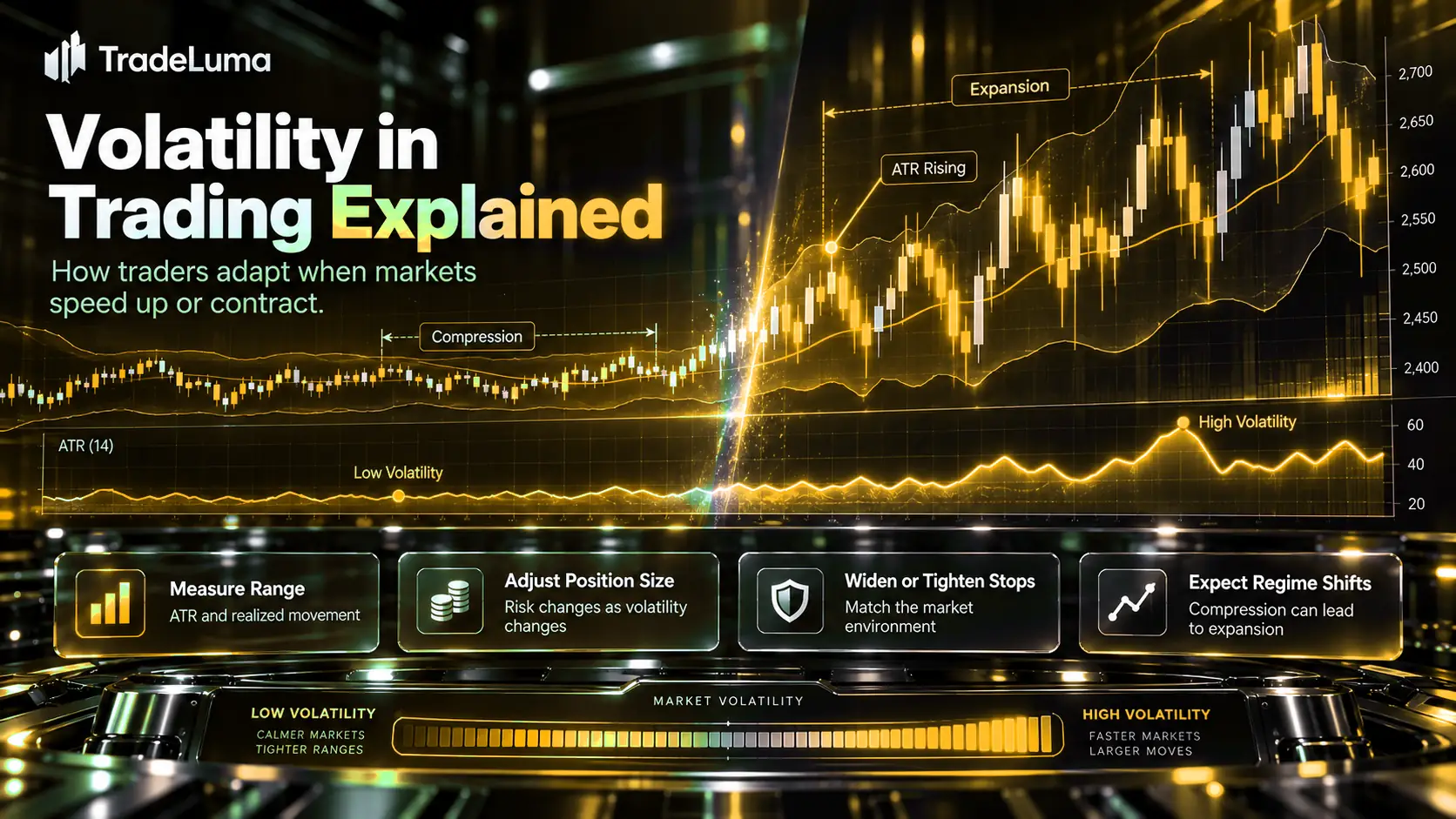
Volatility in Trading Explained: How to Adapt When Markets Speed Up
Learn what trading volatility means, how ATR and realised range measure it, and how volatility affects stops, position size, targets, and execution.