
Risk
Risk-reward ratio, stop loss, and take profit explained
Learn how risk-reward ratio works, how traders use stop losses and take-profit targets, and why trade planning can improve consistency and review.
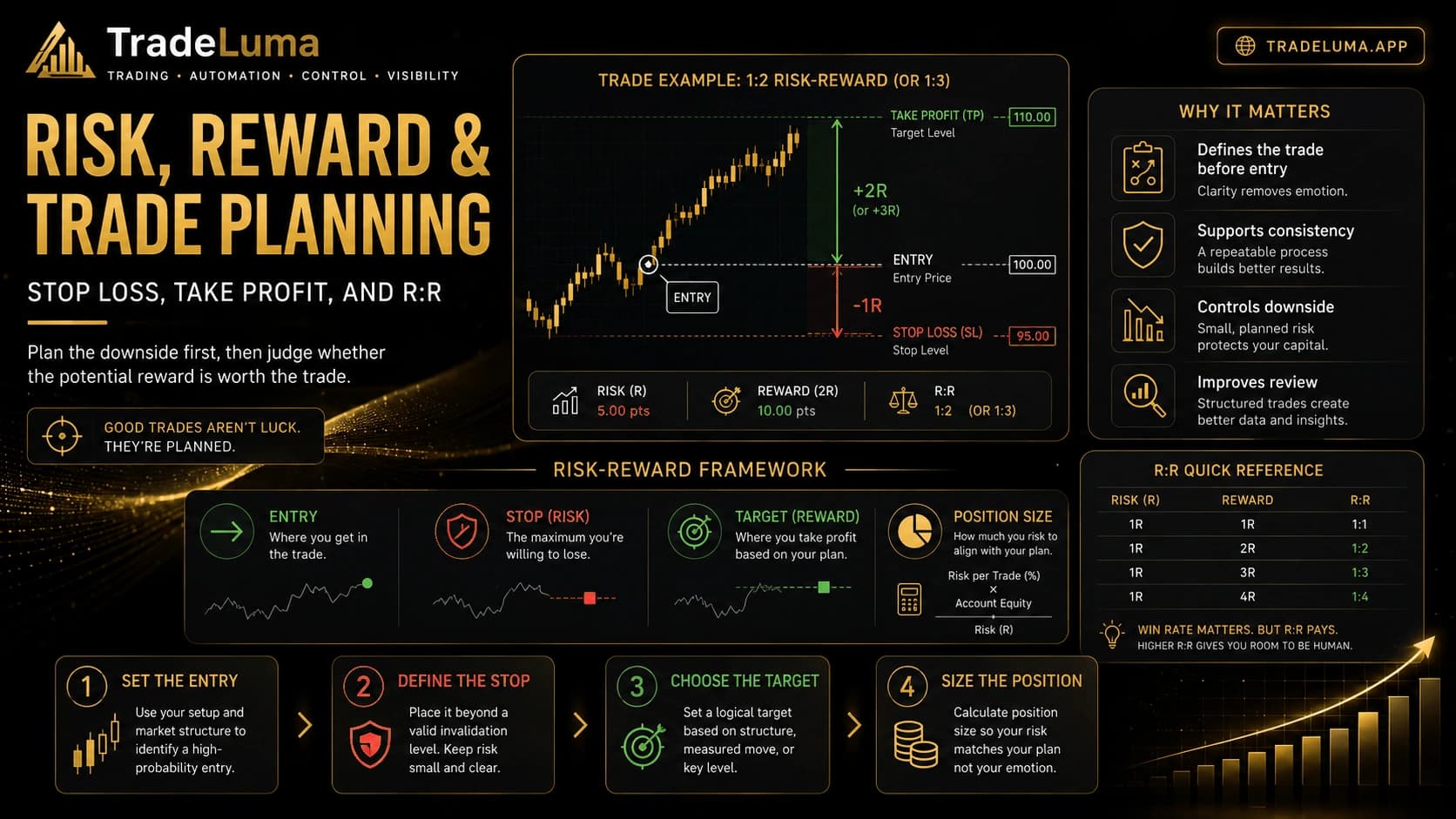
Risk-reward ratio is one of the clearest ways to think about a trade before entering it. Instead of focusing only on how much could be made, the trader first defines what could be lost, where the trade idea becomes invalid, and whether the potential reward is worth the risk taken. This planning process does not guarantee a winning trade, but it can improve discipline, consistency, and review quality over time.
What risk-reward ratio means
Risk-reward ratio compares the potential downside of a trade with its potential upside. If a trader risks 1 unit to make 2 units, the trade has a 1:2 risk-reward ratio. If the trade risks 1 to make 3, the ratio is 1:3. This simple framework helps traders judge whether a trade is attractive before money is at risk.
The important point is that the ratio should come from the chart structure and the strategy logic, not from wishful thinking. A target that is too optimistic or a stop that is unrealistically tight can make the ratio look good on paper without improving the actual quality of the trade.
Why stop loss comes first
A stop loss defines where the trade idea is no longer valid. It answers the question: at what point is the market behaviour inconsistent with the original setup? By answering that question first, traders avoid designing the trade around hope.
The stop should be placed based on logic, not emotion. It might sit beyond a structural level, a volatility threshold, or a clear invalidation point. Once the stop is defined, the trader can calculate the actual risk and decide whether the position size is appropriate.
How take-profit targets are chosen
A take-profit target is the price area where the trader expects to realise a reward if the market moves as planned. Targets may be based on support or resistance, prior swing points, measured moves, volatility, or a fixed strategy rule. The key is that the target should make sense within the chart structure and the trading plan.
A target that is too close may limit the reward unnecessarily, while a target that is too distant may reduce the probability of being reached. Good planning balances realism with opportunity rather than choosing a number at random.
How risk-reward affects long-term performance
Risk-reward ratio matters because not every strategy wins at the same rate. A trader using a 1:2 ratio does not need to win as often as a trader using a 1:1 ratio to remain profitable over time. This does not mean higher ratios are always better, because ambitious targets may reduce the strike rate.
The main lesson is that win rate and risk-reward ratio must be understood together. A system with a modest win rate can still work if the average winner is meaningfully larger than the average loser.
Entry, stop, target, and position size belong together
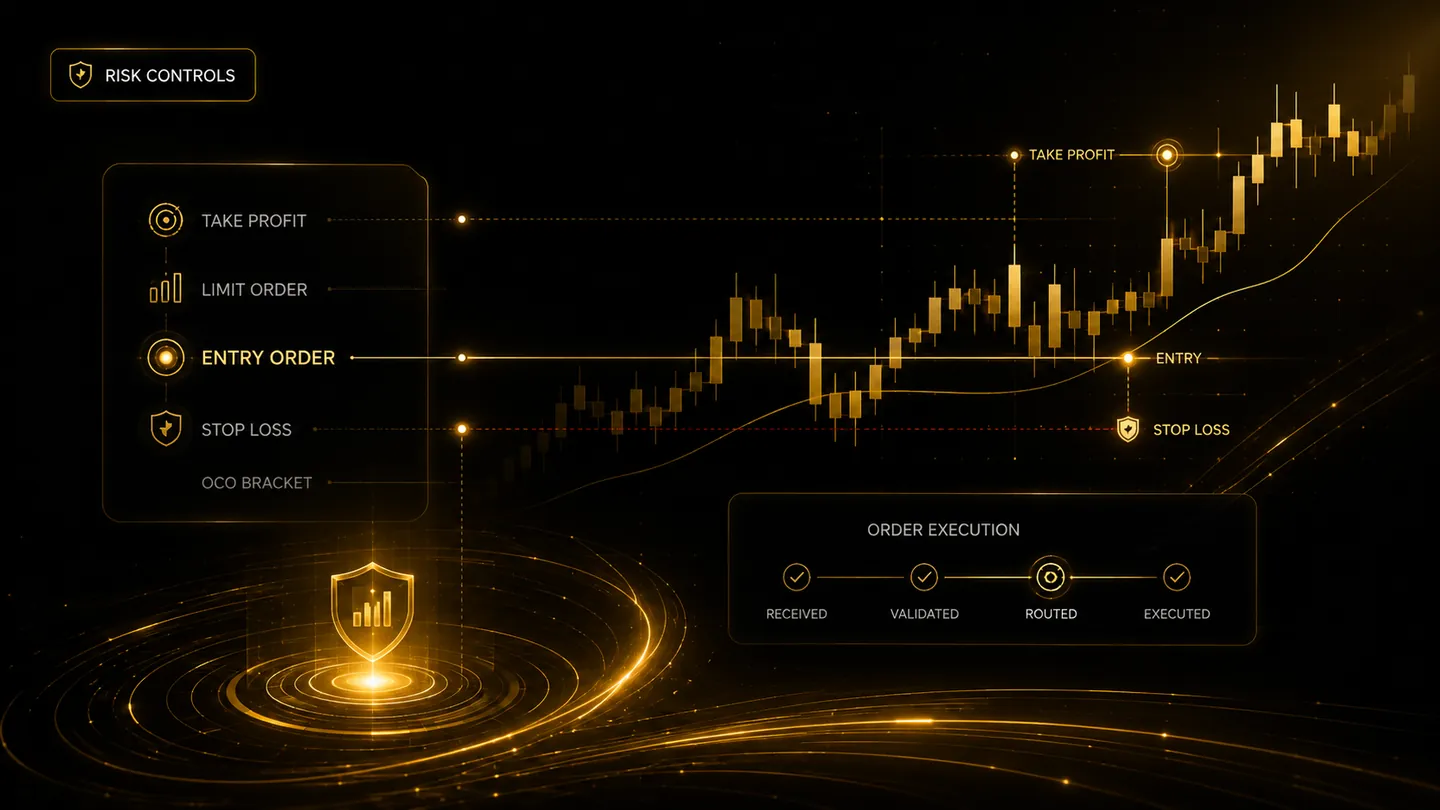
A structured trade is built from four connected decisions: where to enter, where the stop belongs, where the target sits, and how large the position should be. If one part changes, the others may need to change as well. That is why trade planning is more useful than evaluating each element in isolation.
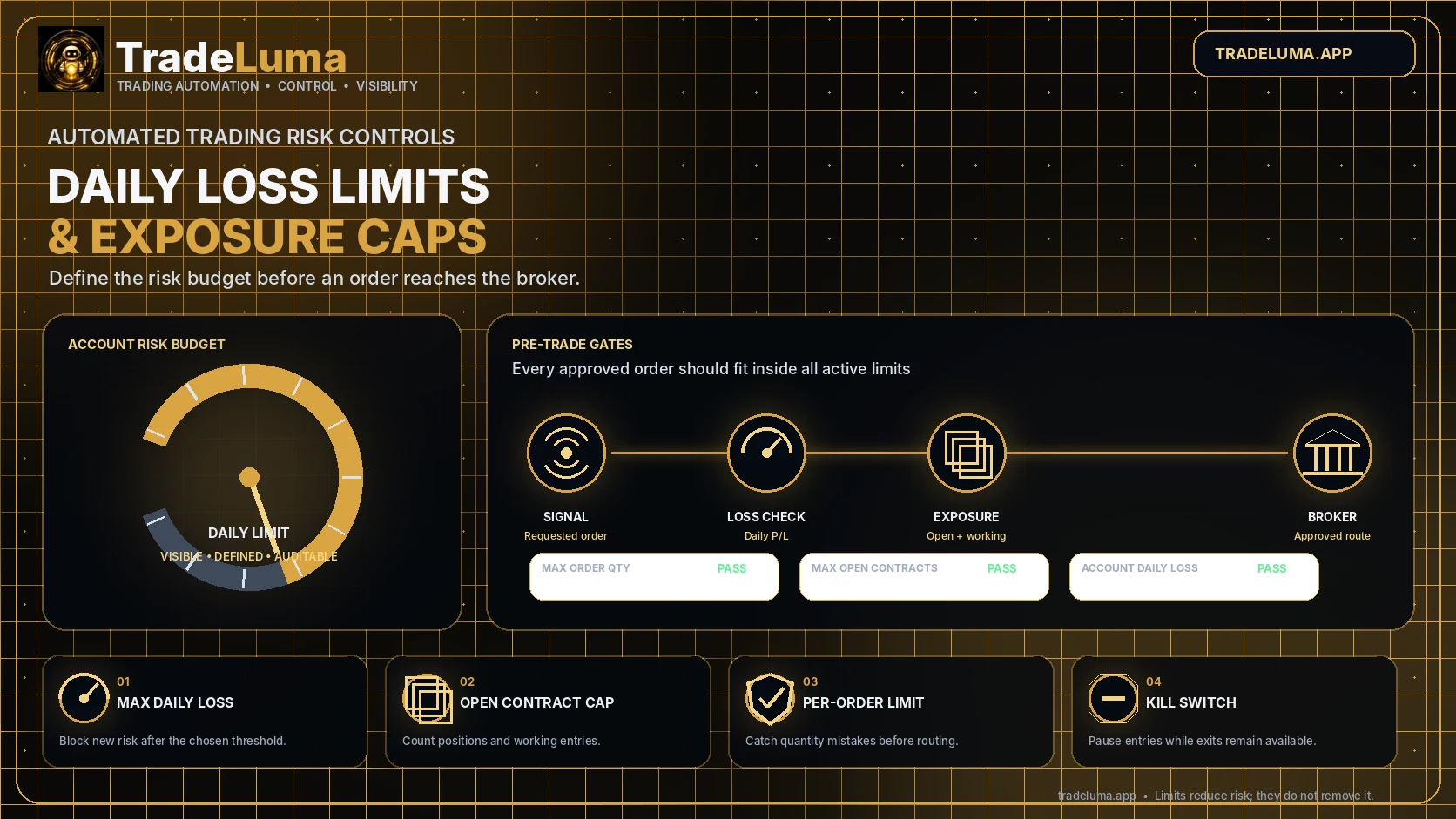
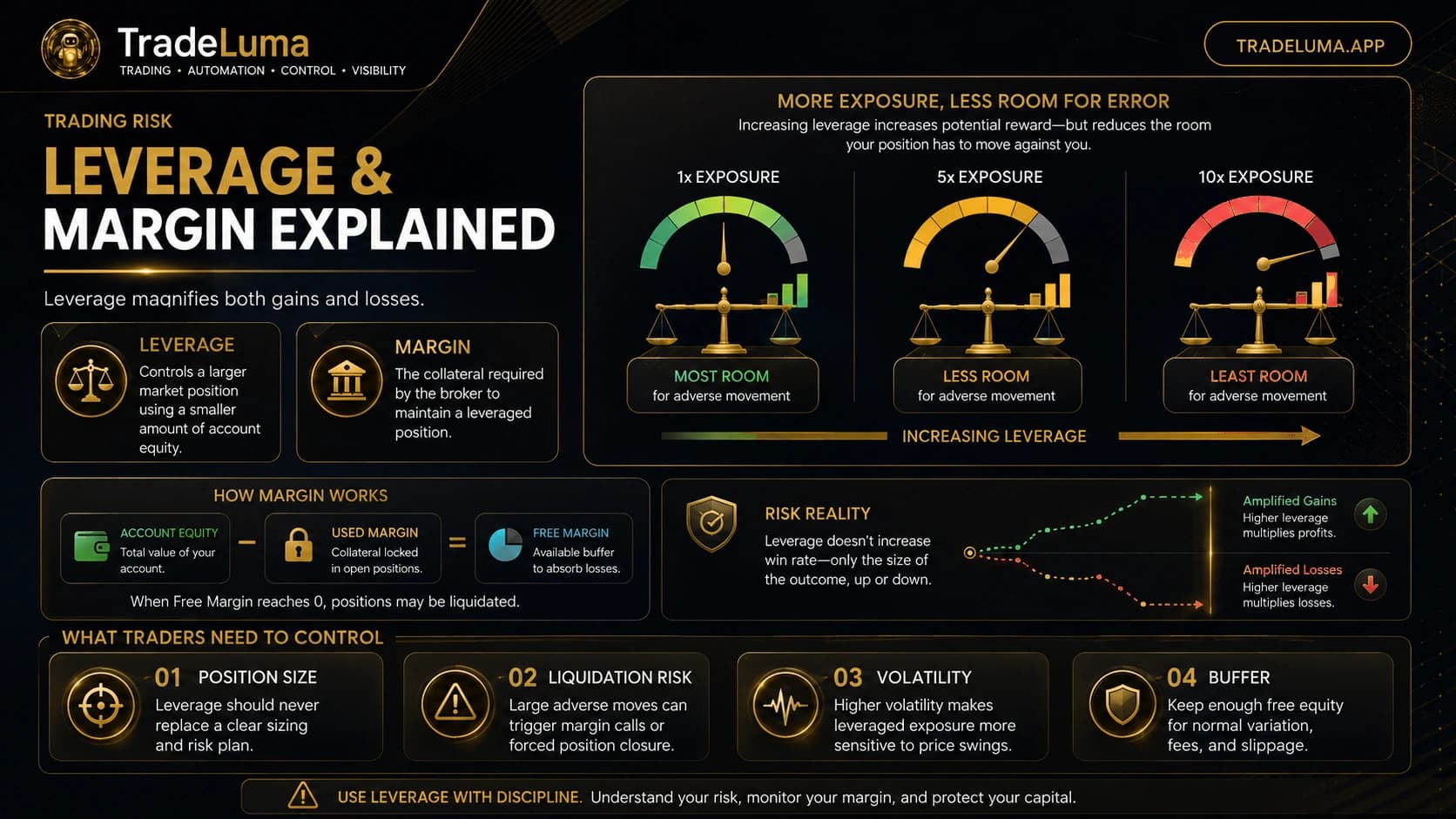
Position sizing is especially important. Even a strong setup can become dangerous if the size is too large relative to account risk. The stop distance helps determine how many units can be traded while keeping the risk within limits.
Common mistakes with risk-reward planning
One common mistake is tightening the stop unrealistically just to improve the apparent ratio. Another is setting oversized targets that have little structural justification. Traders may also ignore changing market conditions and keep using the same ratios even when volatility or liquidity is very different.
A further mistake is judging the plan only by the outcome of one trade. A well-planned 1:2 trade can lose, while a poorly planned trade can win. The better question is whether the structure, stop, target, and size all made sense before entry.
Why trade planning improves psychology
Planning the stop and target before entering can reduce emotional decision-making. Instead of improvising after the trade is open, the trader already knows the invalidation point and the intended objective. That can make it easier to stay disciplined during fast movement or temporary noise.
This does not remove emotion completely, but it makes the process more objective. The trader is less likely to widen the stop impulsively or grab profit too early if the plan is visible and was designed in advance.
The goal is a repeatable framework
Risk-reward ratio, stop loss, and take profit are useful because they turn trade ideas into a repeatable framework. The trader can compare setups, review decisions, and learn from the outcomes more effectively. That process is often more valuable than the result of any single trade.
A good trade is not just one that makes money. It is one that was planned clearly, sized appropriately, and executed according to process. That is what risk-reward planning helps make possible.
Frequently asked questions
What is a good risk-reward ratio?
There is no single perfect number. Many traders aim for at least 1:2 when the setup allows it, but the right ratio depends on the strategy, market structure, and realistic probability of reaching the target.
Why should a stop loss be set before the trade?
Setting the stop first defines the invalidation point and prevents the trade from being planned around hope instead of structure and risk control.
Can a high risk-reward ratio guarantee profitability?
No. A high ratio alone does not guarantee good results. It still needs to be paired with a valid setup, sensible target placement, and disciplined execution.
How does position size relate to risk-reward planning?
Position size determines how much money is actually at risk between the entry and the stop. It should be adjusted so the trade risk stays within the trader's account limits.
Continue learning
Related TradeLuma guides
Build a controlled automation workflow with TradeLuma
Configure alerts, test in paper mode, apply execution controls, and follow broker outcomes from one workspace.