
Risk
Leverage and margin trading explained: benefits and risks
Understand leverage and margin trading, how buying power and margin requirements work, and why leveraged exposure can magnify both gains and losses.
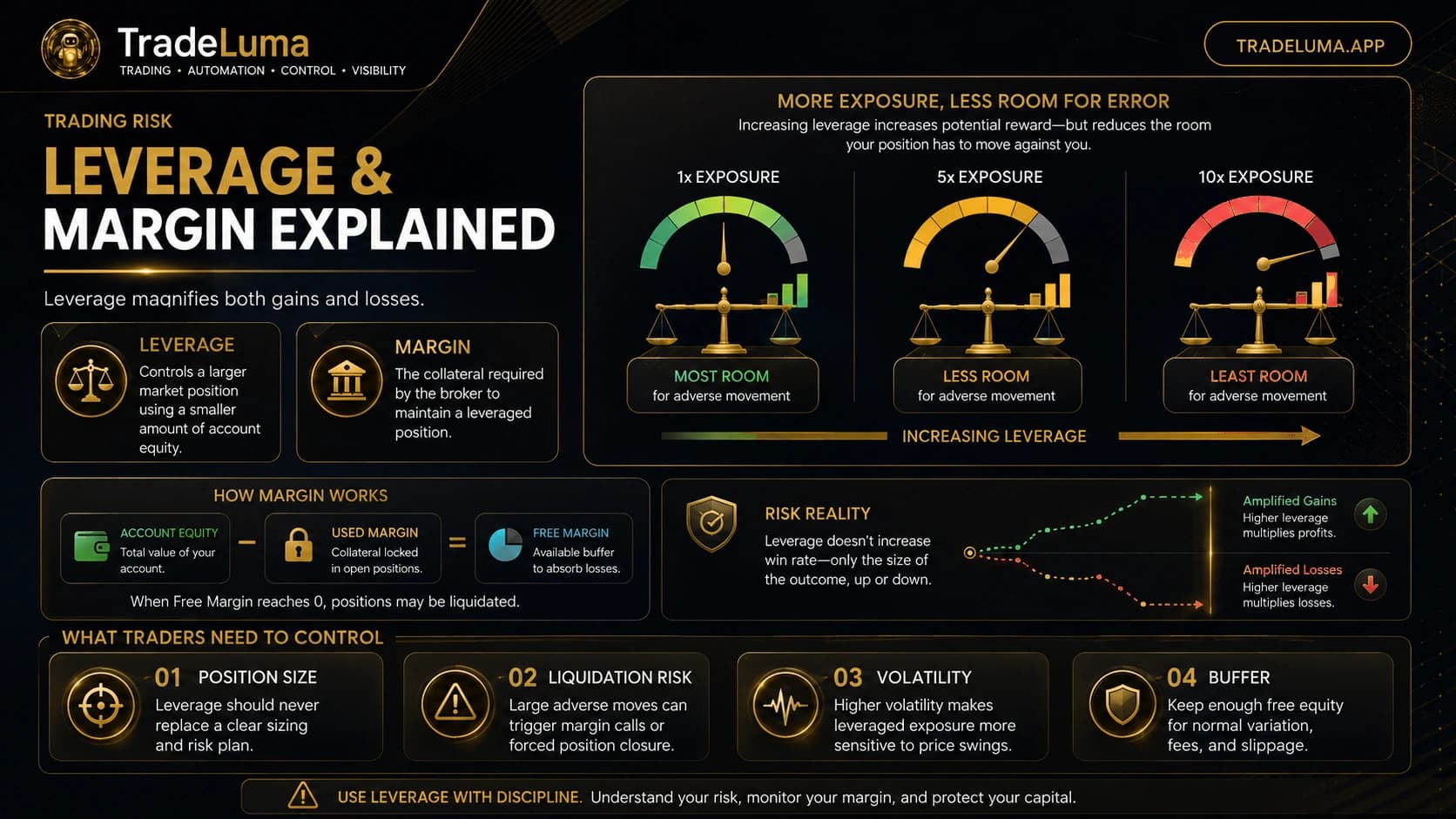
Leverage allows a trader to control market exposure that is larger than the cash committed to the position. Margin is the collateral a broker requires to support that leveraged exposure. Together they can make capital more efficient, but they also make mistakes more expensive: the same percentage move in the market can create a much larger percentage change in the trader's equity. Understanding leverage is therefore a risk-management topic before it is an opportunity topic.
What leverage means in trading
Leverage describes the relationship between the size of the market position and the trader's own capital supporting it. At 5-to-1 leverage, a trader may control exposure five times larger than the equity assigned to that position. Different products and brokers use different margin systems, so the available leverage is not identical across shares, futures, foreign exchange, or other markets.
Leverage does not make the market move more. It makes the account more sensitive to the market's movement. A one-percent change in the underlying position can have a much larger effect on the capital supporting that position when leverage is high.
What margin means
Margin is the amount of collateral the broker requires to open or maintain a leveraged position. Initial margin is associated with establishing the position, while maintenance requirements relate to keeping it open. Exact terminology and calculations vary by broker and product.
A crucial distinction is that margin is not a stop loss and is not a guarantee of the maximum amount that can be lost. Market gaps, fast moves, fees, and forced liquidation can produce outcomes that differ from the margin amount shown when the trade was opened.
Why leverage magnifies gains and losses
Suppose two traders have exposure to the same market move but one uses much more leverage. Their underlying asset may move by the same percentage, but the leveraged trader has more exposure relative to account equity. The profit can therefore be larger when the move is favourable, and the loss can be larger when it is adverse.
This symmetry is important. Leverage is often marketed through the buying power it creates, but risk management should focus just as strongly on how quickly account equity can decline when the market moves the wrong way.
Margin calls and forced liquidation
If account equity falls too close to or below the broker's maintenance requirement, the trader may need to add funds or reduce exposure. Depending on the broker, product, and market conditions, positions may also be liquidated automatically to bring the account back within required limits.
Forced liquidation can occur at an unfavourable time and may not follow the trader's preferred exit plan. That is one reason experienced traders usually keep a buffer rather than operating at the maximum leverage the broker permits.
Leverage and position sizing are different decisions
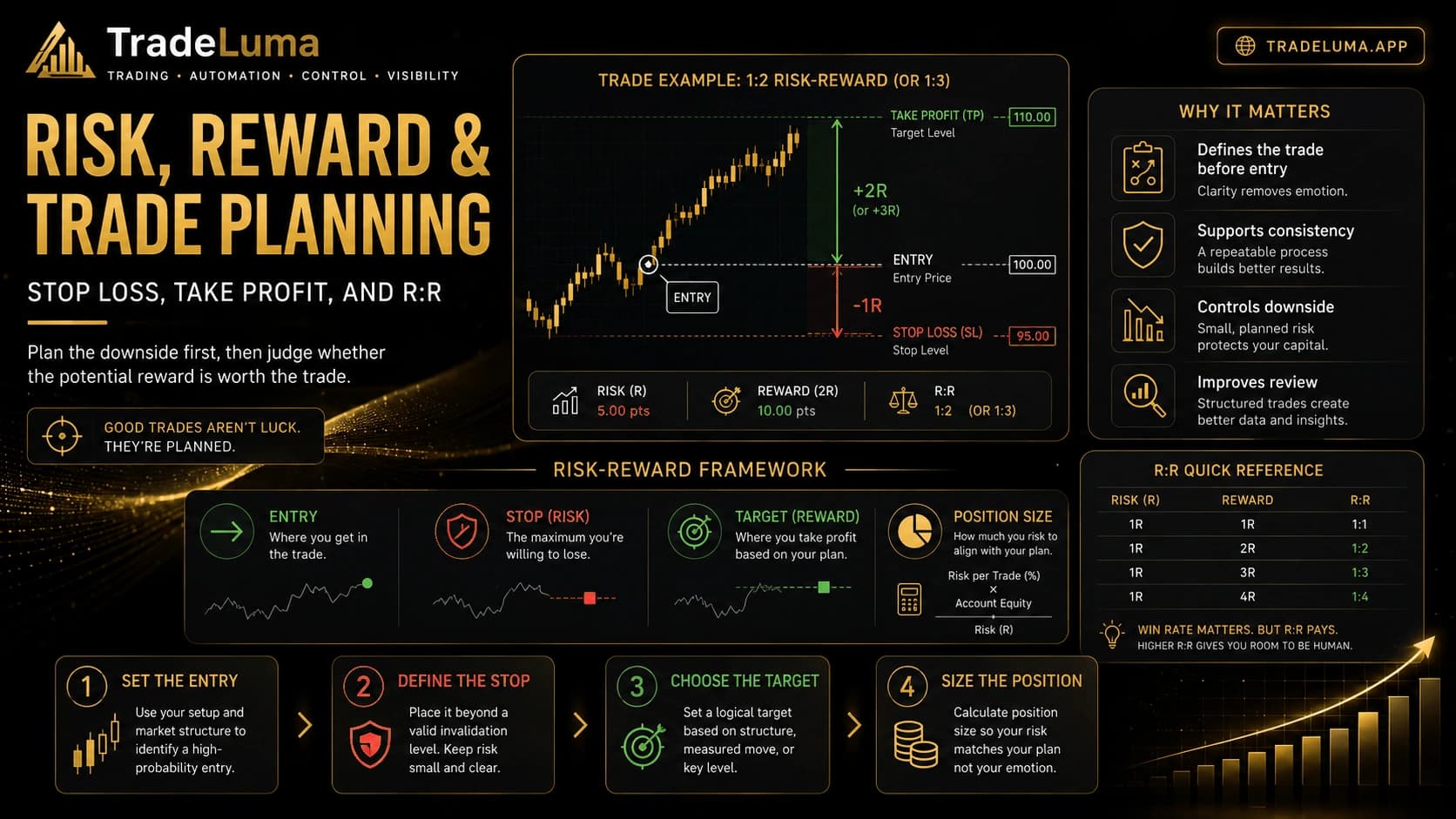
A broker may allow a large position, but that does not mean the position is appropriate for the trader's risk plan. Position sizing starts with the amount the trader is willing to lose if the trade is wrong and the distance between entry and invalidation. Leverage only determines how much exposure can be controlled with the available equity.
Separating those ideas prevents a common error: sizing a trade based on available buying power instead of acceptable risk. The maximum permitted position and the sensible position are often very different numbers.
Why volatility matters more when leverage is high
Highly volatile instruments can move through a large percentage range quickly. With leverage, normal market noise can become a significant change in account equity. Stops may also experience slippage in fast conditions, so planning only around an ideal fill can underestimate real risk.
Traders can respond by using smaller position sizes, wider free-equity buffers, realistic stops, and instrument-specific limits. Volatility should influence exposure rather than being treated as an afterthought.
Common leverage mistakes
Common mistakes include using the maximum buying power simply because it is available, treating margin as the amount at risk, adding to losing positions without a defined plan, and ignoring correlated exposure across several trades. Multiple small leveraged positions can create one large portfolio-level risk if they all move together.
Another mistake is forgetting that margin requirements can change. Brokers may adjust requirements around volatility, contract expiry, concentrated positions, or changing market conditions. Traders should understand the broker's rules rather than assume yesterday's requirement will always remain the same.
A safer framework for leveraged trading
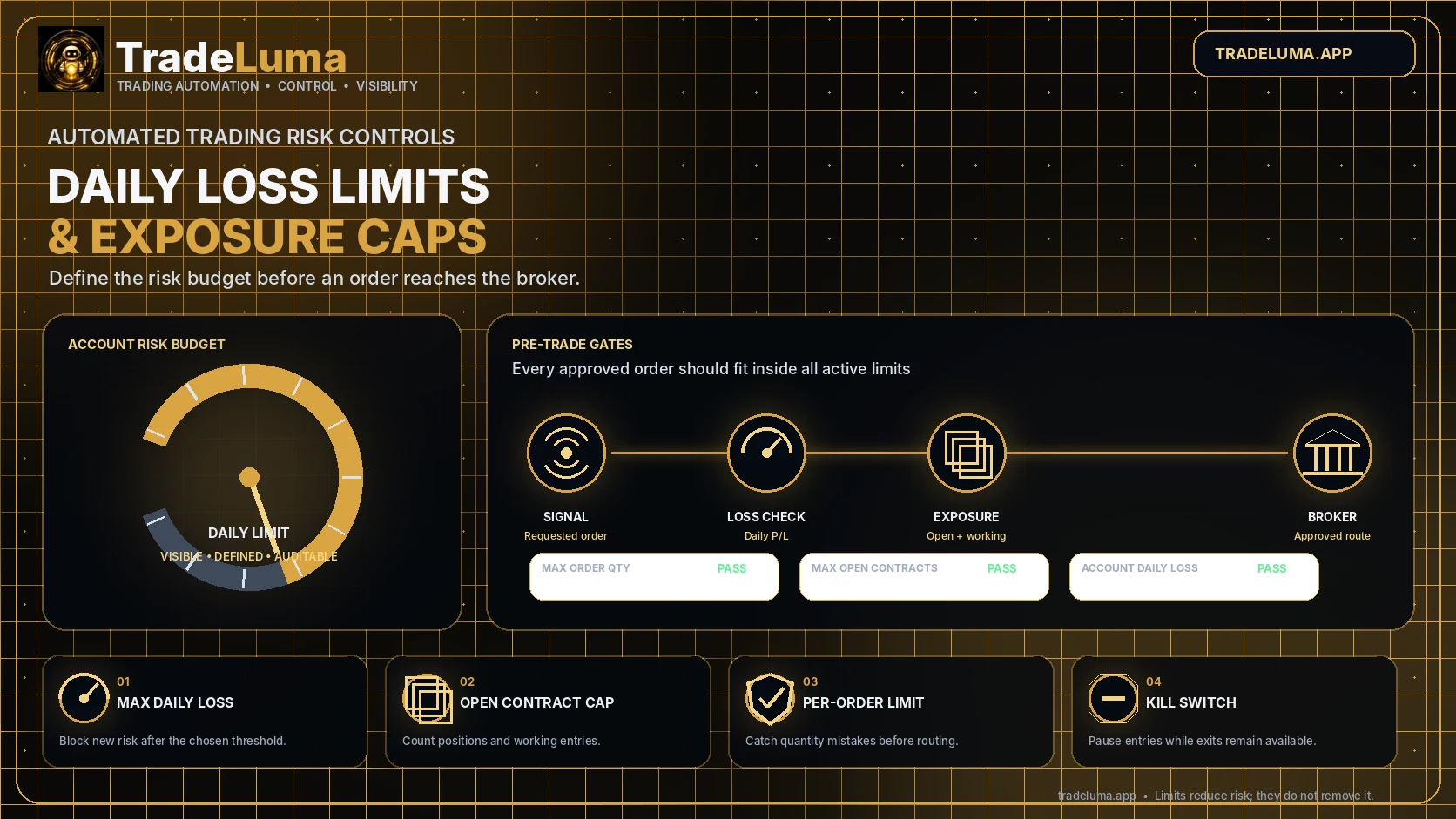
A disciplined leverage framework starts with risk per trade and total account exposure, then checks the broker's margin requirements. It keeps free equity available, defines loss boundaries in advance, and monitors positions continuously when markets are open. Automation can enforce exposure caps, but the trader still chooses the limits.
Leverage can be useful when it is treated as a tool rather than a target. The objective is not to maximise the position the broker will permit; it is to take only the exposure that fits the strategy, volatility, and account risk budget.
Frequently asked questions
What is leverage in trading?
Leverage allows a trader to control market exposure larger than the amount of equity directly supporting the position. It magnifies both gains and losses relative to that equity.
What is margin in trading?
Margin is collateral required by a broker to open or maintain a leveraged position. It is not the same as the maximum possible loss on the trade.
Is more leverage always better?
No. Higher leverage increases sensitivity to adverse price moves and reduces the buffer available for normal volatility, fees, slippage, and changing margin requirements.
Can a broker close a leveraged position automatically?
Depending on the broker and product, positions can be reduced or liquidated if account equity falls below required margin thresholds. Traders should understand the specific broker rules before using leverage.
Continue learning
Related TradeLuma guides
Build a controlled automation workflow with TradeLuma
Configure alerts, test in paper mode, apply execution controls, and follow broker outcomes from one workspace.