
Risk Management
Risk reward ratio in trading: how to judge whether a setup is worth taking
Understand risk reward ratio, how to calculate it, and why trade quality depends on both payoff structure and actual execution discipline.
On this page+
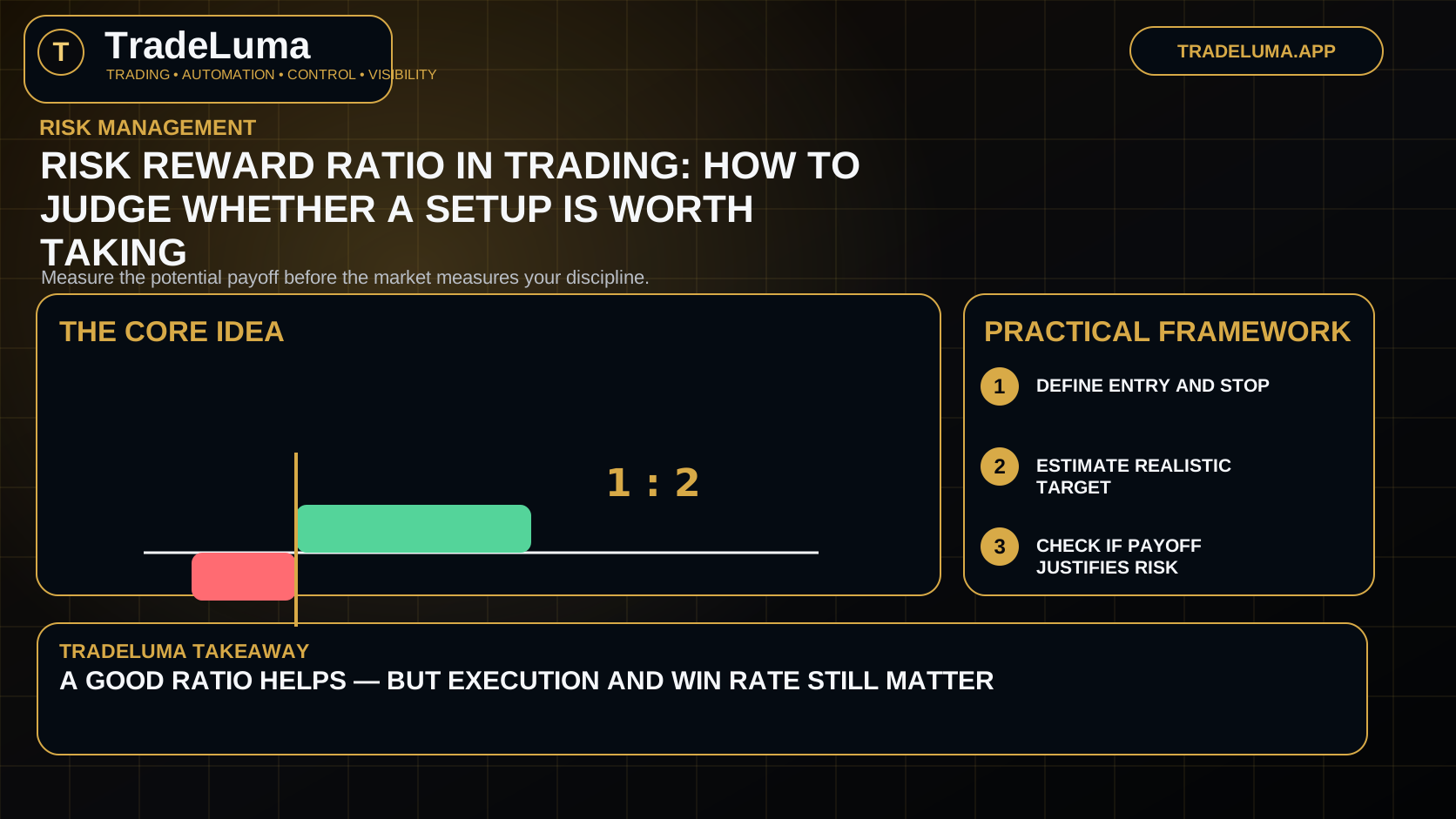
Understand risk reward ratio, how to calculate it, and why trade quality depends on both payoff structure and actual execution discipline. Measure the potential payoff before the market measures your discipline.
What risk reward ratio means
Risk reward ratio compares how much a trader is prepared to lose if a setup fails with how much the trader expects to make if the trade reaches its target.
For example, risking 10 points to make 20 points represents a 1:2 setup. The number is useful only when both the stop and target make sense in the actual market structure.
Why the ratio matters
A trader does not need an extremely high win rate if the average win is meaningfully larger than the average loss. That is why risk reward is closely linked to expectancy.
The ratio also discourages impulsive entries because it forces the trader to check whether enough room exists before the next support, resistance, or liquidity barrier.
How to calculate it correctly
Start with a clear entry, a logical invalidation point, and a target based on structure rather than hope. Then compare the entry-to-stop distance with the entry-to-target distance.
Include spread, slippage, and commissions where they matter, especially for short-term strategies where transaction costs can materially change the effective payoff.
High ratios are not automatically better
A 1:4 target sounds attractive, but if the target is rarely reached the setup may still have poor expectancy. Good trading joins payoff structure with realistic probability.
Likewise, forcing a distant target in a quiet or range-bound market can turn a sensible setup into a low-probability guess.
Using risk reward in a trading plan
Many traders set a minimum acceptable ratio and then size the position so the cash risk remains consistent across trades.
Risk reward works best as one filter among several, alongside setup quality, volatility, execution conditions, and the trader’s own historical statistics.
Frequently asked questions
What is a good risk reward ratio in trading?+
There is no universal answer, but many traders prefer setups where the potential reward is meaningfully larger than the defined risk.
Can a lower risk reward ratio still work?+
Yes. Some strategies can work with smaller payoff ratios if they have a sufficiently high win rate and strong cost control.
Why is risk reward not enough on its own?+
Because trade quality also depends on probability, execution, and whether the stop and target are logically placed.
Put it into practice
Use the risk maths next to the guide.
Open TradeLuma's free position-size, risk/reward, expectancy, and drawdown tools to test the numbers behind a risk-management decision.
Open free trading calculators →Continue learning
Related guides.
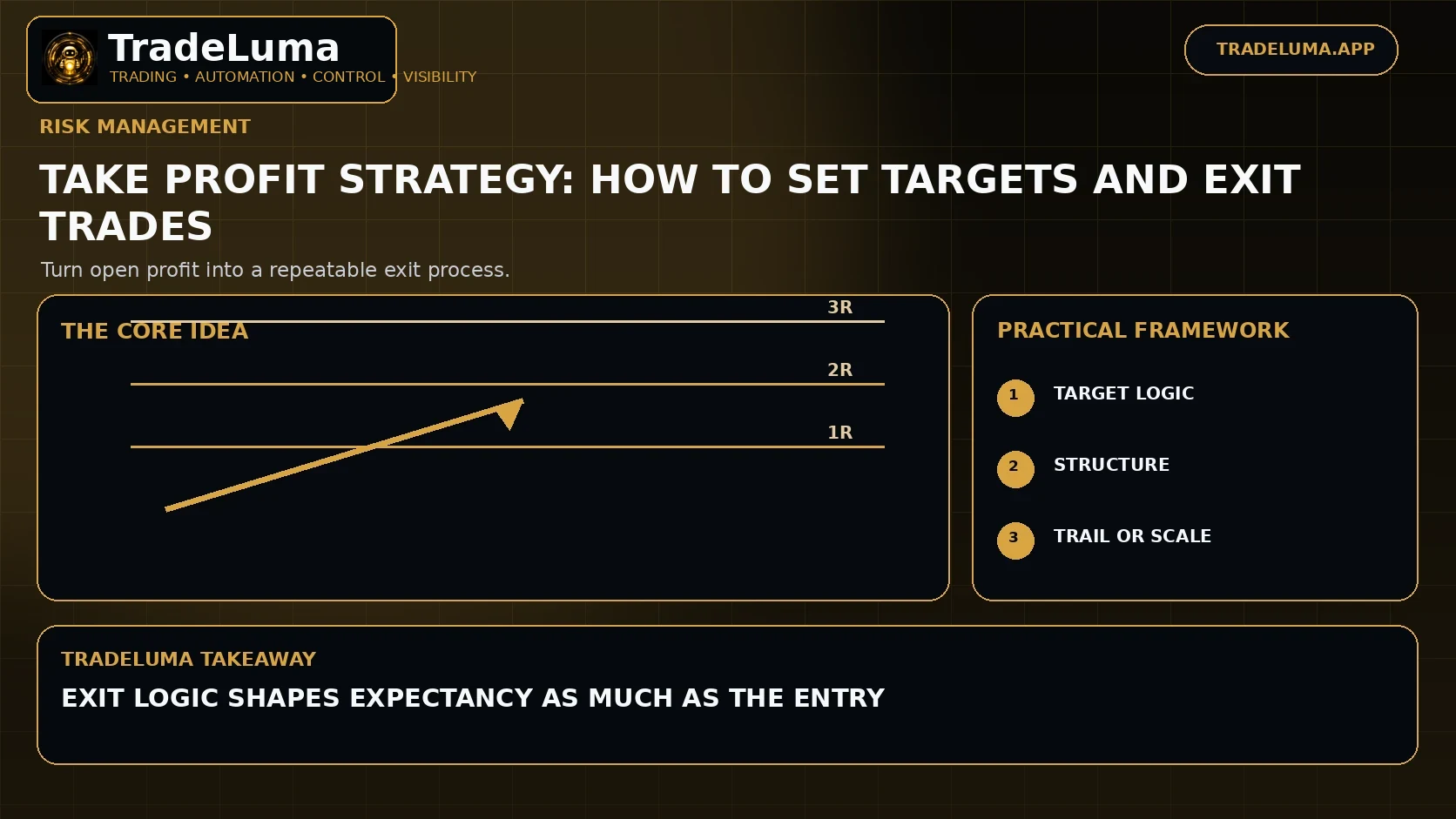
Take Profit Strategy: How to Set Targets and Exit Trades
Learn how traders set take-profit targets using reward-to-risk, market structure, volatility, trailing exits, and partial profit-taking.
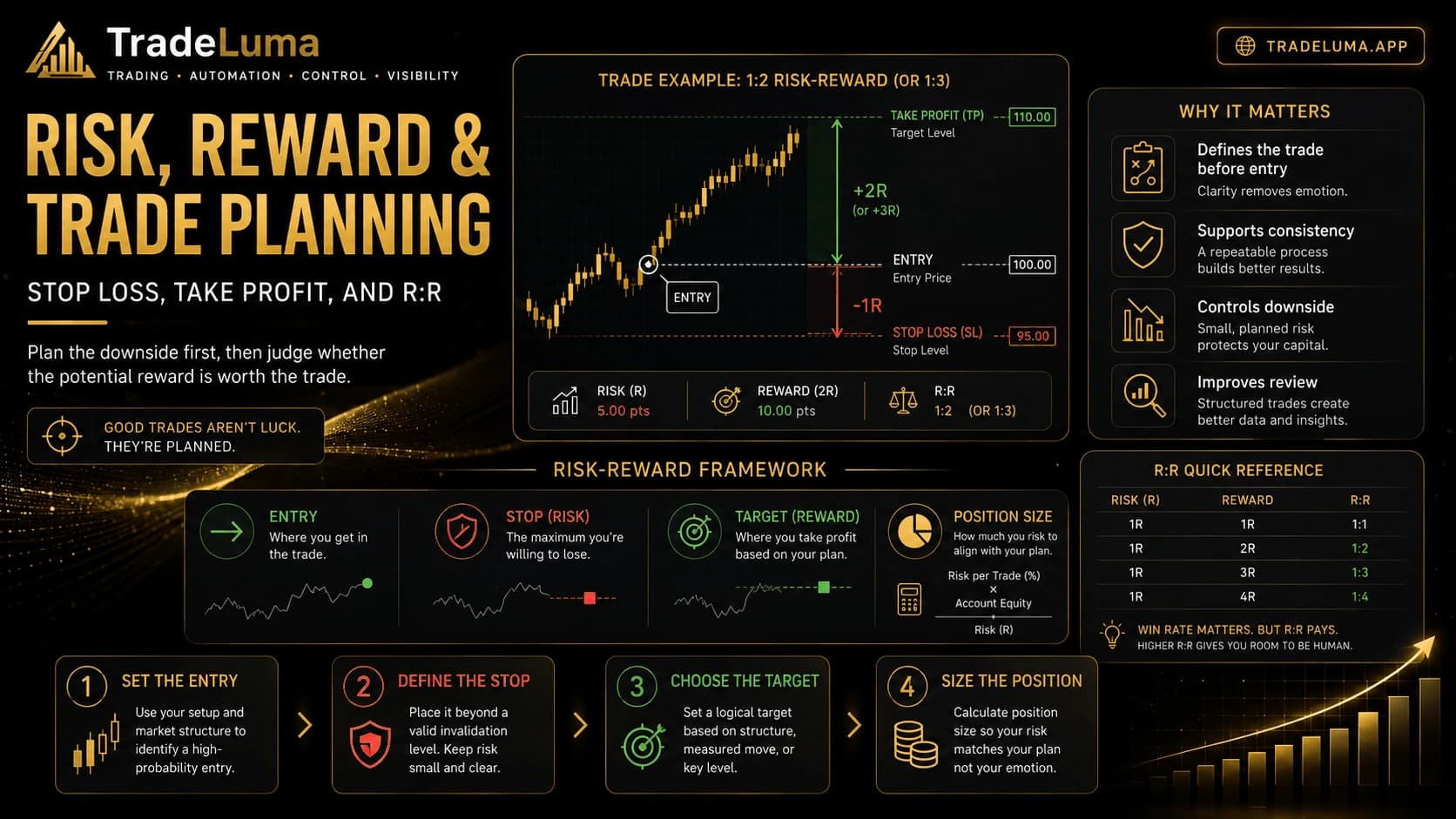
Risk-reward ratio, stop loss, and take profit explained
Learn how risk-reward ratio works, how traders use stop losses and take-profit targets, and why trade planning can improve consistency and review.
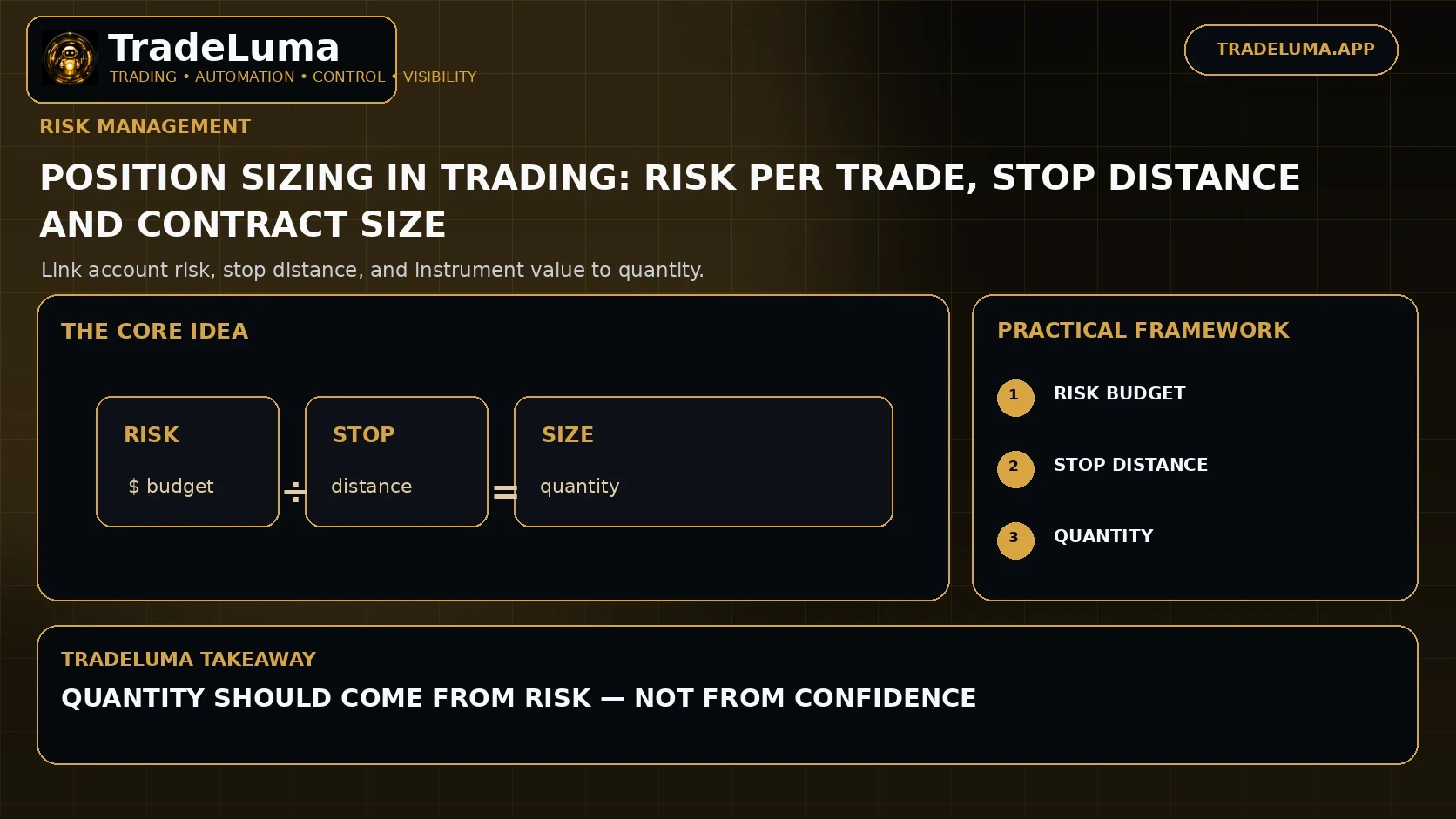
Position Sizing in Trading: Risk Per Trade, Stop Distance and Contract Size
Learn how position sizing links account risk, stop distance, point value, leverage, and contract or share quantity into one repeatable risk process.