
Trading Psychology
Revenge trading: what it is, why it happens, and how traders stop it
A practical look at revenge trading, why it appears after losses, and the habits traders use to interrupt the cycle before it damages capital and discipline.
On this page+
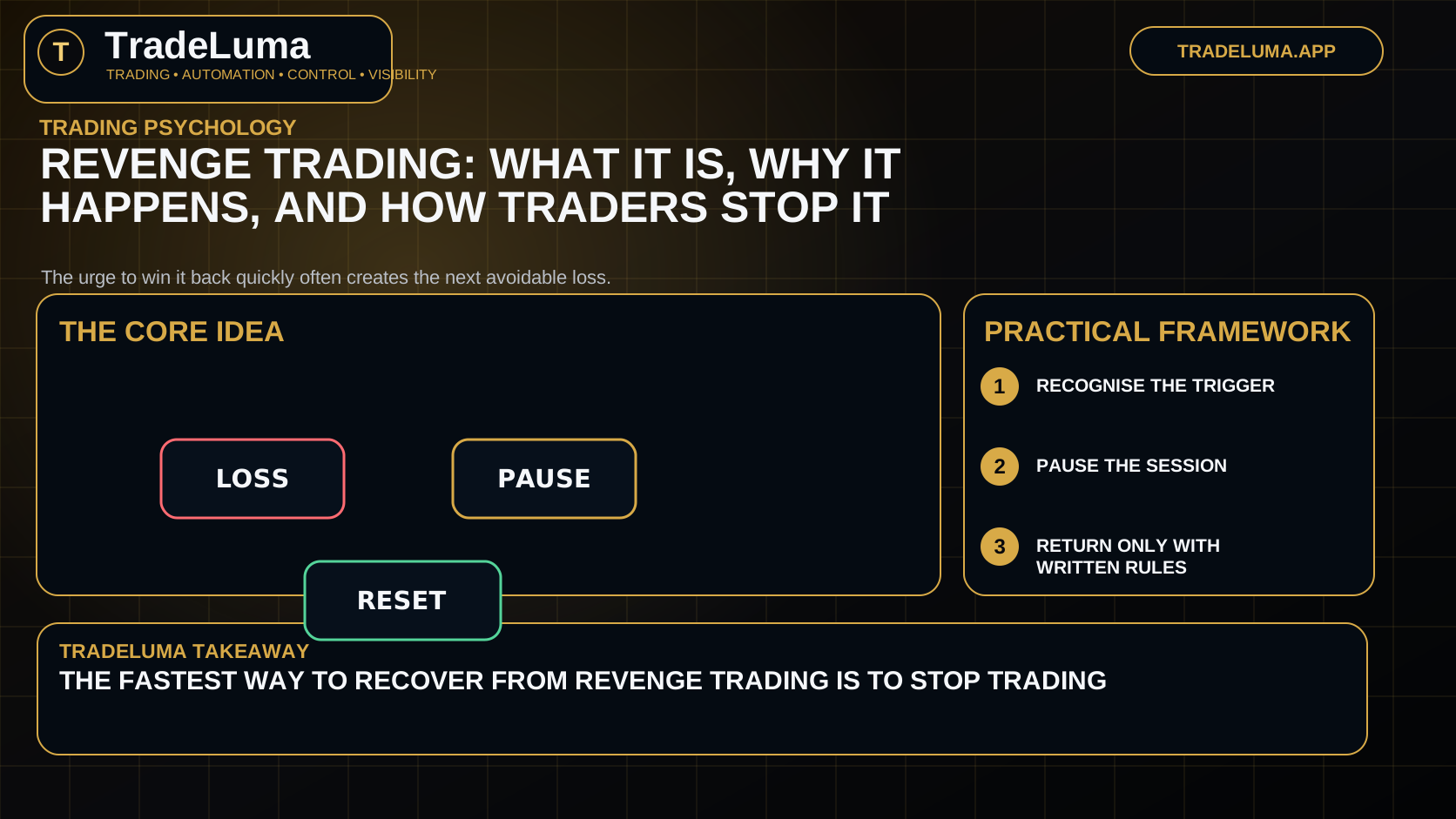
A practical look at revenge trading, why it appears after losses, and the habits traders use to interrupt the cycle before it damages capital and discipline. The urge to win it back quickly often creates the next avoidable loss.
What revenge trading is
Revenge trading is the impulse to recover losses quickly by taking trades outside the normal plan or by increasing size emotionally.
It often follows frustration, embarrassment, or the feeling that the market owes the trader a reversal.
Why it happens
Losses naturally create emotional discomfort. Without a process for handling that discomfort, a trader may look for immediate relief rather than objective decisions.
The problem is rarely only the loss itself. It is the combination of stress, urgency, and broken discipline.
How revenge trading shows up
Warning signs include chasing entries, skipping confirmations, increasing size after a loss, or taking setups that would normally be ignored.
The trader may feel unusually certain and unusually desperate at the same time.
How to interrupt the cycle
The most effective response is often a hard pause: step away, flatten risk if appropriate, and stop trying to repair the result immediately.
Daily loss limits, session stop rules, and a written reset routine can make the pause automatic rather than optional.
Building prevention habits
Prevention usually works better than cure. Good journaling, realistic expectations, and clear process metrics reduce the emotional weight of any single trade.
The aim is not to eliminate emotion completely, but to stop emotion from controlling execution.
Frequently asked questions
What is revenge trading?+
It is impulsive trading driven by the urge to recover losses quickly rather than follow a structured plan.
How do traders interrupt revenge trading?+
A common approach is to pause trading, step away from the screen, and return only when the normal rules are clear again.
Why is revenge trading dangerous?+
Because it often combines weaker trade selection with larger size and poorer discipline, increasing the chance of compounding losses.
Trading psychology
Continue with the topic hub.
Browse the related TradeLuma guides and build the topic from foundations through practical application.
Explore Trading psychology guides →Continue learning
Related guides.
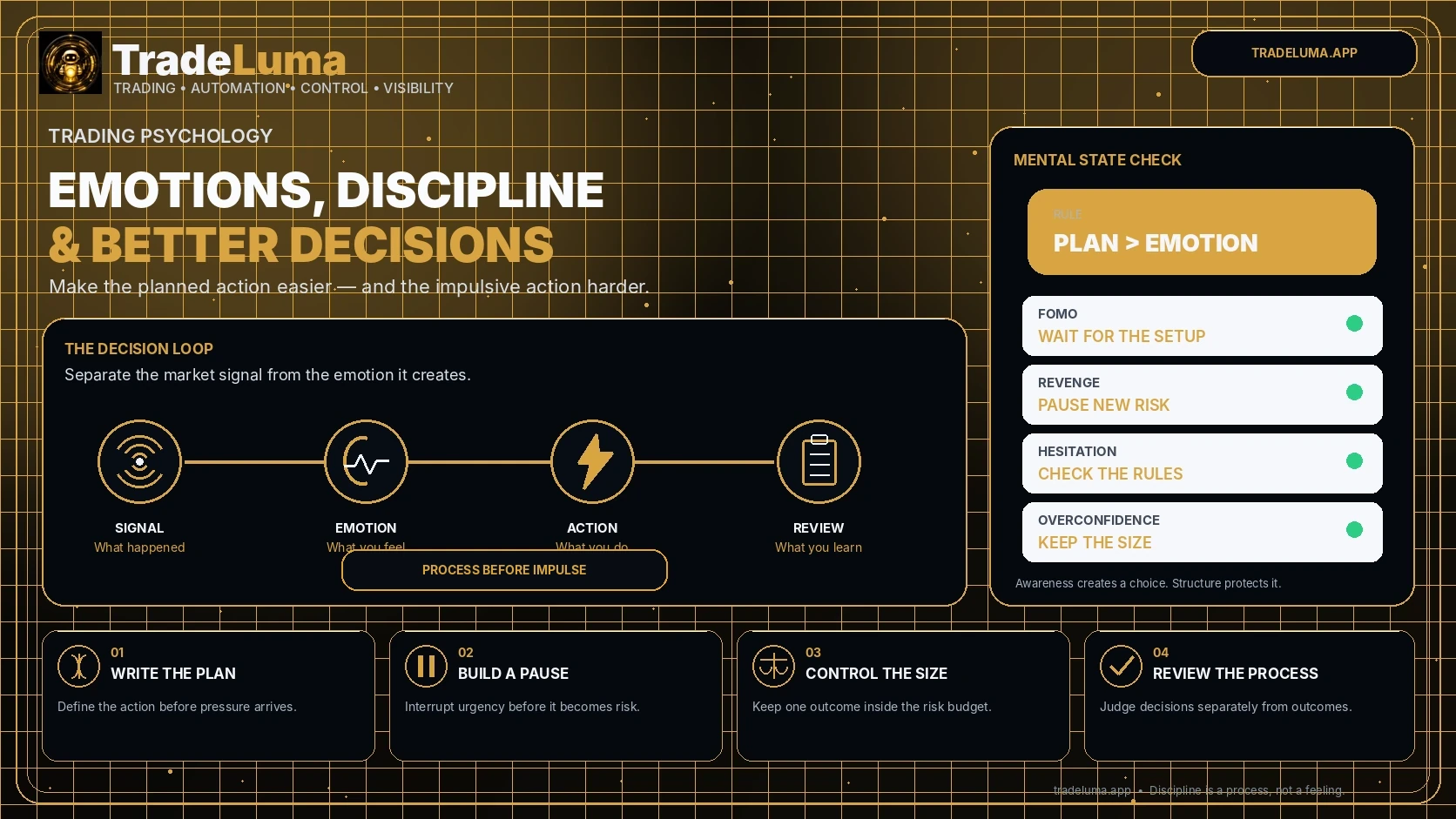
Trading psychology: emotions, discipline, and decisions
Learn how fear, greed, FOMO, revenge trading, overconfidence, and hesitation influence decisions—and how a repeatable process can reduce emotional mistakes.
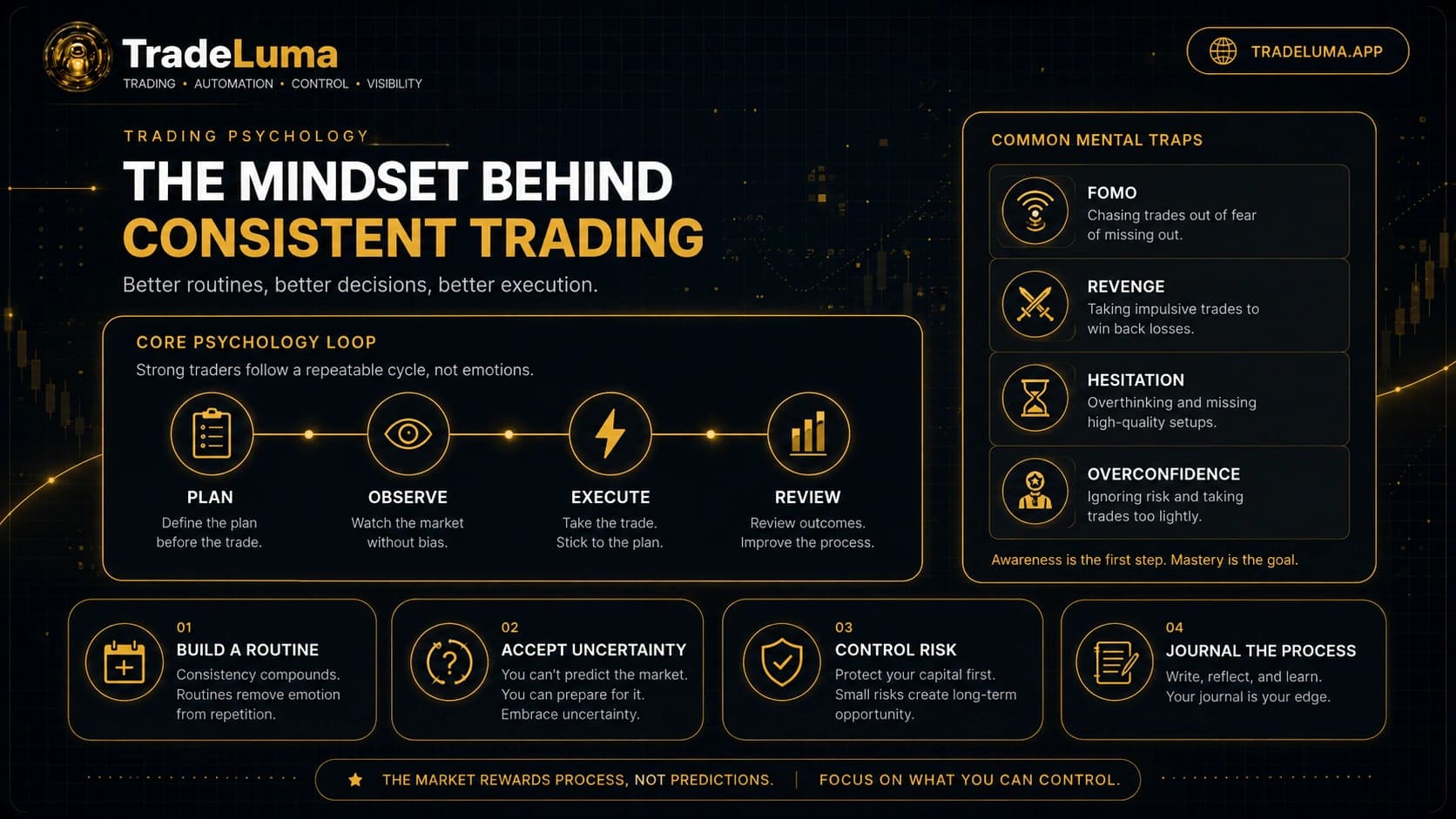
Trading psychology: habits, routines, and discipline
Discover how routines, self-awareness, and discipline improve trading psychology, reduce impulsive decisions, and support more consistent execution.
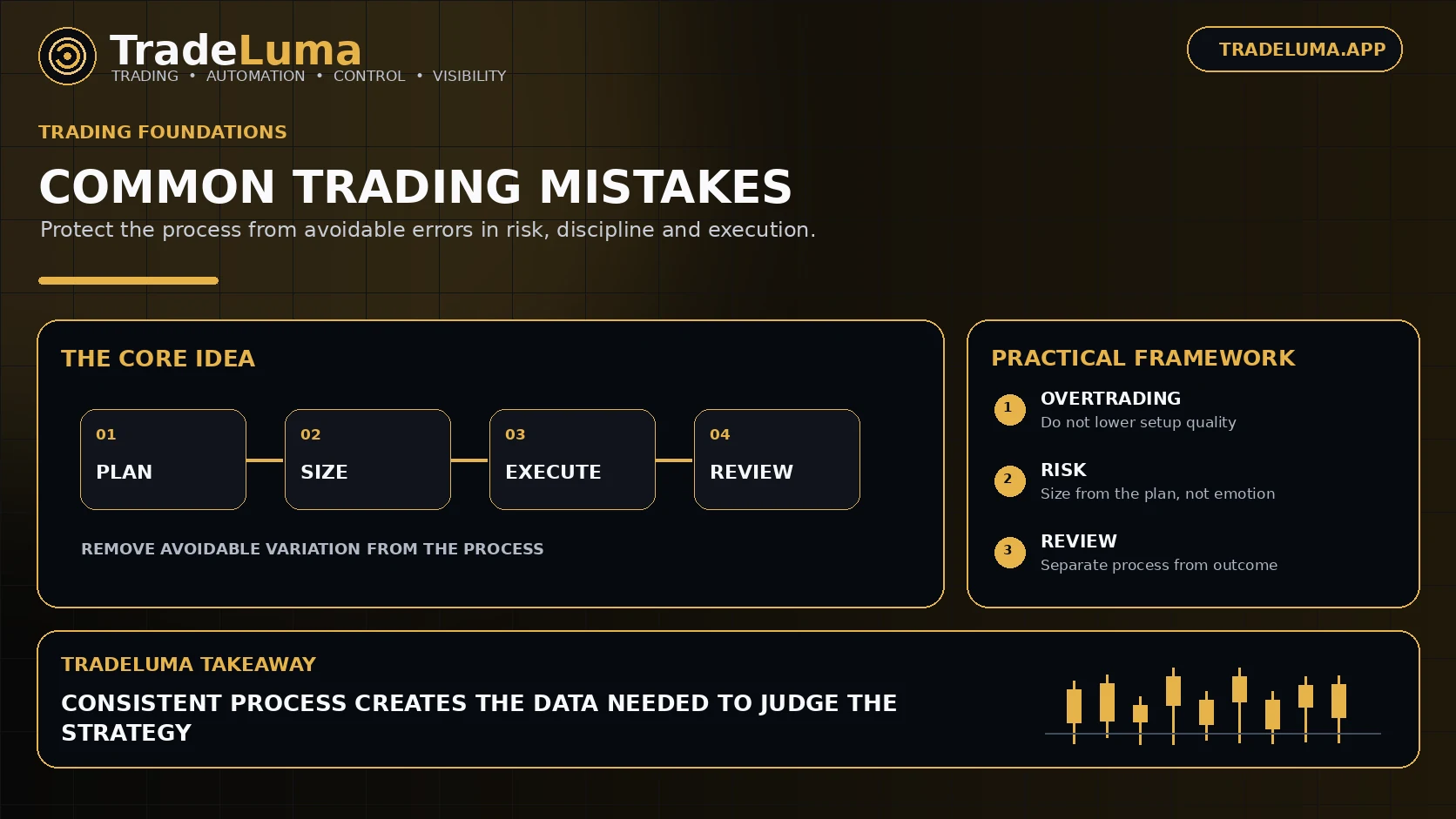
Common Trading Mistakes to Avoid: Risk, Discipline and Execution
Review common trading mistakes including overtrading, revenge trading, oversized positions, moving stops, strategy hopping, poor testing, and ignoring costs.