
Psychology
Trading psychology: emotions, discipline, and decisions
Learn how fear, greed, FOMO, revenge trading, overconfidence, and hesitation influence decisions—and how a repeatable process can reduce emotional mistakes.
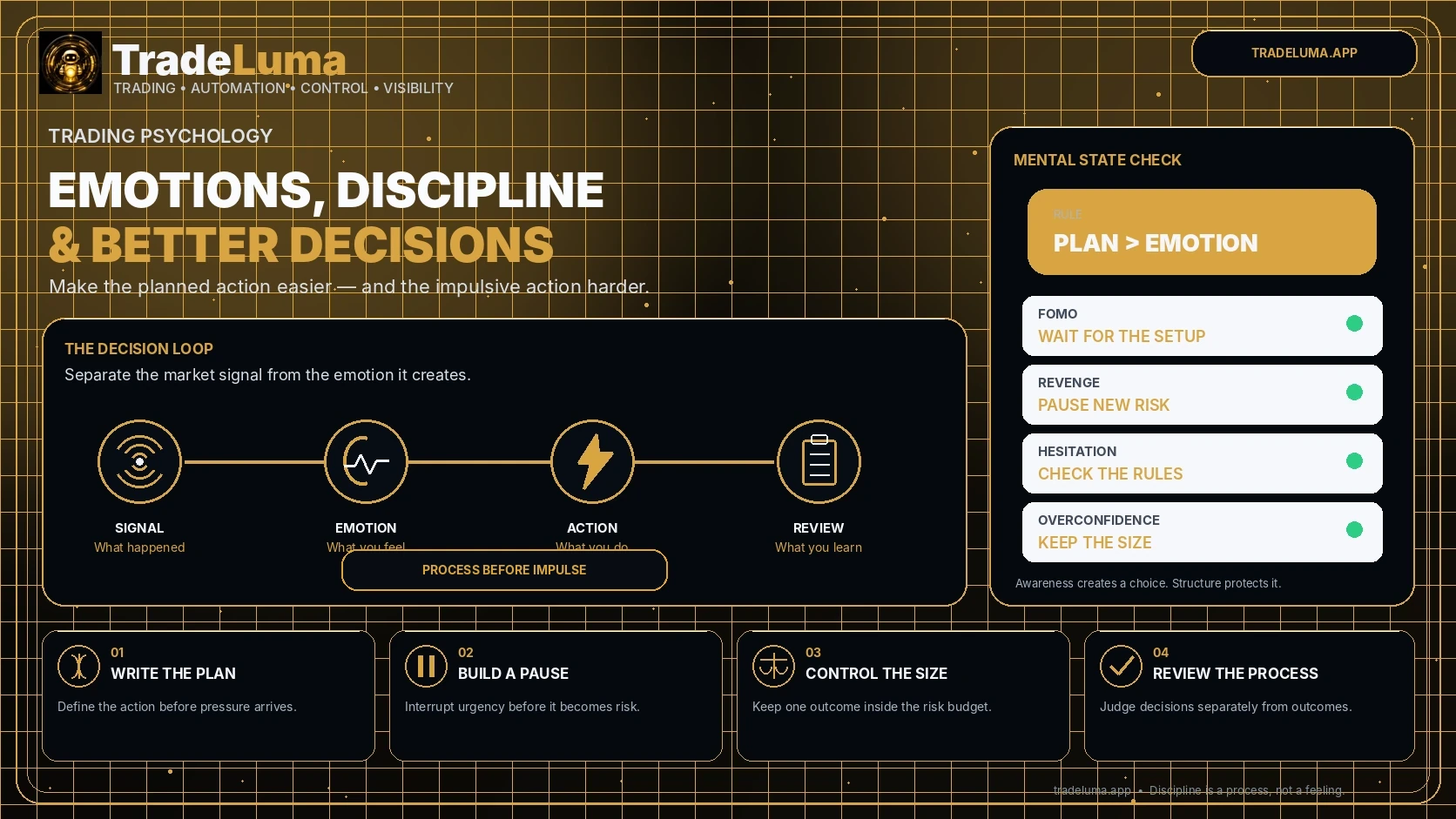
Trading psychology is the study of how emotions, habits, expectations, and cognitive biases affect decisions under uncertainty. A trader may understand a strategy perfectly and still abandon it when money, speed, and ambiguity enter the picture. The goal is not to remove emotion—an impossible standard—but to design a process that prevents temporary feelings from quietly rewriting the trading plan.
Why trading creates unusually strong emotional pressure
Markets combine uncertain outcomes, incomplete information, rapid feedback, and real financial consequences. That combination encourages the brain to search for certainty even when none is available. A winning trade can feel like proof of skill, while a losing trade can feel personal, even when both outcomes were possible within the same valid strategy.
The pressure becomes stronger when the trader watches every price movement, increases size after a win, or tries to recover a loss immediately. Emotional intensity narrows attention. Instead of evaluating the complete setup, the trader may focus on one candle, one headline, or the amount of money currently gained or lost.
Recognise the common emotional trading patterns
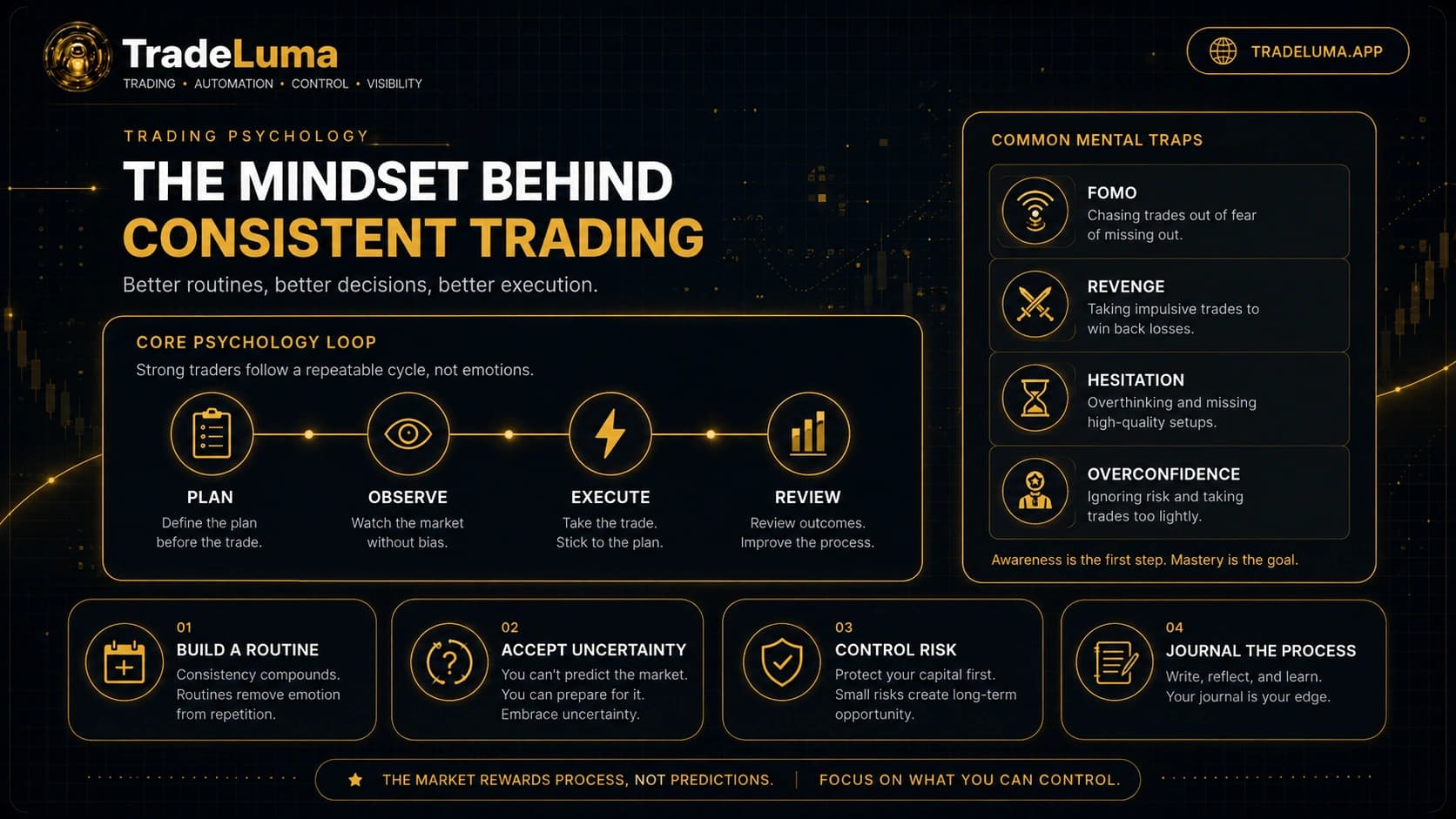
Fear can cause a trader to skip valid setups, close too early, or reduce size inconsistently. Greed can encourage oversized positions, delayed exits, or repeated entries after the original opportunity has passed. FOMO often appears when price has already moved and the trader feels that doing nothing is more painful than accepting poor entry conditions.
Revenge trading is the attempt to erase a recent loss through an immediate new trade. Overconfidence can follow a winning streak and weaken respect for risk limits. Hesitation can appear after several losses, even when the next setup meets the plan. These patterns differ, but each replaces a tested rule with a short-term emotional objective.
Separate a good decision from a profitable outcome
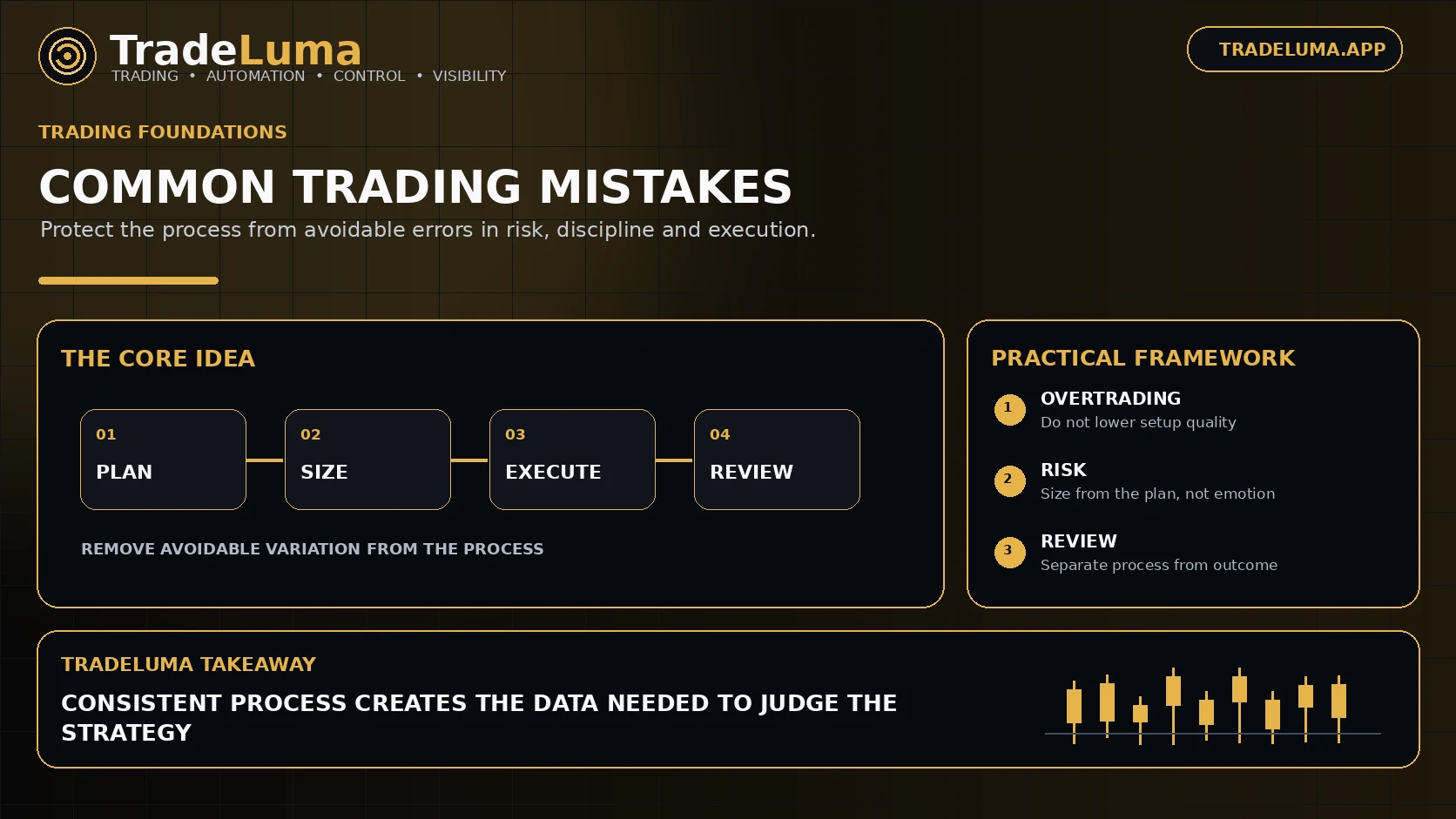
A profitable trade can come from poor process, and a well-executed trade can lose. Judging every decision only by its immediate result teaches the wrong lesson. The more useful questions are whether the setup met its criteria, the size stayed within the risk plan, the order was entered as intended, and the exit followed the defined logic.
This distinction protects the trader from outcome bias. Without it, lucky rule-breaking is rewarded and disciplined losses are treated as failures. Over time, the trader may optimise for emotional relief rather than repeatable decision quality.
Use a written plan to reduce decisions made under stress
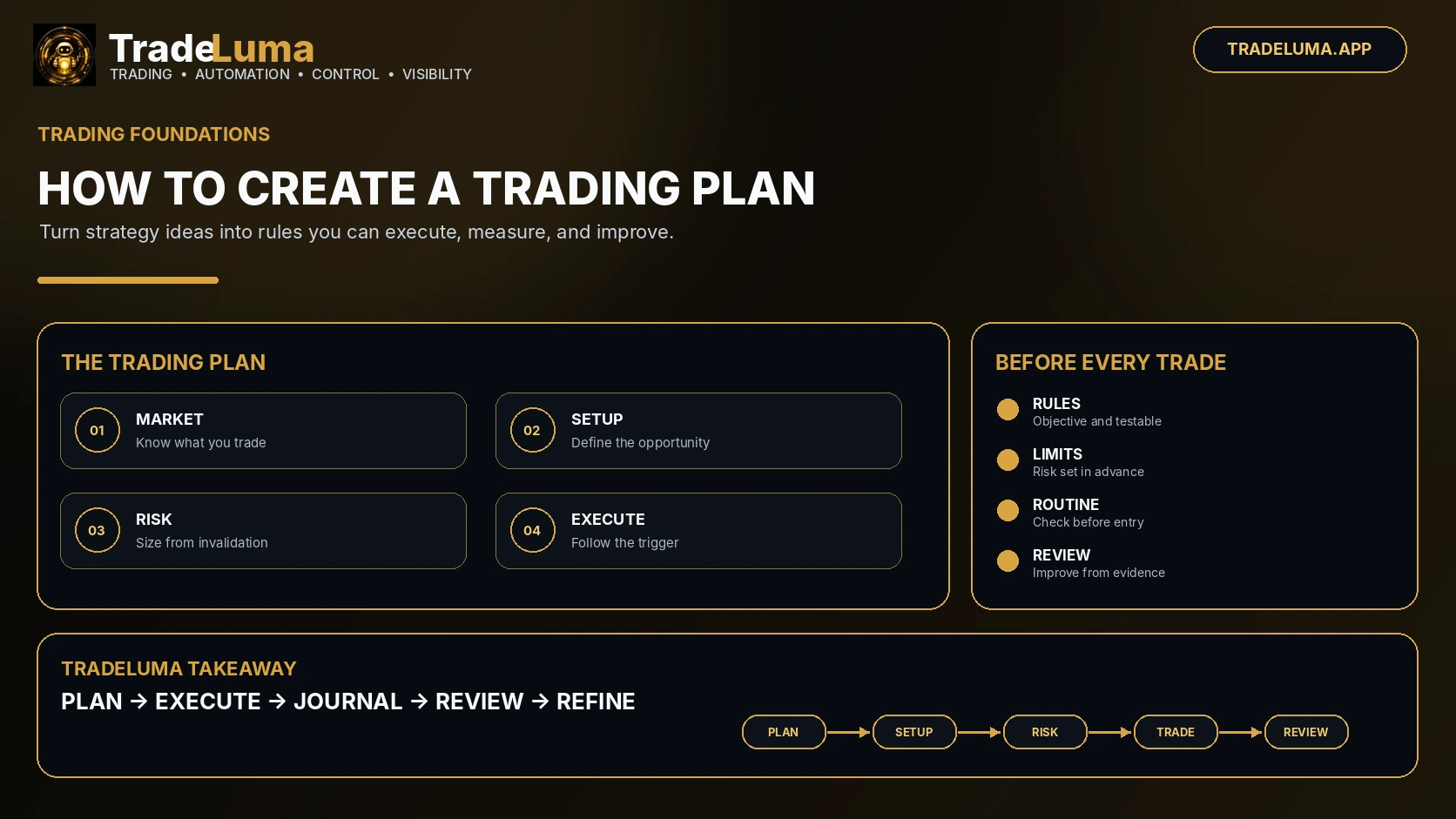
A trading plan should define the market, setup, direction, entry condition, invalidation point, size, maximum exposure, session limits, and conditions that require no trade. The plan does not need to predict every market event. Its value is that important decisions are made before the trader is emotionally committed to a position.
Checklists are especially useful for recurring mistakes. A short pre-trade check can confirm that the signal is valid, the order type is appropriate, risk is within limits, no conflicting position exists, and the trade is not an attempt to recover a previous loss. If the checklist feels inconvenient, that may be exactly when it is most valuable.
Build pauses and boundaries into the workflow
A deliberate pause between signal and action can interrupt impulsive behaviour. The pause may be a timer, a checklist, a requirement to record the reason for entry, or a rule that prevents new trades after a daily loss threshold. The objective is not to delay every valid order; it is to stop emotional urgency from pretending to be market urgency.
Boundaries also reduce decision fatigue. Maximum position size, maximum open exposure, a defined number of attempts, and a session stop time remove repeated negotiations with oneself. A boundary is most effective when it is established in advance and difficult to change during the trading session.
Journal the process, not just the result
A useful journal captures the setup, planned risk, actual execution, rule deviations, market context, and emotional state before and after the trade. Simple labels such as calm, rushed, fearful, frustrated, or overconfident can reveal patterns that profit-and-loss summaries hide.
Review should look for recurring process failures: entering late after watching a move, widening a stop, increasing size after a loss, cancelling a valid order from fear, or taking several correlated trades at once. The purpose is not self-criticism. It is to identify which parts of the workflow need stronger structure.
Know what automation can and cannot fix
Automation can enforce pre-defined entries, exits, position limits, duplicate protection, and trading pauses without becoming tired, fearful, or excited. This can reduce the gap between the trader's tested plan and actual execution. It is especially useful when the main psychological problem is inconsistency in following clear rules.
Automation cannot turn an untested idea into a sound strategy, choose an appropriate risk level, or guarantee that the trader will not interfere manually. Poor rules can be executed consistently too. Psychology remains relevant because the trader still decides what to automate, when to change it, and whether to respect the controls during drawdowns.
Aim for consistency rather than emotional perfection
Experienced traders still feel fear, excitement, frustration, and doubt. Progress is better measured by whether those feelings cause fewer unplanned actions. A consistent process makes the decision trail visible and gives the trader something objective to review after the market closes.
The practical goal is simple: make the planned action easier and the impulsive action harder. Written rules, sensible sizing, pre-trade checks, enforced limits, journaling, and selective automation can work together to create that environment.
Frequently asked questions
What is trading psychology?
Trading psychology describes how emotions, habits, expectations, and cognitive biases influence trading decisions, particularly when outcomes are uncertain and money is at risk.
How can a trader reduce FOMO?
Use objective entry criteria, define when a move is already too extended, accept that missed trades are normal, and avoid creating a new rule simply because price is moving quickly.
What is revenge trading?
Revenge trading is taking an unplanned or oversized trade mainly to recover a recent loss. A cooling-off period and session loss boundary can help interrupt that pattern.
Can automated trading remove emotion completely?
No. Automation can reduce emotion during rule-based execution, but people still design the strategy, set risk, change settings, and decide whether to intervene. Governance and review remain essential.
Continue learning
Related TradeLuma guides
Build a controlled automation workflow with TradeLuma
Configure alerts, test in paper mode, apply execution controls, and follow broker outcomes from one workspace.