
Process
Trading plan guide: how to build rules you can actually follow
Learn what to include in a trading plan, why written rules matter, and how to turn ideas into a process that is easier to execute consistently.
On this page+

Learn what to include in a trading plan, why written rules matter, and how to turn ideas into a process that is easier to execute consistently. A plan turns scattered ideas into a process you can review, measure, and improve.
Why a trading plan matters
A trading plan gives structure to decision-making before money is at risk. It reduces the chance that mood, fear, or excitement rewrites the rules mid-session.
Without a written plan, many traders are not really trading a method; they are improvising one decision at a time.
What a plan should include
A practical plan usually covers market selection, timeframe, setup definitions, entry rules, stop placement, target logic, position sizing, and exposure limits.
It should also include operational rules such as when not to trade, how to handle important news, and what to do after a losing streak.
Keep the rules specific
Vague phrases such as strong trend or good setup are difficult to execute consistently. Better plans use definitions that can be recognised and reviewed later.
Clarity makes it easier to tell whether a trade followed the process or simply worked by chance.
Execution and discipline
A good plan is not the one with the most pages. It is the one the trader can actually follow when the market is moving and emotions are active.
That often means starting with a small number of setups and adding complexity only after consistency is demonstrated.
Review and revision
The plan should be reviewed through journaling and performance analysis. Revisions should come from evidence rather than one frustrating day.
A trading plan can evolve, but changing it impulsively defeats the purpose of having stable rules.
Frequently asked questions
What should a trading plan include?+
At minimum it should include setups, entries, exits, position sizing, and risk rules.
Do beginners need a trading plan?+
Yes. A written plan is especially valuable for beginners because it limits random decision-making.
How often should a trading plan be updated?+
It should be reviewed regularly, but changes should be based on evidence rather than a small sample of emotional trades.
Trading psychology
Continue with the topic hub.
Browse the related TradeLuma guides and build the topic from foundations through practical application.
Explore Trading psychology guides →Continue learning
Related guides.
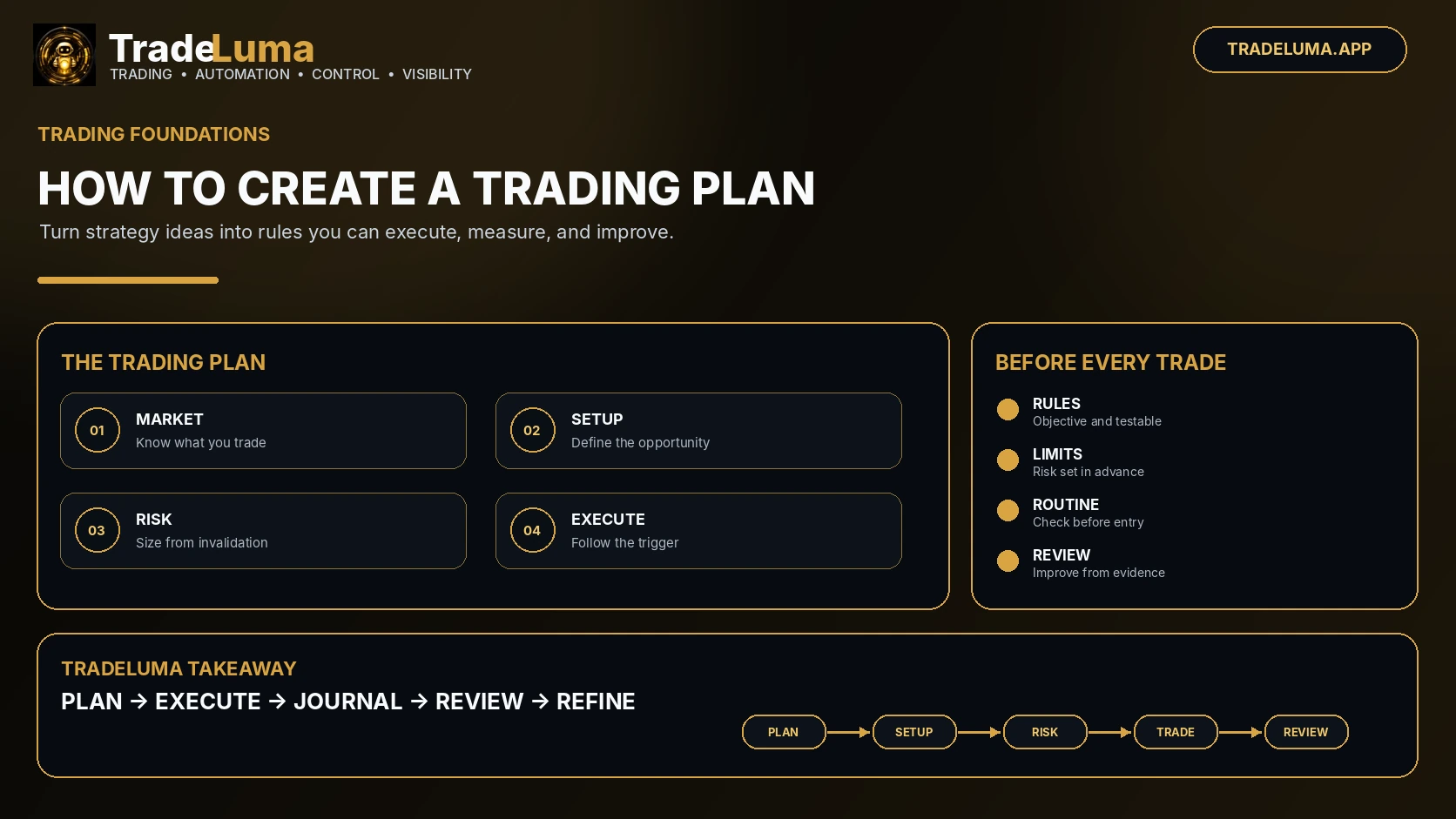
How to Create a Trading Plan: Rules, Risk and Process
Learn how to create a trading plan with clear setup rules, risk limits, entry and exit criteria, daily routines, review steps, and a repeatable process.

How to Backtest a Trading Strategy: A Practical Step-by-Step Guide
Learn how to backtest a trading strategy from written rules to clean data, realistic costs, out-of-sample checks, robustness testing, and final review.

Trading Journal Guide: What to Track and How to Improve
Learn what to record in a trading journal, which metrics to review, and how to turn setup, risk, execution, and trade history into better decisions.