
Futures Trading
How Much Does It Cost to Trade Micro Futures? The Hidden Cost of Every Trade
Calculate round-turn commissions, exchange and clearing costs, slippage, break-even ticks and allocated platform expenses without assuming a universal fee.
On this page+
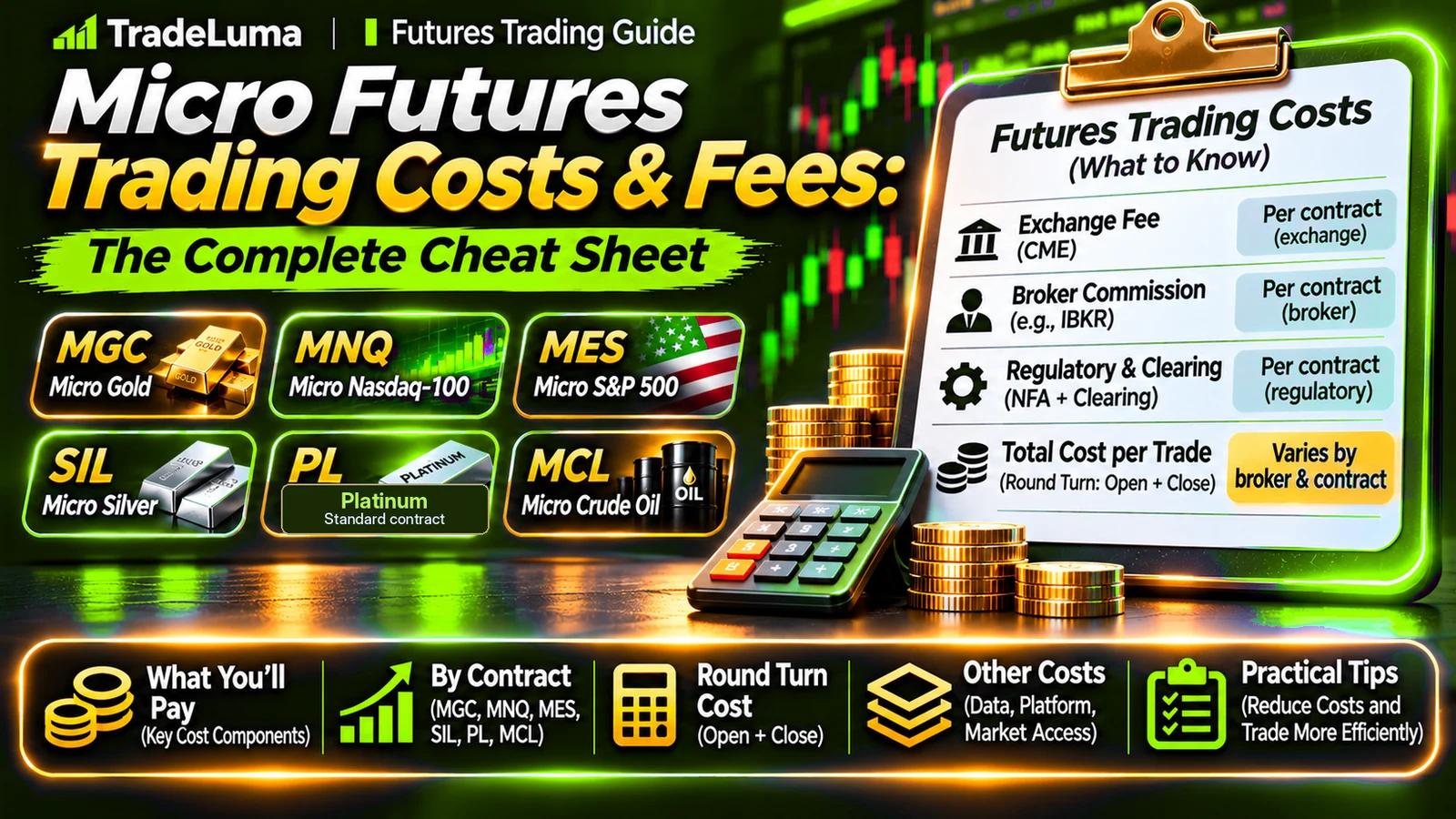
The cost of a micro futures trade is not just the advertised commission. It also includes applicable exchange, clearing and regulatory fees, and execution friction. Data subscriptions, platform costs and currency conversion may matter to the overall account. The correct estimate depends on the contract, broker, account and trading frequency. This is general education, not personalised investment advice; futures trading can result in losses exceeding deposits.
Per side versus round turn
A per-side commission applies when an order opens or closes a position. A round turn counts both entry and exit. Exchange and regulatory charges may be bundled or itemized, so compare like-for-like all-in charges instead of adding a bundled fee twice.
A broker's rate can differ by exchange, membership status, volume tier and contract. Use the current fee schedule and actual trade statements. The standard Platinum contract PL is a different product from micro contracts and must be priced separately.
A hypothetical MNQ break-even example
Assume an all-in fee of US$0.75 per side for one MNQ contract. This is invented for illustration, not a quote from IBKR or any other broker. The round-turn explicit fee would be US$1.50. If the combined execution friction is estimated at two ticks, at US$0.50 per tick that adds US$1.
The resulting estimated total is US$2.50, equivalent to five MNQ ticks or 1.25 index points. A larger move may be needed to make a net profit after other expenses. Do not add the full spread again if it has already been captured by the measured slippage.
Compare costs across contracts and frequencies
Use the futures tick value cheat sheet to translate the same dollar fee into different break-even tick counts. A small absolute fee can consume a larger fraction of a strategy's expected gross payoff when the trades target small price movements.
At a hypothetical US$2.50 total round-turn cost, 100 completed single-contract round turns cost US$250. An additional US$20 monthly data expense would make the example US$270 before other costs, if fully attributable to these trades. Actual execution costs vary.
Measure the real cost in your own account
Export fills and fee records and compare them with the intended order prices. Distinguish explicit charges from execution differences, missed orders, partial fills and recurring expenses. The broker's paper simulator is not evidence of live execution quality.
Use conservative costs in backtesting and test how sensitive net expectancy is to higher costs. An automated strategy can make a large number of small trades, so even a modest change in per-trade friction can materially change results.
Frequently asked questions
Is a broker commission the total cost?+
No. Exchange charges, other fees and execution friction can also apply.
What is a round turn?+
Opening and closing a position; per-side fees generally apply to both transactions.
What are my exact MNQ fees?+
Check the current broker schedule and account statements. There is no universal amount.
Futures workflows
Explore the strategy side of TradeLuma.
Browse TradeLuma's futures strategy catalogue and the chart, rollover, and reference methodology used for each published strategy.
Explore futures strategies →Continue learning
Related guides.
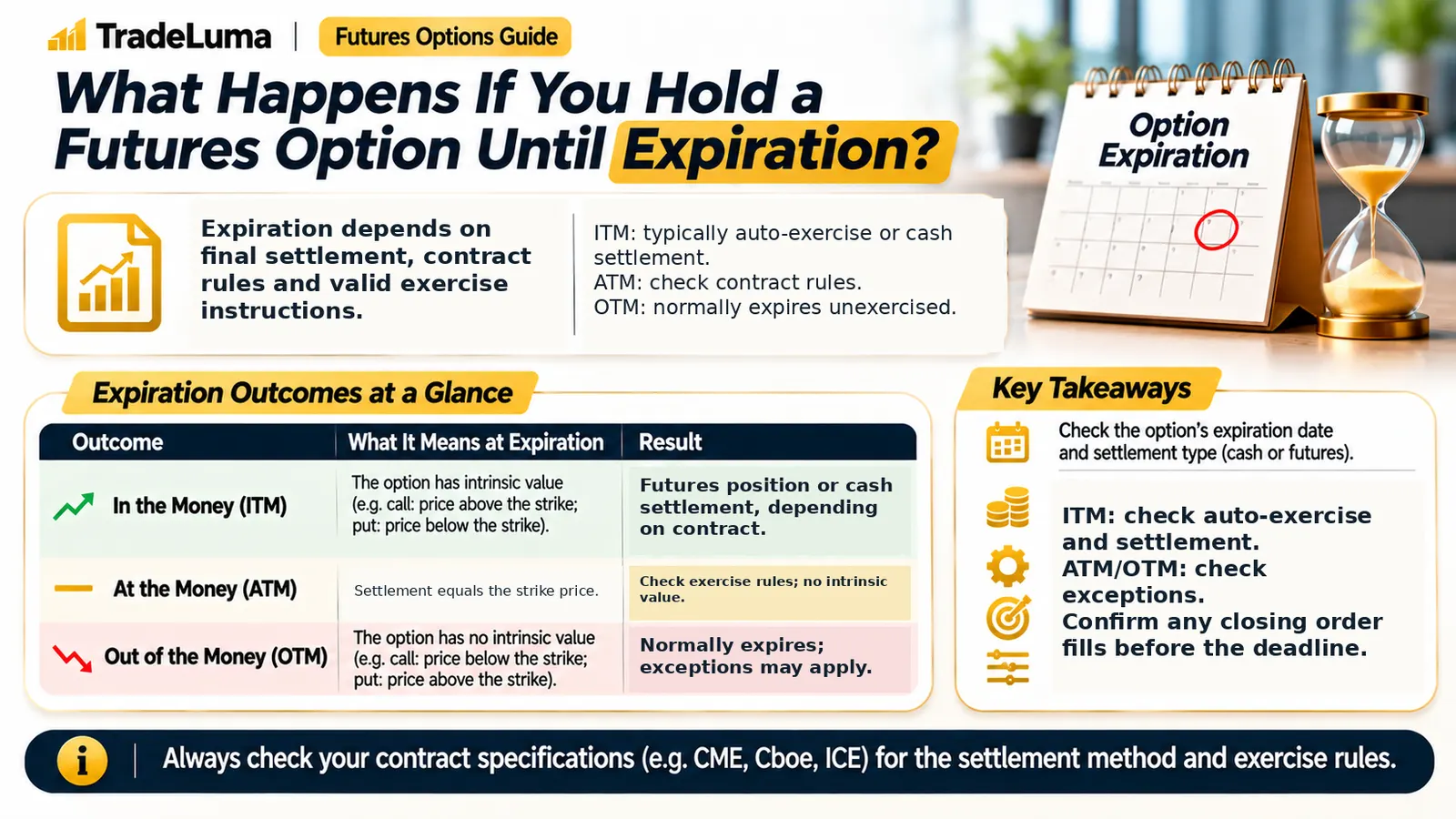
What Happens If You Hold a Futures Option Until Expiration?
Learn ITM, ATM and OTM outcomes, cash settlement, futures assignment and broker deadline risks.
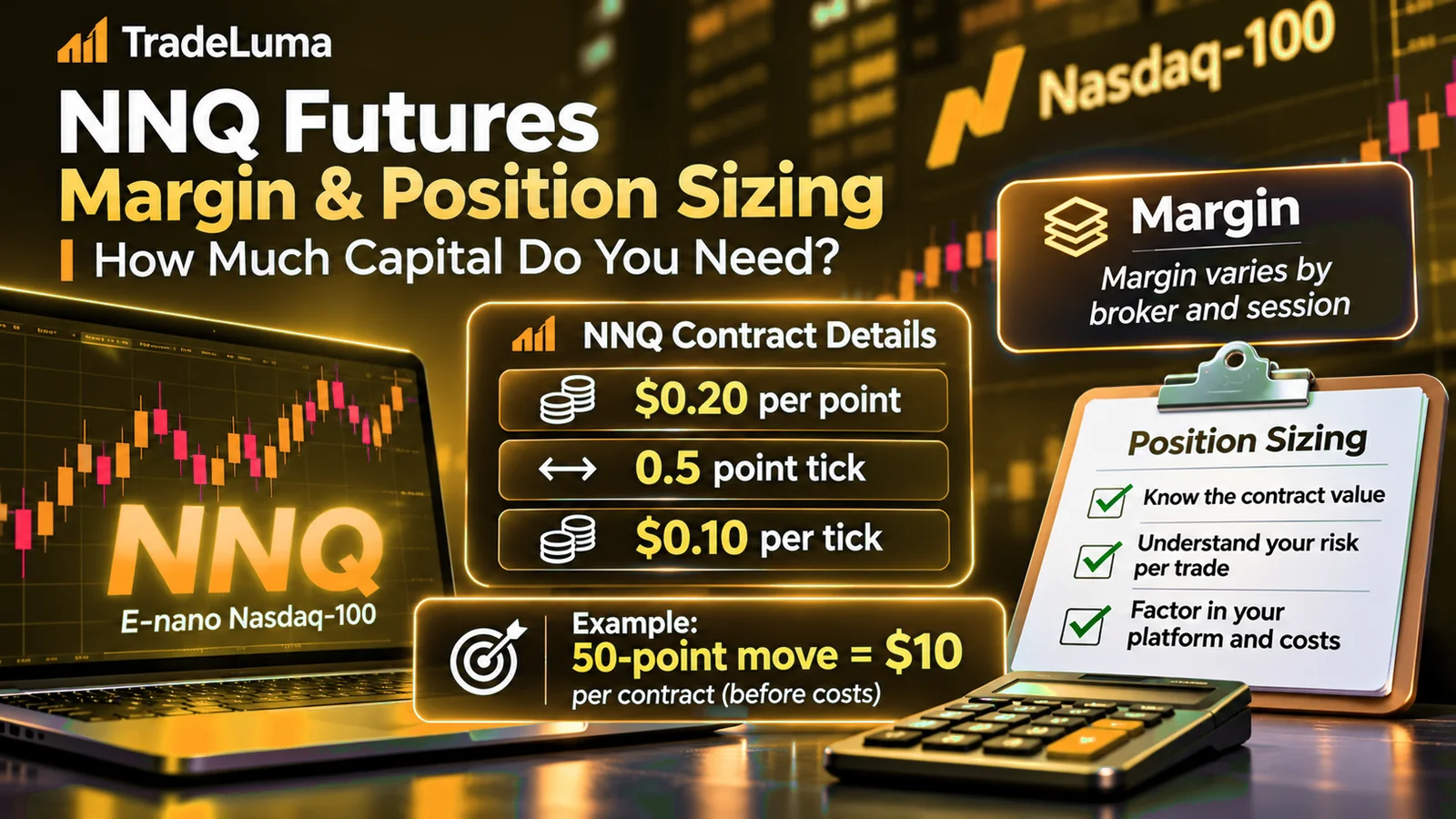
NNQ Futures Margin and Position Sizing: How Much Money Do You Actually Need?
Calculate E-nano Nasdaq-100 futures exposure using $0.20 per point, $0.10 ticks, stop distance, trading costs and current broker margin.
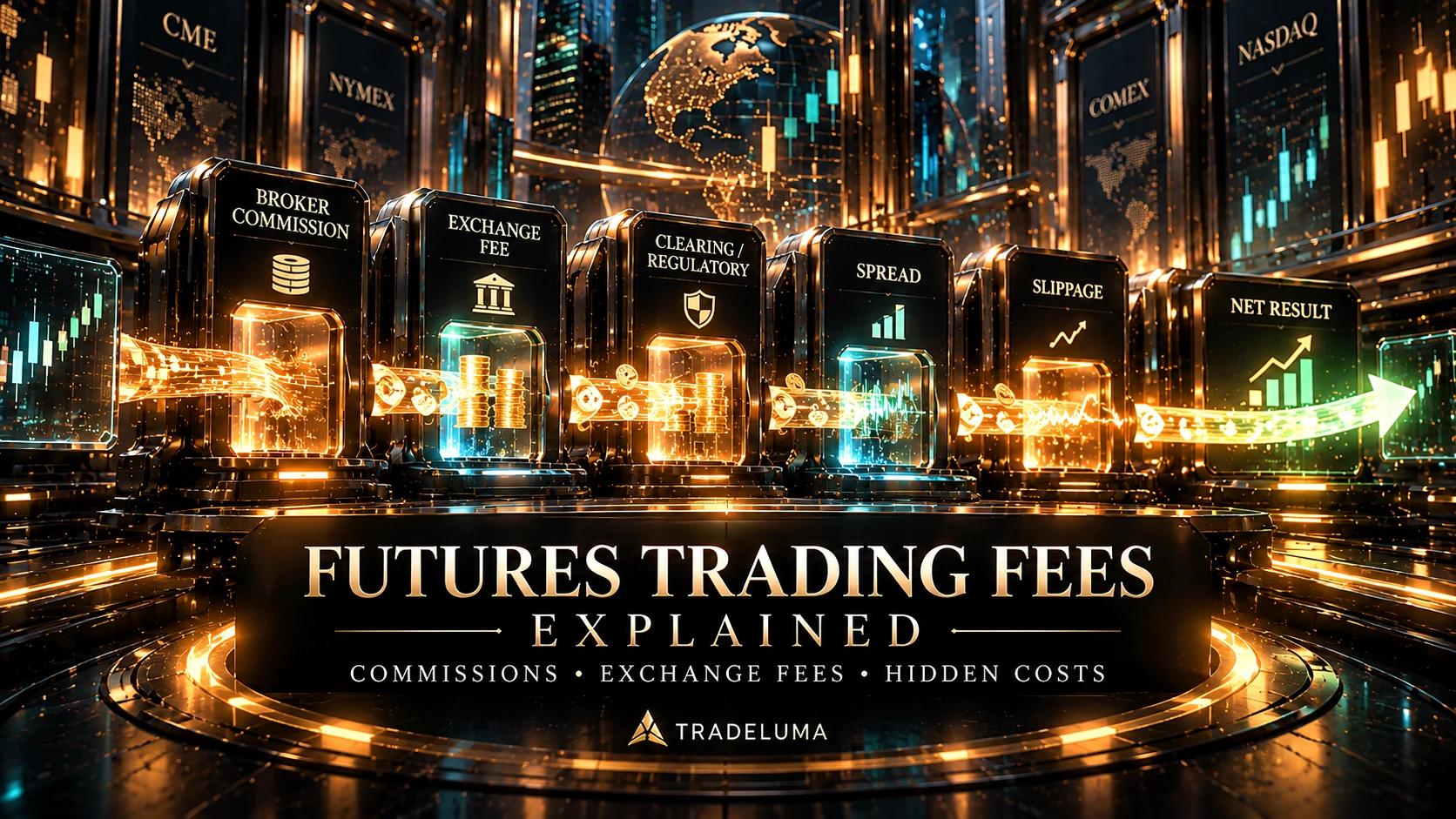
Futures Trading Fees Explained: Commissions, Exchange Fees & Hidden Costs
Understand the real cost of futures trading, including broker commissions, exchange and regulatory fees, spread, slippage, market data and round-turn costs.