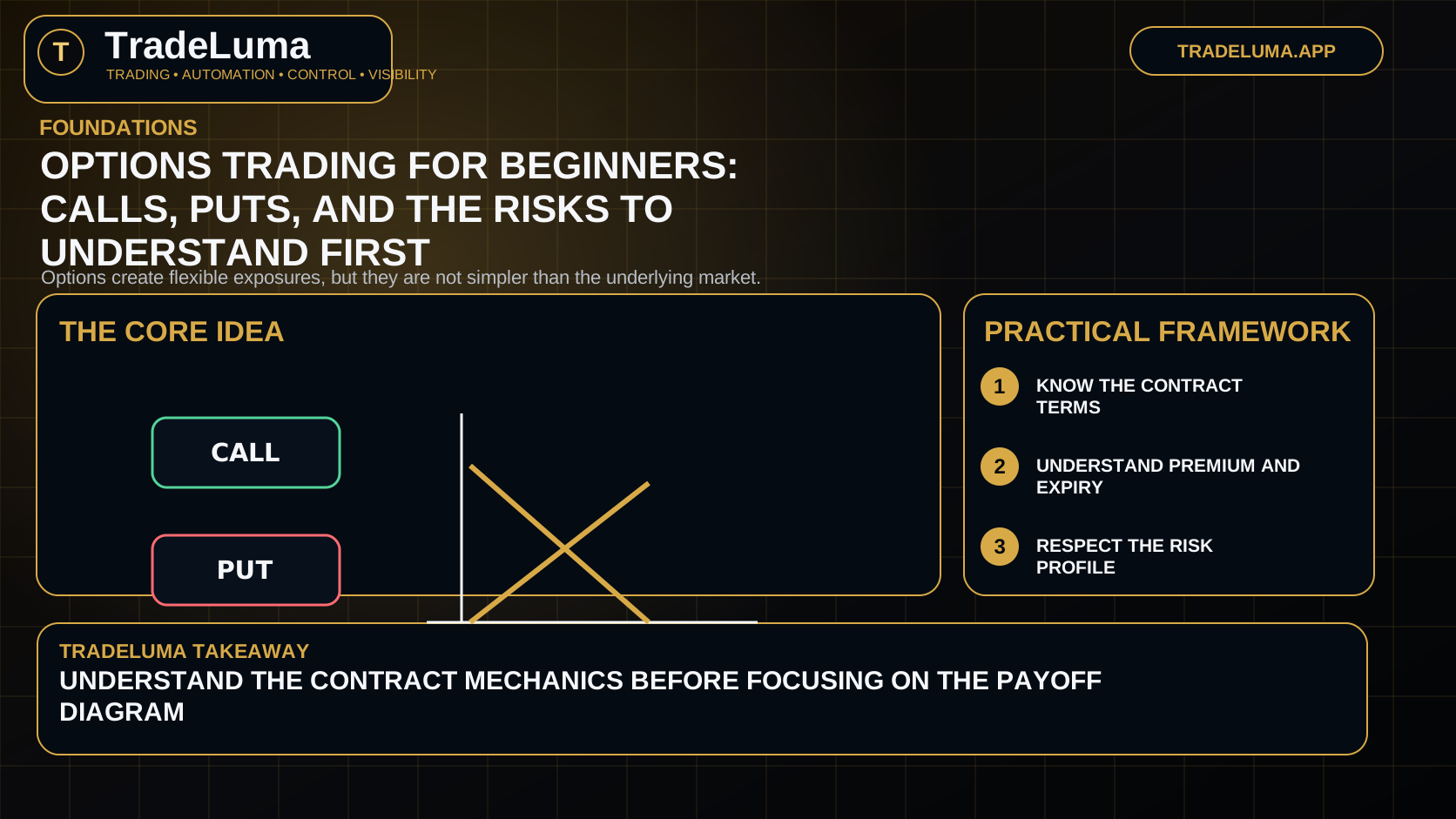
Options trading for beginners: calls, puts, and the risks to understand first
A beginner-friendly introduction to options trading, including calls, puts, premium, expiration, and why options behave differently from simple share or futures positions.
Futures trading
Learn futures contracts, margin, tick value, continuous charts, expiry, rollover, execution, and risk-management concepts for futures traders.
Futures combine standardised exchange contracts with leverage, expiry cycles, and contract-specific tick values. Those mechanics matter just as much as the chart setup.
A strategy can be logically correct while the execution is wrong because the trader mapped the wrong contract month, misunderstood tick value, or ignored rollover timing.
Learn the contract specifications first, separate continuous chart analysis from the tradable contract, and make rollover and margin part of the operating plan before live execution.
Start here
A beginner-friendly introduction to options trading, including calls, puts, premium, expiration, and why options behave differently from simple share or futures positions.
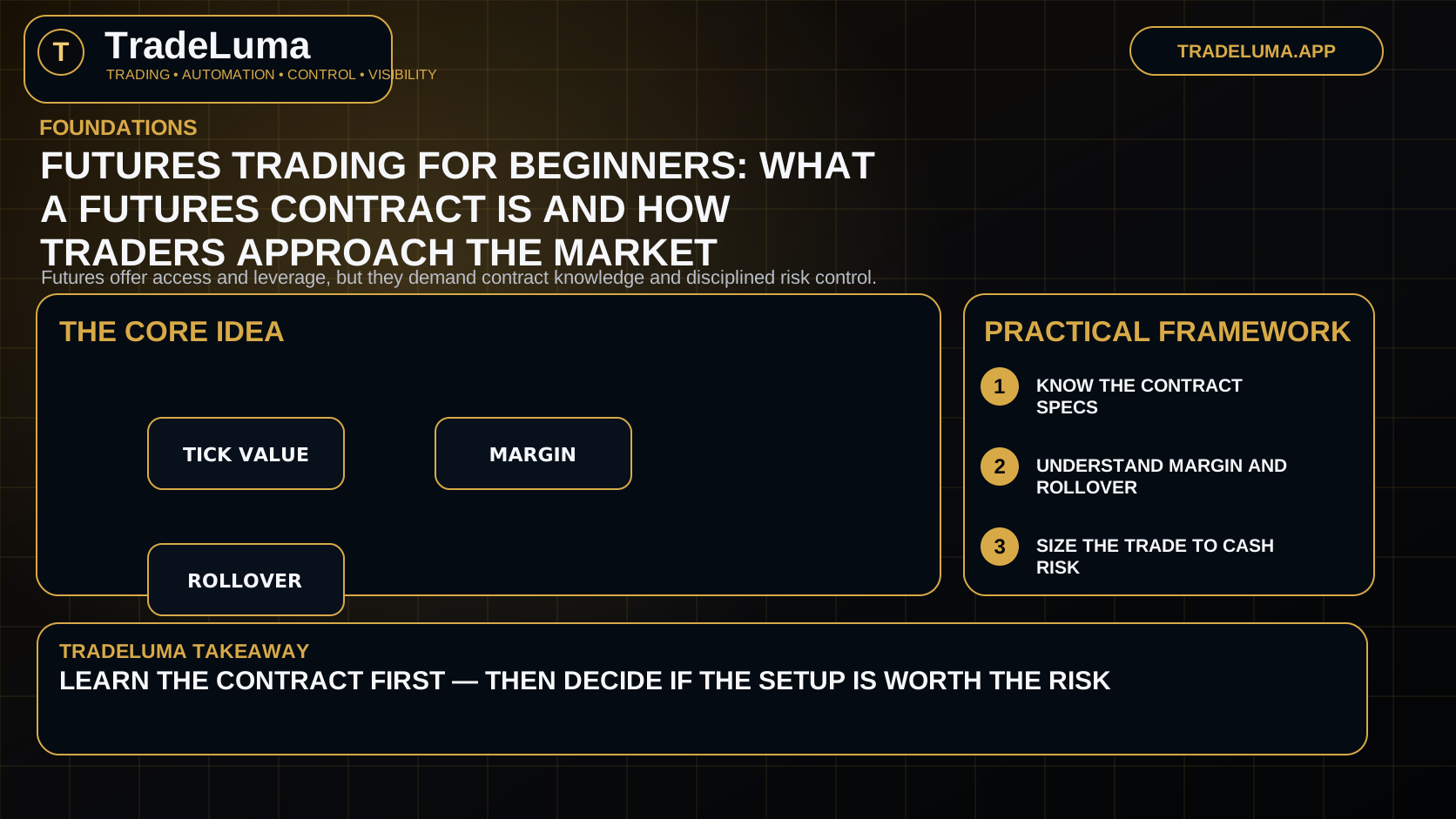
A beginner-friendly guide to futures trading, covering contract basics, margin, rollover, leverage, and practical risk considerations.

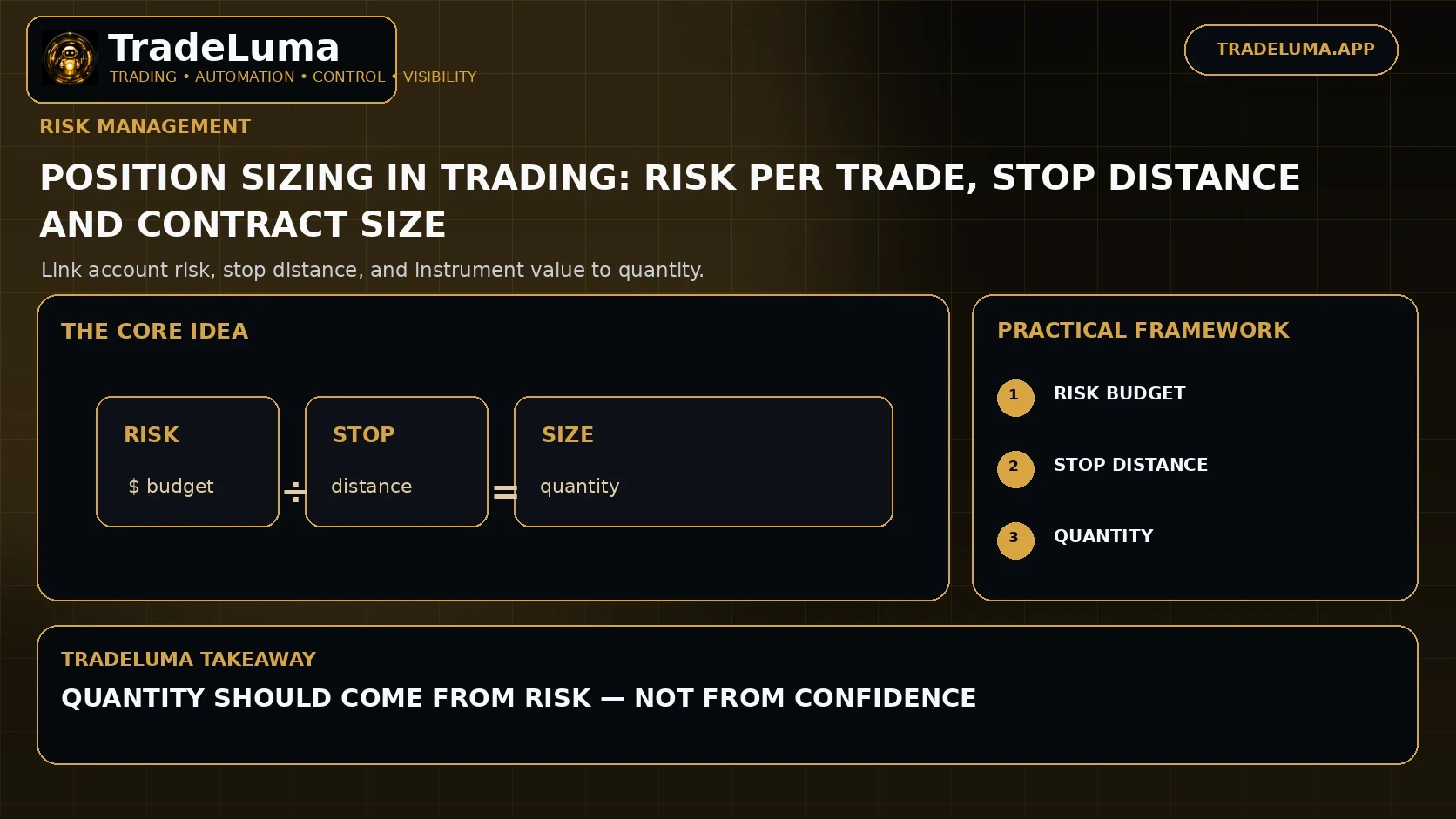
Learn how position sizing links account risk, stop distance, point value, leverage, and contract or share quantity into one repeatable risk process.
Full library

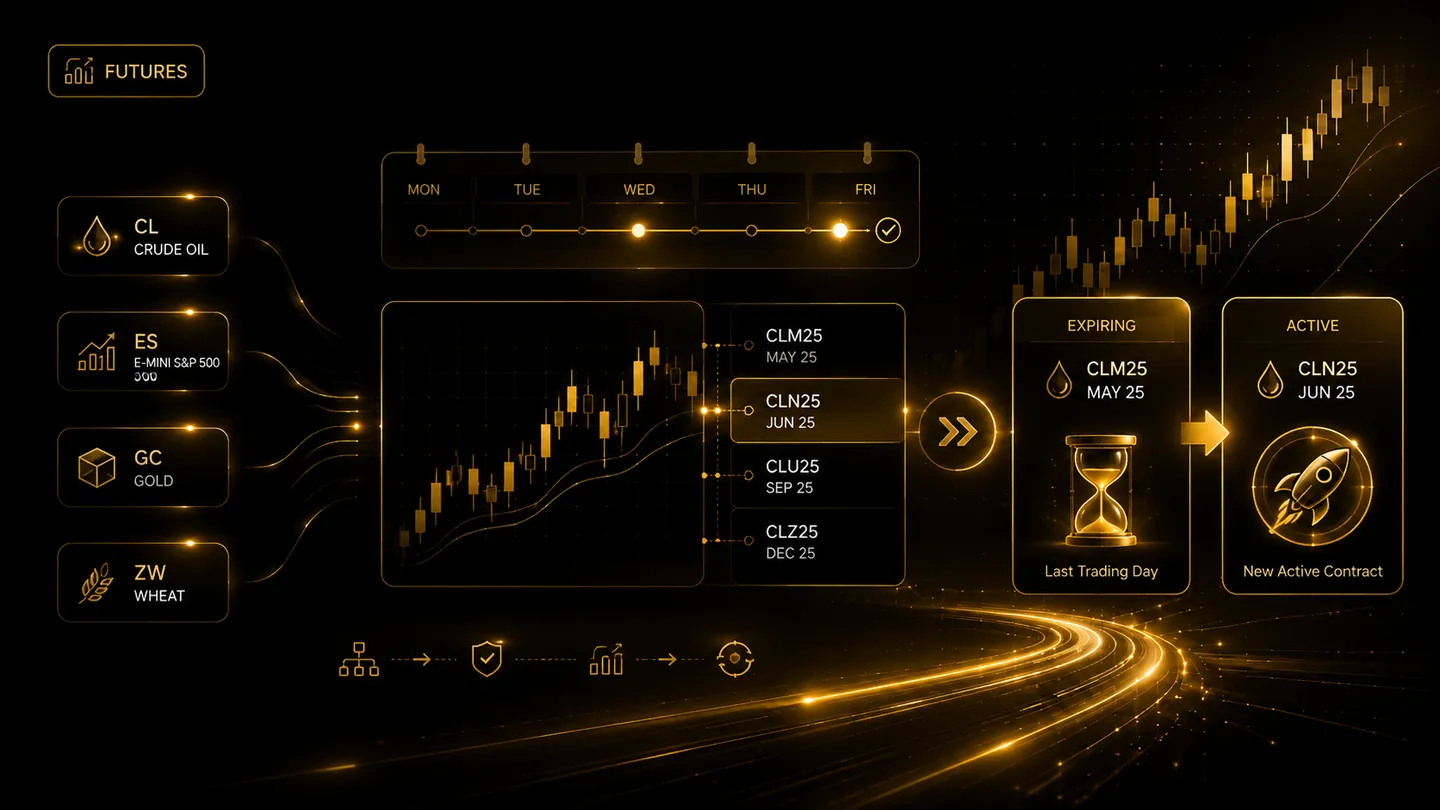
Understand expiry, liquidity migration, first notice, physical delivery risk, rollover mapping, and how automated futures workflows should respond.

Prevent timing errors by understanding exchange sessions, chart time zones, broker clocks, overnight markets, and daylight-saving changes.

Learn how quantity rules, contract value, stop distance, margin, and account-wide limits work together in an automated trading risk plan.

Understand why chart symbols such as continuous futures are useful for analysis but live orders require a specific broker-tradable contract.