
Operations
Trading sessions, time zones, and daylight saving in automated trading
Prevent timing errors by understanding exchange sessions, chart time zones, broker clocks, overnight markets, and daylight-saving changes.
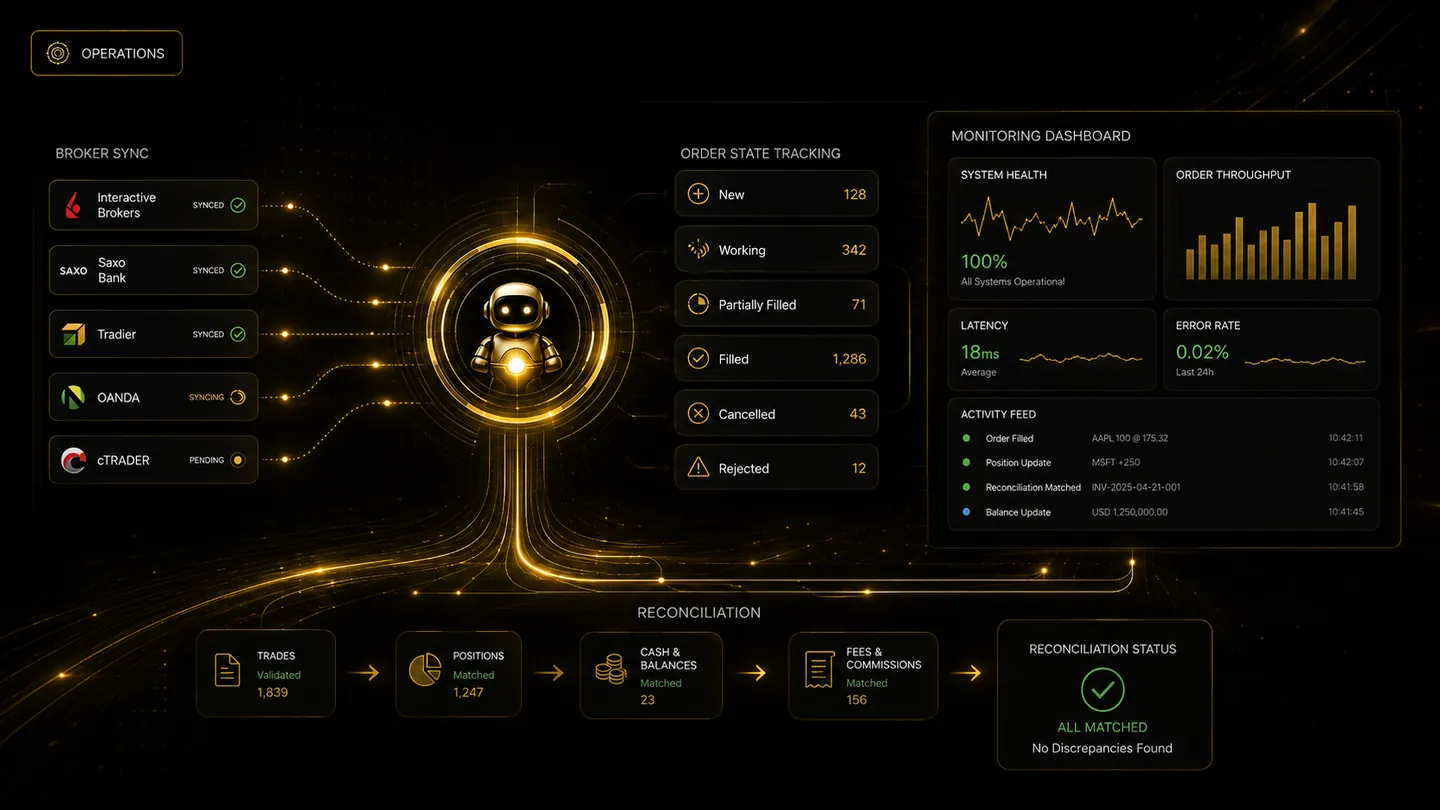
Time filters look simple until a strategy crosses exchanges, servers, chart settings, and daylight-saving rules. A condition intended for the New York morning may shift by an hour for a trader in Melbourne, while the exchange session itself may use a different calendar and maintenance break.
Name the clock explicitly
A strategy should state whether a session is defined in exchange time, chart time, UTC, server time, or the trader's local time. Labels such as morning or overnight are not precise enough for code.
Store timestamps with a recognised time zone or UTC offset and convert only for display. Avoid relying on a server's local clock because hosting regions can change.
Daylight saving changes relationships
Countries and regions change clocks on different dates, and some do not observe daylight saving at all. The time difference between Melbourne and Chicago or New York can therefore change during the year.
Session filters should use time-zone-aware logic rather than fixed offsets. Test the weeks around clock changes because these are common sources of missed or unexpected signals.
Exchange calendars matter
Futures and other markets may trade nearly around the clock but include daily maintenance breaks, early closes, holidays, and special sessions. Broker availability can also differ from the published exchange session.
Automation should know when new entries are allowed, when exits remain allowed, and what happens to working orders around a close or maintenance period.
Frequently asked questions
Should a strategy use the trader's local time?
It can for display, but rules tied to a market session are usually clearer when defined in the exchange's recognised time zone.
Can daylight saving alter backtest results?
Yes. Incorrect conversion can shift session filters and change which bars or trades are included.
Continue learning
Related TradeLuma guides
Operations
Rejected orders in automated trading: causes, recovery, and safer retries
29 July 2026 · 9 min read
Technical Analysis
Volume Profile Explained: Value Areas, Point of Control and Market Context
11 Sept 2026 · 12 min read
Trading Foundations
Volatility in Trading Explained: How to Adapt When Markets Speed Up
8 Sept 2026 · 11 min read
Build a controlled automation workflow with TradeLuma
Configure alerts, test in paper mode, apply execution controls, and follow broker outcomes from one workspace.