
Futures Trading
Futures Tick Value Cheat Sheet: MGC, MNQ, SIL, PL, MES and MCL
Six CME futures contract tick values and multipliers in USD, with practical stop-distance and dollar exposure examples.
On this page+
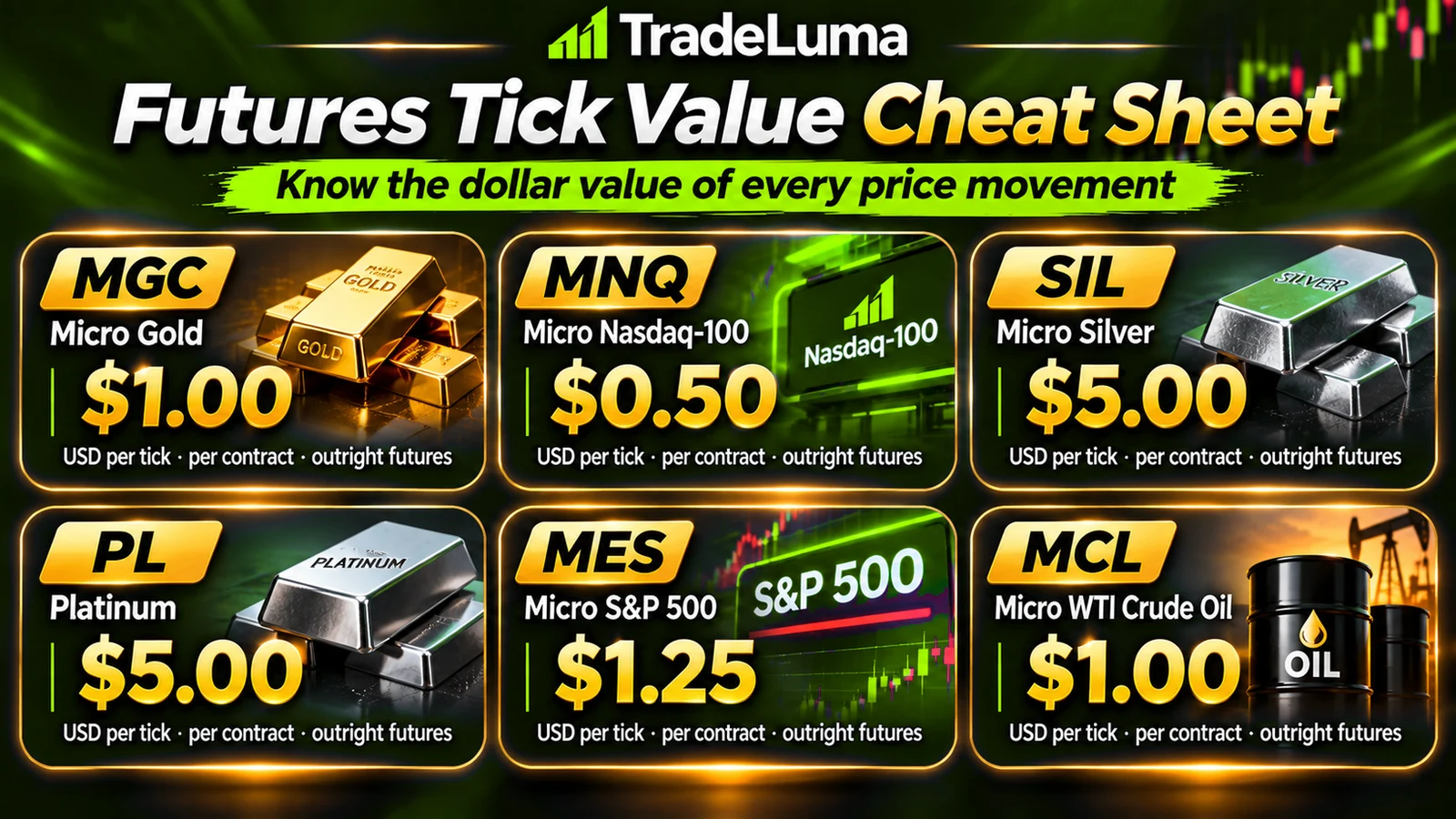
A tick is the minimum permitted price increment for the listed contract and transaction type. The dollar value of one tick is the price increment multiplied by the contract size or index multiplier. These six examples refer to ordinary outright futures, not spread orders or options, which can use different price increments. This is general education, not personalised investment advice; futures trading can result in losses exceeding deposits.
Six contract specifications
Micro Gold (MGC): 10 troy ounces, US$0.10 per ounce tick, US$1 per tick. Micro E-mini Nasdaq-100 (MNQ): US$2 per index point, 0.25-point tick, US$0.50 per tick. Micro Silver (SIL): 1,000 troy ounces, US$0.005 per ounce tick, US$5 per tick.
Platinum (PL): 50 troy ounces, US$0.10 per ounce tick, US$5 per tick. Micro E-mini S&P 500 (MES): US$5 per index point, 0.25-point tick, US$1.25 per tick. Micro WTI crude oil (MCL): 100 barrels, US$0.01 per barrel tick, US$1 per tick. PL is standard Platinum, not Micro Platinum.
Convert stop distances into dollars
For one MGC contract a US$3 per ounce move is 30 ticks or US$30. For one MNQ contract a 20-point move is 80 ticks or US$40. For one SIL contract a US$0.10 per ounce move is 20 ticks or US$100.
For one PL contract a US$2 per ounce move is US$100; for one MES contract an eight-point move is US$40; for one MCL contract a US$0.30 per barrel move is US$30. All six are hypothetical price movements before fees and slippage.
Tick value is not the margin requirement
A contract's tick value determines how its price change translates into dollars. Margin is collateral that can vary with market volatility, broker rules and the holding period. Smaller tick value alone does not prove smaller overall risk.
Compare typical price movement in ticks, liquidity, trading costs and planned stop distance. Multiply the dollar price risk by contract quantity and keep a separate buffer for adverse execution.
Use the correct contract in automated strategies
TradeLuma's published strategy collections cover Micro Gold, Micro Nasdaq, Micro Silver and Platinum reference markets. Their contract specifications are not interchangeable. If using a different size, expiry or instrument, validate all order quantities and price increments separately.
Check the exchange contract specifications and broker contract details before trading. Continuous futures charts are useful for research but do not themselves identify an executable expiry. Review the micro futures trading cost breakdown alongside this tick table.
Frequently asked questions
What is the value of one MNQ tick?+
US$0.50 per contract for a 0.25-point move.
Is PL Micro Platinum?+
No. PL is standard 50-troy-ounce Platinum futures.
Are tick values the same for spreads and options?+
Not necessarily. Verify the specific instrument and transaction type.
Put it into practice
Use the risk maths next to the guide.
Open TradeLuma's free position-size, risk/reward, expectancy, and drawdown tools to test the numbers behind a risk-management decision.
Open free trading calculators →Continue learning
Related guides.
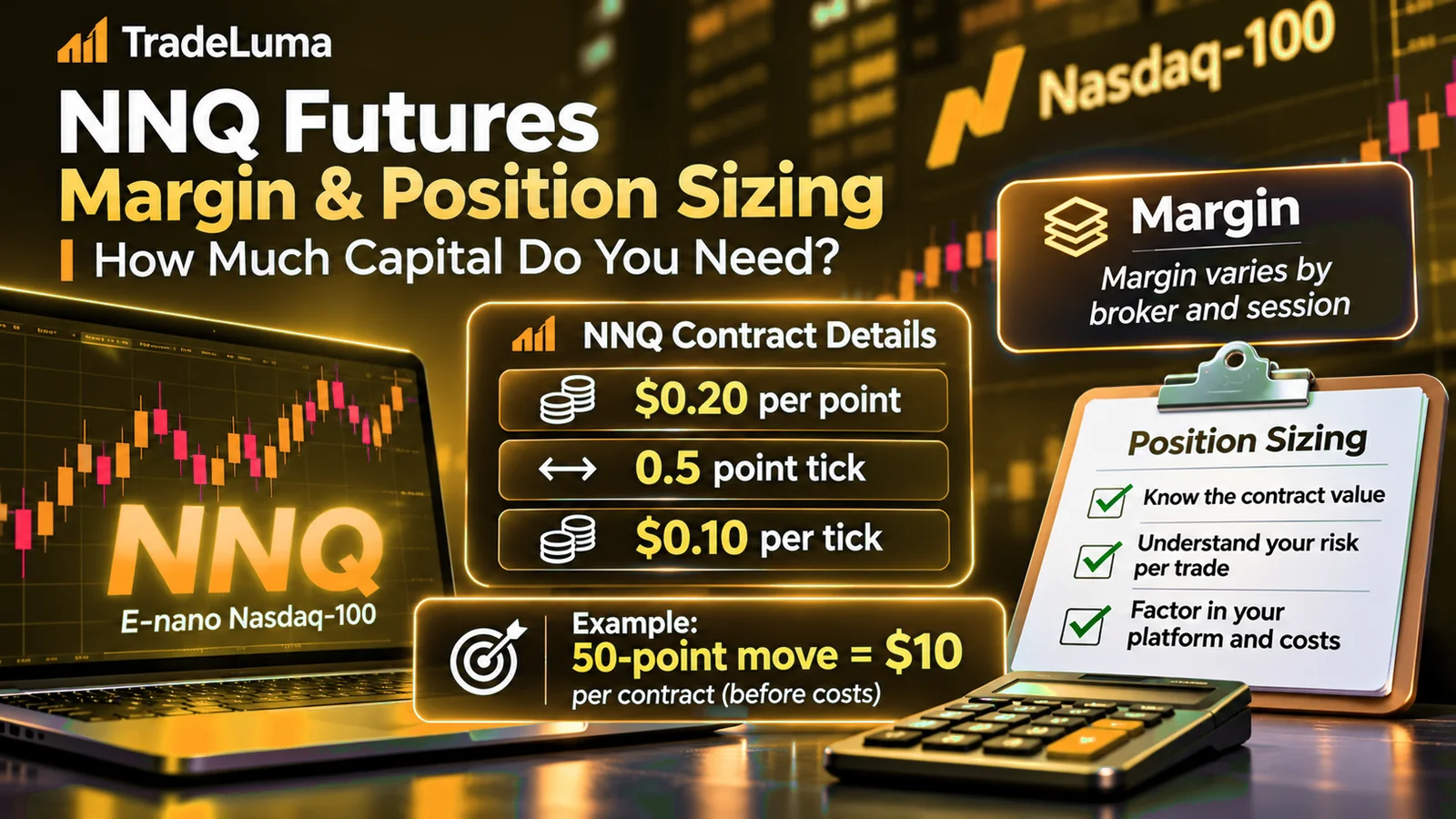
NNQ Futures Margin and Position Sizing: How Much Money Do You Actually Need?
Calculate E-nano Nasdaq-100 futures exposure using $0.20 per point, $0.10 ticks, stop distance, trading costs and current broker margin.
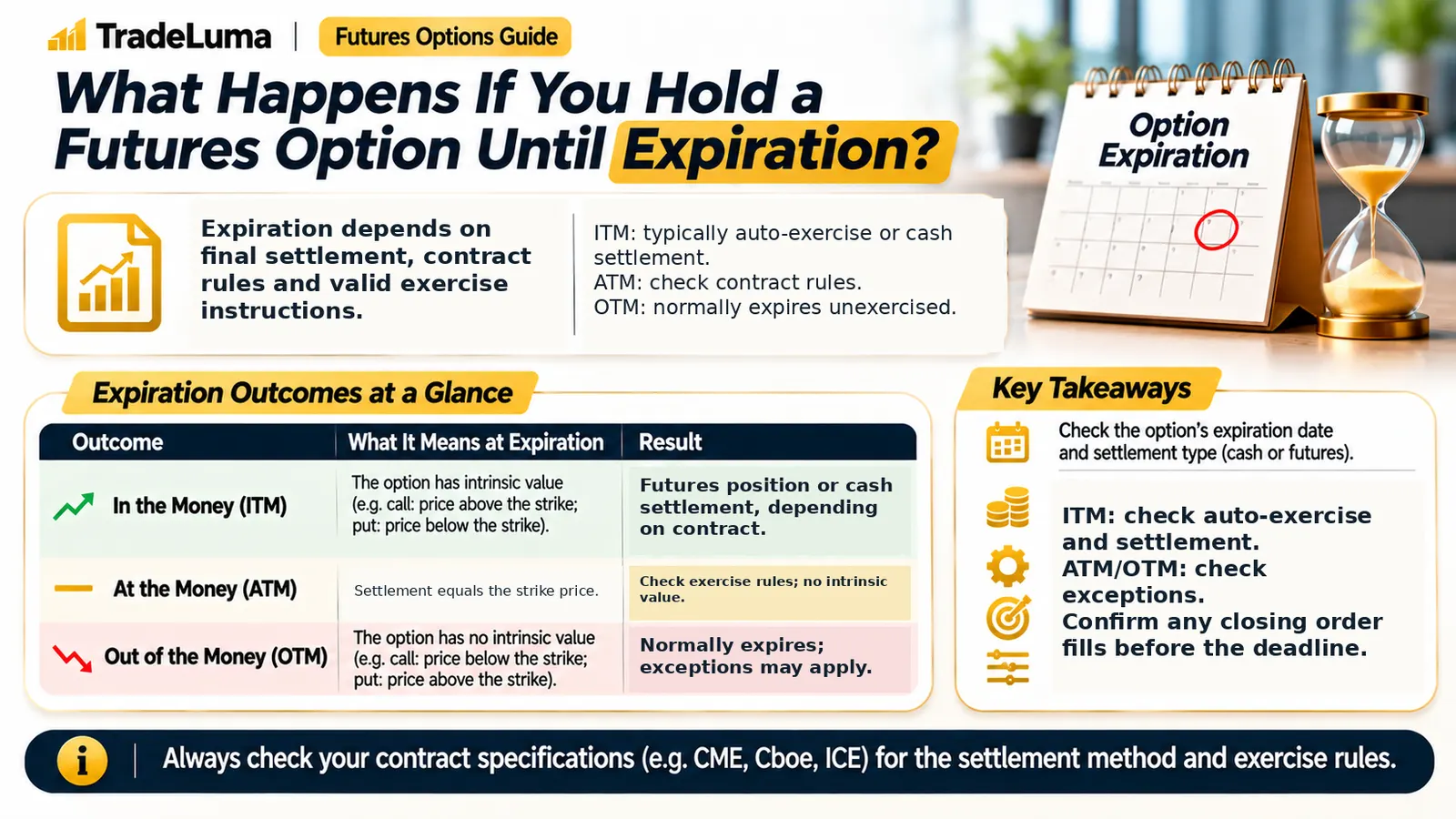
What Happens If You Hold a Futures Option Until Expiration?
Learn ITM, ATM and OTM outcomes, cash settlement, futures assignment and broker deadline risks.
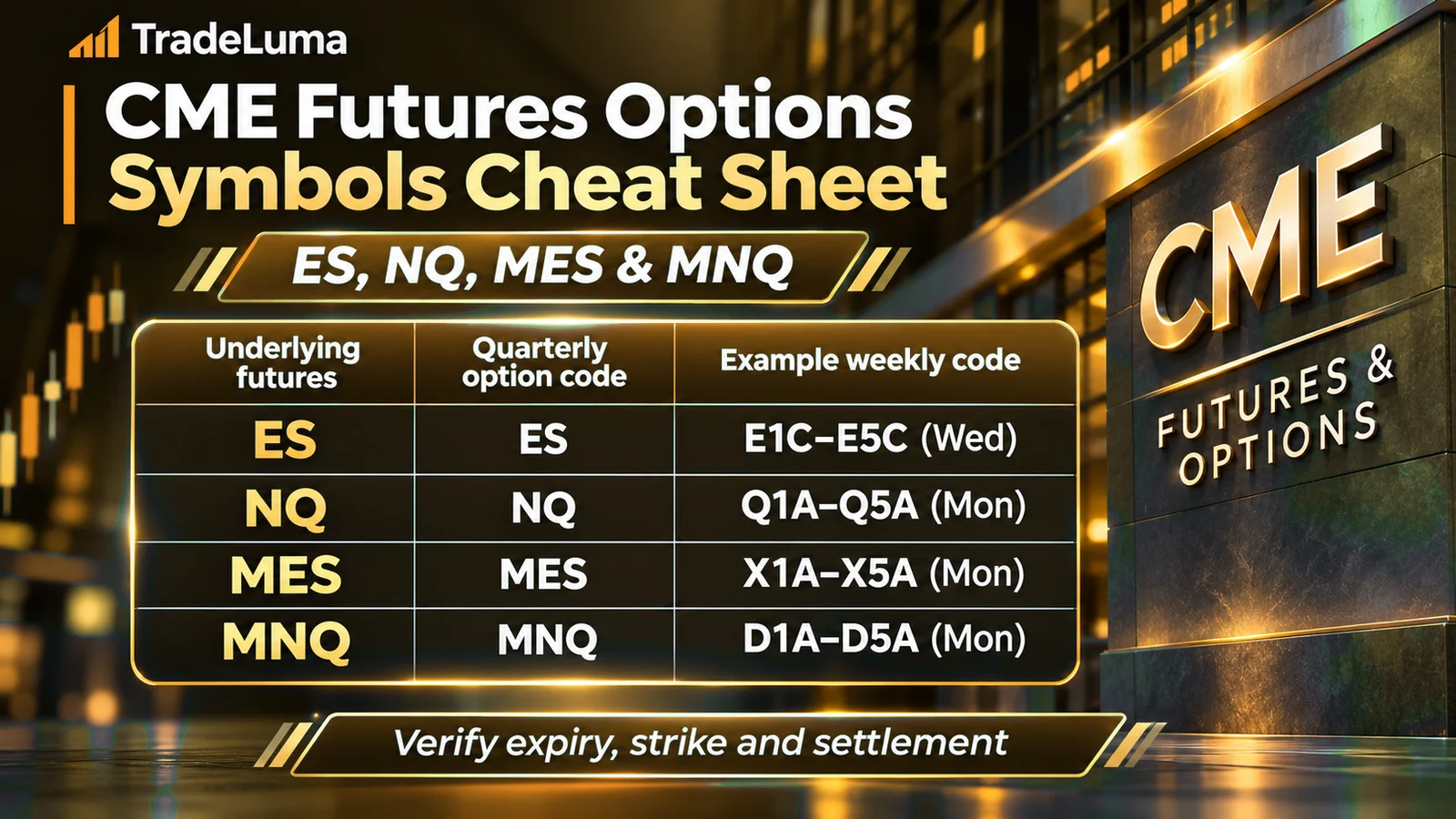
CME Futures Options Symbols Cheat Sheet: ES, NQ, MES and MNQ
Decode CME equity futures option families, quarterly and weekly codes, month letters, strikes, settlement types and broker symbol differences.