
Futures Trading
NNQ Futures Margin and Position Sizing: How Much Money Do You Actually Need?
Calculate E-nano Nasdaq-100 futures exposure using $0.20 per point, $0.10 ticks, stop distance, trading costs and current broker margin.
On this page+
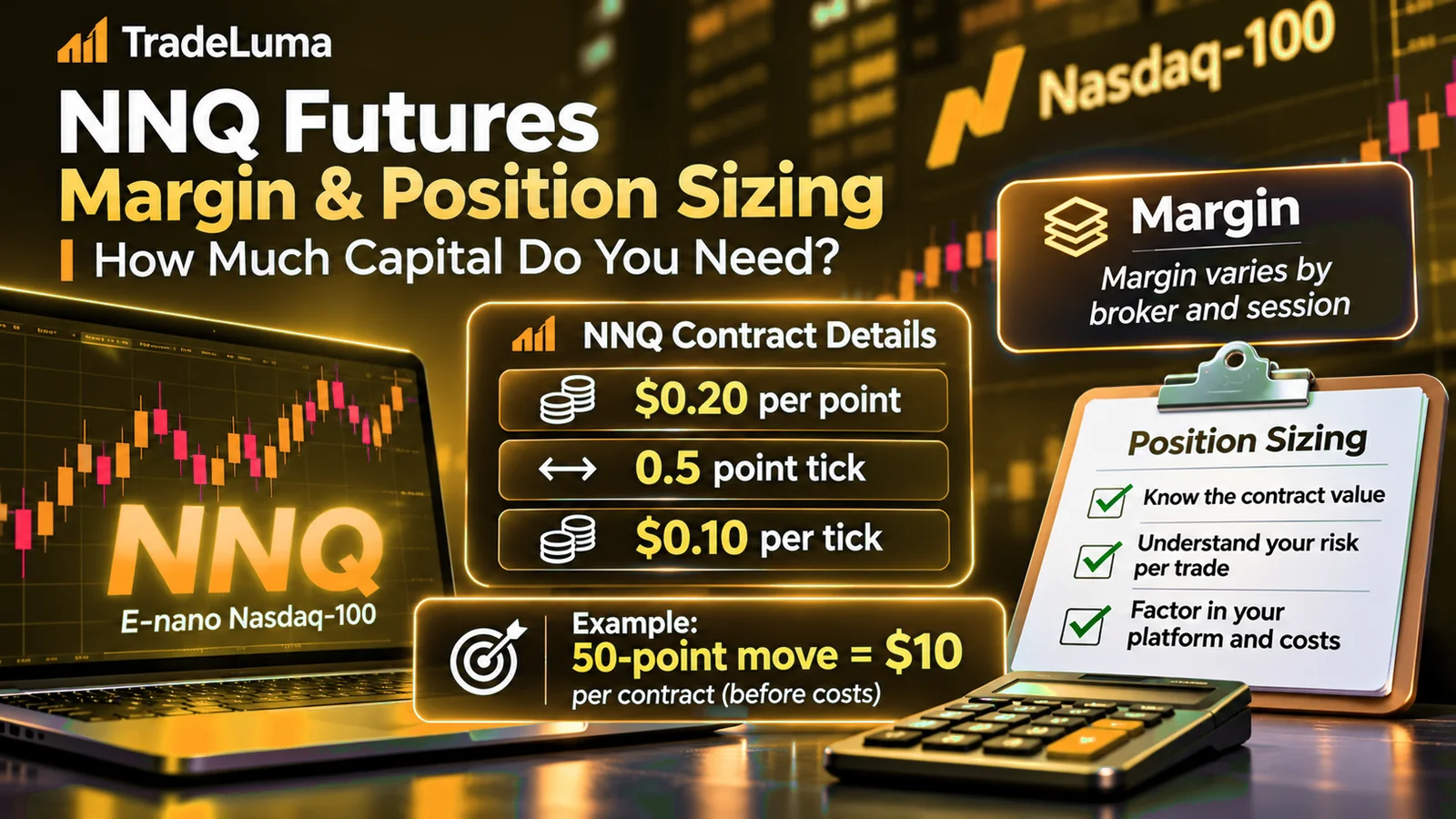
E-nano Nasdaq-100 futures (NNQ) use a US$0.20 index multiplier. That makes their point exposure one tenth of MNQ and one hundredth of NQ. Smaller contracts allow more granular sizing, but neither a low margin requirement nor a small tick guarantees an affordable trade. This educational guide is not personalised investment advice; trading can result in losses.
NNQ contract specifications
NNQ has a minimum price movement of 0.5 index points, worth US$0.10. A 50-point move changes one contract's value by US$10 before commissions and slippage. At a hypothetical index value of 25,000, the notional exposure is US$5,000 per NNQ contract.
MNQ uses US$2 per point and NQ uses US$20. Do not confuse the margin deposited with the economic exposure. NNQ also has its own contract and settlement conventions, so verify the exact listed instrument rather than substituting MNQ automatically.
How much margin is required?
Initial margin and maintenance margin are subject to exchange and broker updates. Some brokers use separate intraday requirements, while others do not offer the contract or require full margin. There is no universal NNQ account minimum.
Get the current requirement for the actual broker account, contract month and intended holding period. Keep a separate cash buffer for adverse price moves, margin increases and liquidation fees. Margin is collateral, not the maximum possible loss.
A position sizing example
Suppose your hypothetical account is US$2,000 and your risk budget is 1%, or US$20. With a 50-point stop, one NNQ contract has a US$10 planned price risk. If estimated round-trip costs and slippage are US$1.50 per contract, planned risk is US$11.50; floor(20 / 11.50) gives one contract.
This is a sizing illustration, not a broker quote or recommendation. A stop-loss order may execute beyond its intended level. The margin check, available cash, exposure limits and broker availability must also pass.
Costs and execution before automation
Compare commissions and exchange fees relative to the small dollar tick. A low dollar risk budget can be disproportionately affected by costs, and a wider spread can consume a meaningful portion of a small trade's expected payoff.
When reviewing a strategy, use the correct point multiplier, price increments, contract month and position sizing. TradeLuma's published Nasdaq strategy collection uses MNQ as its reference market; NNQ suitability requires separate validation.
Frequently asked questions
What is one NNQ point worth?+
US$0.20 per contract.
How much is one NNQ tick?+
0.5 index points, or US$0.10.
Can I trade NNQ with a fixed small deposit?+
There is no universal deposit. Check current broker margin, costs and your independent loss budget.
Put it into practice
Use the risk maths next to the guide.
Open TradeLuma's free position-size, risk/reward, expectancy, and drawdown tools to test the numbers behind a risk-management decision.
Open free trading calculators →Continue learning
Related guides.

Futures Tick Value Cheat Sheet: MGC, MNQ, SIL, PL, MES and MCL
Six CME futures contract tick values and multipliers in USD, with practical stop-distance and dollar exposure examples.

How Much Does It Cost to Trade Micro Futures? The Hidden Cost of Every Trade
Calculate round-turn commissions, exchange and clearing costs, slippage, break-even ticks and allocated platform expenses without assuming a universal fee.
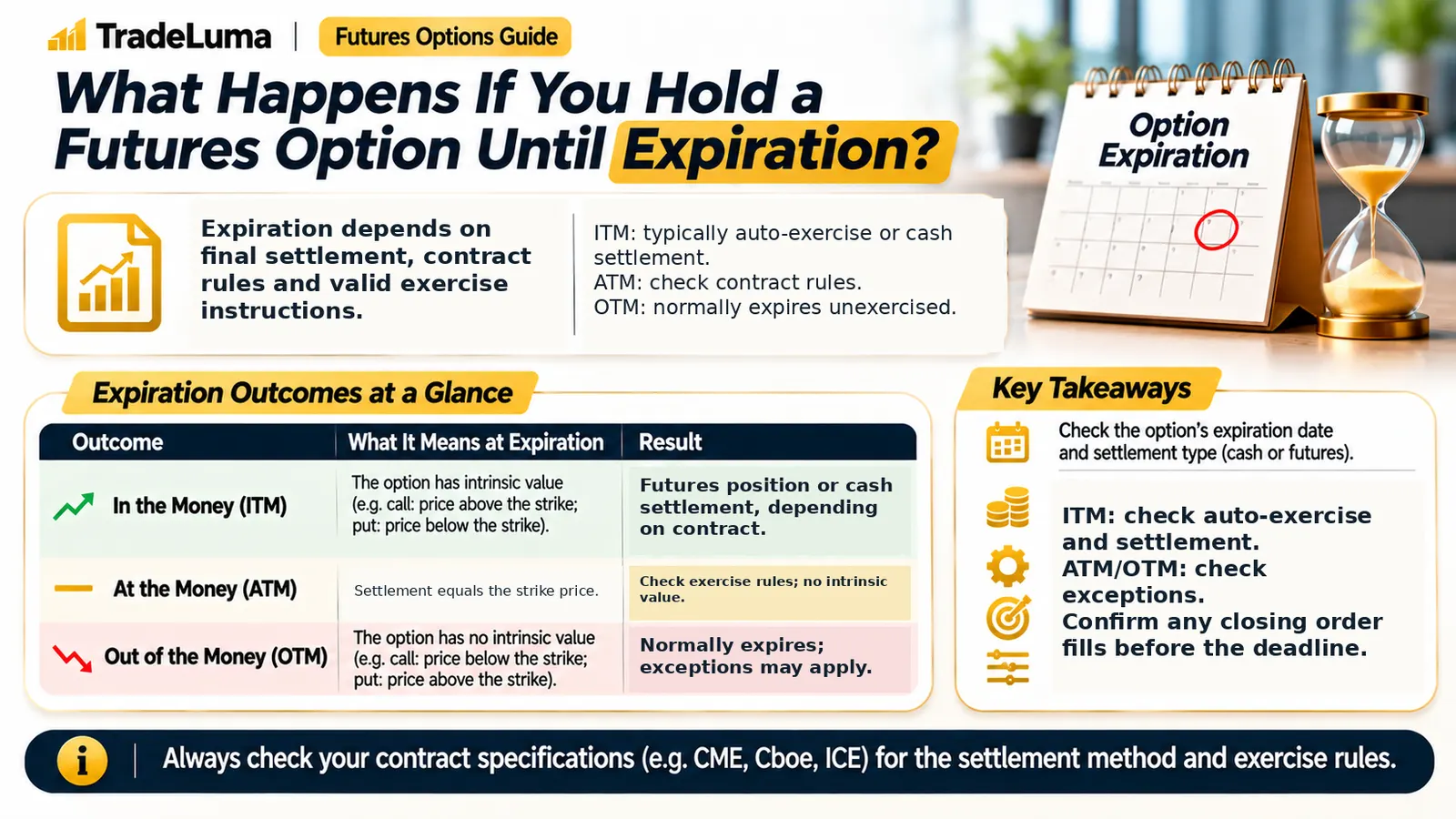
What Happens If You Hold a Futures Option Until Expiration?
Learn ITM, ATM and OTM outcomes, cash settlement, futures assignment and broker deadline risks.