
Futures
E-Nano Futures vs Micro E-mini: NNQ vs MNQ vs NQ (2026 Guide)
Compare E-nano, Micro E-mini and E-mini equity index futures, including NNQ vs MNQ vs NQ contract size, tick value, trading hours, settlement and risk.
On this page+
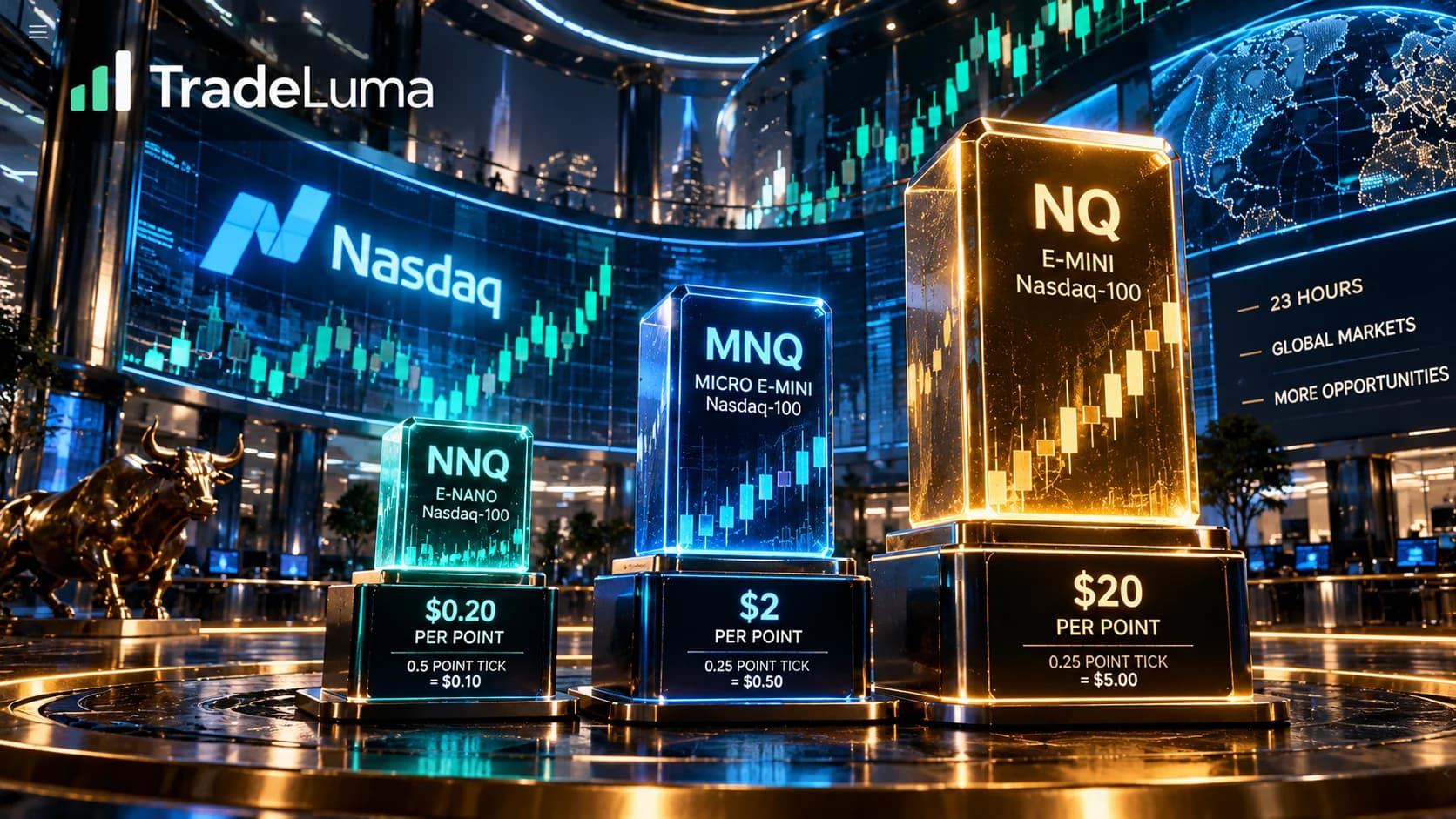
CME's E-nano equity index futures created a new rung below Micro E-minis in August 2026. The new contracts are one tenth the size of their Micro E-mini counterparts and one hundredth the size of the corresponding E-mini contracts. For Nasdaq-100 traders, that means NNQ carries a $0.20-per-point multiplier, compared with $2 for MNQ and $20 for NQ. The smaller multiplier can make position sizing more granular, but traders still need to understand tick size, liquidity, margin, contract months, cash settlement and broker support before treating nano contracts as interchangeable with larger futures.
What are E-nano equity index futures?
E-nano equity index futures are smaller futures contracts introduced by CME Group in August 2026. They track the same major U.S. equity benchmarks as established E-mini and Micro E-mini contracts but use multipliers that are one tenth of the Micro size.
The initial suite covers the S&P 500, Nasdaq-100, Russell 2000 and Dow Jones Industrial Average. The product codes are NES, NNQ, N2K and NDOW respectively. The goal is not to change the underlying index exposure; it is to package that exposure in a smaller unit so traders can scale positions more precisely.
NNQ vs MNQ vs NQ at a glance
The Nasdaq-100 size ladder is straightforward. NNQ, the E-nano Nasdaq-100 future, uses a $0.20 multiplier per index point. MNQ, the Micro E-mini Nasdaq-100 future, uses $2 per point. NQ, the E-mini Nasdaq-100 future, uses $20 per point.
That means ten NNQ contracts have the same point exposure as one MNQ contract, and ten MNQ contracts have the same point exposure as one NQ contract. One hundred NNQ contracts therefore equal the point exposure of one NQ contract before differences in fills, commissions and other costs are considered.
How much does NNQ move per point?
One NNQ contract changes by $0.20 for every one-point move in the Nasdaq-100 Index. A 100-point move therefore changes the contract value by about $20, while a 500-point move changes it by about $100 before commissions and slippage.
This is one tenth of MNQ's $2-per-point exposure and one hundredth of NQ's $20-per-point exposure. The smaller point value is the main reason NNQ can make fine-grained risk sizing possible when a full MNQ contract would represent more exposure than a plan allows.
NNQ tick size and tick value
NNQ has a minimum price increment of 0.50 index points. With a $0.20 multiplier, each minimum tick is worth $0.10 per contract.
This is different from MNQ and NQ, which trade in 0.25-point increments. A 0.25-point MNQ tick is worth $0.50 and a 0.25-point NQ tick is worth $5. The E-nano tick increment is therefore larger in index points even though its dollar tick value is much smaller.
Why E-nano tick sizes are different
CME designed the E-nano tick increments to be twice the index-point increment of the corresponding Micro E-mini and E-mini contracts. For Nasdaq-100 that means 0.50 points instead of 0.25 points; for S&P 500 it is also 0.50 instead of 0.25.
A smaller contract does not automatically mean finer price increments. E-nanos provide finer dollar exposure, while the allowed quote increment can be coarser in index points. That distinction matters when estimating slippage, stop placement and the number of ticks between entry and exit.
The four E-nano contracts and their multipliers
E-nano S&P 500 futures use product code NES and a $0.50-per-point multiplier. E-nano Nasdaq-100 futures use NNQ and $0.20 per point. E-nano Russell 2000 futures use N2K and $0.50 per point. E-nano Dow Jones Industrial Average futures use NDOW and $0.05 per point.
These multipliers are one tenth of the related Micro E-mini multipliers. The equivalent Micro contracts are MES at $5 per S&P 500 point, MNQ at $2 per Nasdaq-100 point, M2K at $5 per Russell 2000 point and MYM at $0.50 per Dow point.
E-nano versus Micro E-mini versus E-mini size
Across the four index families, the size relationship is designed to be consistent: E-nano equals one tenth of Micro E-mini, while Micro E-mini equals one tenth of E-mini. That makes an E-nano one hundredth of the corresponding E-mini by multiplier.
The relationship makes scaling easy to reason about, but traders should not assume ten smaller contracts are operationally identical to one larger contract. Commission schedules, exchange fees, bid-ask spreads, queue position and available depth can produce different execution costs.
Notional exposure: why index level still matters
Contract multiplier is only one part of exposure. Approximate notional value is the index level multiplied by the contract multiplier. If the Nasdaq-100 were at 30,000, NNQ would represent about $6,000 of notional exposure, MNQ about $60,000 and NQ about $600,000.
Those figures move with the index. A trader should calculate notional exposure from the current index level rather than treating a marketing example as a permanent value. The smaller NNQ multiplier reduces notional exposure per contract, but futures remain leveraged instruments.
Trading hours: around 23 hours per day
E-nano equity index futures use the familiar equity-index Globex schedule: Sunday at 6:00 p.m. through Friday at 5:00 p.m. Eastern Time, with a daily maintenance period from 5:00 p.m. to 6:00 p.m. ET. In Chicago time that is 5:00 p.m. Sunday through 4:00 p.m. Friday with maintenance from 4:00 p.m. to 5:00 p.m. CT.
That gives traders roughly 23 hours of access on each trading day, similar to the corresponding Micro E-mini and E-mini products. It does not mean liquidity is uniform around the clock; overnight spreads and depth can differ substantially from the most active U.S. session.
Contract months and expiry
CME currently lists the nearest two quarterly months for E-nano equity index futures. The quarterly cycle is March, June, September and December, matching the familiar equity-index futures calendar.
A trader or automated system still needs a rollover rule. A continuous chart can help with analysis, but the order sent to the broker must reference an actual listed expiry. Contract mapping should be reviewed before a strategy rolls from one quarter to the next.
How E-nano futures settle
E-nano equity index futures are financially settled rather than physically delivered. Final settlement uses the Special Opening Quotation for the relevant index on the third Friday quarterly opening print, in line with the corresponding E-mini and Micro E-mini family.
Daily settlement is linked to the larger E-mini market: CME determines the E-nano daily settlement using the 30-second volume-weighted average price of the corresponding E-mini futures near the equity-index settlement window. That design helps keep the contract family aligned even though tick increments differ.
What smaller size changes for position sizing
The most useful feature of E-nanos is sizing granularity. Suppose a strategy uses a 150-point Nasdaq stop. One NNQ contract represents about $30 of price risk before costs, while one MNQ contract represents about $300 and one NQ contract about $3,000.
A trader whose risk budget sits between zero and one MNQ contract can therefore express a position with several NNQ contracts rather than either taking the full MNQ exposure or skipping the trade. The same principle applies to scaling out: smaller units allow more steps between fully open and fully closed.
Why margin is not the same as trade risk
Futures margin is a performance-bond requirement, not a maximum-loss amount. Exchange and broker margin can change with volatility and risk policy, and brokers may impose requirements above exchange minimums.
Trade risk should still be calculated from entry, invalidation distance, multiplier and quantity. A smaller margin requirement or smaller contract size can make a position easier to open, but neither tells the trader how much can be lost if the market moves through the planned exit or gaps during fast conditions.
Liquidity matters more when a contract is new
E-nano equity index futures are newer than the deeply established E-mini and Micro E-mini markets. Traders should therefore check the actual spread, displayed depth, volume and fill quality in the contract they plan to use instead of assuming liquidity scales perfectly with contract size.
A smaller dollar multiplier can be attractive, but a wider effective spread or repeated slippage can consume more of the intended risk-reward ratio. This is especially important for very short holding periods and strategies that enter or exit frequently.
Commission and fee drag can be proportionally larger
Many transaction costs are charged per contract. When the contract multiplier is much smaller, a fixed per-contract commission can represent a larger percentage of the dollar exposure being traded.
This is why ten NNQ contracts should not automatically be considered economically identical to one MNQ contract. The point exposure can match, but ten order units may create more commission and exchange-fee drag than a single larger contract. Compare the full round-trip cost at your broker before choosing the size ladder.
NNQ versus MNQ for strategy testing
NNQ can be useful when a strategy's stop distance makes one MNQ contract too large relative to the account's risk budget. It also allows finer testing of scale-in and scale-out logic without changing the underlying Nasdaq-100 thesis.
However, a backtest based on MNQ or NQ should not automatically assume identical NNQ fills. The minimum tick differs, and live liquidity may differ. A robust evaluation should use the intended contract's tick size, expected spread, commissions and slippage assumptions.
TradingView and continuous symbols
Chart platforms often provide continuous futures symbols for analysis, but brokers execute specific expiry contracts. A strategy using NNQ therefore needs a deliberate mapping from the chart symbol to the active broker contract, just as MNQ and NQ strategies do.
Do not infer that a platform displaying an NNQ chart means every connected broker supports routing the product. Broker permissions, market-data subscriptions and symbol naming can lag a newly launched contract, so execution support should be verified separately.
What E-nanos change for automated trading
Smaller contracts create new possibilities for risk engines. A system can translate a cash-risk budget into more granular quantities, scale positions in smaller increments and potentially avoid the all-or-nothing decision that occurs when one Micro contract is already too large.
The execution layer still needs exact contract metadata: exchange, expiry, multiplier, tick size, session, account permission and rollover state. Hard-coded MNQ assumptions should not be reused for NNQ because the multiplier and minimum tick are different.
Broker support is a separate question from exchange listing
CME can list a contract before every retail broker, API or charting workflow exposes it in the same way. New products may require broker-side symbol mapping, market-data configuration, permissions or software updates.
Before enabling live automation, verify that the broker can search the contract, return a unique contract identifier, provide current market data, accept the intended order types and report fills correctly. Paper validation is especially useful when a product has only recently been added.
Who might benefit from an E-nano contract?
E-nanos may suit traders or hedgers who need less exposure than one Micro E-mini contract provides, or who want more precise scaling around a fixed cash-risk budget. They can also make it easier to test execution logic with smaller dollar movement per contract.
That does not make them automatically safer or better. A small multiplier can encourage excessive quantity, and percentage costs can matter more. The appropriate contract depends on strategy horizon, liquidity needs, broker costs, account size, stop distance and operational support.
Common mistakes when moving from MNQ to NNQ
The first mistake is copying quantity without adjusting the multiplier. One NNQ is only one tenth of one MNQ by point exposure. The second is assuming the same tick size; NNQ trades in 0.50-point increments while MNQ uses 0.25 points.
Other mistakes include using margin as a stop-loss calculation, ignoring per-contract fees, assuming the newest contract has the same depth as MNQ, failing to update rollover mapping, and routing a continuous symbol directly to the broker without resolving the actual expiry.
A practical E-nano futures checklist
Before trading or automating an E-nano, confirm the product code, multiplier, minimum tick, tick value, active expiry, exchange, settlement method, trading session, margin requirement, broker permission, live market data and expected round-trip cost.
Then calculate risk from the planned stop distance and quantity, test fills in paper mode where possible, and verify rollover behaviour before the quarterly contract changes. The small contract is most useful when the operational details are just as precise as the position sizing.
Frequently asked questions
What are E-nano futures?+
E-nano equity index futures are CME Group contracts launched in August 2026 on the S&P 500, Nasdaq-100, Russell 2000 and Dow Jones Industrial Average. Their multipliers are one tenth the size of the corresponding Micro E-mini futures.
What is NNQ?+
NNQ is the product code for E-nano Nasdaq-100 futures. The contract multiplier is $0.20 per Nasdaq-100 index point.
What is the difference between NNQ and MNQ?+
NNQ is one tenth the size of MNQ by multiplier. NNQ is $0.20 per point with a 0.50-point minimum tick worth $0.10, while MNQ is $2 per point with a 0.25-point tick worth $0.50.
How much is one NNQ tick?+
NNQ's minimum price fluctuation is 0.50 Nasdaq-100 points. At $0.20 per point, one minimum tick is worth $0.10 per contract.
How many NNQ contracts equal one MNQ contract?+
Ten NNQ contracts equal the same point exposure as one MNQ contract. Costs and execution quality can still differ because ten contracts create more order units than one.
How many NNQ contracts equal one NQ contract?+
One hundred NNQ contracts equal the same point exposure as one NQ contract, while ten MNQ contracts equal one NQ contract.
What are the E-nano futures symbols?+
The initial E-nano equity index symbols are NES for S&P 500, NNQ for Nasdaq-100, N2K for Russell 2000 and NDOW for Dow Jones Industrial Average.
What hours do E-nano futures trade?+
They trade on Globex from Sunday 6:00 p.m. to Friday 5:00 p.m. Eastern Time, with a daily maintenance period from 5:00 p.m. to 6:00 p.m. ET.
Are E-nano futures cash settled?+
Yes. E-nano equity index futures are financially settled using the relevant Special Opening Quotation on the third Friday of the quarterly contract month.
Which contract months are listed for E-nanos?+
CME currently lists the nearest two quarterly months in the March, June, September and December cycle.
Can I use the same TradingView strategy for NNQ and MNQ?+
The signal logic may be reusable, but multiplier, tick size, quantity, broker mapping, expiry, fees and liquidity assumptions must be adjusted for the selected contract.
Are E-nano futures better for beginners?+
They provide smaller dollar exposure per contract, but they are still leveraged futures. Suitability depends on risk controls, costs, liquidity, broker support and the trader's understanding of futures mechanics.
Futures workflows
Explore the strategy side of TradeLuma.
Browse TradeLuma's futures strategy catalogue and the chart, rollover, and reference methodology used for each published strategy.
Explore futures strategies →Continue learning
Related guides.
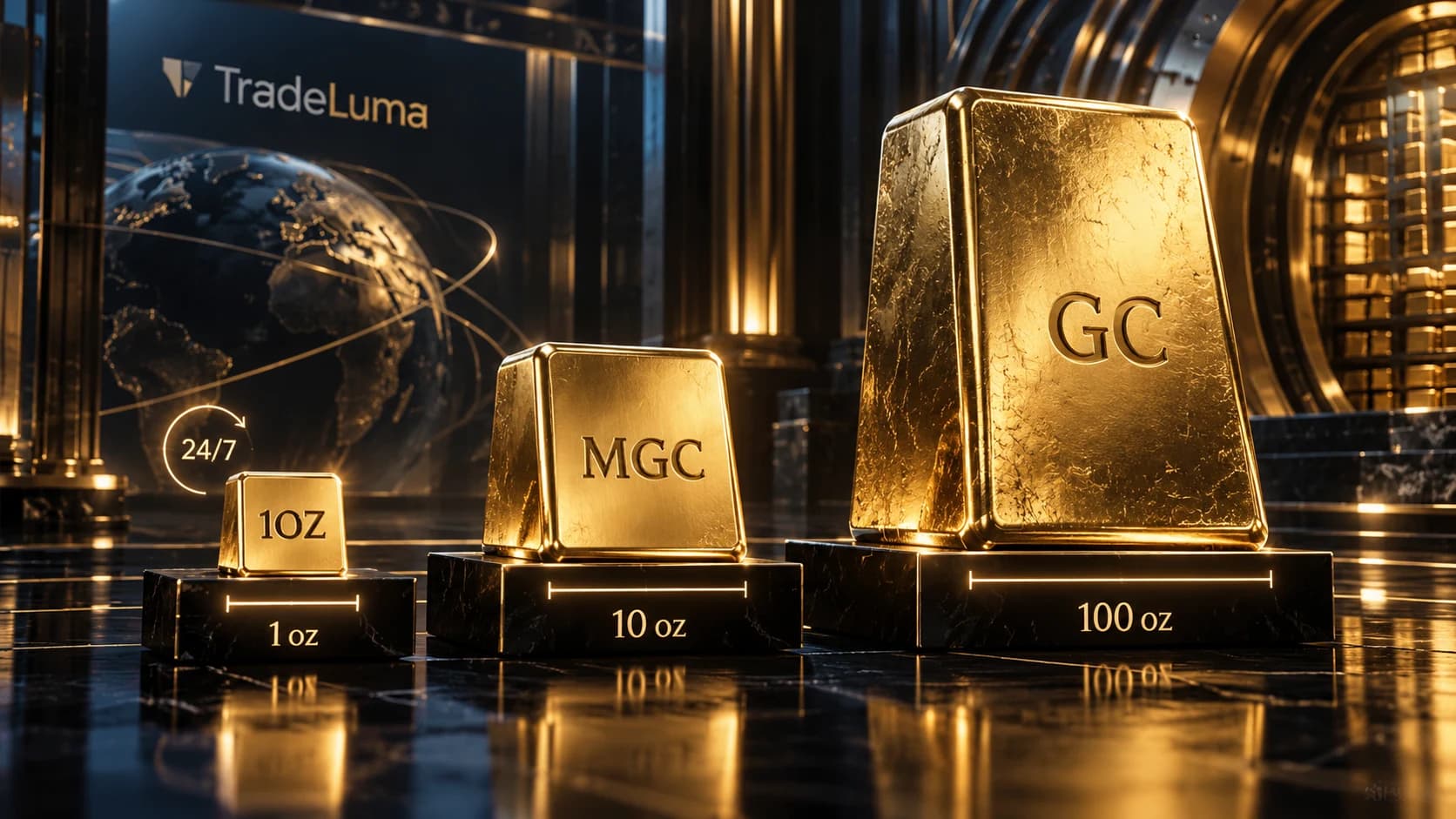
1-Ounce Gold Futures vs Micro Gold (MGC) vs Gold (GC): 2026 Guide
Compare 1-Ounce Gold (1OZ), Micro Gold (MGC) and Gold (GC) futures by contract size, tick value, trading hours, settlement, expiry and risk.
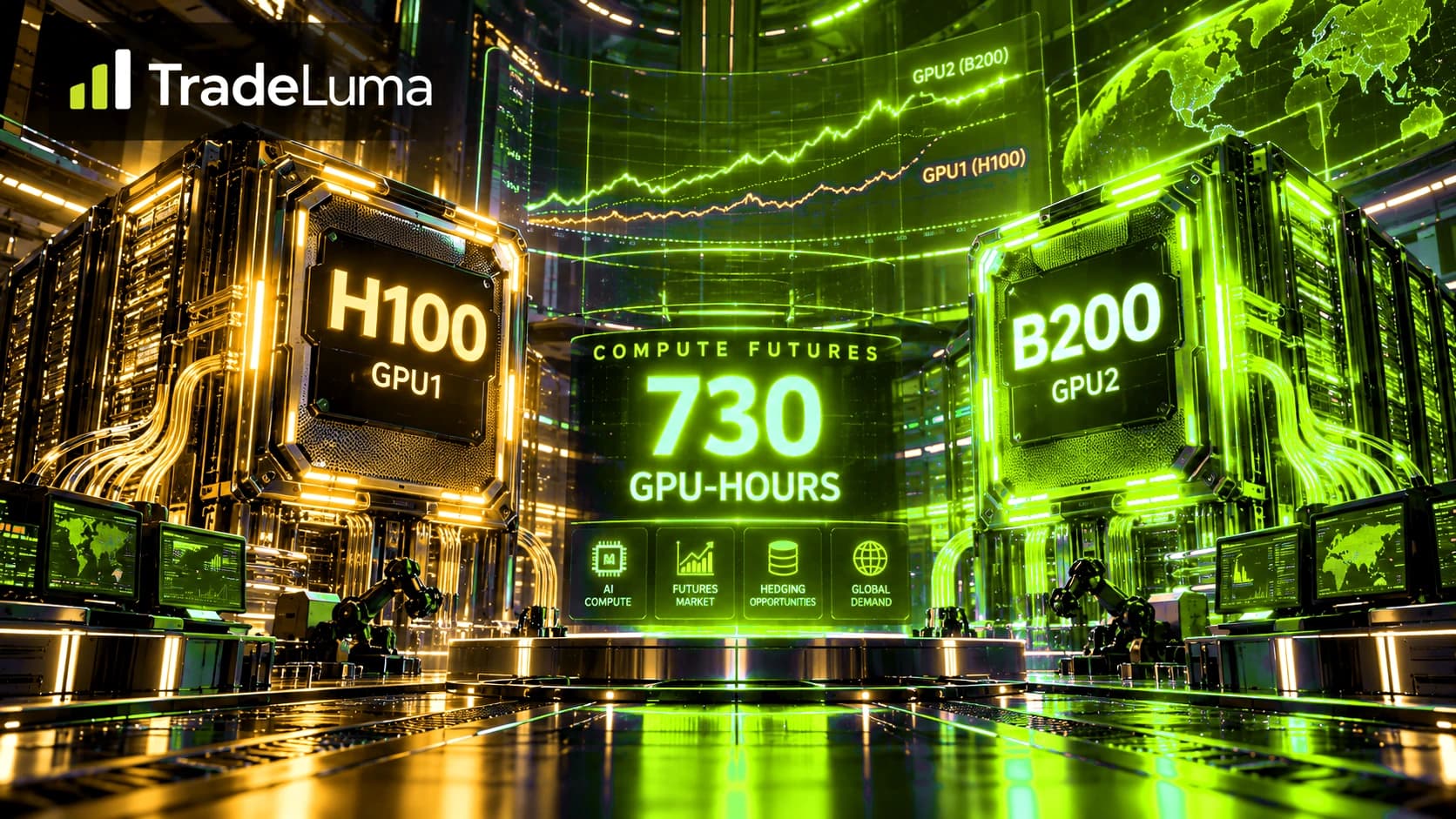
GPU Futures Explained: H100 vs B200 Compute Futures — 2026 Guide
Learn how CME GPU compute futures work, including H100 GPU1 and B200 GPU2 rental indexes, 730 GPU-hours, tick value, settlement, expiry and risk.
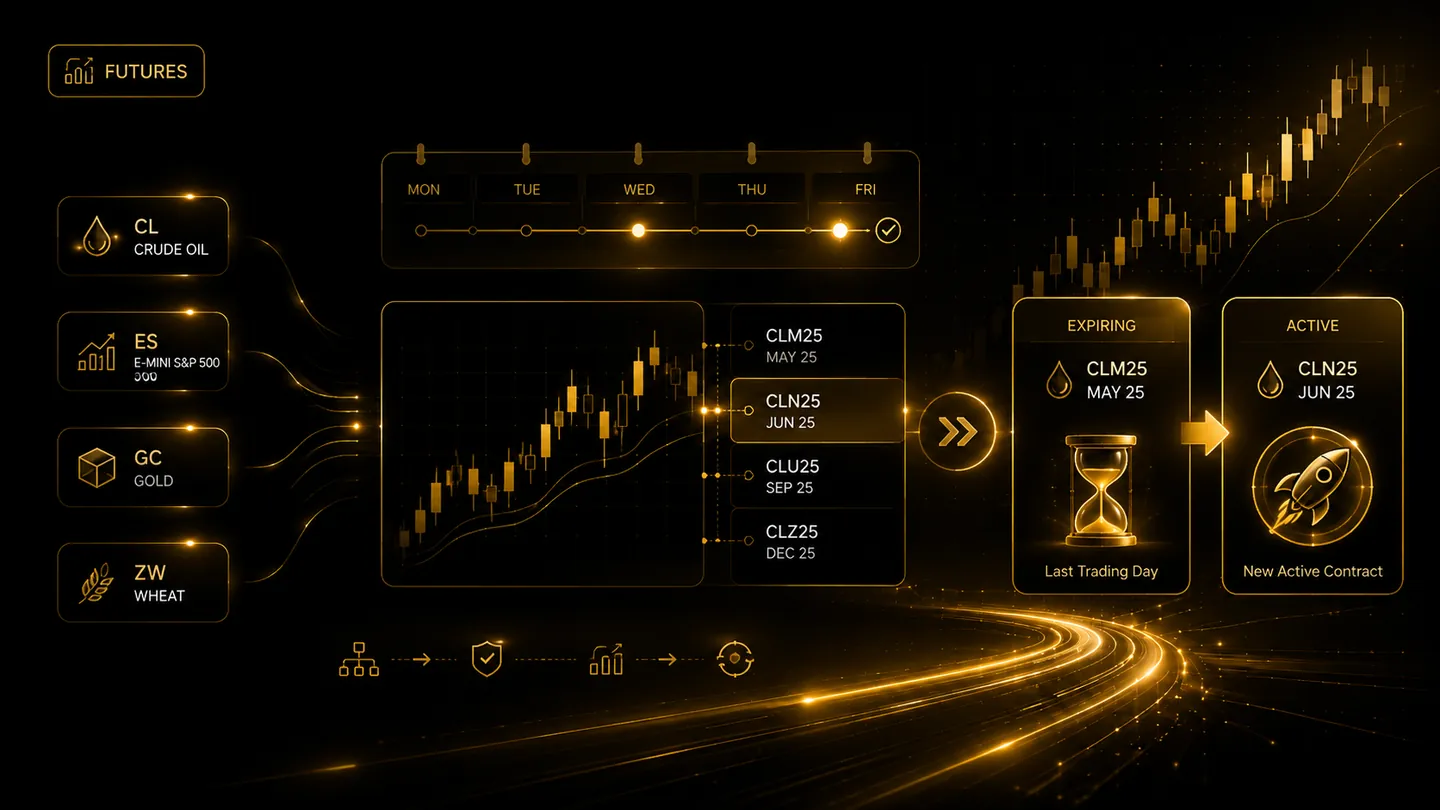
Futures rollover and contract expiry: an automation guide
Understand expiry, liquidity migration, first notice, physical delivery risk, rollover mapping, and how automated futures workflows should respond.