
Execution
Slippage, spread, and latency: the hidden mechanics behind automated fills
Learn how spread, liquidity, latency, and slippage affect the difference between a strategy signal, submitted order, and actual fill.
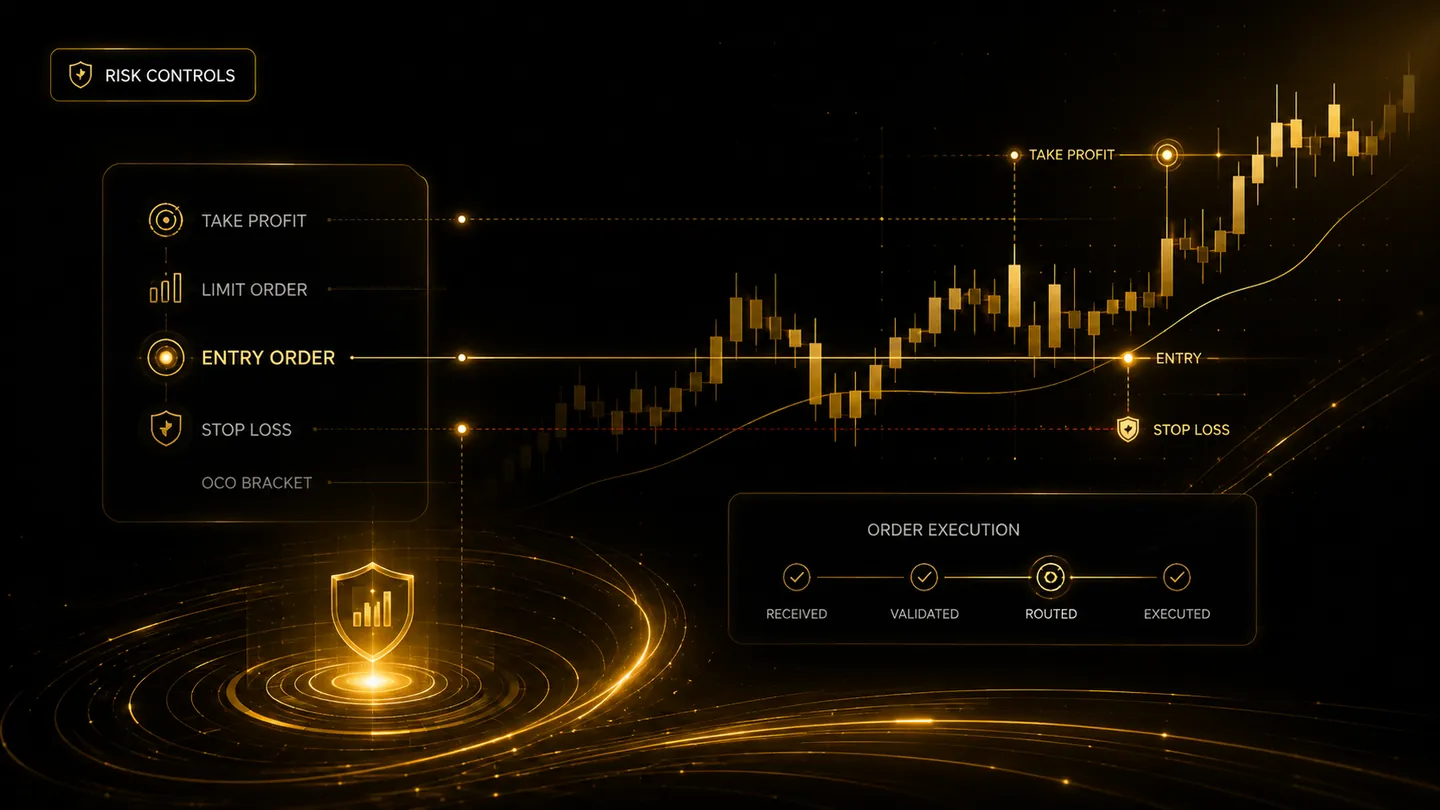
A strategy may generate a signal at one price and receive a fill at another. The difference is not caused by one factor alone. Spread, available liquidity, network and processing latency, broker routing, order type, and market movement all influence execution.
Spread is the immediate trading gap
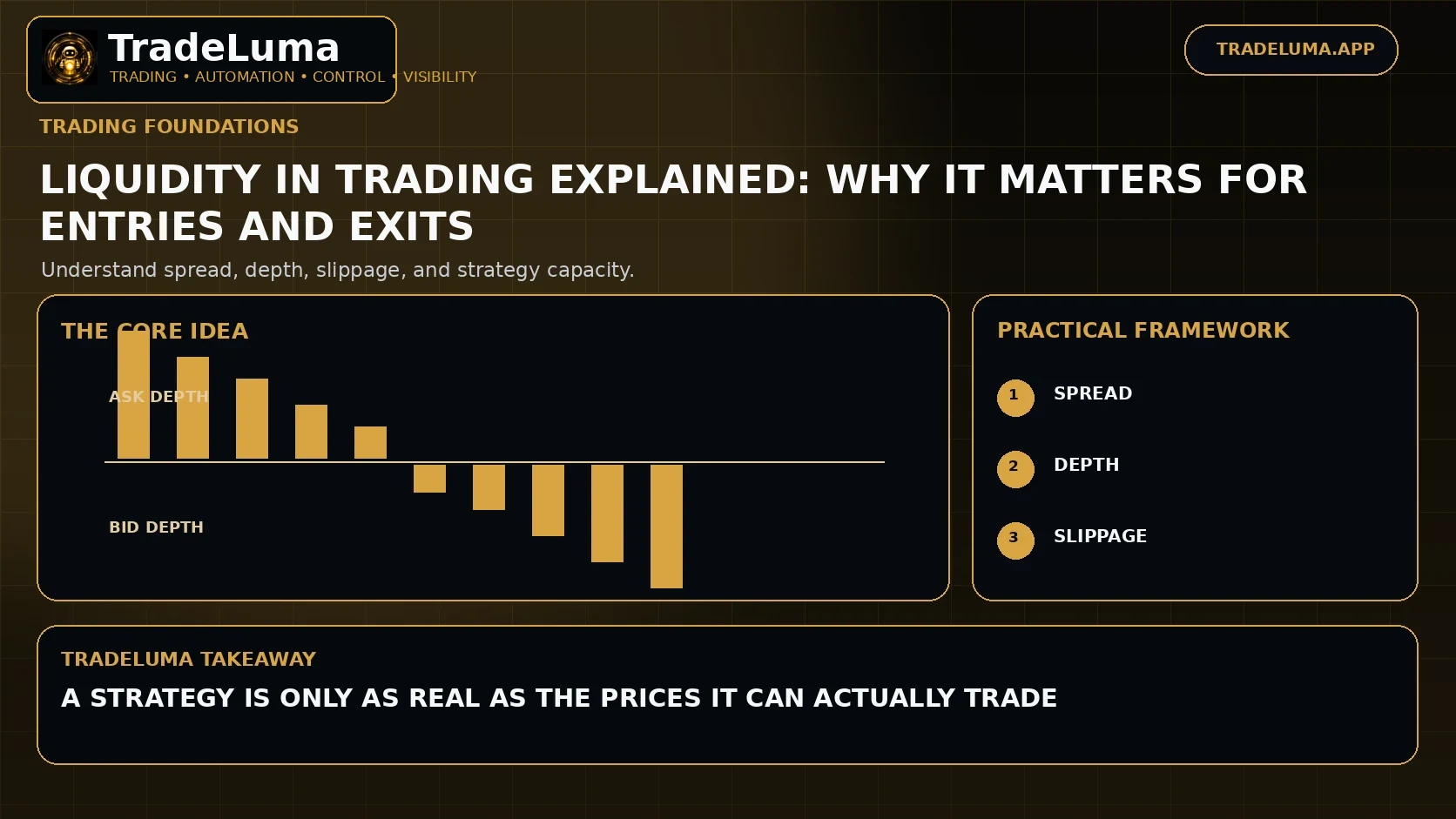
The bid is the highest displayed price a buyer is offering and the ask is the lowest displayed price a seller is offering. The distance between them is the spread. A market buy generally interacts with the ask, while a market sell generally interacts with the bid.
Displayed spread can widen around news, session changes, low-volume periods, or sudden volatility. Historical bars often do not show the full spread that existed at the time.
Slippage is the difference in outcome
Slippage is commonly measured as the difference between an expected reference price and the actual fill. It can be favourable or unfavourable, although protective exits during fast markets often experience adverse slippage.
Backtests should include realistic assumptions for spread, commission, and slippage. A strategy with a small average trade may be especially sensitive to execution costs.
Latency is a chain, not one number
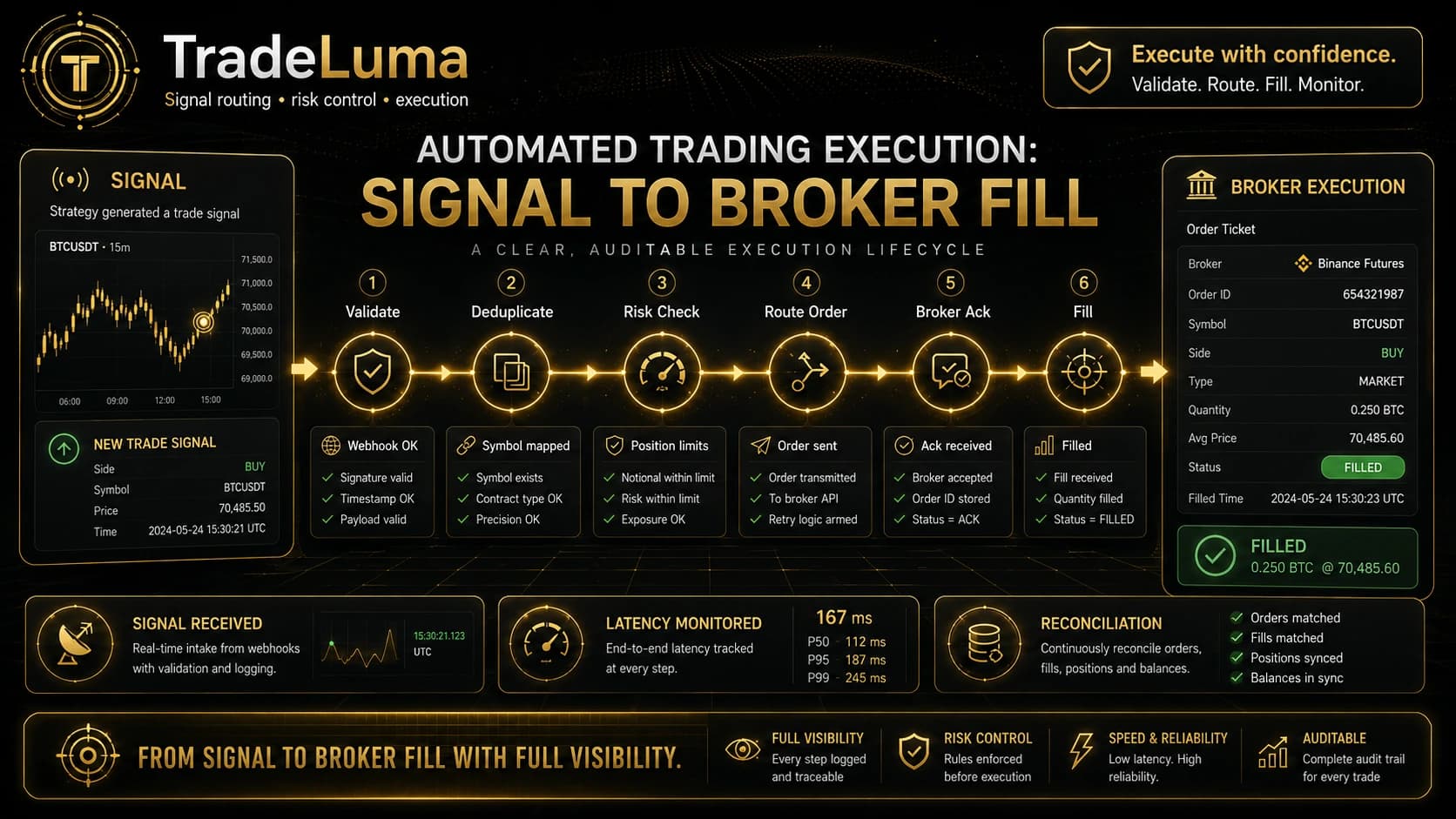
Total latency includes signal calculation, alert creation, internet delivery, authentication, platform validation, broker communication, exchange handling, and status return. Optimising one step does not remove delays elsewhere.
A well-designed system measures stages separately and does not sacrifice safety checks merely to display a smaller headline number. Reliability, duplicate control, and correct broker state are part of execution quality.
Frequently asked questions
Can faster automation eliminate slippage?
No. Lower delay may reduce some price movement, but spread, liquidity, order priority, market gaps, and broker routing still affect fills.
Why can paper fills look better than live fills?
Paper environments may simulate fills using simplified assumptions and may not reproduce queue position, partial fills, market impact, or live liquidity.
Continue learning
Related TradeLuma guides
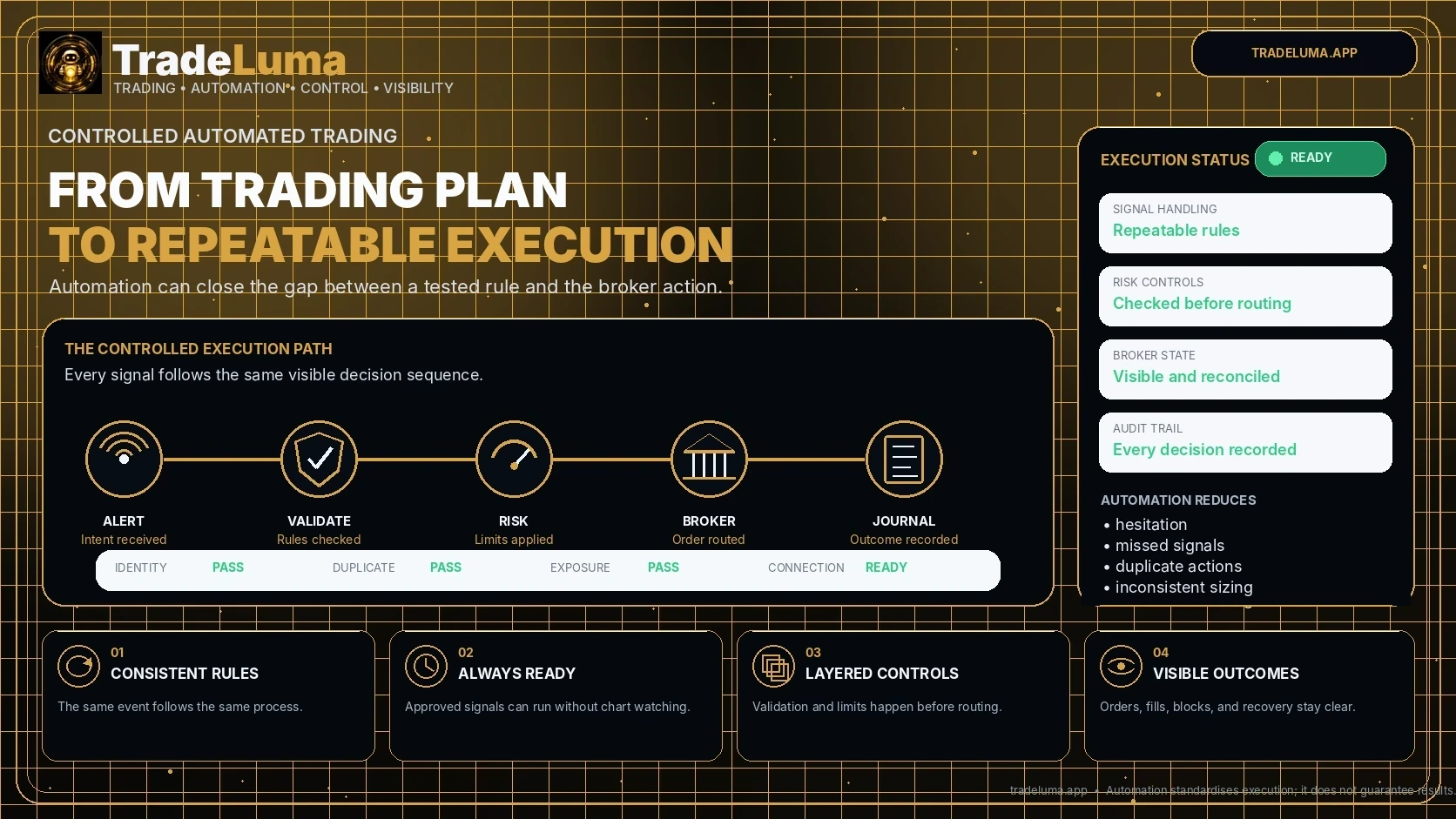
Build a controlled automation workflow with TradeLuma
Configure alerts, test in paper mode, apply execution controls, and follow broker outcomes from one workspace.