
Strategy Research
How to Build a Futures Strategy Portfolio With a $10,000 Account
A hypothetical US$10,000 futures account framework for risk budgets, micro contract sizing, correlated exposure, margin buffers and strategy testing.
On this page+

A US$10,000 futures account is an example for teaching portfolio design, not a statement that this amount is adequate for any particular contract or strategy. Futures collateral is not an investment allocation in the same sense as purchasing shares. The key decisions are contract quantity, simultaneous exposure, stress losses and uncommitted cash. This is general education, not personalised investment advice; futures trading can result in losses exceeding deposits.
Start with a hypothetical portfolio risk budget
For illustration, a US$10,000 account might use a planned single-trade risk budget of US$50 and a combined planned open risk limit of US$150. These are teaching assumptions, not personal recommendations. A gap or correlated move could exceed either number.
Keep cash available for changing margin requirements and adverse execution. Do not allocate the entire account to margin or assume an arbitrary percentage assigned to gold or Nasdaq translates into a tradable number of contracts.
Translate the budget into contract quantities
One MGC contract with a hypothetical US$3 per ounce stop distance has US$30 planned price risk; one MNQ contract with a 20-point stop has US$40. Add estimated round-trip costs before comparing each to a US$50 risk budget.
One SIL contract with a US$0.10 per ounce stop distance has US$100 planned price risk. One standard PL contract with a US$2 per ounce stop distance also has US$100 planned price risk. Both fail the example US$50 budget before costs, demonstrating why an account may need to skip a market entirely.
Diversification requires evidence, not four symbols
Gold, silver and platinum can share metals-related drivers; Nasdaq may also respond to rates and dollar conditions. Positions that appear independent in calm markets can become correlated during stress.
Compare individual strategy drawdowns, overlapping positions and adverse scenarios at the portfolio level. A portfolio containing several strategies can lose more than one strategy alone, especially when exposure accumulates across simultaneous trades.
Validate strategy subscriptions before combining them
TradeLuma offers separate published Gold, Nasdaq, Silver and Platinum strategy collections using their specified reference markets. Evaluate historical assumptions, actual contract sizing, costs and trade overlap before considering multiple subscriptions. Historical results do not assure future performance.
Use the strategy portfolio research guide and tick-value cheat sheet to document each candidate. Check broker margin, realistic stop distances and account-level risk controls. If the required margin or loss budget does not fit, reduce the quantity where possible or skip the trade.
Frequently asked questions
Is US$10,000 enough for four futures strategies?+
Not necessarily. Margin, position sizes, market conditions and combined risk determine feasibility.
Should I divide my account equally across four contracts?+
Not by default. Futures exposure depends on multipliers and quantity, not simply allocated cash.
Can I lose more than my planned risk budget?+
Yes. Gaps, slippage and correlated losses can exceed planned amounts.
Put it into practice
Use the risk maths next to the guide.
Open TradeLuma's free position-size, risk/reward, expectancy, and drawdown tools to test the numbers behind a risk-management decision.
Open free trading calculators →Continue learning
Related guides.

One Trading Strategy vs Multiple Strategies: How to Allocate Capital
Compare single and multi-strategy capital allocation, shared exposure, correlated losses, margin and combined portfolio risk using worked hypothetical scenarios.
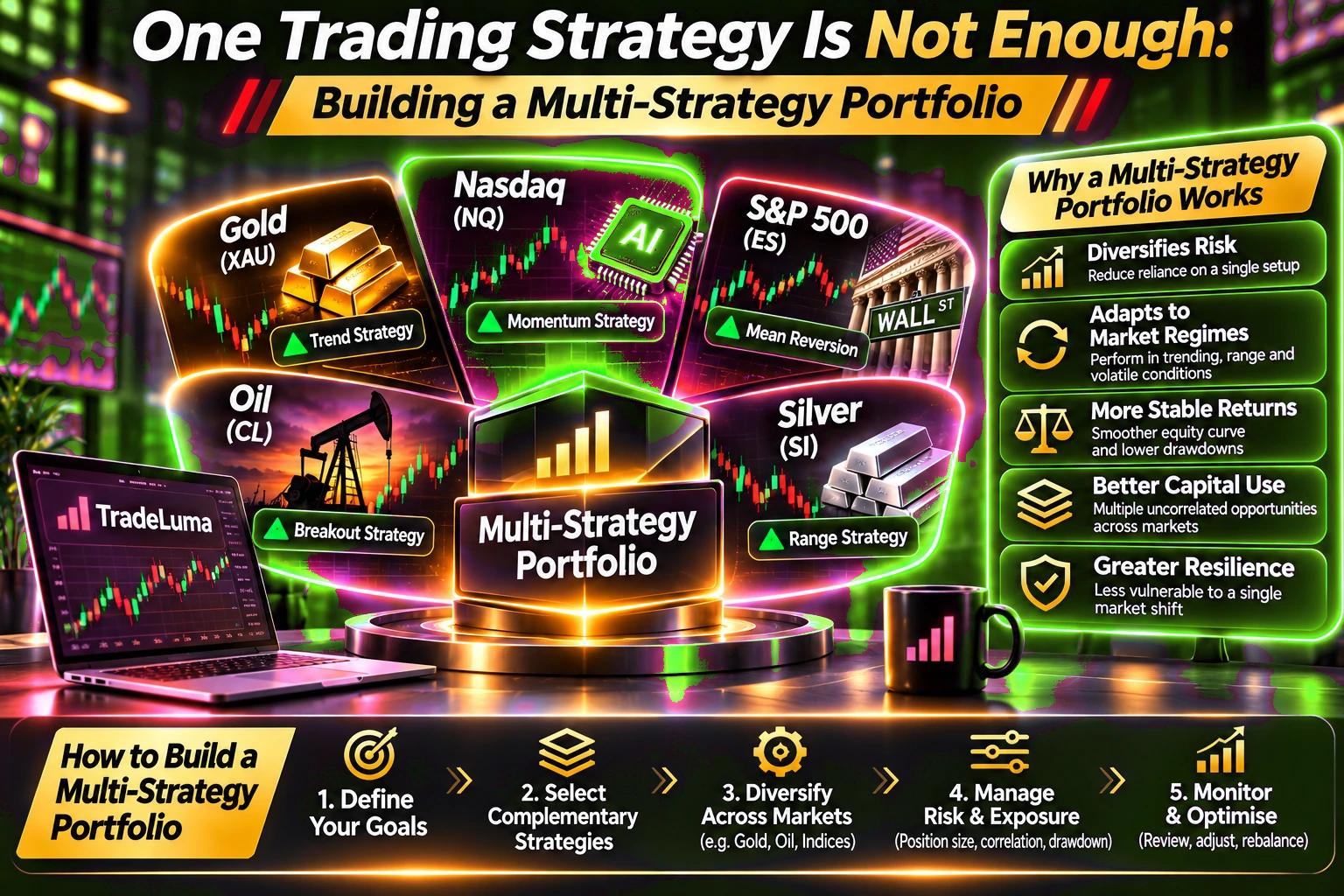
One Trading Strategy Is Not Enough? Building a Multi-Strategy Portfolio
Learn how complementary trading strategies, correlation, risk budgets, market regimes and portfolio monitoring can affect aggregate exposure.
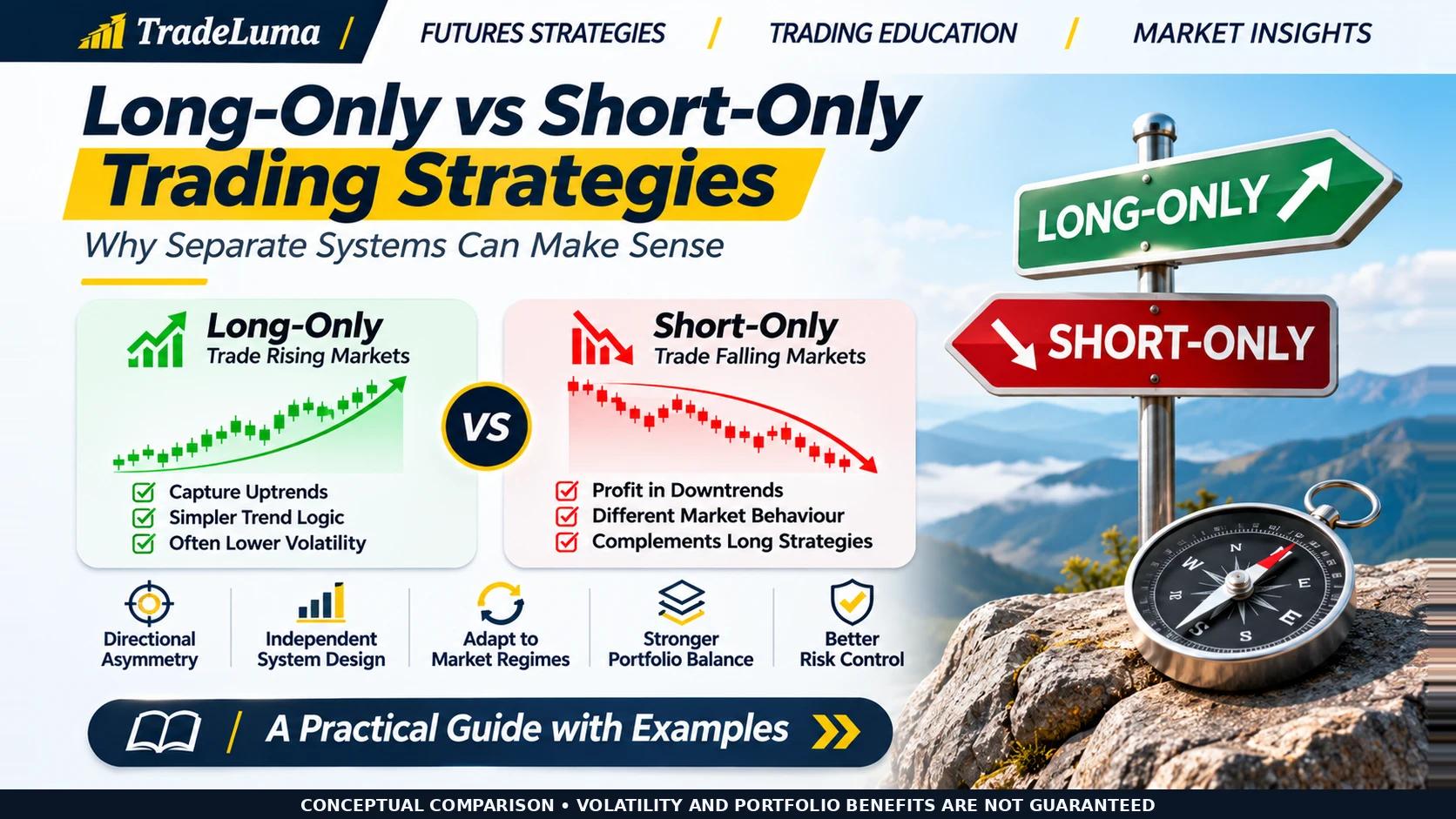
Long-Only vs Short-Only Trading Strategies: Why Separate Systems Can Make Sense
Compare directional trading systems, asymmetric market behaviour, combined exposure and separate long/short strategy research for futures traders.