
Risk Management
Can You Lose More Than Your Account Balance Trading Futures?
Understand negative futures balances, leverage, gaps, margin liquidation, broker controls and why stop-loss orders do not guarantee a loss limit.
On this page+
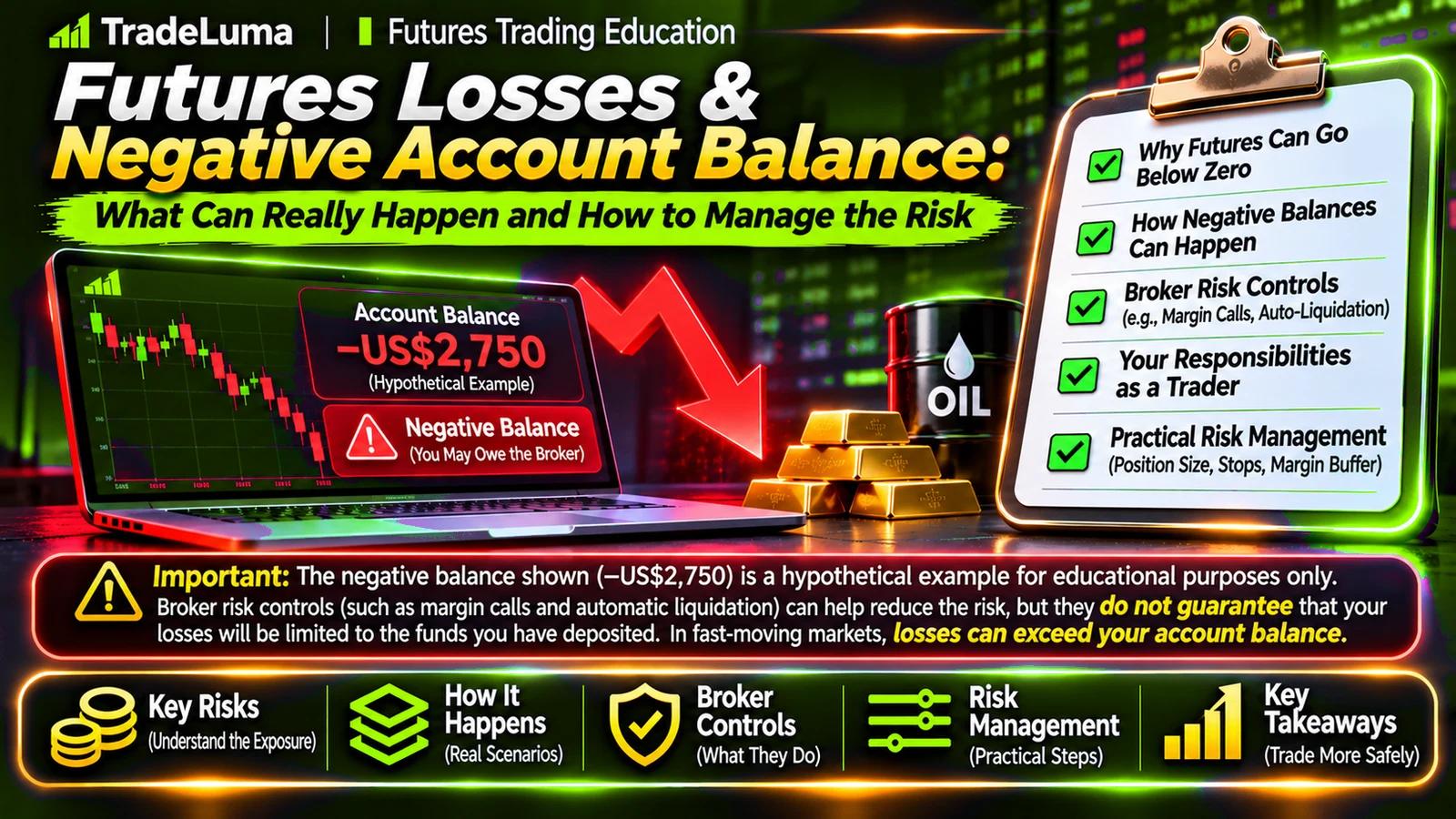
Yes. Leveraged futures positions can produce losses greater than the collateral deposited and potentially greater than the account balance. Brokers may apply margin controls and automatic liquidation, but these controls do not guarantee that every position can be closed before a deficit occurs. Account agreements and applicable protections vary. This is general education, not personalised investment advice; futures trading can result in losses exceeding deposits.
How the loss can exceed deposited cash
A futures contract's price exposure is based on its multiplier, not its margin requirement. A position may be liquidated when equity falls below applicable thresholds, but the fill can occur after further losses, particularly during fast markets or a trading halt.
If equity becomes negative, the customer may owe the broker a deficit under the account agreement. Do not assume protections that apply to one retail financial product also apply to exchange-traded futures.
A hypothetical negative balance
Suppose a US$2,000 futures account has an adverse loss of US$4,750 including execution charges. Its resulting equity is negative US$2,750. This arithmetic example matches the illustrative cover; it is not a real customer account or observed TradeLuma result.
The example does not assume that the broker would allow any specific position at entry. It demonstrates what can happen when market exposure, available equity and executable prices are different from the intended risk budget.
Why a stop-loss cannot guarantee the exit price
A stop-market order becomes eligible for execution when triggered, but liquidity and gaps can cause a materially different fill. A stop-limit order can remain unfilled if price moves beyond its limit. Exchange price limits and market closures can prevent immediate execution.
Margin liquidation is also subject to executable prices and broker policies. A warning or margin call may not arrive before action is taken, and an automated alert is not proof of a successful exit.
Practical risk management
Use contract-specific position sizing, a separate loss budget and a margin buffer. Stress-test gap moves and correlated positions instead of treating a stop distance as the worst possible outcome. Reduce exposure or remain flat if the smallest eligible contract exceeds the risk budget.
Review initial, maintenance and intraday margin requirements and monitor actual positions, open orders and liquidation rules. If a deficit occurs, contact the broker promptly, request account records and clarify the terms and obligations.
Frequently asked questions
Can my futures account go negative?+
Yes, depending on the loss, execution and applicable account terms.
Will automatic liquidation prevent every deficit?+
No. It cannot guarantee execution before losses exceed account equity.
Does using a stop order cap my losses?+
No. Stops may fill at worse prices or, for stop-limit orders, may remain unfilled.
Put it into practice
Use the risk maths next to the guide.
Open TradeLuma's free position-size, risk/reward, expectancy, and drawdown tools to test the numbers behind a risk-management decision.
Open free trading calculators →Continue learning
Related guides.
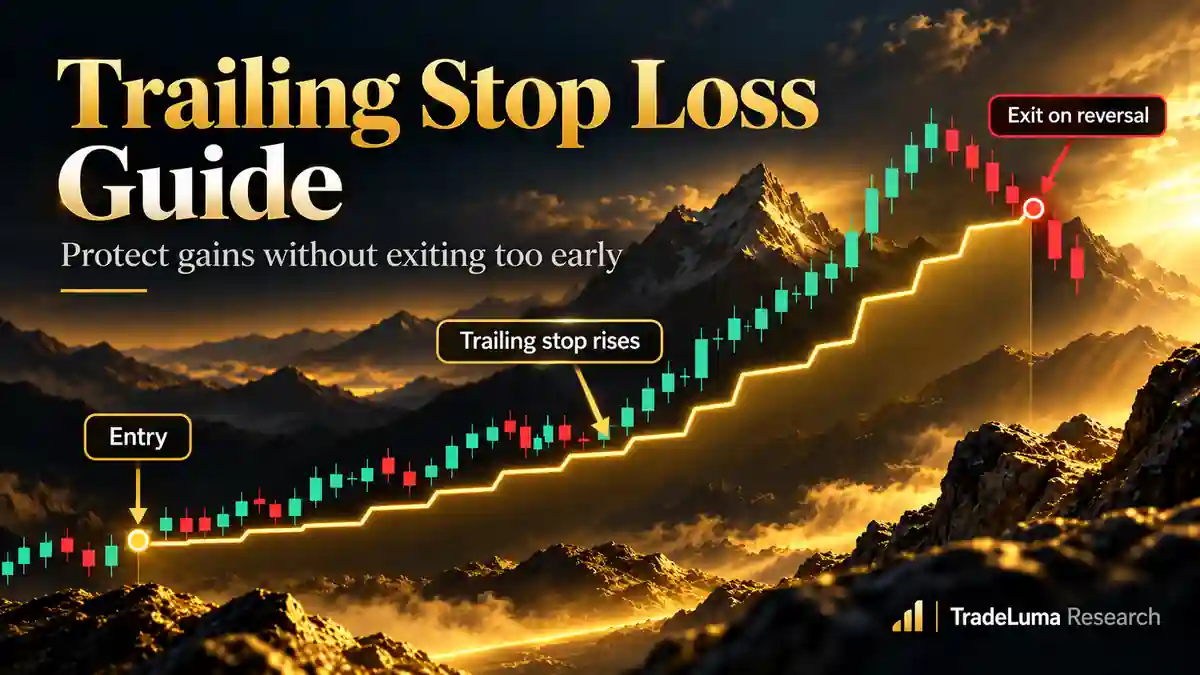
Trailing stop loss guide: how traders protect gains without exiting too early
Learn what a trailing stop loss is, how it differs from a fixed stop, and how traders use it to balance protection with room for the trade to work.

Position Sizing in Trading: Risk Per Trade, Stop Distance and Contract Size
Learn how position sizing links account risk, stop distance, point value, leverage, and contract or share quantity into one repeatable risk process.

Stop Loss Strategy: Where to Place Stops and Manage Trading Risk
Learn how stop losses work, where traders place them, how volatility affects stop distance, and why position size should adapt to the invalidation point.