
Risk Management
Trailing stop loss guide: how traders protect gains without exiting too early
Learn what a trailing stop loss is, how it differs from a fixed stop, and how traders use it to balance protection with room for the trade to work.
On this page+
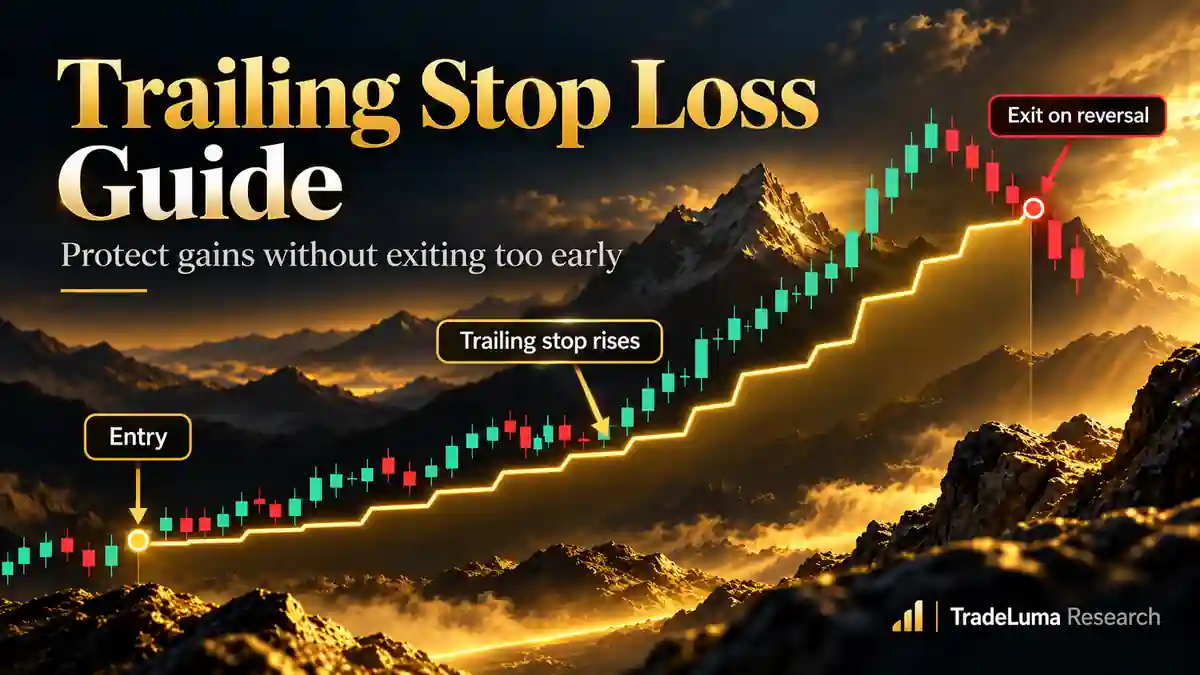
Learn what a trailing stop loss is, how it differs from a fixed stop, and how traders use it to balance protection with room for the trade to work. A trailing stop aims to protect progress while still giving the trade room to breathe.
What a trailing stop is
A trailing stop is a stop-loss method that moves as a trade develops, usually in the direction of open profit.
Unlike a fixed stop, it is designed to reduce downside exposure as the market moves favourably while still allowing the position to continue.
Why traders use trailing stops
Trailing stops can help protect part of a move without requiring the trader to guess the exact top or bottom.
They are especially common in trend-following approaches where the objective is to remain in a persistent move while progressively protecting gains.
Common trailing methods
Some traders trail behind swing lows or highs, some use ATR-based distance, and others use a moving average or fixed step rule.
The method should match the normal volatility of the market and the holding period of the strategy.
The main challenge
If the stop is tightened too quickly, ordinary price noise may close the trade before the broader move has finished.
If it is moved too slowly, the trader may give back more open profit than intended.
How to use trailing stops well
Trailing stops work best when they are rule-based rather than emotional. The trader should know in advance when the stop moves and what evidence triggers the adjustment.
Backtesting and journal review can show whether a trailing method improves the strategy or simply feels safer in the moment.
Frequently asked questions
What is a trailing stop loss?+
It is a stop-loss method that moves with the trade to protect gains as price moves favourably.
Is a trailing stop better than a fixed stop?+
Not always. The better choice depends on the strategy and the behaviour of the market.
Why do trailing stops sometimes exit too early?+
Because the trail may be too tight for the normal volatility of the market or timeframe being traded.
Put it into practice
Use the risk maths next to the guide.
Open TradeLuma's free position-size, risk/reward, expectancy, and drawdown tools to test the numbers behind a risk-management decision.
Open free trading calculators →Continue learning
Related guides.
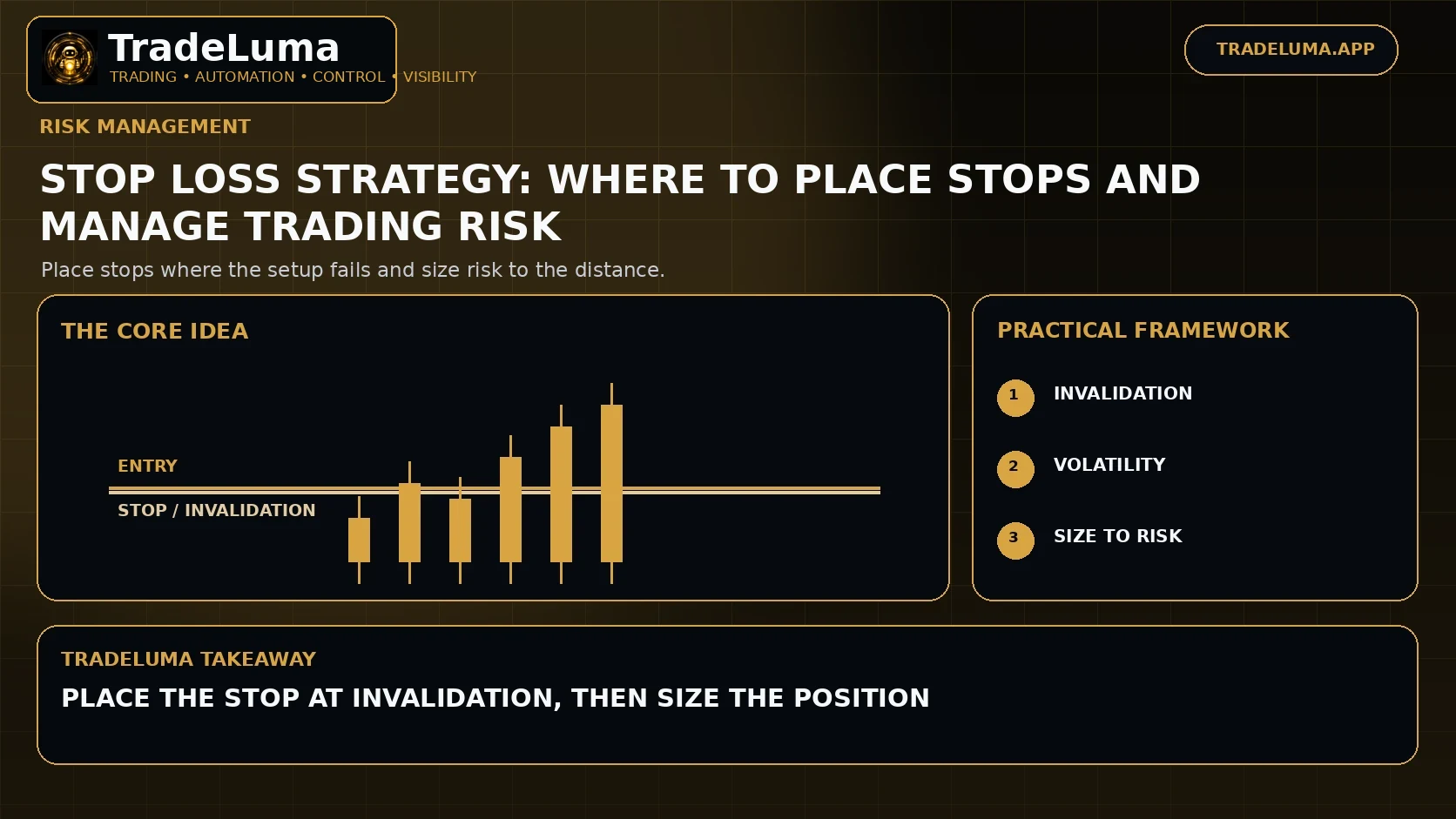
Stop Loss Strategy: Where to Place Stops and Manage Trading Risk
Learn how stop losses work, where traders place them, how volatility affects stop distance, and why position size should adapt to the invalidation point.
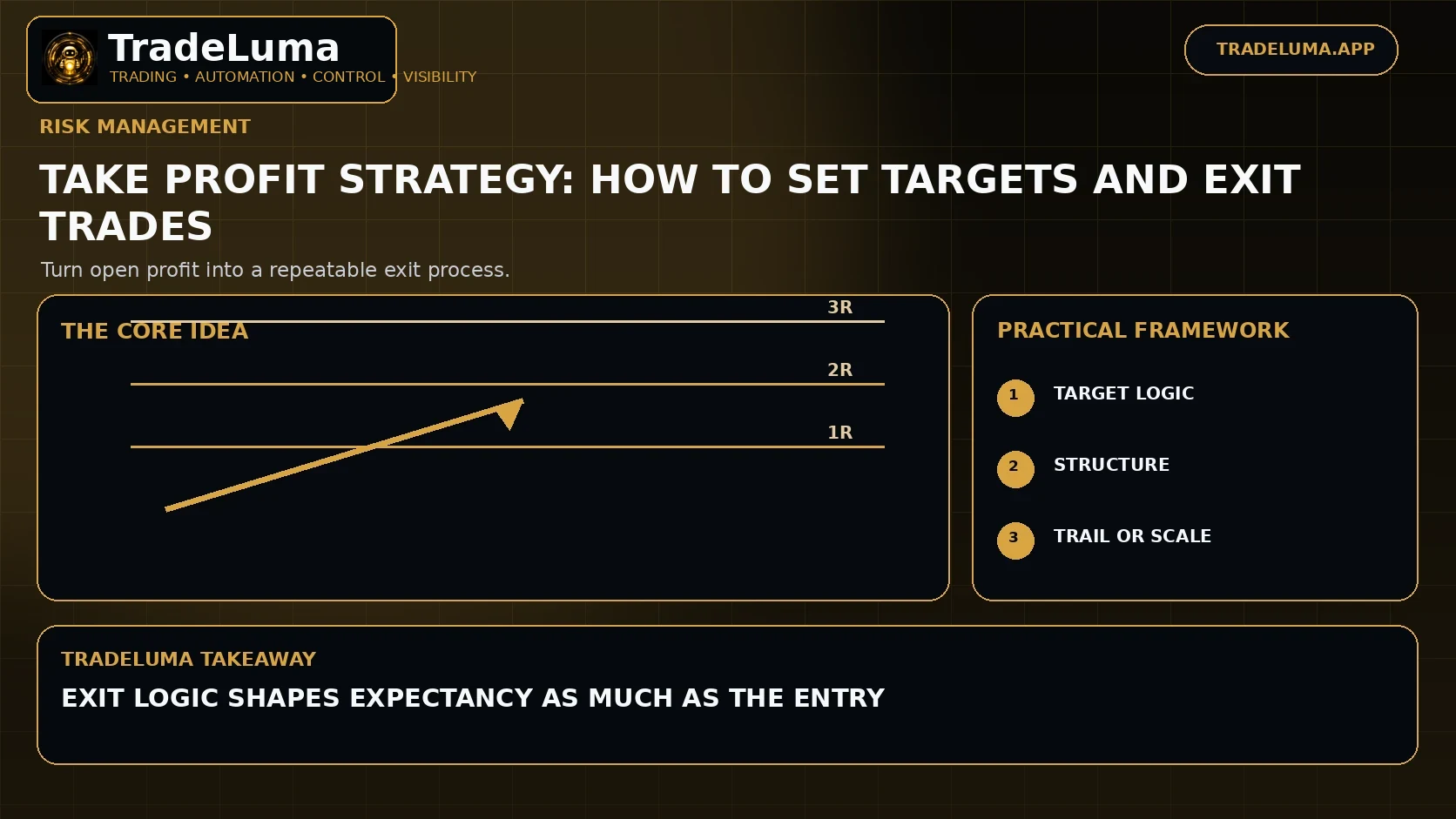
Take Profit Strategy: How to Set Targets and Exit Trades
Learn how traders set take-profit targets using reward-to-risk, market structure, volatility, trailing exits, and partial profit-taking.
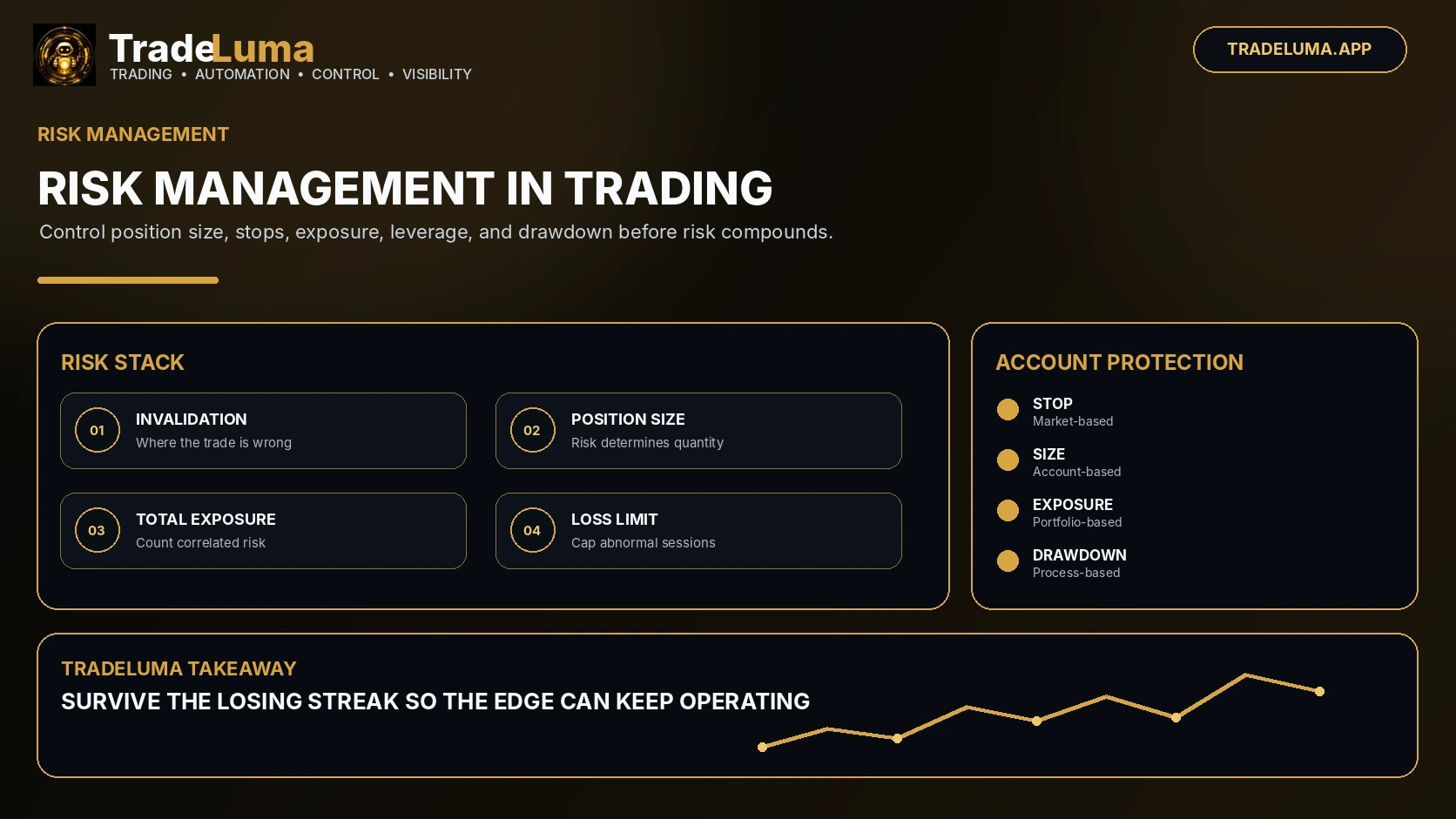
Risk Management in Trading: Position Size, Stops and Drawdown
Learn trading risk management through position sizing, stop placement, portfolio exposure, drawdowns, losing streaks, leverage, and risk limits.