
Strategy Research
One Trading Strategy vs Multiple Strategies: How to Allocate Capital
Compare single and multi-strategy capital allocation, shared exposure, correlated losses, margin and combined portfolio risk using worked hypothetical scenarios.
On this page+

Adding strategies can broaden a research portfolio, but the number of systems is not the same as diversification. The relevant unit is combined exposure under adverse conditions. This guide examines allocation rather than advocating a fixed number of subscriptions. Cover charts are conceptual. TradeLuma has a commercial interest in its own invite-only futures strategy scripts. This is educational material, not a personalised recommendation or a promise of returns. Historical simulations and hypothetical examples do not predict future outcomes. Futures are leveraged and losses can exceed initial margin.
Single system: simple but concentrated
A single strategy can be easier to maintain, observe and diagnose. It may nevertheless rely on a narrow set of market conditions. Even a system that has traded across many years can have concentrated exposure to one market or direction.
Document its intended behaviour and maximum acceptable research loss. Do not assume adding another strategy is the only solution to an unacceptable risk profile; lower exposure or no exposure may be more appropriate.
Worked allocation scenario
Suppose a hypothetical research portfolio sets $600 as an aggregate planned loss budget for a particular adverse move. Four independent order ideas each with $150 planned stop risk use the entire $600 before fees, slippage or gaps. Two systems each sized at $400 would exceed the same budget if their risk overlaps.
This arithmetic is not a recommended budget or a maximum guaranteed loss. A stop may fill beyond its trigger; margin and notional exposure require separate checks. Contract indivisibility may mean no permissible size fits the budget.
Allocation based on risk rather than subscription count
Equal capital does not necessarily mean equal risk because contract units, volatility and stop distances differ. Translate each proposed position into cash exposure with the relevant contract multiplier. Account for working orders and consider how an adverse market move would affect them together.
Review total margin requirement and maintain a documented buffer suitable for the account's own risk constraints. A broker can change margin requirements; a strategy's standalone simulation is not the broker's margin model.
Use bundles as research options, not mandatory positions
TradeLuma offers separate Gold, Nasdaq, Silver and Platinum collections and market bundles. Access to multiple scripts is not a requirement to run every script simultaneously. Evaluate each separately and then test combined behaviour, including coincident losses.
The multi-strategy portfolio risk calculator can help organise assumptions. Use a paper workflow to inspect conflicting signals and broker reconciliation before contemplating a combined live system.
Frequently asked questions
Should I divide capital equally between strategies?+
Not automatically. Equal capital can produce unequal cash risk; account for volatility, contract size and shared exposures.
Do opposite directions eliminate risk?+
No. Timing, sizing, basis and execution differences can leave substantial exposure.
Can buying a bundle guarantee diversification?+
No. Diversification depends on the actual positions and their behaviour, not the number of subscriptions.
Put it into practice
Use the risk maths next to the guide.
Open TradeLuma's free position-size, risk/reward, expectancy, and drawdown tools to test the numbers behind a risk-management decision.
Open free trading calculators →Continue learning
Related guides.

How to Build a Futures Strategy Portfolio With a $10,000 Account
A hypothetical US$10,000 futures account framework for risk budgets, micro contract sizing, correlated exposure, margin buffers and strategy testing.
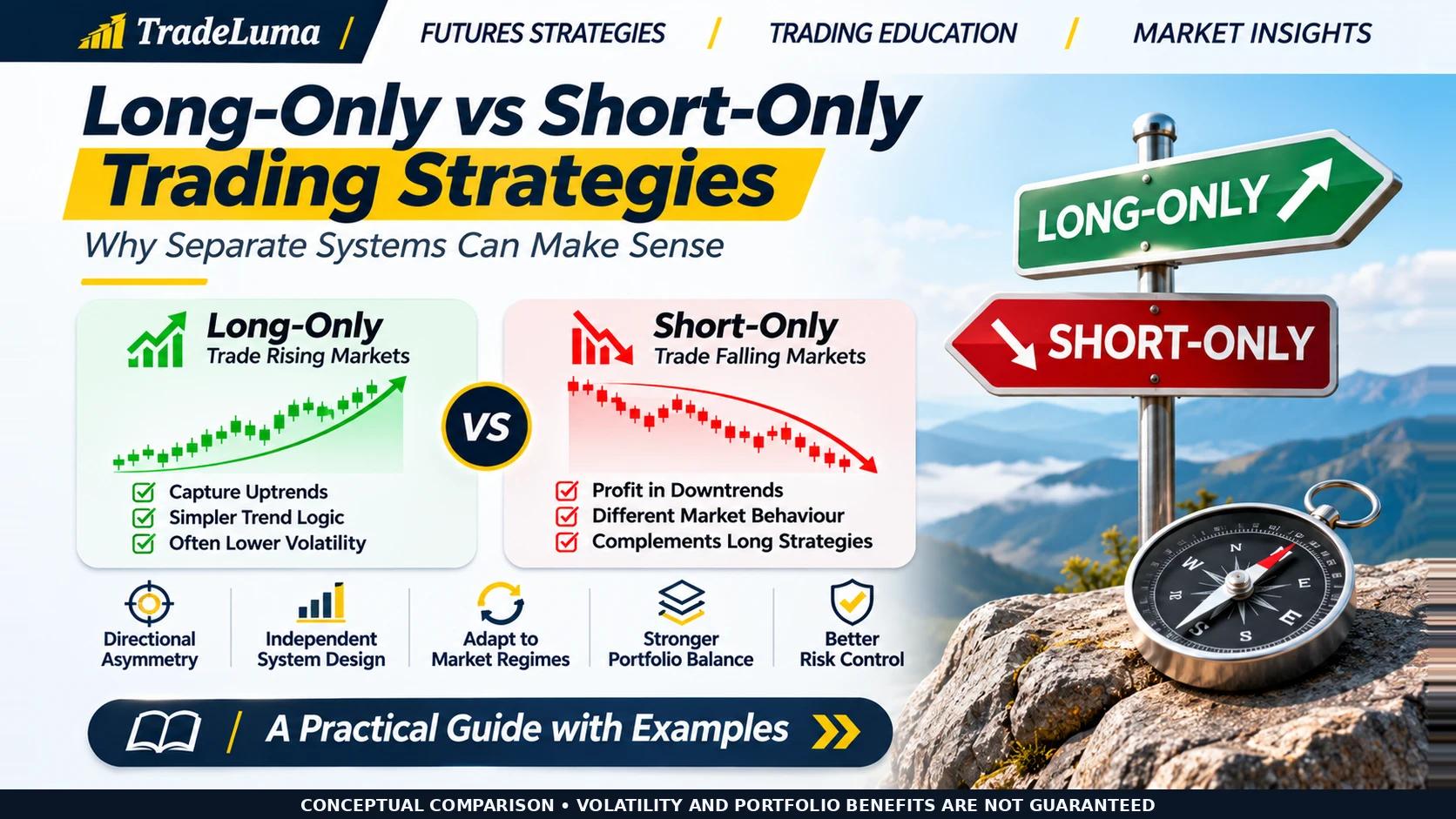
Long-Only vs Short-Only Trading Strategies: Why Separate Systems Can Make Sense
Compare directional trading systems, asymmetric market behaviour, combined exposure and separate long/short strategy research for futures traders.
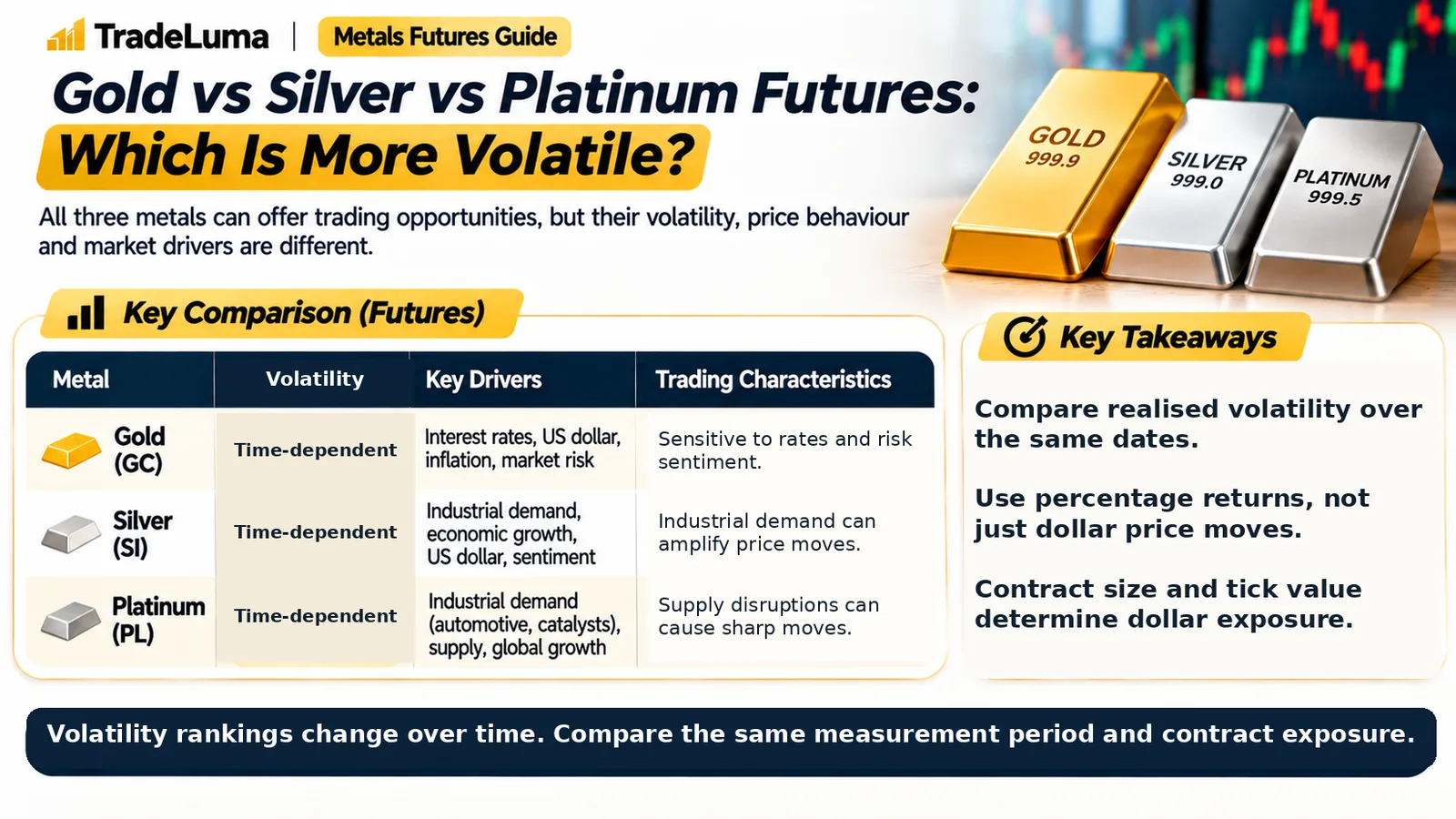
Gold vs Silver vs Platinum Futures: Which Is More Volatile?
Compare percentage volatility, ATR, dollar exposure and market drivers without assuming fixed metals volatility rankings.