
Strategy Research
Gold vs Silver vs Platinum Futures: Which Is More Volatile?
Compare percentage volatility, ATR, dollar exposure and market drivers without assuming fixed metals volatility rankings.
On this page+
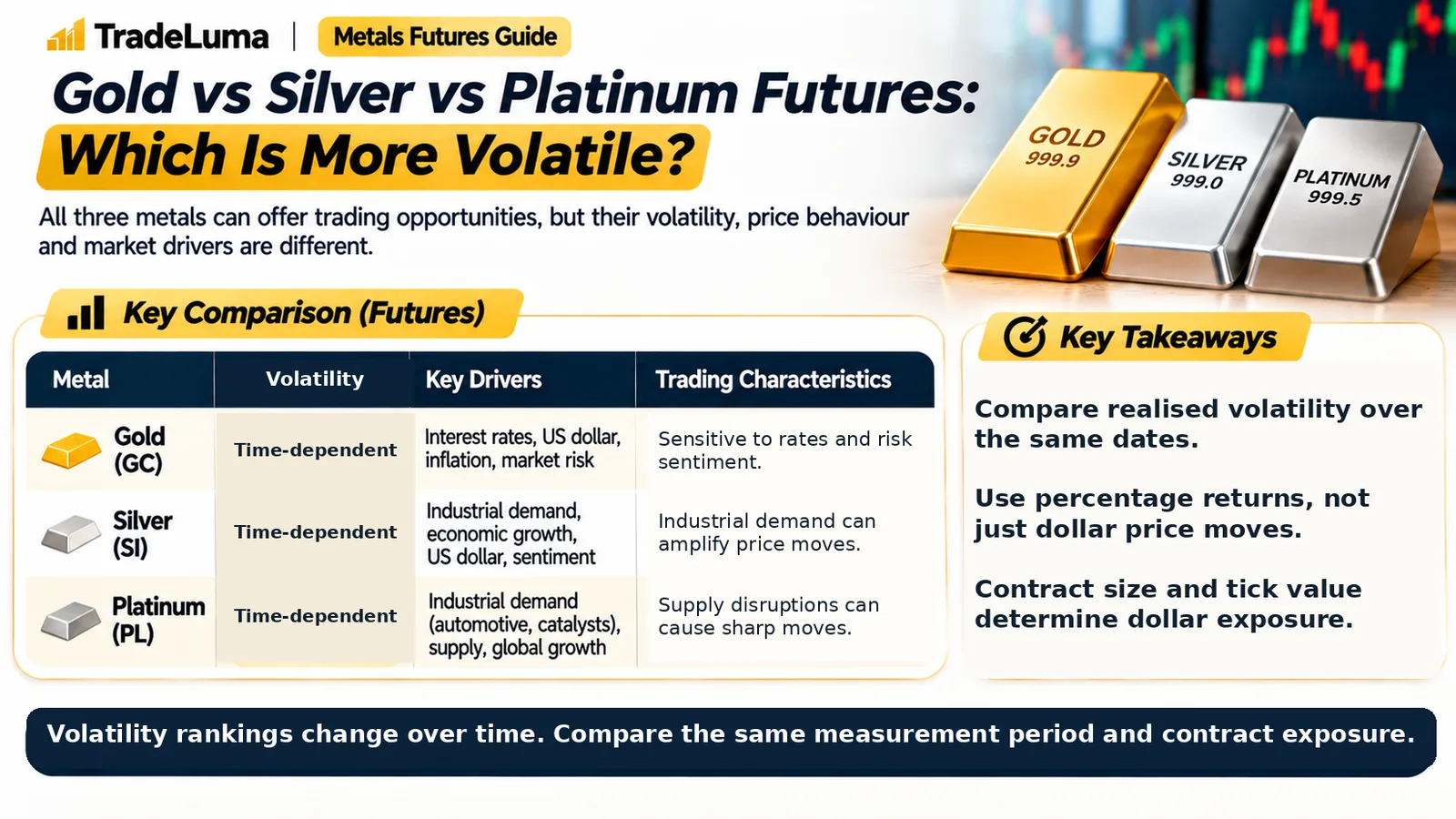
Silver often exhibits larger percentage swings than gold, while platinum can show substantial supply-driven moves. The order can change with the measurement period and methodology; no fixed ranking is guaranteed. This is general education, not personalised investment advice.
Measure comparable returns
Calculate percentage returns over matching dates and use consistent annualisation when comparing realised volatility. Average True Range (ATR) measures price variability, but raw dollars per ounce are not comparable across prices.
ATR divided by price provides a relative measure. Handle futures rolls, holidays and missing data consistently. State dates and methodology before publishing a numerical ranking.
Market drivers
Gold responds to real yields, currencies and investment demand. Silver has additional industrial demand, and platinum is influenced by industrial demand and concentrated supply chains.
Shared drivers can cause simultaneous losses. Compare gold and silver futures correlation over rolling windows rather than assuming their risk is independent.
Contract size matters
Micro Gold MGC represents 10 ounces, Micro Silver SIL 1,000 ounces and standard Platinum PL 50 ounces. A US$1 adverse move in MGC is US$10 per contract; a US$0.10 move in SIL is US$100; a US$2 move in PL is US$100.
These are hypothetical separate price movements, not comparative forecasts. Use the futures tick value cheat sheet to calculate actual exposure and include fees and slippage.
Strategy comparison
TradeLuma publishes Gold, Silver and Platinum strategy collections for specified reference markets. Compare net historical returns, drawdown, trade counts and contract sizing using consistent assumptions.
Neither a higher-volatility market nor a larger historical gain proves a better strategy. Historical volatility does not limit future losses.
Frequently asked questions
Is silver always more volatile than gold?+
No. It often is, but measurement periods matter.
Is platinum always between gold and silver?+
No. The ranking can change.
Does higher volatility guarantee higher returns?+
No. Volatility measures variability, not an edge.
Trading indicators
Continue with the topic hub.
Browse the related TradeLuma guides and build the topic from foundations through practical application.
Explore Trading indicators guides →Continue learning
Related guides.
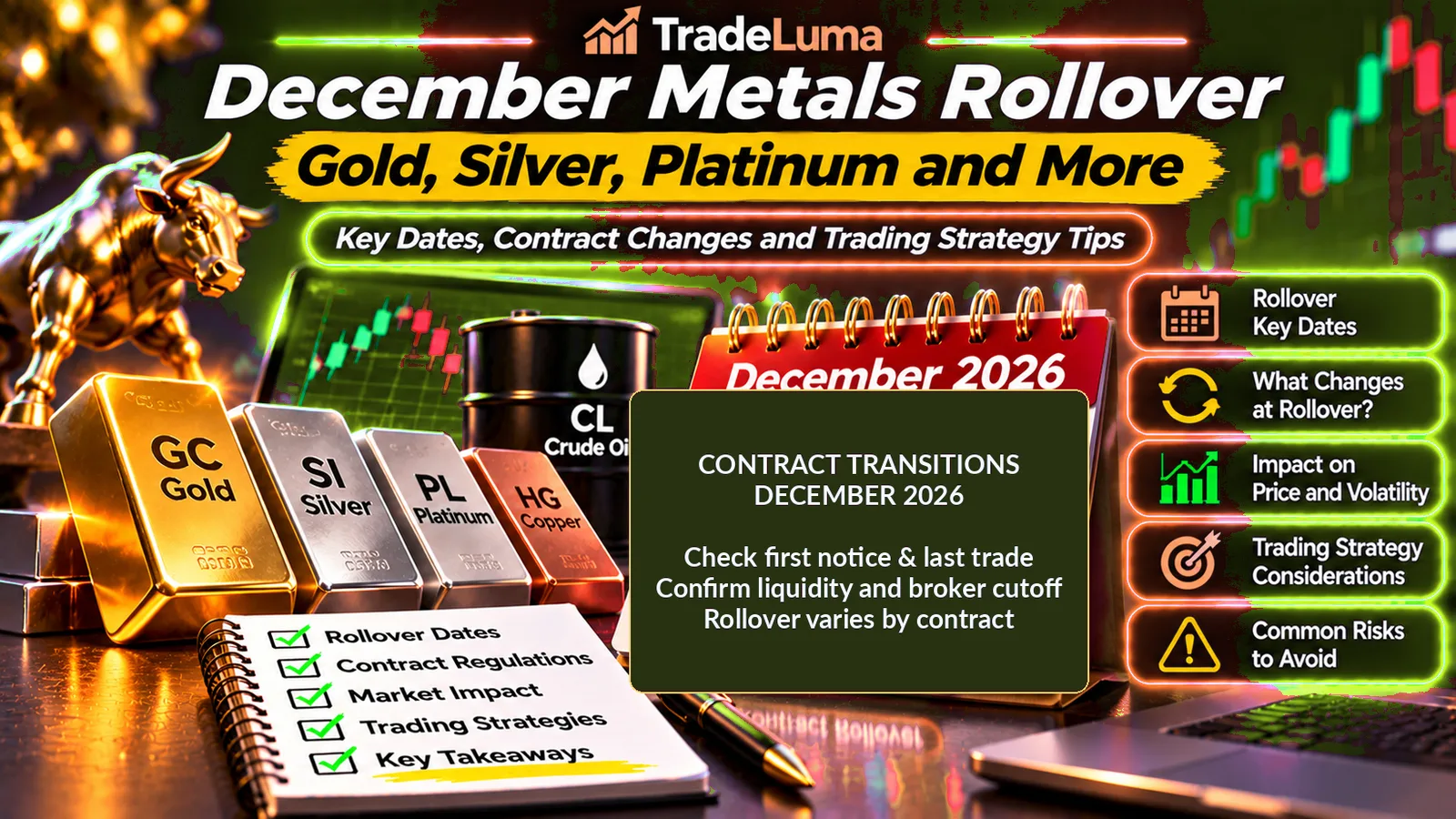
December Metals Futures Rollover 2026: Gold, Silver and Platinum Contract Dates
Compare December 2026 gold, silver and platinum first notice and last trade dates, January platinum delivery timing and broker-specific rollover checks.
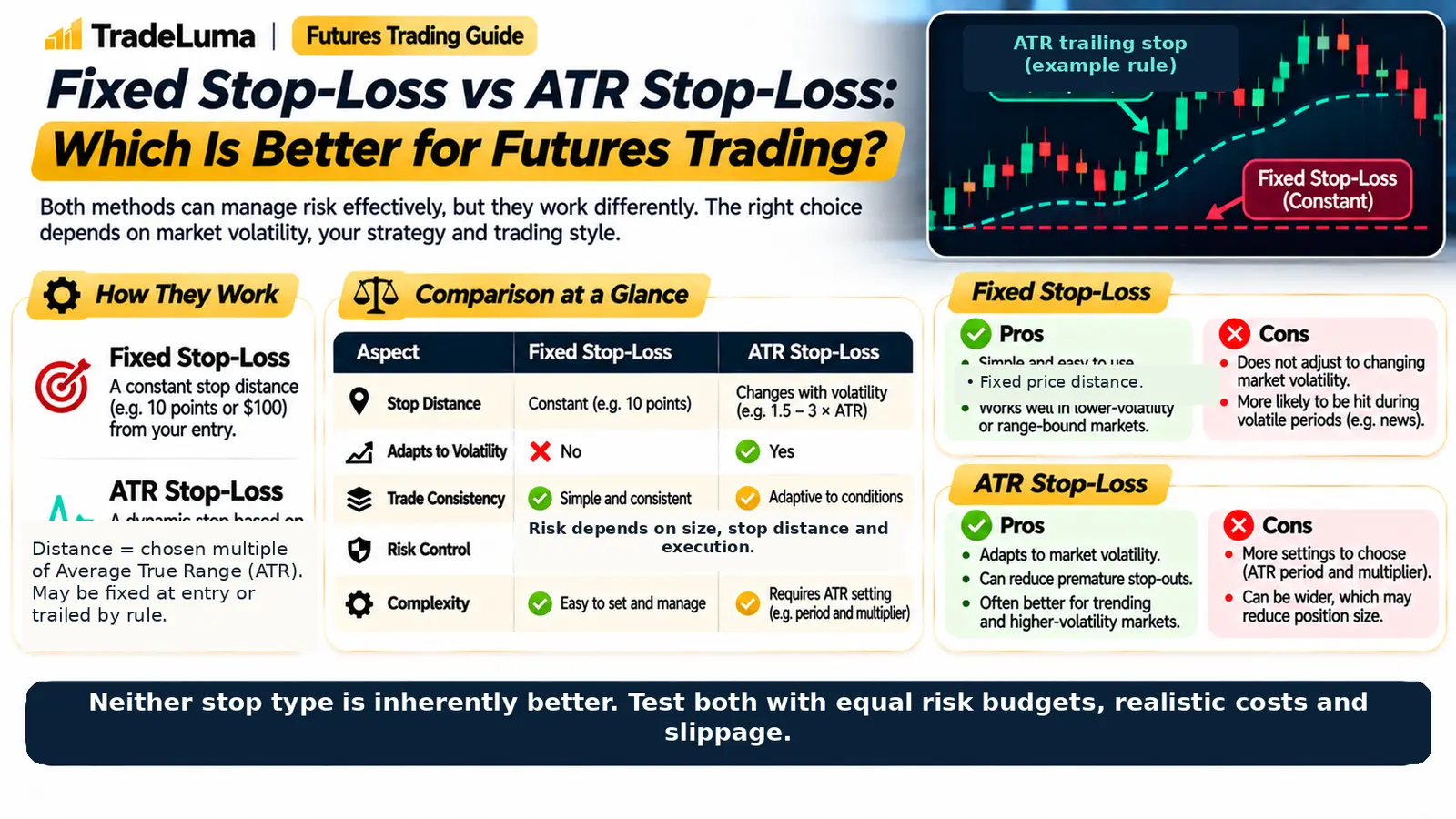
Fixed Stop Loss vs ATR Stop Loss: Which Works Better?
Compare fixed-distance and ATR-based stops, entry-time ATR versus trailing rules, sizing and realistic execution costs.

How to Build a Futures Strategy Portfolio With a $10,000 Account
A hypothetical US$10,000 futures account framework for risk budgets, micro contract sizing, correlated exposure, margin buffers and strategy testing.