
Risk Management
Why Trading Gold and Silver Together May Not Provide Diversification
Understand shared metals exposures, rolling return correlations, position sizes and simultaneous strategy losses.
On this page+
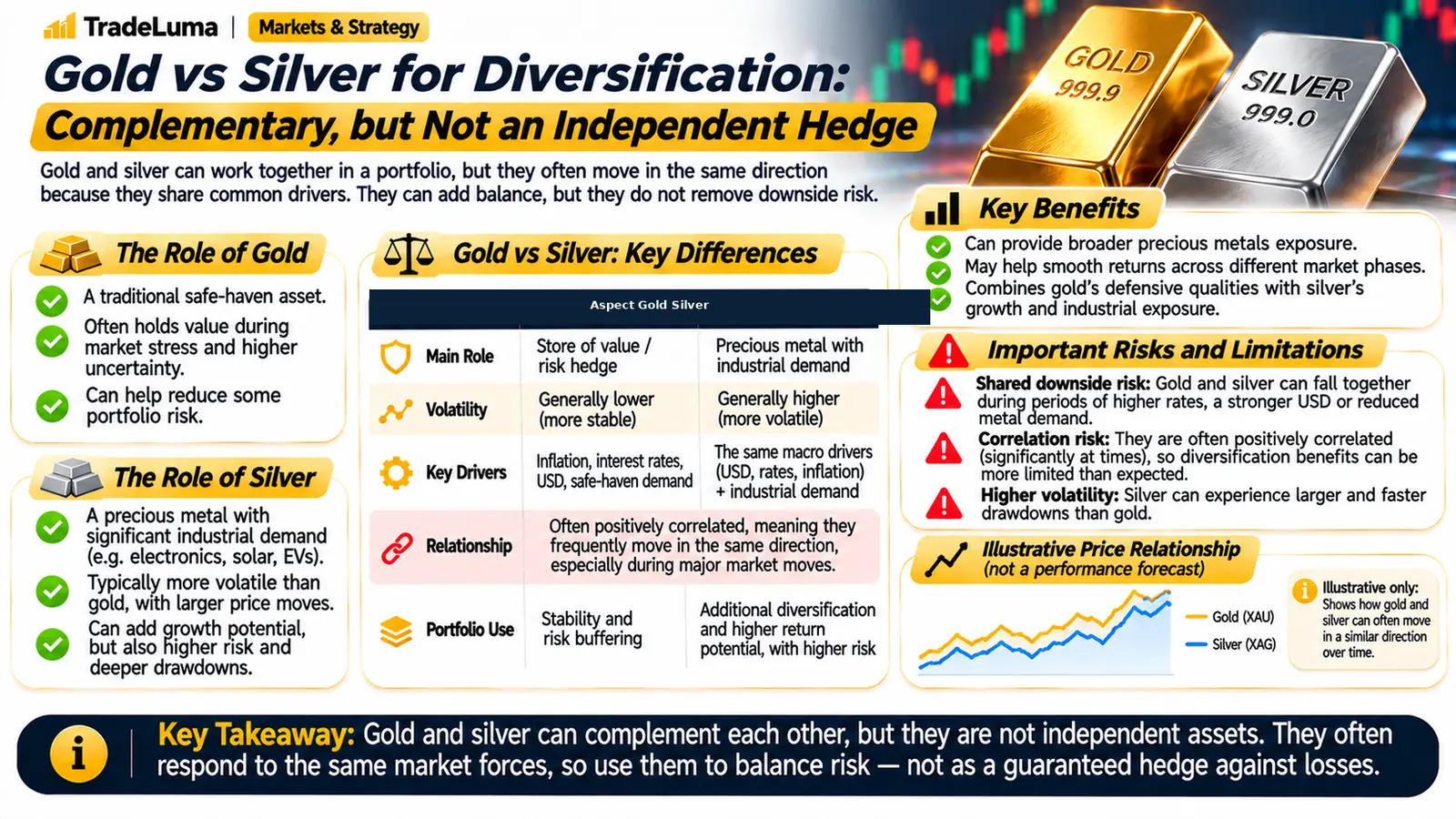
Gold and silver have distinct uses, but often share exposure to real yields, the dollar and precious-metals sentiment. Holding both futures does not necessarily reduce overall risk; correlations change over time. This is general education, not personalised investment advice.
Measure return correlation
Use aligned percentage returns and an explicit rolling lookback. Correlation ranges from negative one to positive one; it is not causation or a stable forecast.
Avoid interpreting similar trending price levels as measured return correlation. The cover uses illustrative lines rather than a numerical historical estimate.
Combined dollar exposure
Long MGC and long SIL can lose simultaneously. Hypothetical losses of US$40 and US$100 combine to US$140 before costs. Margin and contract size do not automatically balance exposure.
Opposite-direction strategies may offset some movements but can still lose at different times. Measure actual strategy return correlations, positions and joint losses.
Portfolio review
TradeLuma's Gold and Silver collections use their own reference instruments. Evaluate aligned historical net returns, overlap and actual contract quantities before combining subscriptions.
Stress-test joint losses and reserve a margin buffer. Compare portfolio drawdown and trade-level risk. Combining two symbols is not proof of diversification.
Frequently asked questions
Are gold and silver always positively correlated?+
No. Correlation varies.
Does holding both guarantee less risk?+
No. Leveraged combined exposure can increase losses.
How do I compare strategies?+
Use aligned returns, overlap, dollar risk and joint drawdown.
Put it into practice
Use the risk maths next to the guide.
Open TradeLuma's free position-size, risk/reward, expectancy, and drawdown tools to test the numbers behind a risk-management decision.
Open free trading calculators →Continue learning
Related guides.

Position Sizing in Trading: Risk Per Trade, Stop Distance and Contract Size
Learn how position sizing links account risk, stop distance, point value, leverage, and contract or share quantity into one repeatable risk process.
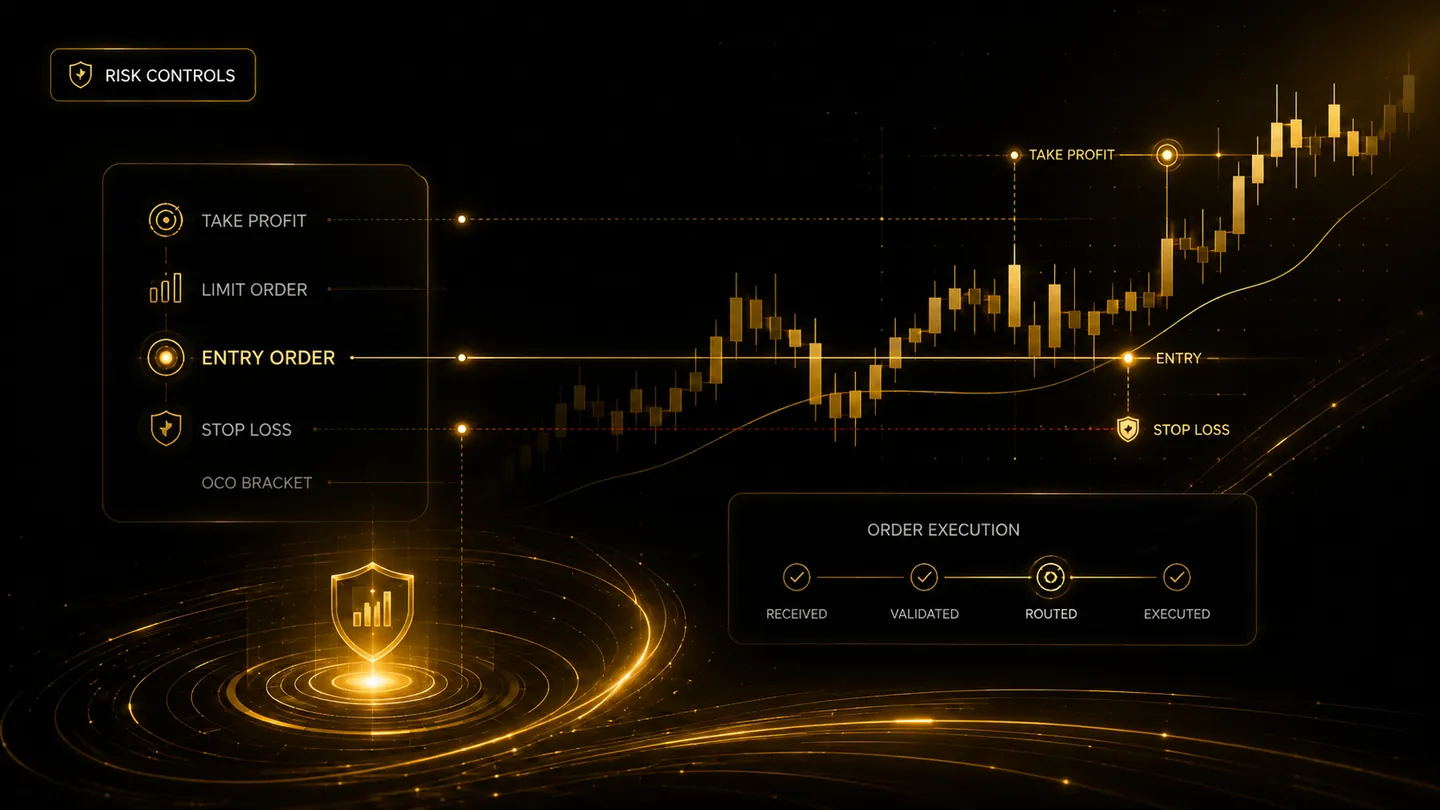
Position sizing and maximum exposure in automated trading
Learn how quantity rules, contract value, stop distance, margin, and account-wide limits work together in an automated trading risk plan.
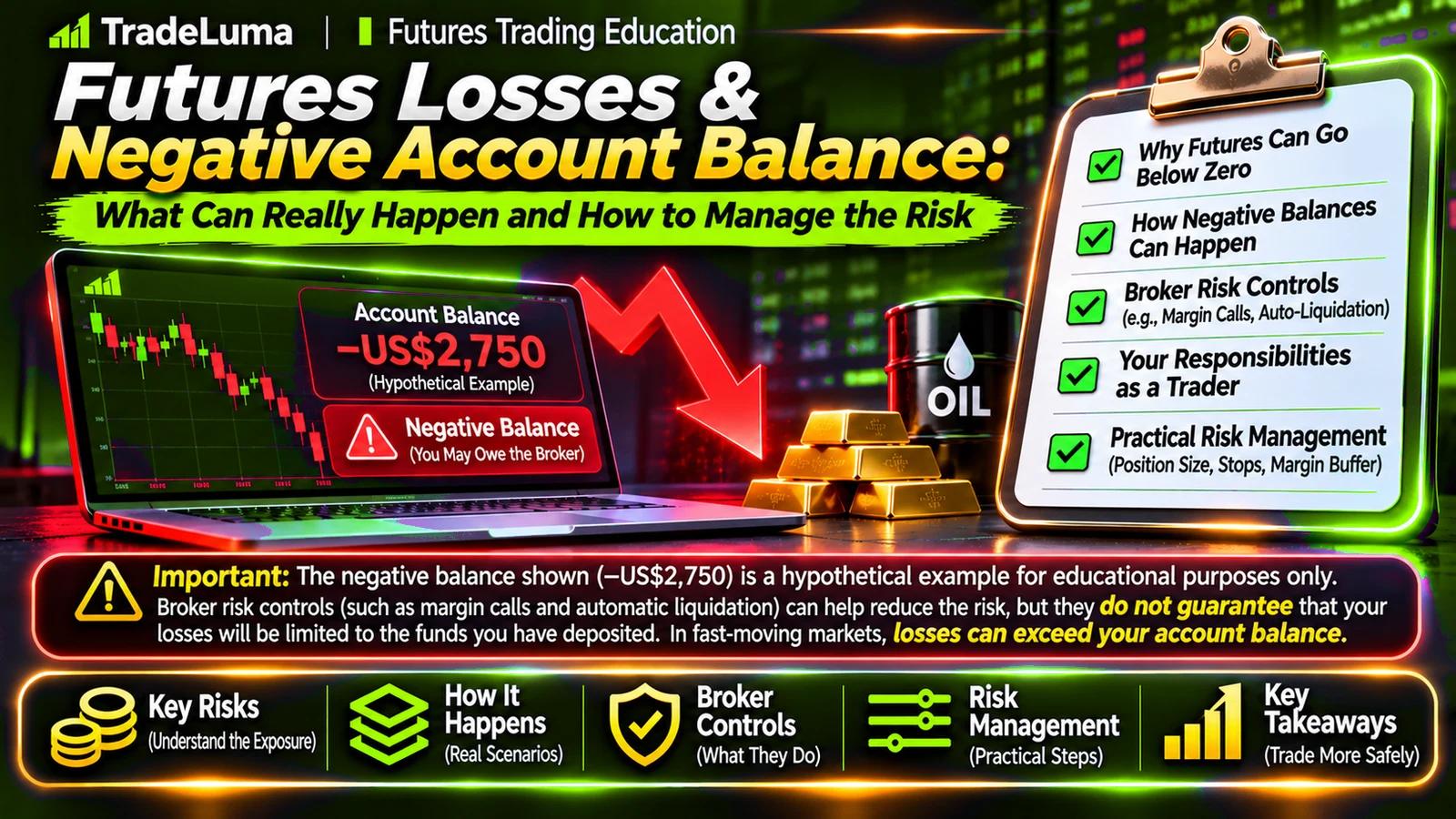
Can You Lose More Than Your Account Balance Trading Futures?
Understand negative futures balances, leverage, gaps, margin liquidation, broker controls and why stop-loss orders do not guarantee a loss limit.