
Strategy Research
How to Stress-Test a Futures Trading Strategy: A Practical Research Guide
Stress-test futures strategies with higher costs, parameter sensitivity, adverse market scenarios, contract rollover, drawdown and independent evaluation.
On this page+
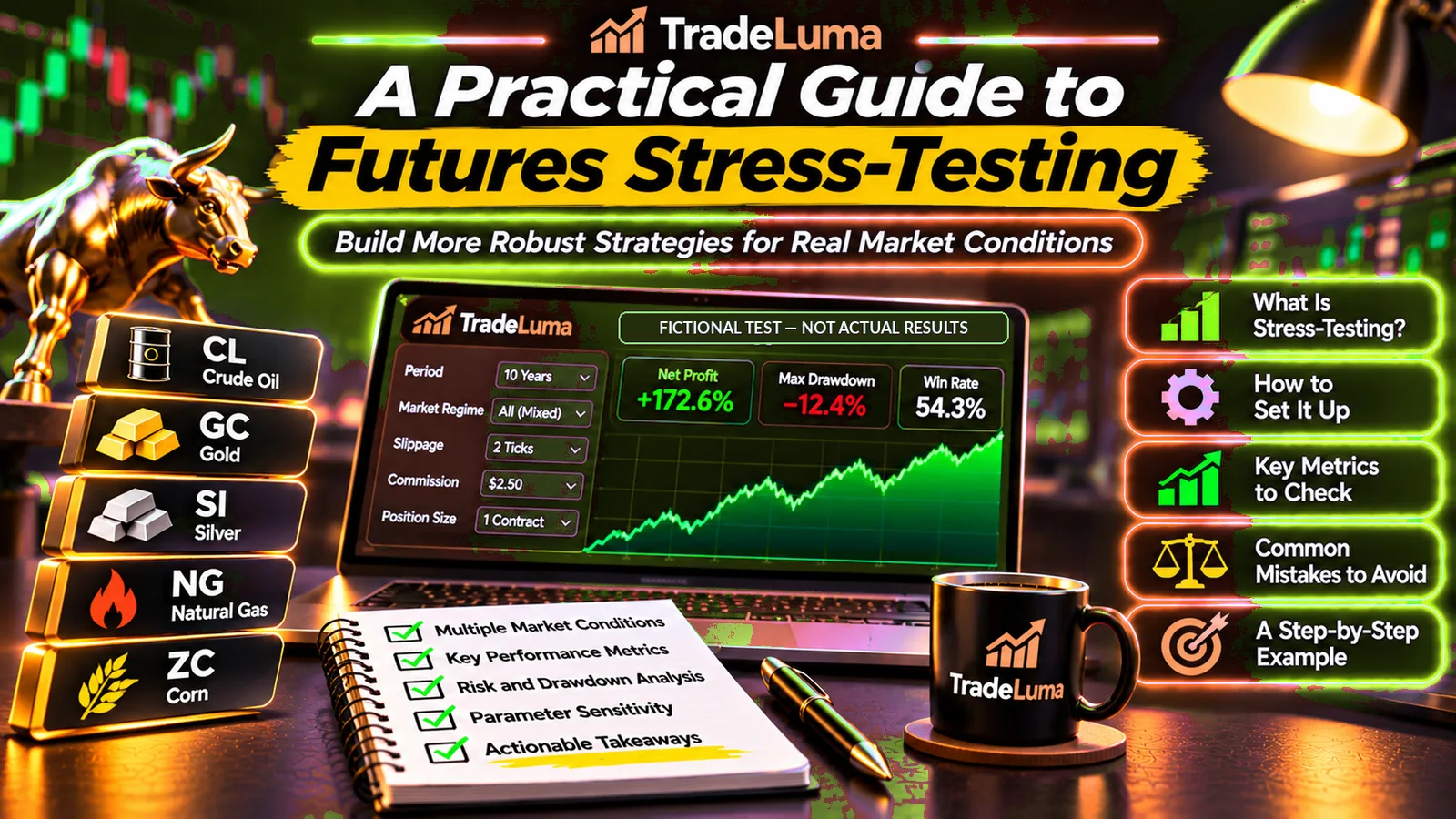
A baseline simulation is only one outcome under a particular set of assumptions. Stress testing asks how research results change when those assumptions become less favourable. It cannot prove future robustness or bound actual loss. The cover contains a fictional research dashboard, not a TradeLuma tool screenshot or verified performance figures. TradeLuma has a commercial interest in its own invite-only futures strategy scripts. This is educational material, not a personalised recommendation or a promise of returns. Historical simulations and hypothetical examples do not predict future outcomes. Futures are leveraged and losses can exceed initial margin.
Build a documented baseline
Record the exact contract and chart basis, bar calculation schedule, test period, quantity, commission, slippage and fill assumptions. Save the original report and individual simulated trades. Every comparison needs a clear baseline so a changed result can be attributed to a specific assumption.
For futures, continuous-chart adjustments and contract-specific price differences can affect signals and simulated fills. Compare the research chart with the actual expiry that would have been tradable.
Higher costs and less favourable execution
Assume a hypothetical sample produces $1,200 gross P&L over 100 round trips. Costs of $4 per round trip leave $800; $9 leave $300; $14 leave a $200 loss. This arithmetic shows the sensitivity of a fixed gross sample to costs, not a prediction of actual fills.
Costs may also change entry and exit behaviour rather than merely subtracting a fixed amount. Evaluate stop gaps, limit orders that do not fill, and order rejection scenarios in addition to a simple fee calculation.
Test different periods and neighbouring settings
Divide available history into a development period and an untouched evaluation period. Compare trending and sideways environments and different volatility levels, using definitions chosen in advance. Include periods when liquidity deteriorates where reliable data exist.
Examine a small predeclared range of neighbouring parameter values. A strategy that only looks attractive at one narrowly selected setting may be sensitive to noise. Do not reselect the best combination on the evaluation period and then call it independent.
Trade sequence and combined portfolio stress
A resampling exercise can help illustrate how different sequences of historical outcomes affect drawdown. Simple independent shuffling does not preserve clustered losses or changing market conditions. Block-based approaches can represent some dependence but remain assumptions about a limited historical sample.
For multiple systems, include coincident adverse moves and a higher margin requirement. Stop-loss orders cannot guarantee a fixed loss when markets gap or orders fail. Test capital and margin separately from the software subscription cost.
Operational scenarios and acceptance criteria
Review what happens if the correct expiry is unavailable, an alert is duplicated, the broker is disconnected or a protective order is rejected. These are workflow failures rather than purely financial stress scenarios, and should be checked using paper or controlled test arrangements.
Write the conditions that invalidate the research before viewing the final results. The TradeLuma backtest performance analyser, trading costs calculator and portfolio risk calculator can support hypothetical comparisons. They cannot certify live execution or future results.
Frequently asked questions
Is stress testing the same as optimising?+
No. Stress testing evaluates sensitivity to adverse assumptions; optimisation searches for selected settings.
Can a stress test establish the worst possible loss?+
No. Future gaps, liquidity, leverage and operational failures can exceed the model.
Should I test multiple contracts?+
Only where the rules and contract-specific assumptions are appropriate. A result does not automatically transfer to another market.
Put it into practice
Use the risk maths next to the guide.
Open TradeLuma's free position-size, risk/reward, expectancy, and drawdown tools to test the numbers behind a risk-management decision.
Open free trading calculators →Continue learning
Related guides.
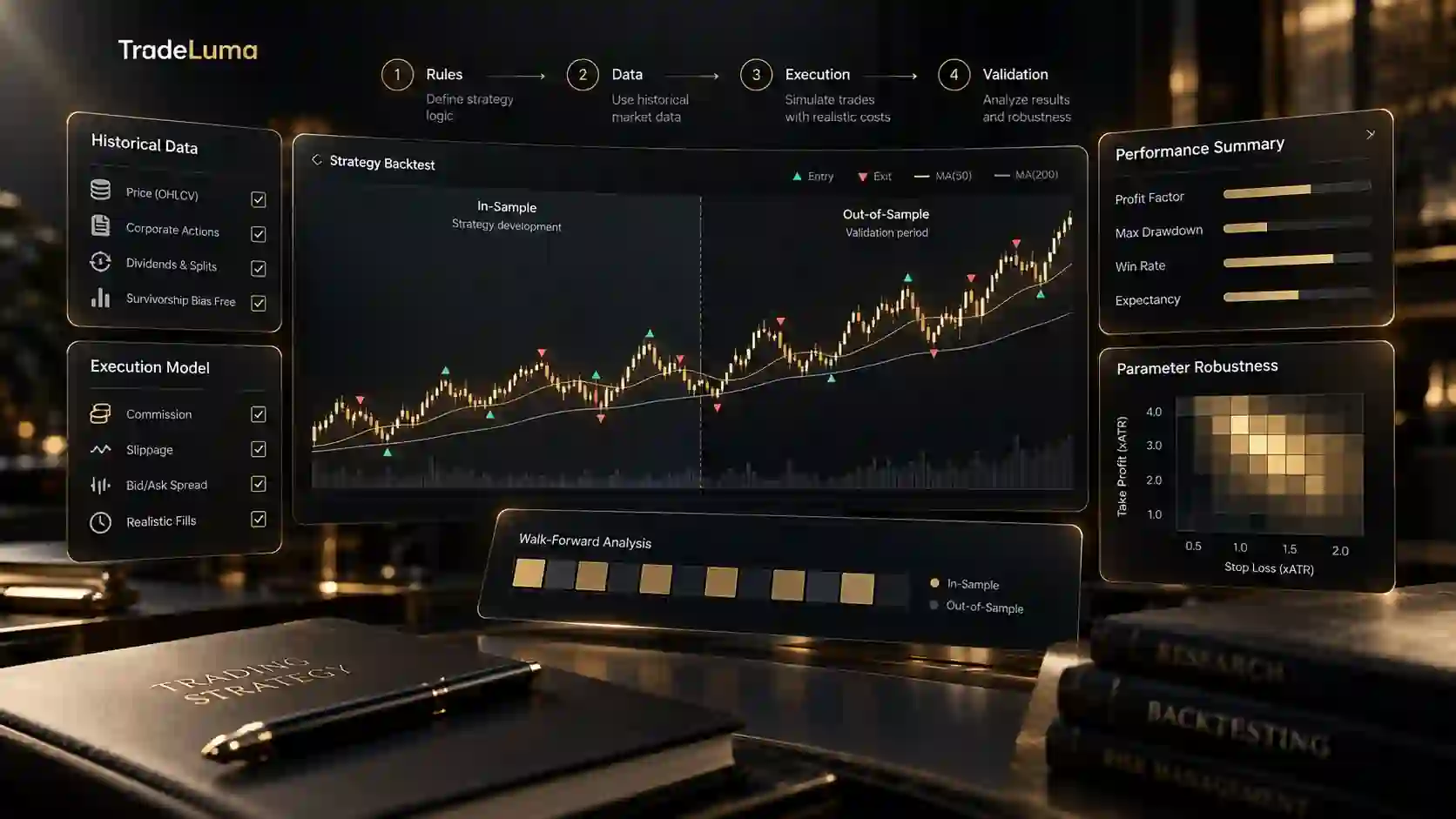
How to Backtest a Trading Strategy: A Practical Step-by-Step Guide
Learn how to backtest a trading strategy from written rules to clean data, realistic costs, out-of-sample checks, robustness testing, and final review.
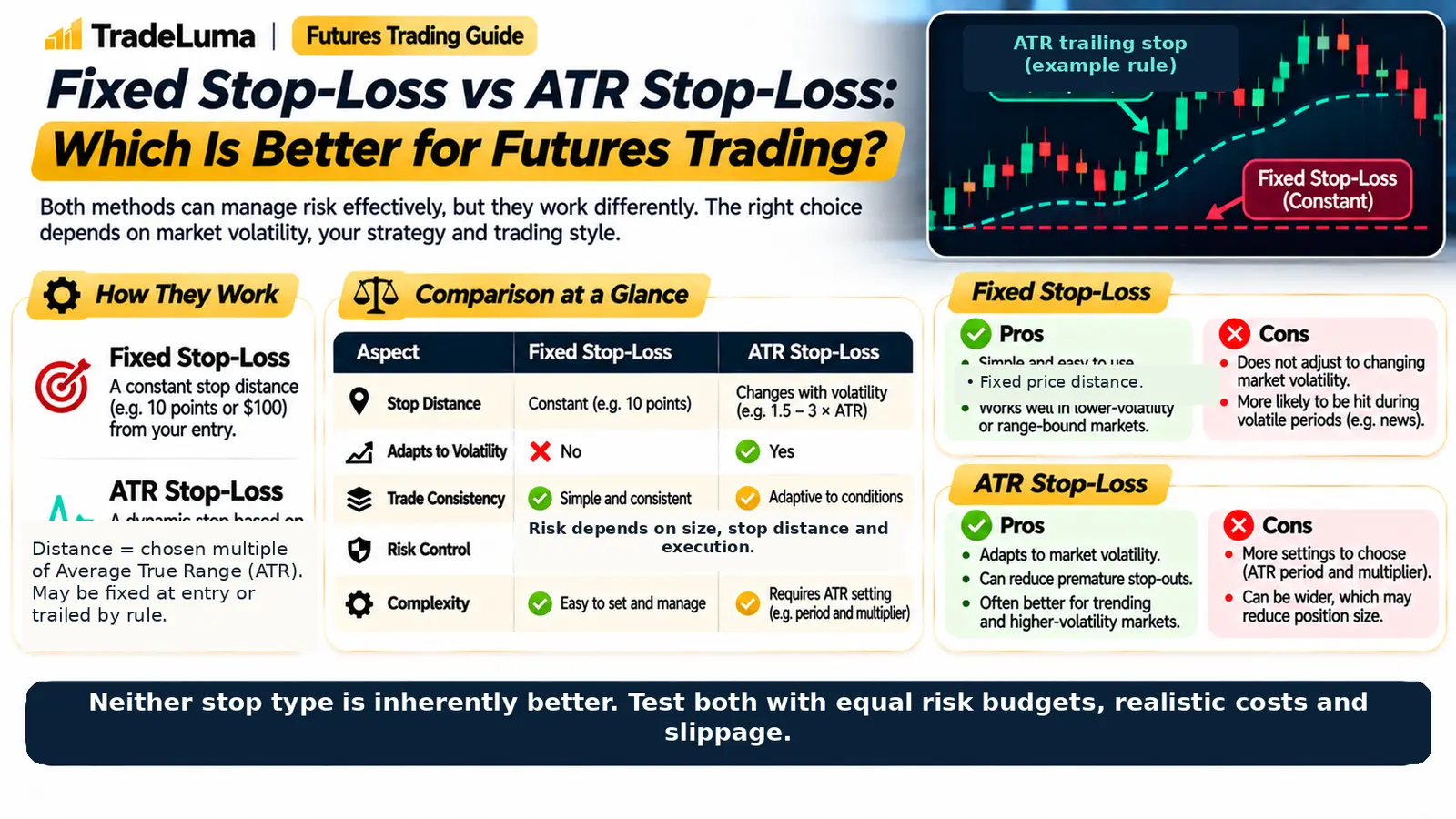
Fixed Stop Loss vs ATR Stop Loss: Which Works Better?
Compare fixed-distance and ATR-based stops, entry-time ATR versus trailing rules, sizing and realistic execution costs.
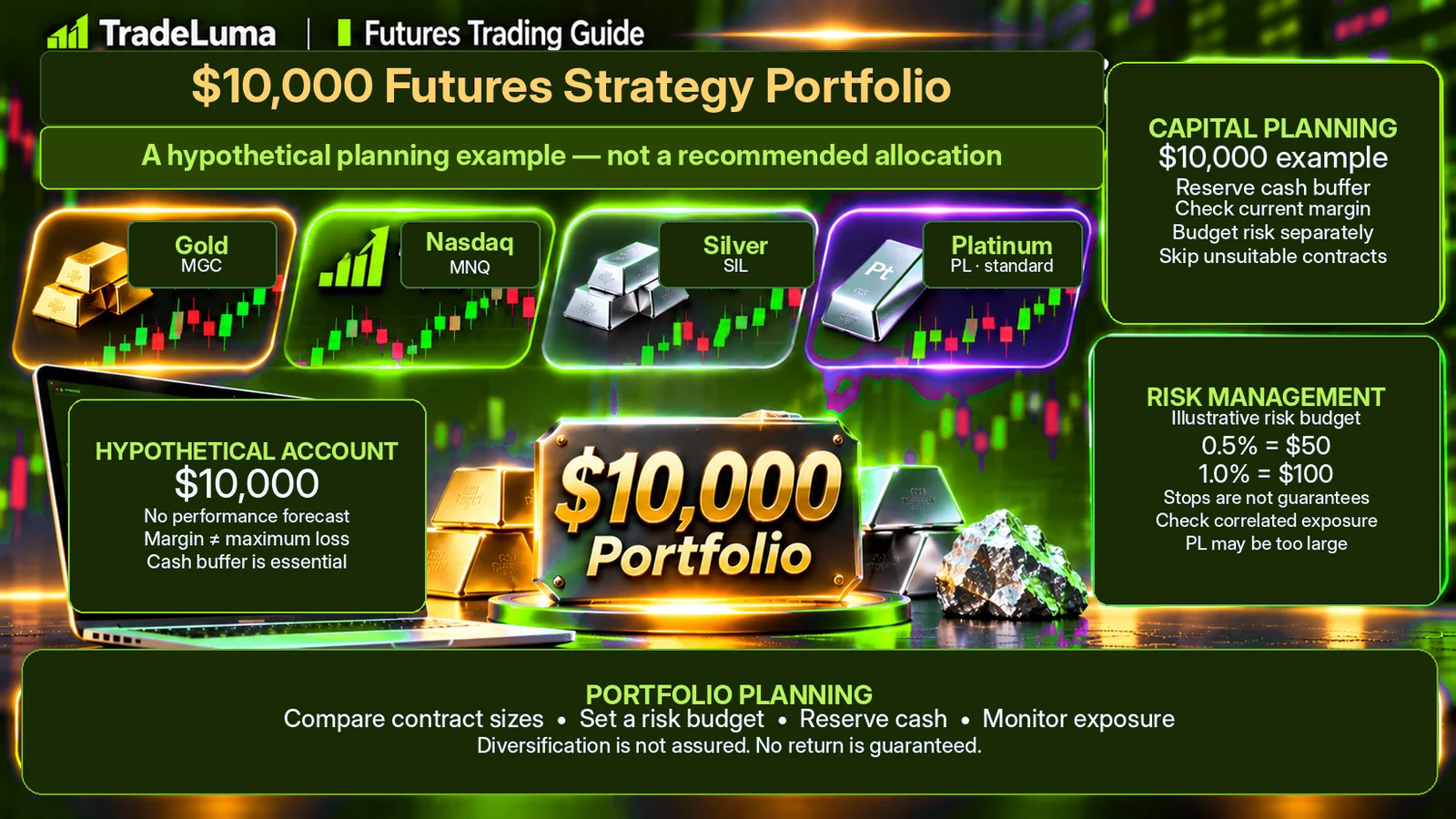
How to Build a Futures Strategy Portfolio With a $10,000 Account
A hypothetical US$10,000 futures account framework for risk budgets, micro contract sizing, correlated exposure, margin buffers and strategy testing.