
Strategy Research
Why a Trading Strategy Stops Working: Understanding Market Regime Changes
Diagnose changing trading strategy performance through volatility, market regimes, cost shifts, execution faults and disciplined re-testing.
On this page+

A trading system may perform differently when volatility, liquidity, trends or costs change. But a sequence of losses is not sufficient evidence that an edge has permanently disappeared. Treat a deteriorating result as a question to investigate, not a signal to optimise indiscriminately. TradeLuma has a commercial interest in its own invite-only futures strategy scripts. This is educational material, not a personalised recommendation or a promise of returns. Historical simulations and hypothetical examples do not predict future outcomes. Futures are leveraged and losses can exceed initial margin.
What a market regime describes
A regime is a description of a market environment, such as sustained direction, range-bound movement or unusually wide price fluctuations. These labels are imperfect abstractions rather than objectively known states. Real markets can transition gradually or abruptly between them.
Trend-following rules may experience repeated failed signals in a range, while mean-reversion rules can be exposed to persistent directional movement. Neither relationship guarantees the performance of a particular script.
Check your evidence before changing rules
Compare the recent sample with the reference test using matching instrument, timeframe, version, quantity and costs. Examine trade count, average outcome, maximum drawdown and the distribution of adverse moves. A few unusually large losses merit investigation even if the average remains positive.
Keep a record of changing volatility, session mix, spreads and market conditions using definitions selected before looking at the result. Labelling a period after its losses can create circular explanations.
Execution can mimic strategy deterioration
Missed alerts, stale symbols, unexpected fill prices, changed contract mapping or data feed differences can alter outcomes without any change to the research rules. Reconcile individual order timestamps and quantities before attributing deterioration to a market regime.
A strategy that produces a signal on a continuous futures chart may still require mapping to a specific tradable expiry. Check execution logs and distinguish chart behaviour from broker state.
Decide whether a pause is required
A predefined loss boundary, a malfunction or uncertain protective order status may justify immediate suspension. Do not wait for statistical proof of regime change while accepting an unbounded exposure. Use observation or paper testing when additional evidence is needed.
If the issue is insufficient information, record the uncertainty. If a verified execution fault exists, fix and validate it separately. If the research hypothesis has weakened, test alternatives rather than treating a successful in-sample adjustment as a solution.
Re-test changes without chasing recent losses
Use an untouched sample or a forward-testing period for a modified ruleset. Check sensitivity to neighbouring parameters, costs and different market conditions. Repeatedly tuning on the same recent losing period increases selection bias.
TradeLuma publishes market-specific strategies rather than asserting one system works everywhere. Evaluate their documented market fit and limitations, and avoid assuming that a past regime will return.
Frequently asked questions
Does a losing streak mean the strategy has stopped working?+
Not necessarily. Sampling variation, market changes, costs and execution errors all require investigation.
Can I identify a market regime perfectly in realtime?+
No. Market labels are uncertain and can change.
Should I immediately optimise after losses?+
No. Respect risk boundaries, diagnose the cause and independently evaluate any proposed change.
Trading psychology
Continue with the topic hub.
Browse the related TradeLuma guides and build the topic from foundations through practical application.
Explore Trading psychology guides →Continue learning
Related guides.
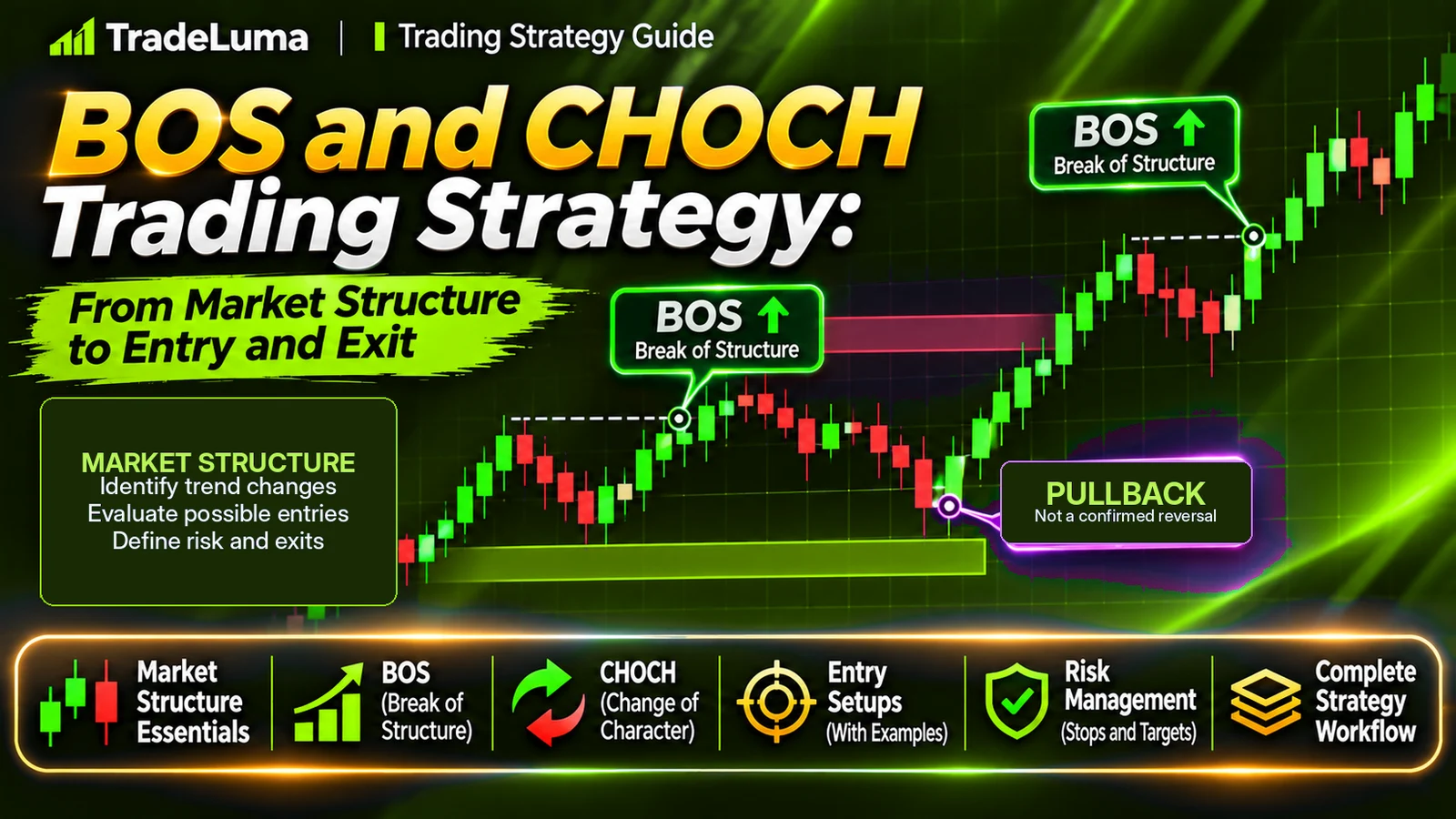
BOS and CHOCH Trading Strategy: From Market Structure to Entry and Exit
Turn market-structure labels into testable trading rules using confirmed swings, break-of-structure levels, invalidation and realistic entry assumptions.
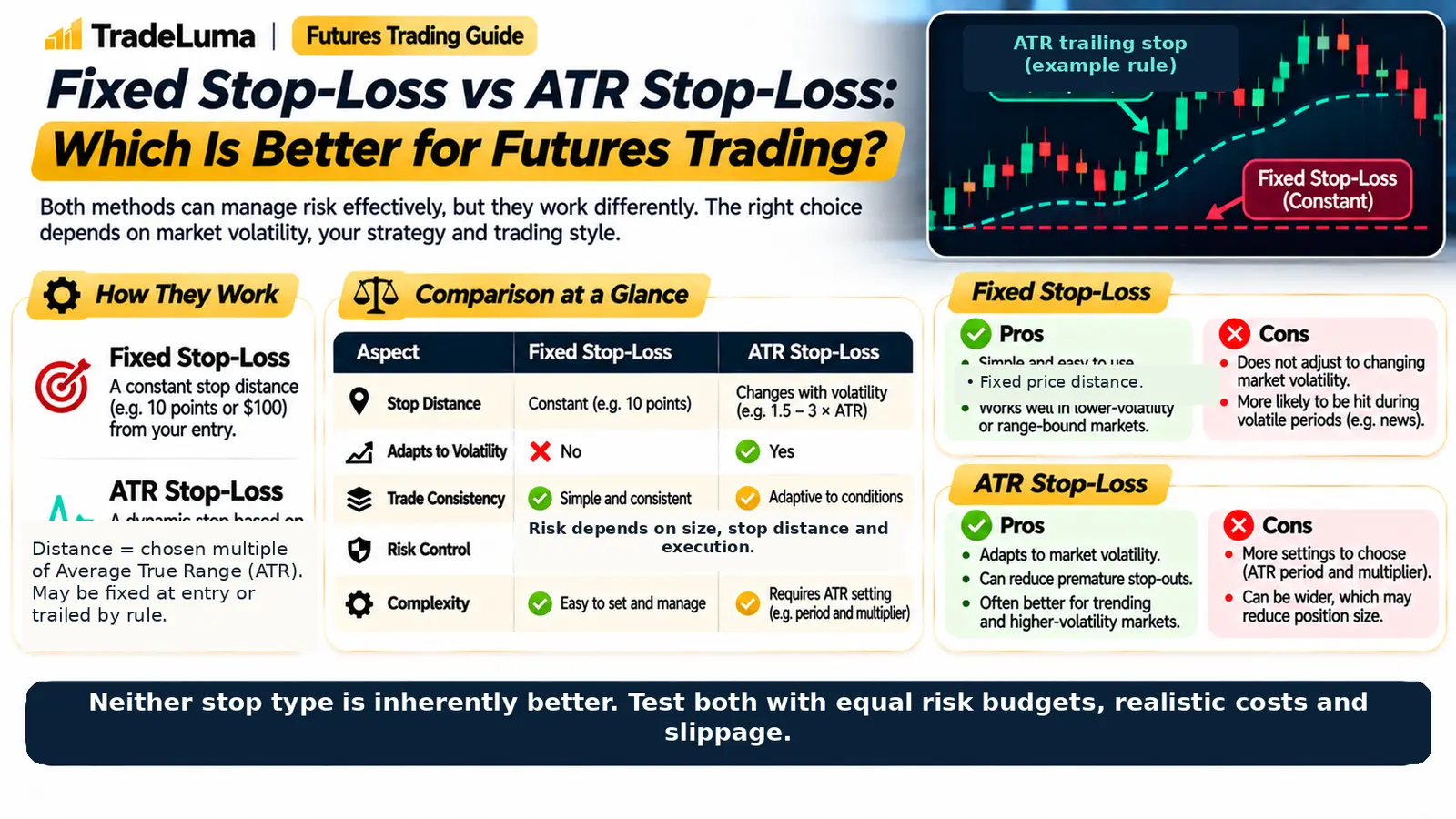
Fixed Stop Loss vs ATR Stop Loss: Which Works Better?
Compare fixed-distance and ATR-based stops, entry-time ATR versus trailing rules, sizing and realistic execution costs.
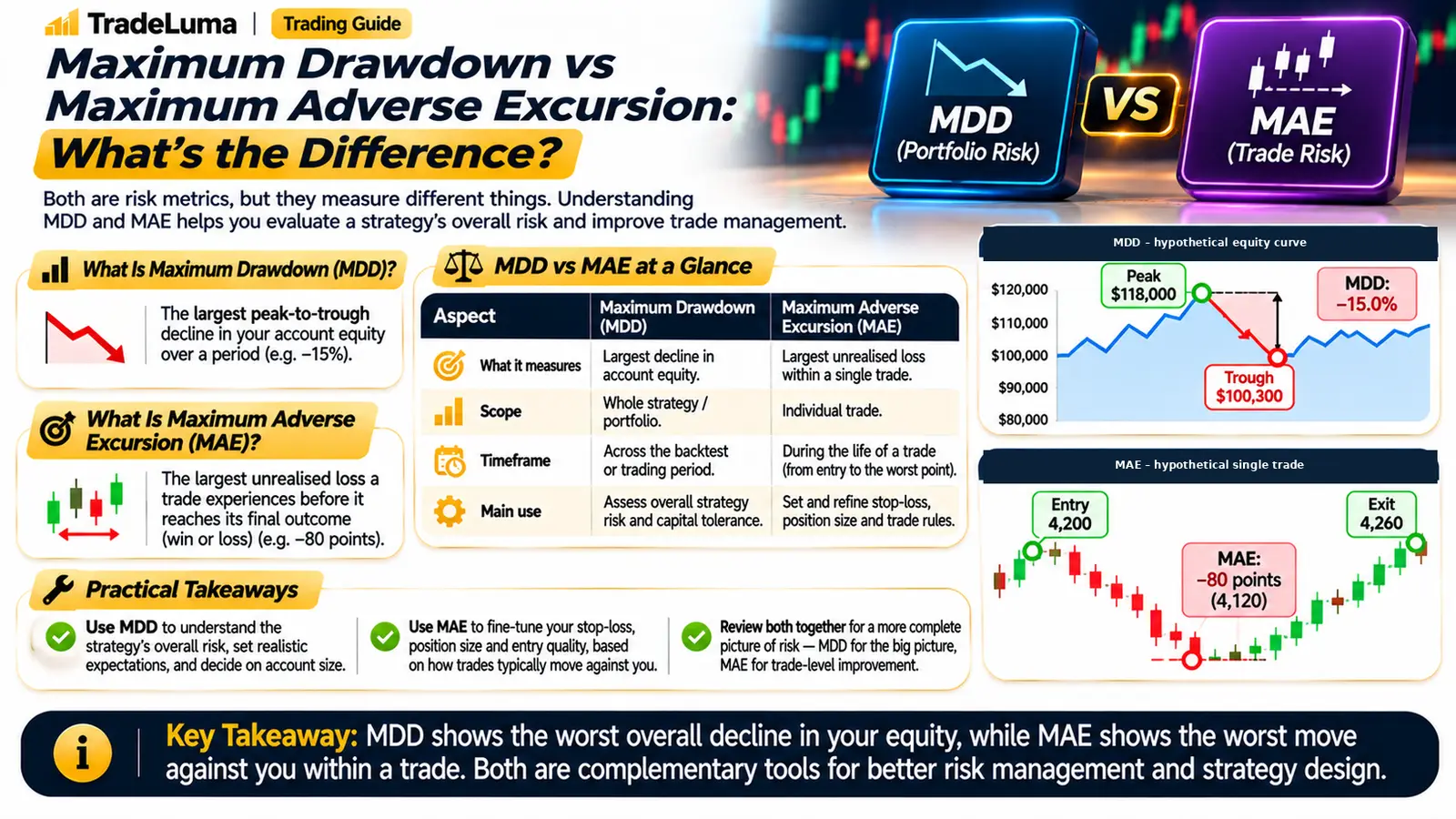
Maximum Drawdown vs Maximum Adverse Excursion: Understanding Trading Risk
Calculate peak-to-trough equity loss and worst adverse movement during a trade using consistent data and assumptions.