
Strategy Research
BOS and CHOCH Trading Strategy: From Market Structure to Entry and Exit
Turn market-structure labels into testable trading rules using confirmed swings, break-of-structure levels, invalidation and realistic entry assumptions.
On this page+
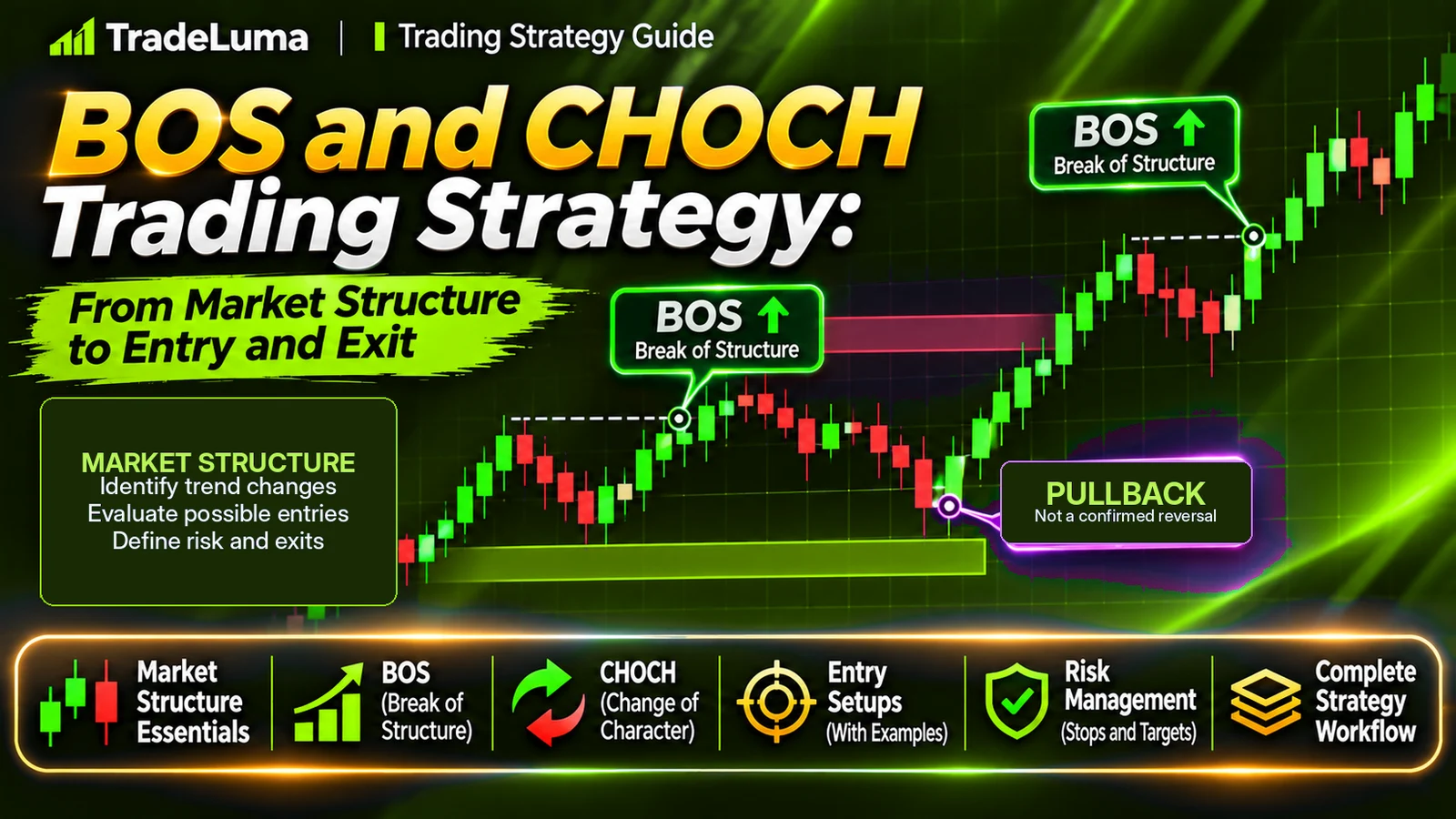
Break of structure (BOS) and change of character (CHOCH) are widely used price-action labels rather than universal exchange definitions. A practical approach is to turn the labels into explicit rules, including the way swings are confirmed, whether a wick or close counts as a break, and the point at which a setup becomes invalid. This is general education, not personalised investment advice; futures trading can result in losses exceeding deposits.
Define confirmed market structure
One example uses a swing high with two lower highs on either side and a swing low with two higher lows on either side. The swing is only known after those later bars complete. An uptrend can be described using successive higher confirmed highs and lows; a downtrend uses lower highs and lows.
A close above the previous confirmed high in an uptrend may be labelled a bullish BOS. A close below the protected higher low may be labelled a bearish CHOCH. Define the protected swing before the break rather than selecting it afterwards.
A hypothetical bullish continuation setup
Assume a market makes a confirmed high at 100 and a higher low at 95. A bar closes at 102, beyond the high. Under the example rules the close triggers a BOS condition, but an entry is not necessarily available at the close price.
A testable retest rule might require price to revisit the broken level and close back above it within a predefined number of bars. The setup expires if the defined invalidation level is broken first. Specify whether execution happens at the next available price or via an explicit limit order.
Distinguish CHOCH from confirmation of a reversal
If price subsequently closes below the protected higher low, the original uptrend definition is no longer intact. A CHOCH may indicate a possible transition, not proof that a sustained downtrend has begun. A separate confirmation rule could require a lower high and a lower low.
Liquidity sweeps can cross a prior swing temporarily before price returns to the range. Use a consistent close or wick rule and test both alternatives without switching definitions after seeing results.
Test the complete strategy, not just the labels
Record the pivot confirmation delay, signal timestamp, fill assumption, stop placement, target rule and contract multiplier. Include commissions, slippage and missed entries. A stop order can fill beyond its intended price.
Run the rules on unseen periods, inspect losing examples and compare them against simpler baseline rules. Market structure labels alone are not evidence of a profitable edge or high-probability entries.
Frequently asked questions
What is the difference between BOS and CHOCH?+
Under one common convention BOS is a break in the prevailing trend direction, while CHOCH is a break against a protected swing.
Does a wick count as a break?+
It depends on your rule. Choose and test a fixed wick or close definition.
Does CHOCH guarantee a reversal?+
No. It may indicate a possible structure change, which can fail.
Technical analysis
Continue with the topic hub.
Browse the related TradeLuma guides and build the topic from foundations through practical application.
Explore Technical analysis guides →Continue learning
Related guides.
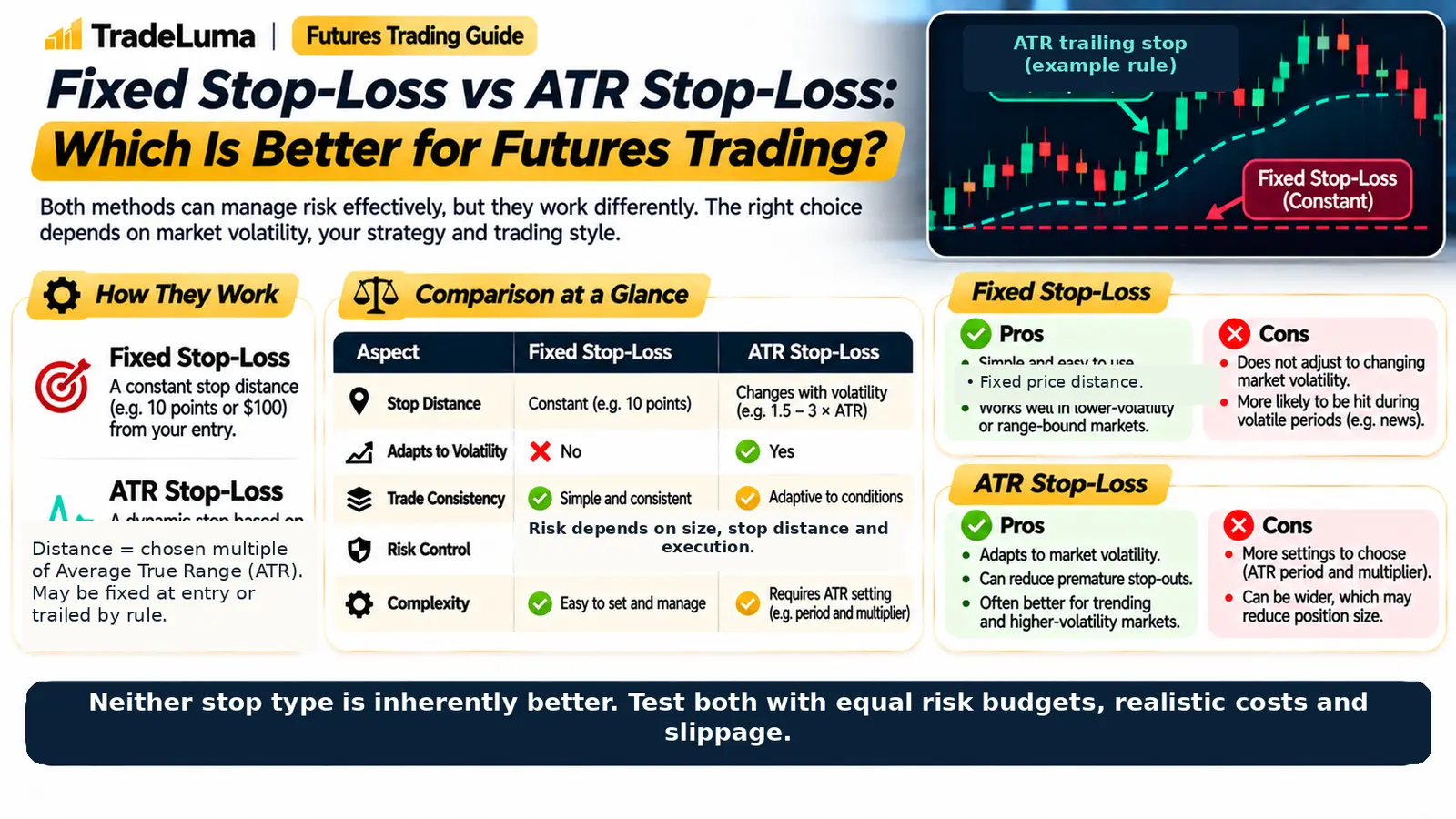
Fixed Stop Loss vs ATR Stop Loss: Which Works Better?
Compare fixed-distance and ATR-based stops, entry-time ATR versus trailing rules, sizing and realistic execution costs.

Can a Low-Win-Rate Trading Strategy Be Profitable?
Calculate trading expectancy and break-even win rates using average gains, losses and execution costs; understand the risks of low-win-rate systems.

Why a Trading Strategy Stops Working: Understanding Market Regime Changes
Diagnose changing trading strategy performance through volatility, market regimes, cost shifts, execution faults and disciplined re-testing.