
Strategy Research
TradingView Indicators vs Strategies: Which Do You Actually Need?
Compare TradingView indicators and strategies, their alerts, simulated orders, Strategy Tester results and the right workflow for your trading research.
On this page+
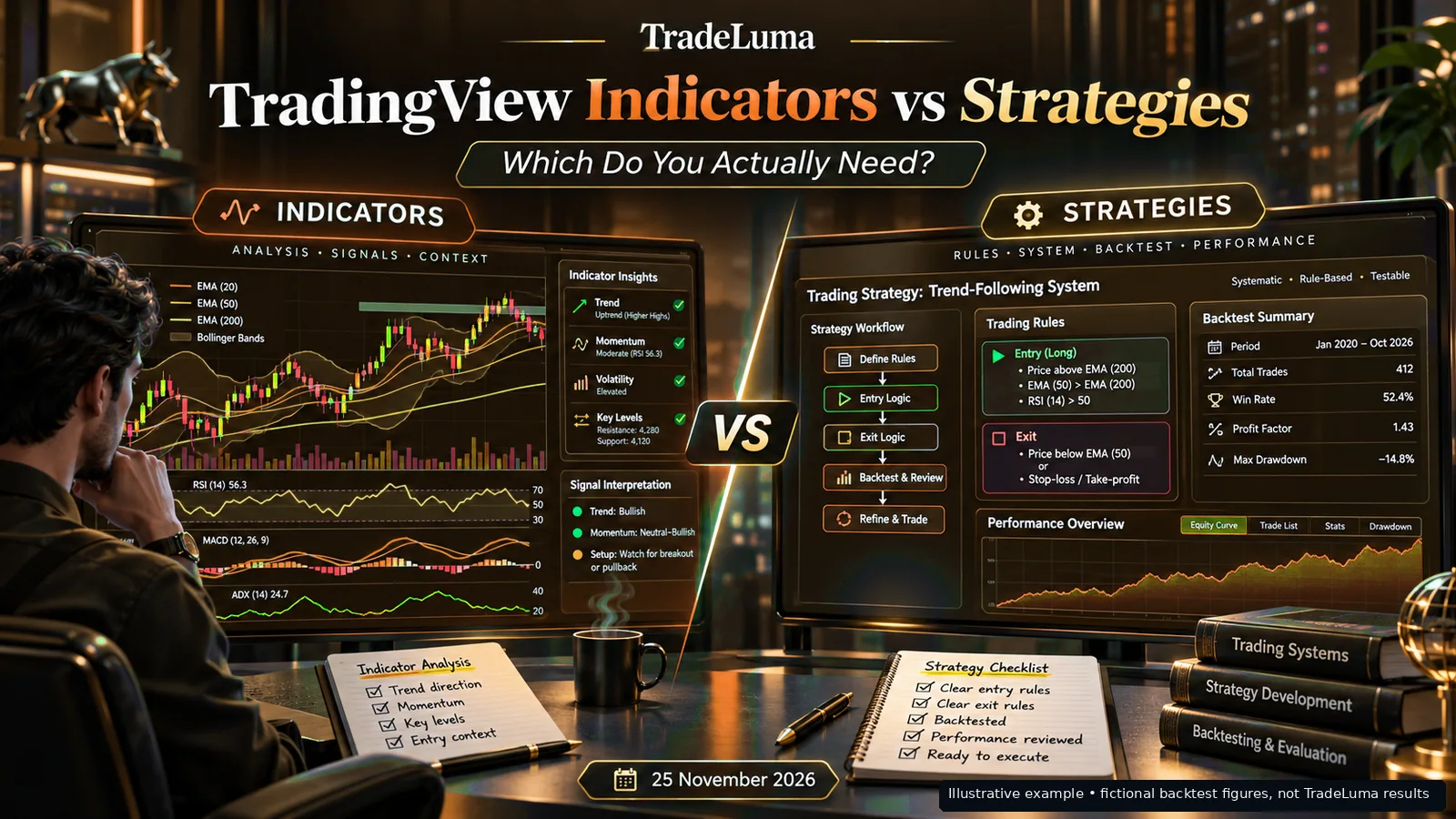
An indicator can help answer what a market is doing. A strategy script can also express rules for simulated orders and help investigate how those rules behaved across a particular dataset. Neither is automatically a better purchase. This guide explains the distinction using original examples rather than a ranking of vendors. Any charts or statistics on the cover are fictional illustrations, not actual trading results. TradeLuma has a commercial interest in its own invite-only TradingView strategies. The catalogue is first-party product information, not an independent recommendation. Historical simulated results do not guarantee future performance. Futures are leveraged and losses can exceed initial margin.
What a TradingView indicator actually does
An indicator transforms its inputs into outputs such as plotted levels, moving averages, coloured zones, tables or alert conditions. It can support discretionary decisions or a repeatable rule-based process. A signal on a chart alone does not establish how a complete entry, exit and sizing plan would behave.
For example, a moving average crossover indicator might identify when two averages cross. It may mark that event without defining whether to exit an existing trade, whether a short position is allowed or how much capital is exposed.
What a strategy script adds
A Pine strategy can specify simulated entry and exit orders, position direction and quantities. TradingView's broker emulator models fills and produces a report that can be reviewed in the Strategy Tester. A script can also display analytical plots, so a strategy does not have to look less informative than an indicator.
A hypothetical crossover system could define one entry when a condition becomes true, an exit when an opposing condition appears and a protective stop. The resulting trade list can then be examined under explicit cost and fill assumptions. That is an educational example, not a description of TradeLuma's proprietary rules.
Comparison: research, alerts and execution
An indicator is useful when the decision involves discretionary context not fully defined in code. A strategy is useful when the objective is to review a specific set of measurable rules and simulated outcomes. Both can have alert capabilities; the available event types depend on the actual script and alert configuration.
An alert is not a confirmed broker fill. Live order handling needs a separate permitted execution arrangement, correct symbol mapping and risk management. Check the vendor's documented capabilities rather than assuming that a strategy subscription includes automation.
Why a strategy report is not a performance guarantee
Review profit factor, trade count, maximum drawdown, net results, test duration and the assumptions behind the report. A comparison should use the same market, chart basis, timeframe, quantity and realistic costs. A beautiful equity curve is not independent evidence of future profitability.
An indicator without a strategy report is not necessarily inferior. Its value might be in organising market context. Conversely, a strategy with a report is not necessarily robust: a carefully selected historical window may conceal fragility.
Signal timing matters in both tools
On an open realtime bar, calculated conditions can change as new data arrives. TradingView strategies and indicators have different default calculation schedules, and strategy properties may alter these behaviours. The bar-close vs intrabar trading guide explains why an observed alert and a historical marker can differ.
When evaluating an invite-only script, confirm supported settings and log observed behaviour without changing several inputs at once.
Which should you choose?
First decide what job you need done: market interpretation, testing a complete ruleset, reviewing alerts or coordinating actual orders. A free tool might be sufficient. If repeatable simulated entries and exits are central to your work, examine a strategy with clearly documented research assumptions.
TradeLuma's published Gold, Nasdaq, Silver and Platinum strategies include reference chart configurations and historical simulated metrics. The same evaluation standards apply to our products as to any other vendor. Review the specific script and terms, rather than treating a subscription as a shortcut to trading success.
Frequently asked questions
Can a TradingView indicator generate alerts?+
Yes, where its implementation and alert settings support them. An alert alone is not an executed broker order.
Does every TradingView strategy include a Strategy Tester report?+
A Pine strategy supports simulated order testing; useful results depend on its actual rules, data and settings.
Do I need both indicators and strategies?+
Not necessarily. Choose tools that serve distinct research or decision-making needs rather than duplicating signals.
Does buying a strategy automatically place live orders?+
No. Script access, alerts and broker execution are separate arrangements.
Trading indicators
Continue with the topic hub.
Browse the related TradeLuma guides and build the topic from foundations through practical application.
Explore Trading indicators guides →Continue learning
Related guides.
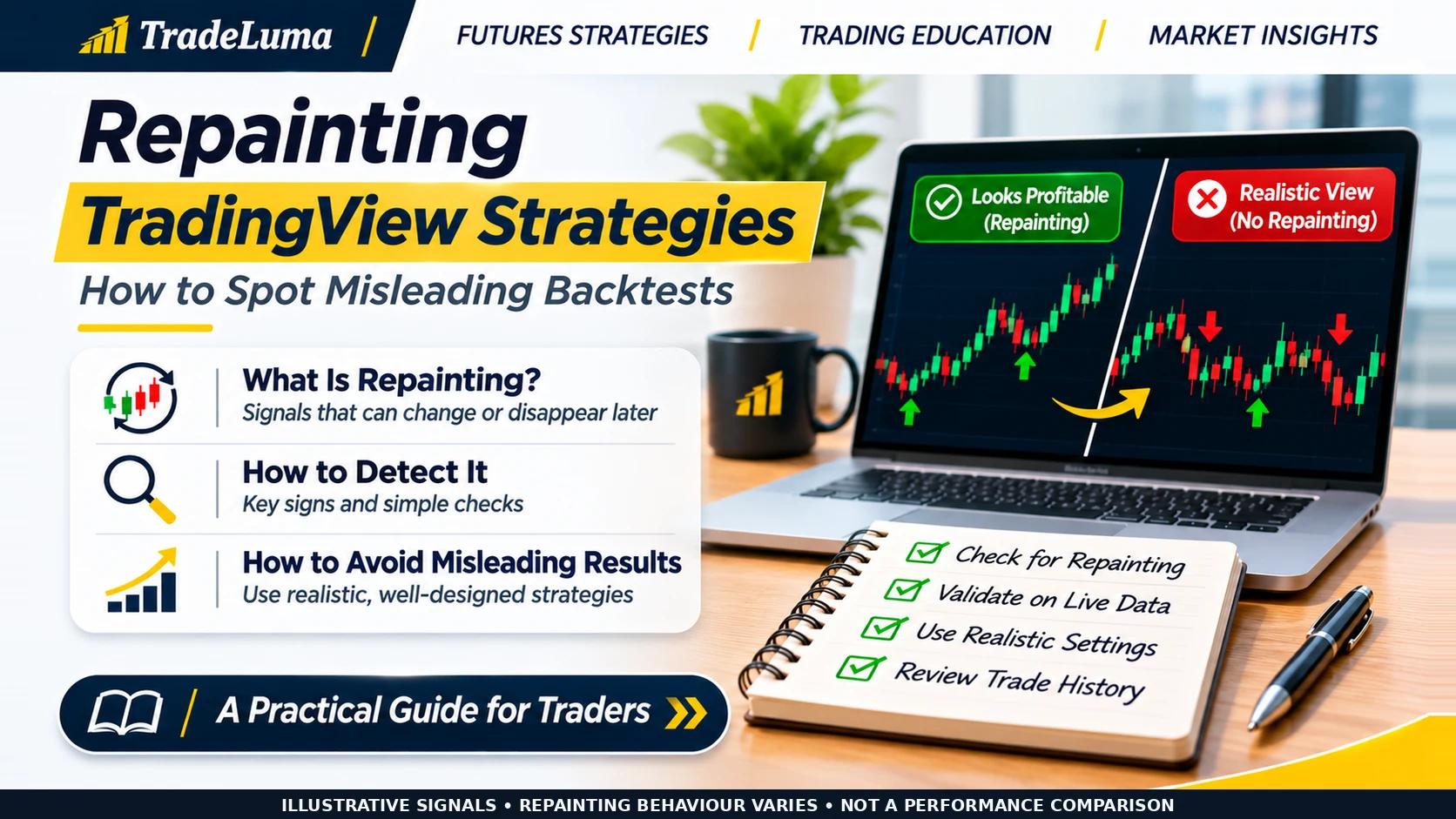
Repainting TradingView Strategies: How to Spot Misleading Backtests
Learn why TradingView signals can change, how future-data leakage differs from ordinary intrabar updates, and how to evaluate protected scripts with forward logs.
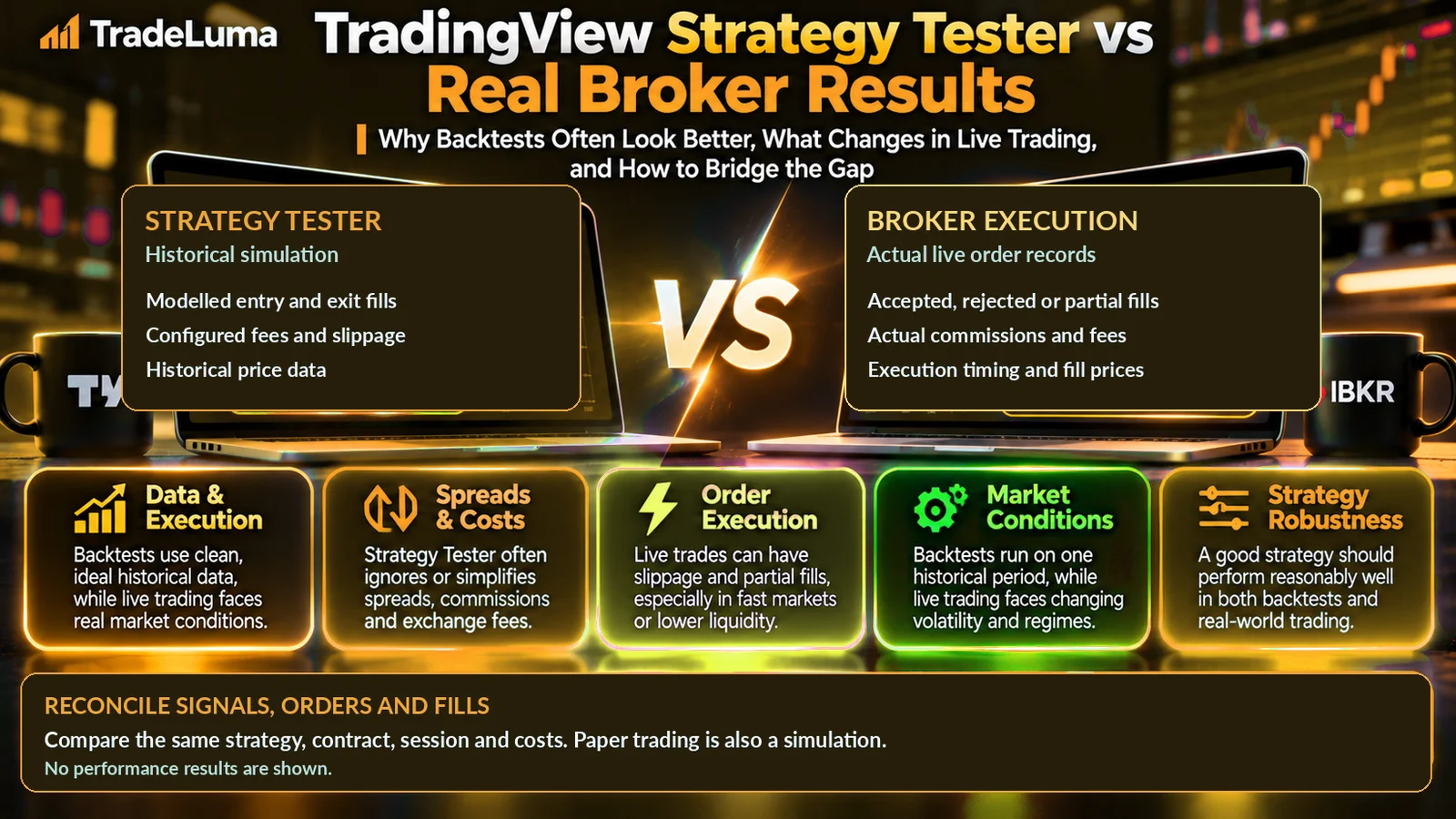
TradingView Strategy Tester vs Real Broker Results: Where Does the Profit Go?
Compare simulated and actual trade records using timestamps, commissions, slippage, missed orders, partial fills and a reconciliation workflow.
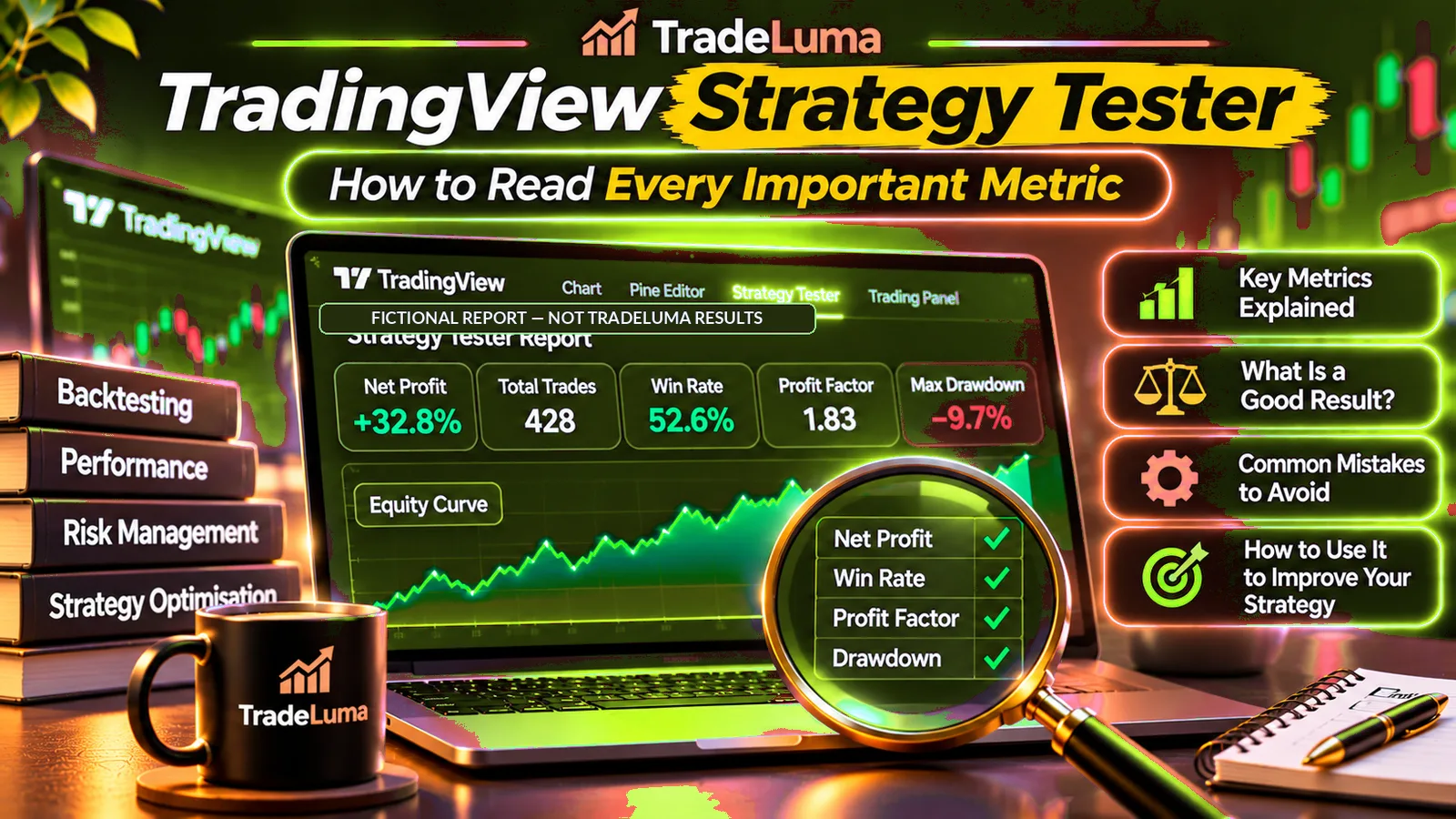
TradingView Strategy Tester: How to Read Every Important Metric
Interpret TradingView Strategy Tester and Strategy Report metrics including net P&L, profit factor, drawdown, expectancy, trade count and cost assumptions.