
Risk Management
Futures Initial Margin vs Maintenance Margin vs Day Trading Margin
Understand futures collateral, broker intraday concessions, overnight margin, liquidation and why margin is not the same as maximum loss.
On this page+
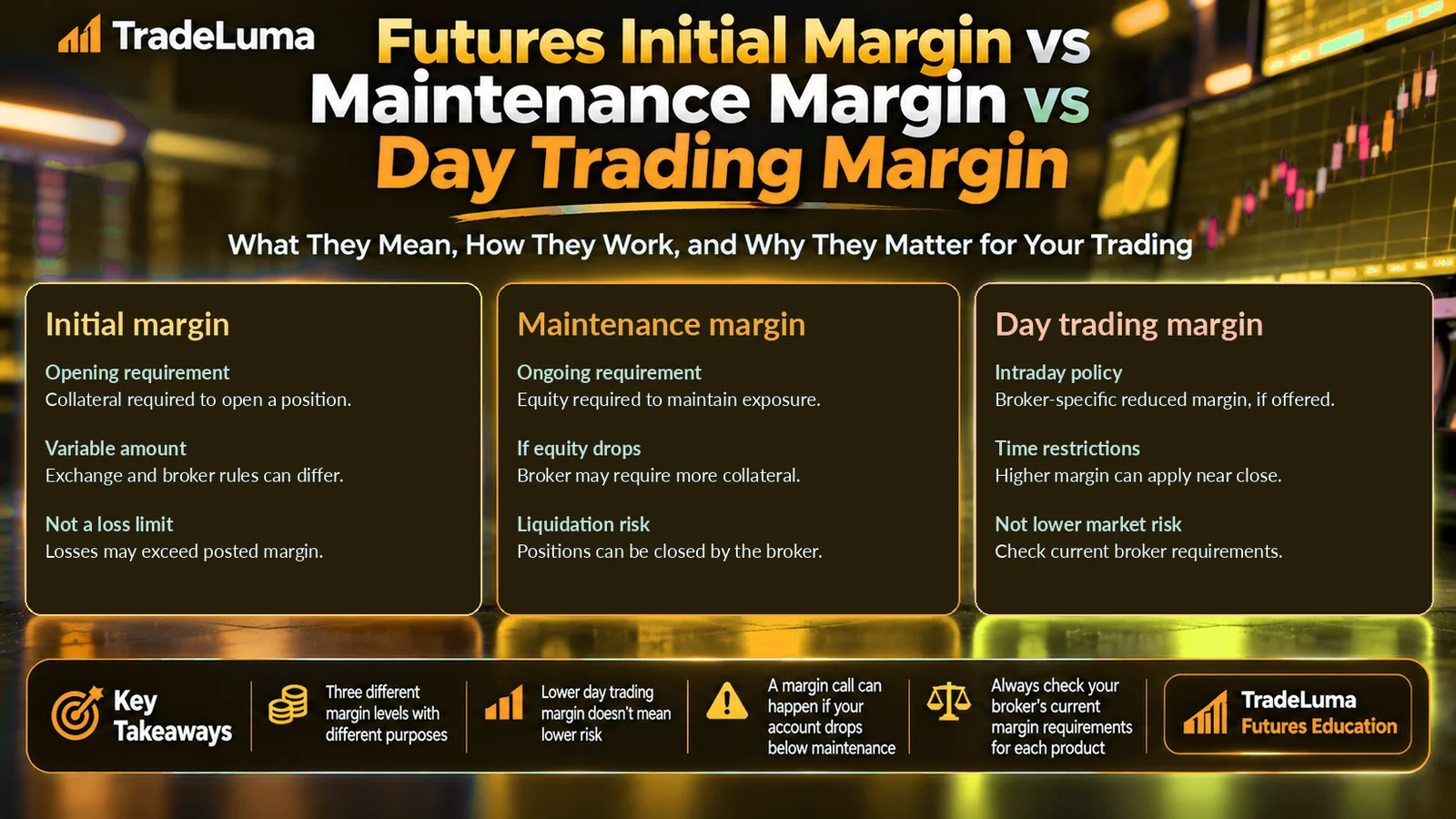
Futures margin is collateral to support an open position, not a down payment that caps losses. Initial margin, maintenance margin and broker day-trading margin answer different questions. Exact amounts depend on product, broker, account and market conditions, and can increase without warning. This educational guide is not personalised investment advice; trading can result in losses.
Initial margin
Initial margin is the required collateral to establish a position under the applicable margin regime. Clearing requirements and broker house rules may differ. A broker can require more than exchange minimums.
The collateral is not the position's notional value. A futures contract can expose the trader to a much larger price movement than the amount deposited.
Maintenance margin and liquidation
Maintenance margin is the threshold used to support an existing position under a specified margin framework. If account equity drops below the requirement, a broker may require additional funds or reduce or liquidate positions according to its policies.
Do not rely on receiving a margin call or being given time to respond. Brokers can liquidate positions without advance notice. Mark-to-market losses, fees and changes to margin requirements can all affect available funds.
Intraday margin and the overnight transition
Some brokers offer lower intraday margin for eligible products during defined sessions. It is a conditional broker policy, not a universal exchange guarantee. Brokers can change or withdraw it, and may raise requirements before holidays, news or the session cutoff.
If you plan to hold through a cutoff, verify the overnight requirement beforehand. If the account cannot meet it, the broker may liquidate. Do not assume that a stop order or closing alert will execute before a deadline.
Risk budget is a separate calculation
In a hypothetical account with US$5,000 equity, one contract might have a hypothetical US$1,000 margin requirement and US$250 planned stop risk. These numbers are not market quotes. A gap could produce a larger loss than US$250 and a margin increase could reduce available buying power.
Use position sizing based on a separate loss budget, contract value, estimated costs and adverse-move buffer. Then confirm the broker's actual margin, exposure cap and available funds. Lower margin does not reduce the price risk per contract.
Frequently asked questions
Is initial margin always higher than maintenance margin?+
Often, but the relationship depends on the applicable product and broker regime.
Is day-trading margin an exchange minimum?+
It can be a broker-specific concession subject to eligibility and time limits.
Can losses exceed the initial margin?+
Yes. Futures are leveraged and losses can exceed deposited collateral.
Put it into practice
Use the risk maths next to the guide.
Open TradeLuma's free position-size, risk/reward, expectancy, and drawdown tools to test the numbers behind a risk-management decision.
Open free trading calculators →Continue learning
Related guides.
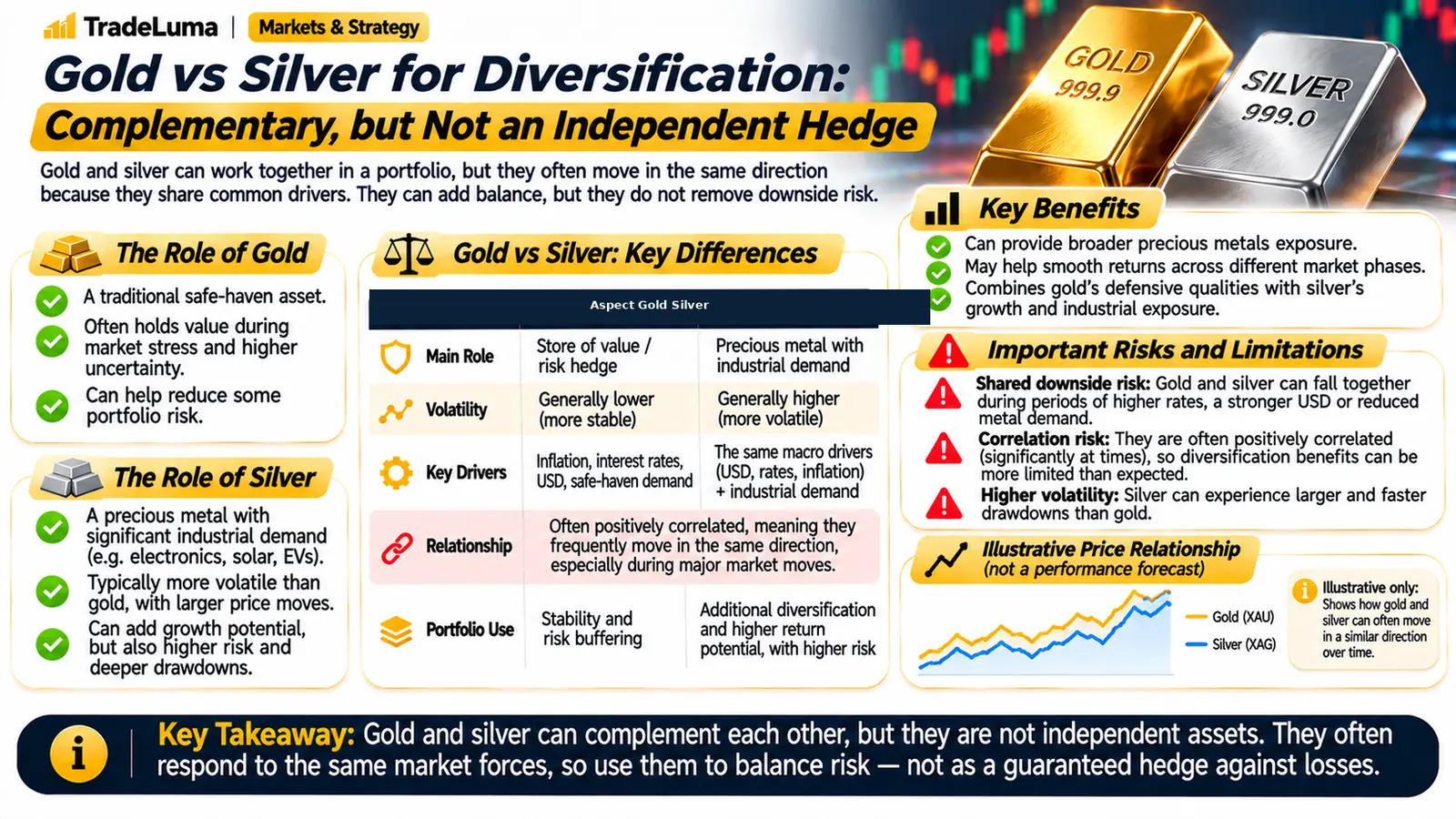
Why Trading Gold and Silver Together May Not Provide Diversification
Understand shared metals exposures, rolling return correlations, position sizes and simultaneous strategy losses.

Can You Lose More Than Your Account Balance Trading Futures?
Understand negative futures balances, leverage, gaps, margin liquidation, broker controls and why stop-loss orders do not guarantee a loss limit.

Leverage in trading explained: what it does, why it helps, and why it hurts
Understand how leverage works in trading, why it magnifies both returns and losses, and how to think about leverage responsibly.