
Risk Management
Leverage in trading explained: what it does, why it helps, and why it hurts
Understand how leverage works in trading, why it magnifies both returns and losses, and how to think about leverage responsibly.
On this page+
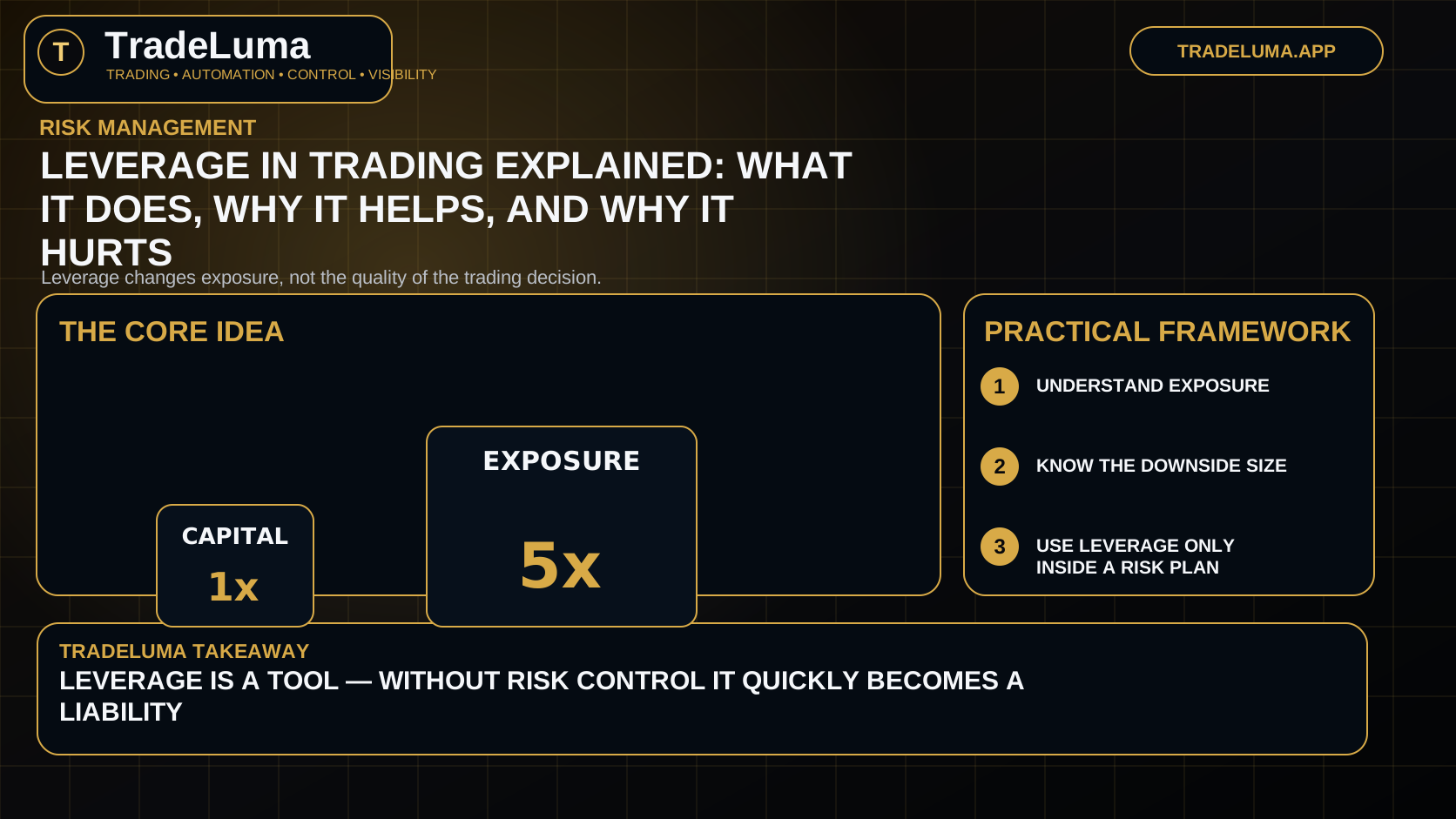
Understand how leverage works in trading, why it magnifies both returns and losses, and how to think about leverage responsibly. Leverage changes exposure, not the quality of the trading decision.
What leverage is
Leverage allows a trader to control market exposure larger than the capital committed upfront. It is commonly accessed through margin in products such as futures, forex, and CFDs.
The attraction is obvious: leverage can increase the impact of a successful trade. The danger is that losses are magnified by the same principle.
Why leverage feels attractive
Leverage can make relatively small market movements materially affect the account, which can be useful when applied thoughtfully inside a tested plan.
It can also tempt traders to focus on potential profit while underestimating how quickly losses can accumulate.
Exposure versus risk
A leveraged position increases notional exposure, but trade risk is still determined by position size, stop distance, market gaps, and actual execution.
That is why thoughtful position sizing matters more than simply knowing the maximum leverage a broker offers.
Where traders get into trouble
Problems often begin when leverage is used to compensate for impatience, a small account, or a desire to recover losses quickly.
Excessive exposure can make normal market noise emotionally difficult to tolerate and can push traders into decisions they would avoid at sensible size.
Using leverage responsibly
Responsible use starts with a defined cash risk, realistic stops, and a clear understanding of product mechanics such as margin requirements and forced liquidation risk.
The important question is not how much leverage is available, but how much exposure the trading plan can safely handle.
Frequently asked questions
What is leverage in trading?+
Leverage is the ability to control a larger market exposure using a smaller amount of capital or margin.
Does leverage increase profit?+
It can increase profit potential, but it also increases loss potential by the same principle.
Is high leverage always bad?+
Not automatically, but higher leverage leaves less room for error and usually demands stricter risk control.
Put it into practice
Use the risk maths next to the guide.
Open TradeLuma's free position-size, risk/reward, expectancy, and drawdown tools to test the numbers behind a risk-management decision.
Open free trading calculators →Continue learning
Related guides.
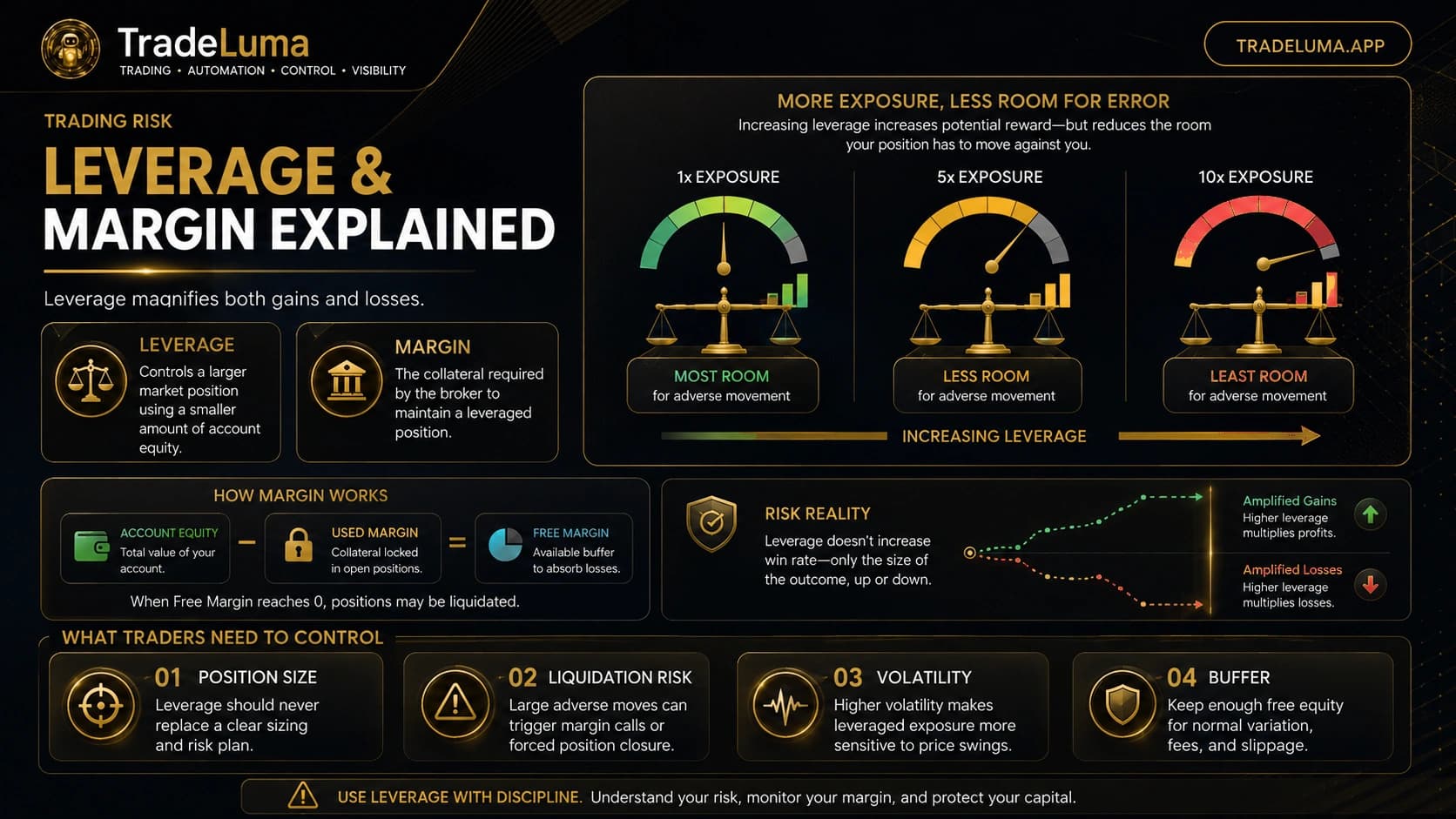
Leverage and margin trading explained: benefits and risks
Understand leverage and margin trading, how buying power and margin requirements work, and why leveraged exposure can magnify both gains and losses.
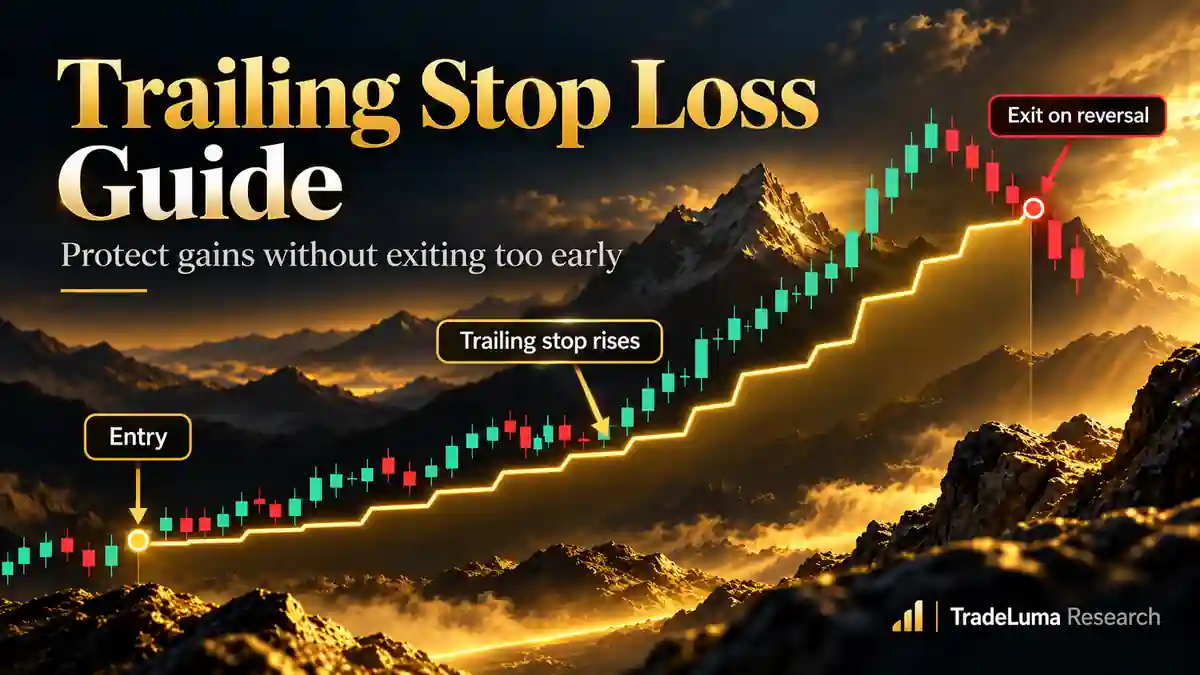
Trailing stop loss guide: how traders protect gains without exiting too early
Learn what a trailing stop loss is, how it differs from a fixed stop, and how traders use it to balance protection with room for the trade to work.
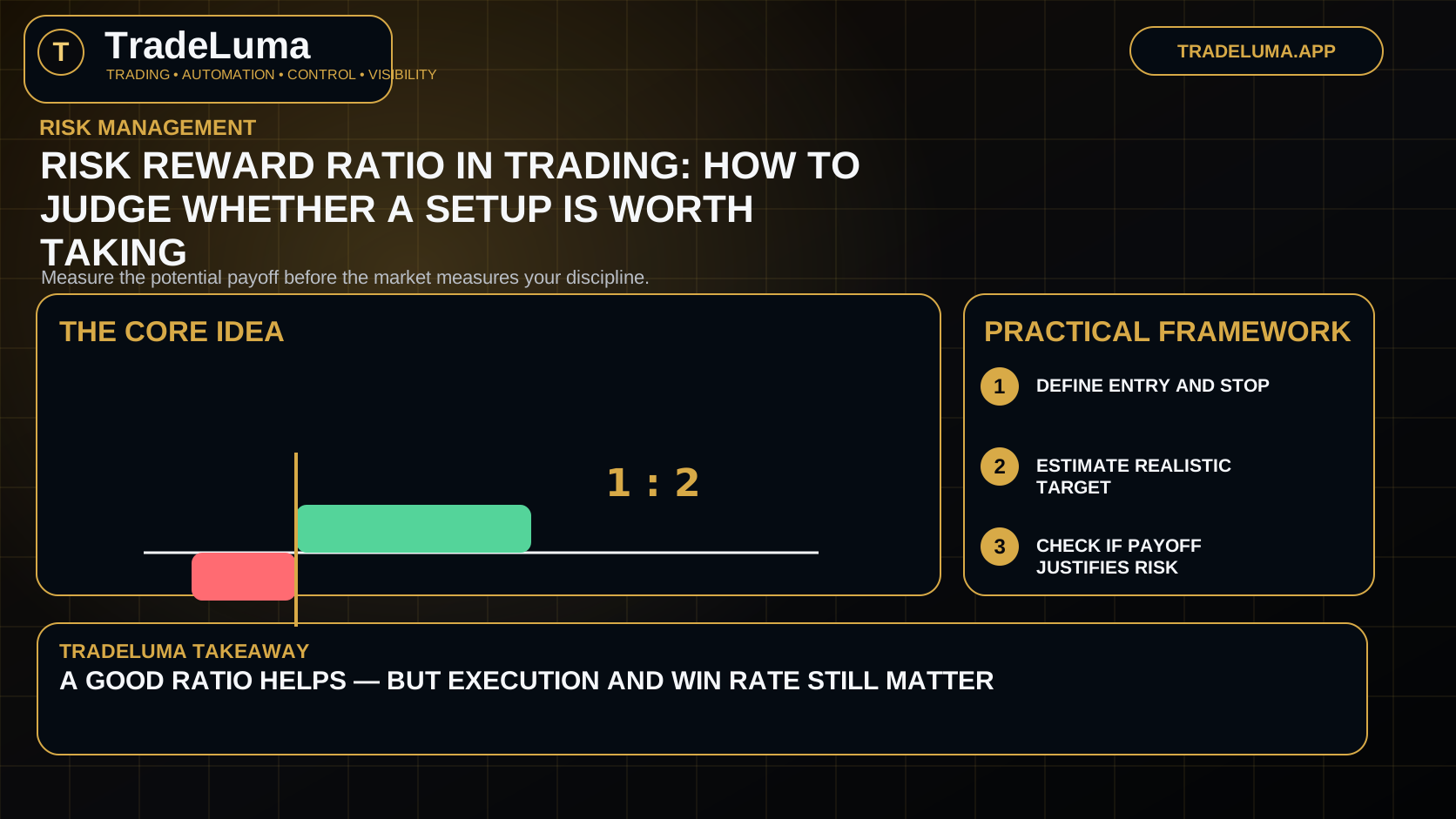
Risk reward ratio in trading: how to judge whether a setup is worth taking
Understand risk reward ratio, how to calculate it, and why trade quality depends on both payoff structure and actual execution discipline.