
Strategy Research
The Trader's 2027 Playbook: Preparing Your Trading Strategy for a New Market Cycle
Build a 2027 strategy review plan covering research evidence, market scenarios, risk limits, costs, contract calendars and paper execution validation.
On this page+

A new calendar year is a useful administrative checkpoint, not a reason to predict certain market winners. The 2027 playbook focuses on preparing an evidence-based research and risk process that remains useful if markets behave differently from expectations. Themes on the cover are scenarios to investigate, not forecasts or certified strategies. TradeLuma has a commercial interest in its own invite-only futures strategy scripts. This is educational material, not a personalised recommendation or a promise of returns. Historical simulations and hypothetical examples do not predict future outcomes. Futures are leveraged and losses can exceed initial margin.
Audit the previous year's process
Collect strategy versions, reference settings, simulated results and actual order records where available. Reconcile differences caused by slippage, missed signals, broker rejection, changes in size or manual interventions. Distinguish realised results from unrealised exposure.
Review trades as a distribution across the year, not just an annual percentage. Examine the largest losses, drawdown periods, trading costs and exposure by instrument. Note which observations are missing or incomparable.
Build scenarios rather than forecasts
Interest-rate changes, technology investment and commodity supply-demand conditions are possible drivers of 2027 markets. Their direction, timing and magnitude are uncertain. A plan can define scenarios of higher and lower volatility, sustained trends and range conditions without asserting that a particular outcome is inevitable.
Ask how an existing strategy would behave under each scenario, which observations could challenge its assumptions and how much exposure might occur at the same time. Do not select a new system based only on a broad market story.
Set risk and research boundaries
Document portfolio-wide exposure limits, a maximum tolerable research loss and review intervals appropriate to your circumstances. Test how losses could exceed planned stops. Check margin requirements and the possibility of simultaneous adverse positions.
Separate a prospective research budget from personal expenses and capital needed elsewhere. No particular trade frequency, target return or fixed risk percentage is required. A decision to trade less or not trade is part of a valid plan.
Update the operational calendar
Confirm trading sessions, holiday exceptions, daylight-saving conversions and dated-contract transitions using current exchange notices. Review broker connectivity, alert delivery, symbol mapping and order reconciliation in paper mode. Record what happens when a connection fails or a market is closed.
Subscription renewals, data packages and broker fees should be reviewed alongside trade costs. Do not rely on outdated promotional prices or assume the historical fill model captures every expense.
Create quarterly review points
Use a documented baseline and avoid modifying several inputs simultaneously. Schedule periodic checks of evidence, settings, costs, risk and execution. If risk thresholds or protective-order checks fail, investigate immediately rather than waiting for a scheduled review.
TradeLuma offers separate market-specific research collections and free calculators. Use them as optional research inputs and evaluate their fit with the same standards as any alternatives. The purpose of a 2027 plan is to improve decision quality, not promise an outcome.
Frequently asked questions
Should I change strategy just because the year changes?+
No. Review evidence and operational needs; a calendar change is not proof that rules should change.
What markets will perform best in 2027?+
This guide does not forecast winners. Scenario planning is distinct from predicting returns.
Can I use last year's backtest as a guarantee?+
No. The next year's conditions and actual execution may differ substantially.
Put it into practice
Use the risk maths next to the guide.
Open TradeLuma's free position-size, risk/reward, expectancy, and drawdown tools to test the numbers behind a risk-management decision.
Open free trading calculators →Continue learning
Related guides.
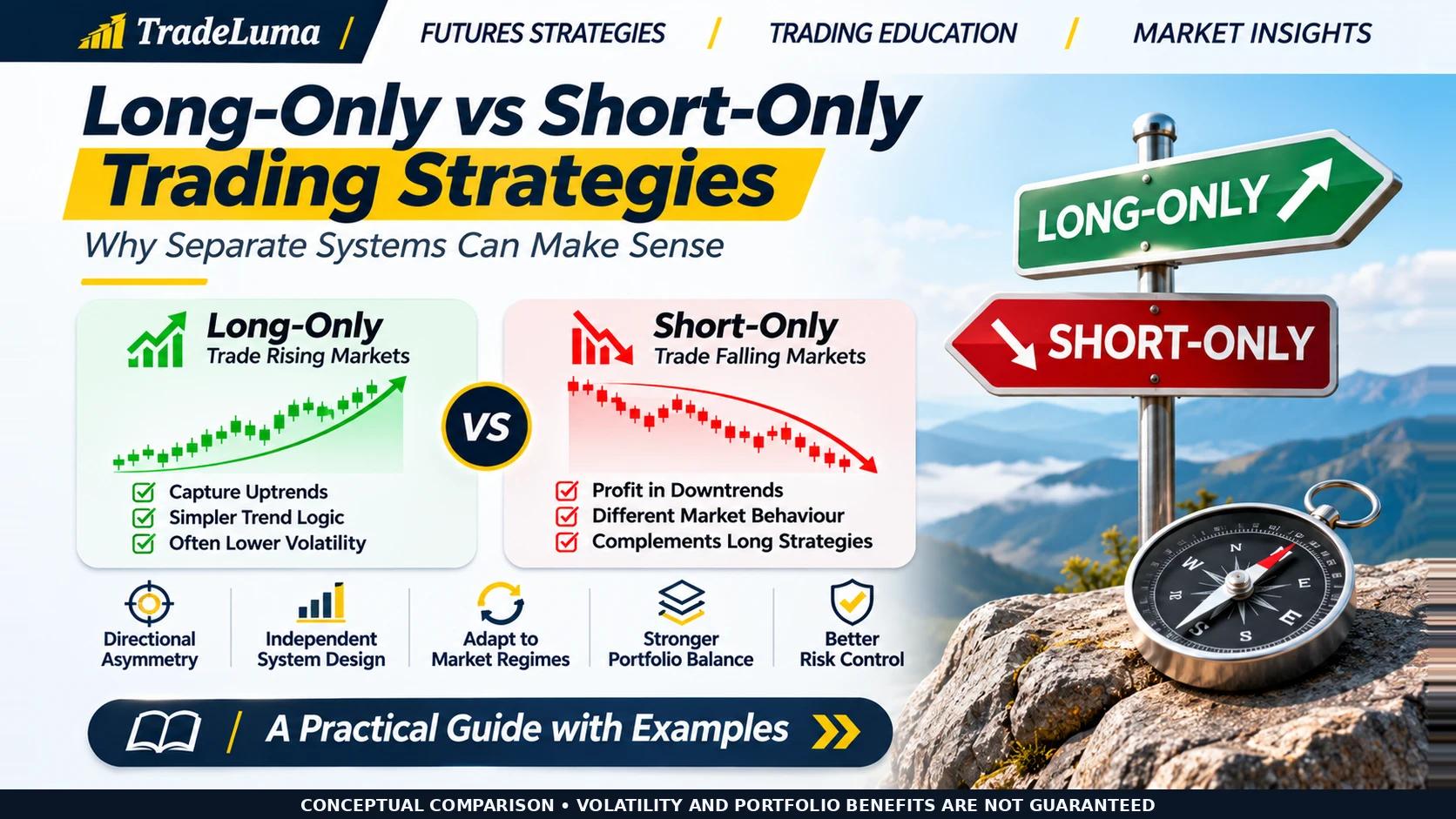
Long-Only vs Short-Only Trading Strategies: Why Separate Systems Can Make Sense
Compare directional trading systems, asymmetric market behaviour, combined exposure and separate long/short strategy research for futures traders.
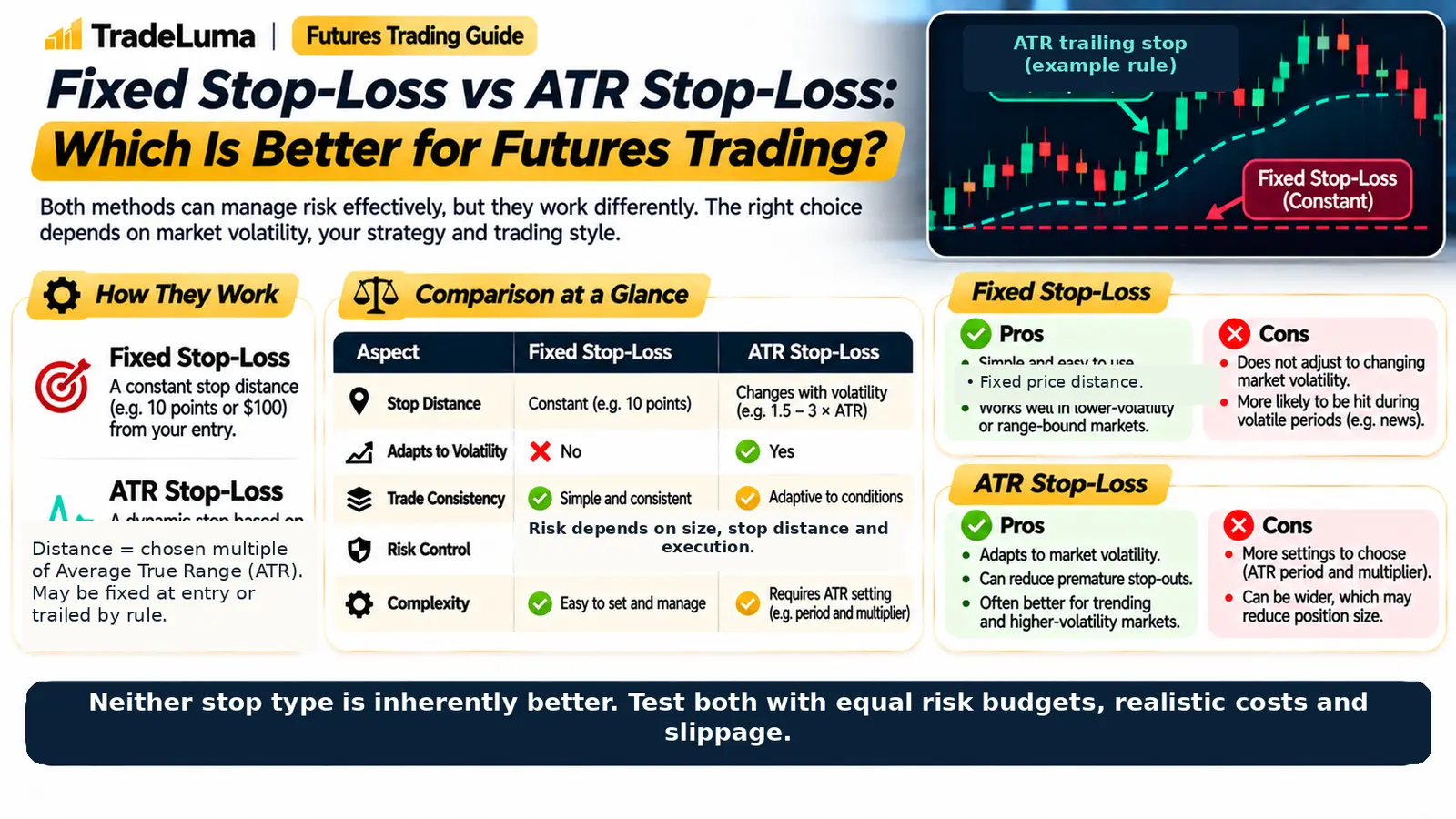
Fixed Stop Loss vs ATR Stop Loss: Which Works Better?
Compare fixed-distance and ATR-based stops, entry-time ATR versus trailing rules, sizing and realistic execution costs.
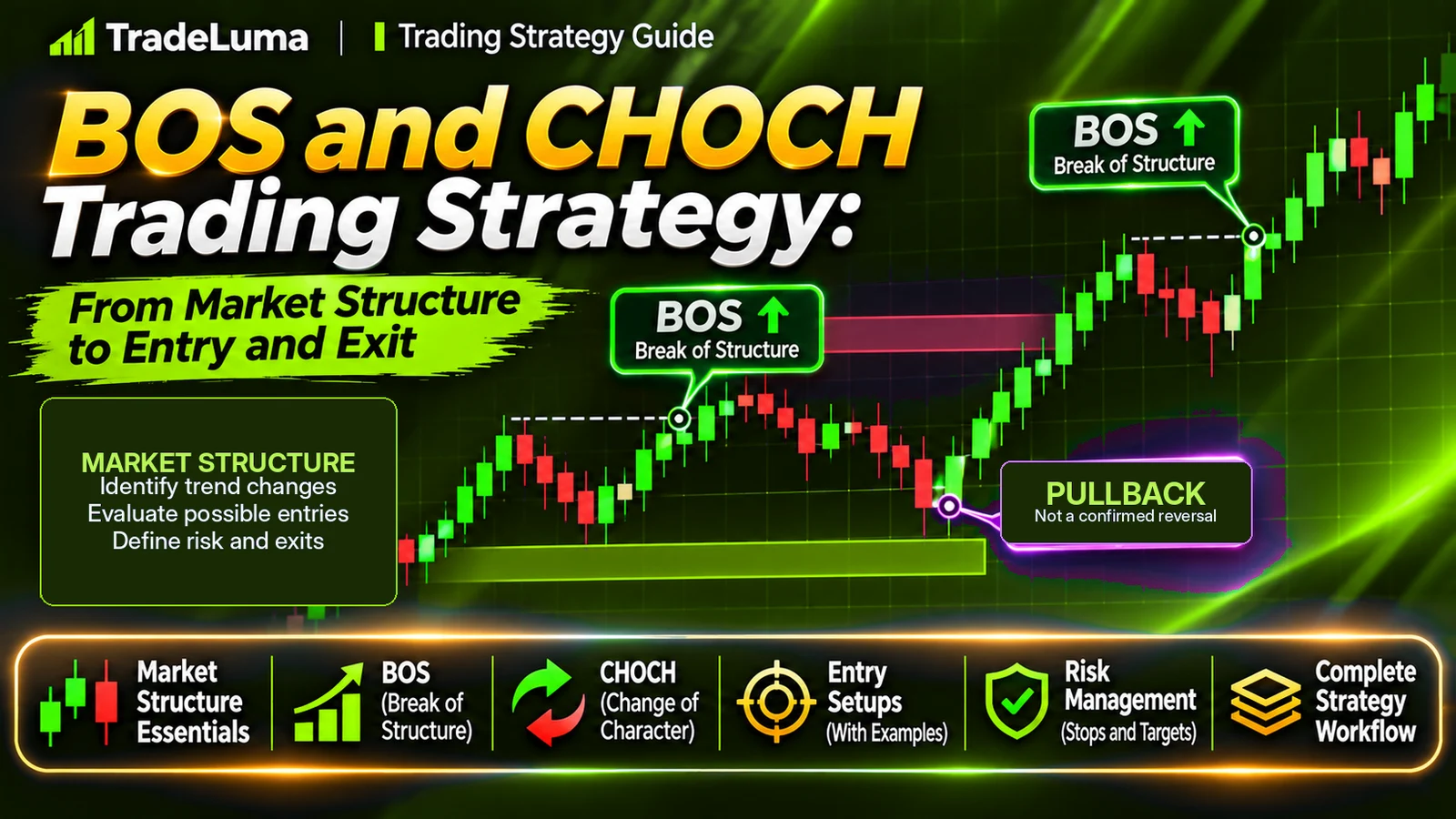
BOS and CHOCH Trading Strategy: From Market Structure to Entry and Exit
Turn market-structure labels into testable trading rules using confirmed swings, break-of-structure levels, invalidation and realistic entry assumptions.