
Global Markets & Semiconductors
South Korea's Market Rescue: KOSPI Drops 3.31% as Government Prepares Intervention
KOSPI closed at 4,708.54, down 3.31% on November 23, 2026. Korea prepared its ₩10.76T stabilisation fund and eased stock-buyback limits from Nov 24.
On this page+
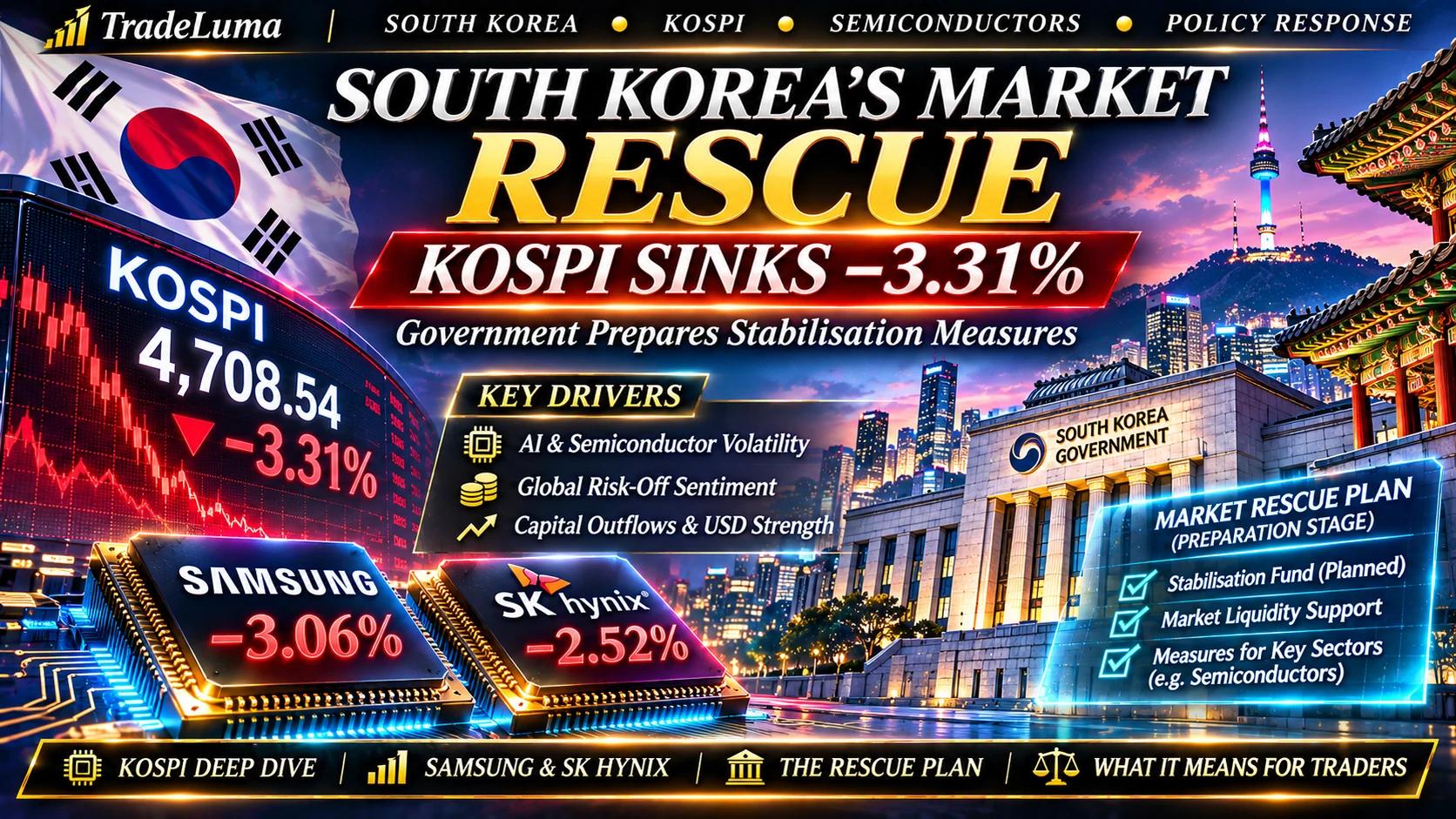
South Korean shares finished Monday, November 23, 2026 deep in the red, with the KOSPI down 161.42 points, or 3.31%, at 4,708.54. Yonhap reported that Samsung Electronics declined 3.06% and SK hynix fell 2.52% as the market absorbed worries about the AI hardware cycle and global risk appetite. Seoul responded with policy announcements: officials prepared for possible activation of a market-stabilisation fund estimated at ₩10.76 trillion, while the Financial Services Commission approved a temporary easing of the daily treasury-stock buyback order limits for listed firms, effective November 24 through February 23, 2027. Preparing a fund for potential deployment is not the same as actually spending its entire balance, and easing buyback rules does not guarantee shares will recover. This TradeLuma analysis separates the confirmed market close, the specific policy steps and what investors should monitor.
What happened to the KOSPI on November 23?
South Korea's KOSPI closed at 4,708.54, down 161.42 points, or 3.31%, on Monday November 23, 2026, according to Yonhap. It had fallen as low as 4,586.80 intraday before paring some losses by the close. Those are exact historical observations at different moments in the session.
The decline followed a period of global stress for technology and AI-linked shares. Korean benchmark components include large semiconductor exporters, so changes in perceived AI demand and US market sentiment can influence domestic investors rapidly.
The subsequent Monday Wall Street rebound and Nvidia's US-session rally occurred later in the global trading clock. Do not retroactively describe the US close as a cause of the earlier Korea closing decline.
How did Samsung and SK hynix perform?
Yonhap reported Samsung Electronics fell 3.06% to ₩177,500 and SK hynix dropped 2.52% to around ₩1.09 million. Their importance extends beyond the absolute share-price moves because both companies are major players in semiconductor hardware and memory.
High-bandwidth memory and other chips are essential inputs for AI accelerators and data-centre systems. Concern about the economics of large AI spending programmes can influence valuations across suppliers even when particular factories are operating normally.
A daily stock decline does not prove a 3% drop in revenue, orders or earnings. Those claims would require operating disclosures and their own measurement windows.
What is South Korea's ₩10.76 trillion stabilisation fund?
South Korea has a market-stabilisation framework designed to support confidence when severe financial stress disrupts equities. Reports on November 23 described resources near ₩10.76 trillion, including contributions pledged by financial institutions and market-related entities.
Official government statements said authorities would begin the required preparations to make the fund available swiftly if conditions warranted. Preparation, legal capacity, potential activation and executed purchases are distinct steps.
Neither the fund's headline size nor the government's assurance of readiness confirms that ₩10.76 trillion was spent buying listed shares on November 23. Claims about actual investment require dated fund or regulatory disclosures.
What did the government actually approve?
The Financial Services Commission said it held a regular meeting on November 23 and agreed to relax the daily buying-order limit for listed companies purchasing their own treasury shares. The relaxation runs from November 24, 2026 to February 23, 2027, according to the English-language FSC release.
This is a concrete policy change distinct from the still-preparatory fund. It can allow qualifying corporate issuers greater daily flexibility to buy back their own shares, subject to the relevant regulatory details and each board's own authorisations.
A rule that permits buybacks does not compel every company to use the maximum amount. Investors should watch actual disclosures of completed company repurchases.
Why officials prepared a market-support response
Severe volatility can damage investor confidence and contribute to wider financial strain, particularly when leverage, foreign equity flows and currency movements interact. Officials may want a mechanism that supports orderly trading without promising a permanent floor for the index.
Finance Minister Lee Hyoung-il said the government had contingency plans in addition to the fund, according to Yonhap. The existence of response options can affect expectations, but it is not proof of a completed rescue operation.
The central questions for investors are when a measure becomes effective, who can execute it, whether it targets specific products or the wider market, and how its impact will be reported.
Why semiconductor concentration matters for the whole KOSPI
South Korea is an important supplier of advanced memory and electronics used in AI and consumer hardware. Samsung and SK hynix occupy substantial positions in investor portfolios and sector indexes; a shift in market confidence in semiconductors can therefore appear as a large move in the KOSPI.
But the link is not one-directional. An AI share-price rebound in the United States can improve sentiment, yet Korean company results also depend on currency, order mix, product generation, inventory, manufacturing yields and competitive position.
Do not use a single KOSPI percentage change to infer the health of all South Korean industries, which include autos, financial services, chemicals and other businesses.
What is the difference between support preparations and actual intervention?
Preparedness might include operational instructions, authority to convene an investment committee or the ability to raise or deploy capital. Actual intervention means a fund or institution executed purchases, providing potential incremental market demand.
The press statements available at publication supported the former and an adopted temporary buyback-rule change, but they did not establish that the full fund had been deployed. The distinction matters because portfolio managers could misprice risk if they expect guaranteed government purchases.
Regulatory action can also carry limitations: concentrated support, reduced available cash or changing market conditions can weaken or offset its impact. No policy announcement should be treated as a risk-free trade signal.
How foreign investors and the won can amplify volatility
International funds measure returns in currencies such as US dollars. A decline in Korean shares accompanied by won depreciation can magnify losses in a foreign investor's home currency, potentially contributing to risk reduction.
At the same time, local investors may be responding to margin conditions, flows in exchange-traded products and broader expectations for semiconductor profits. Such factors may create sharp intraday moves without a corresponding change in underlying chip production.
To determine whether outflows are slowing, follow official exchange net-purchase statistics, currency rates, futures positioning and margin-financing data across more than a single day.
Three scenarios for Korea's next market sessions
Scenario one: Global technology shares stabilise, foreign flows improve and the government communicates a credible liquidity plan. In this case KOSPI may find support even without immediate large public fund purchases.
Scenario two: The fund remains on standby while investors continue reducing exposure. The index could stay volatile despite the adopted buyback rules, because permitted purchases are not the same as guaranteed demand.
Scenario three: AI earnings forecasts deteriorate or global financing conditions tighten. Broader selling could overwhelm temporary local policy relief. These scenarios are analytical possibilities, not assigned probabilities or trading instructions.
What should traders monitor after November 23?
Track the Korea Exchange's official daily KOSPI closes, Financial Services Commission notices, Ministry of Finance statements and any disclosed fund purchase activity. Distinguish listed-company buyback authorisations from executed transactions, and separate intraday index lows from closes.
For the semiconductor names, review Samsung and SK hynix disclosures on memory pricing, HBM capacity, inventories, exports and actual demand. Compare movements with global technology indexes using timestamps and currency-adjusted data.
The TradeLuma cover is a dramatic editorial interpretation of Seoul's financial markets, not a photograph of an actual government rescue transaction. Figures and corporate declines are from the November 23 session and are historical. This is educational information, not personalised financial advice.
Frequently asked questions
How much did the KOSPI fall on November 23, 2026?+
The benchmark closed at 4,708.54, down 161.42 points or 3.31%, according to Yonhap.
How much did Samsung Electronics fall?+
Yonhap reported Samsung Electronics down 3.06% to ₩177,500 on November 23.
How much did SK hynix fall?+
SK hynix declined 2.52% to about ₩1.09 million in the same session, according to Yonhap.
Did South Korea spend ₩10.76 trillion buying stocks?+
The reported amount refers to the stabilisation fund's capacity, while official statements focused on preparing for possible activation. Full deployment was not established.
What market-support step was approved on November 23?+
The Financial Services Commission approved temporary easing of listed companies' daily treasury-stock buyback ordering limits, effective November 24.
When does the temporary corporate buyback measure end?+
The FSC specified February 23, 2027 as the end of the three-month measure.
Why is the KOSPI sensitive to AI stocks?+
Large semiconductor companies, including Samsung and SK hynix, make Korea's benchmark sensitive to market expectations for memory and AI computing demand.
Is South Korea's market fund the same as Taiwan's?+
No. They are separate countries' market-support mechanisms, with different resources, authorities and reported activation timelines.
Can a government stabilisation fund stop all stock-market losses?+
No. Support may affect market functioning or confidence but cannot guarantee an index level or eliminate economic and valuation risks.
Are the KOSPI and semiconductor figures on the cover live?+
No. The -3.31%, -3.06% and -2.52% figures represent the historical November 23, 2026 closing session.
Put it into practice
Use the risk maths next to the guide.
Open TradeLuma's free position-size, risk/reward, expectancy, and drawdown tools to test the numbers behind a risk-management decision.
Open free trading calculators →Continue learning
Related guides.

The Great Everything Sell-Off: Why Gold, Bitcoin and Nasdaq Crashed Together — and What Happens Next
Why did stocks, Bitcoin and gold fall together on November 20, 2026? Understand the Nasdaq plunge, VIX surge, margin calls, liquidity risk and what to watch.
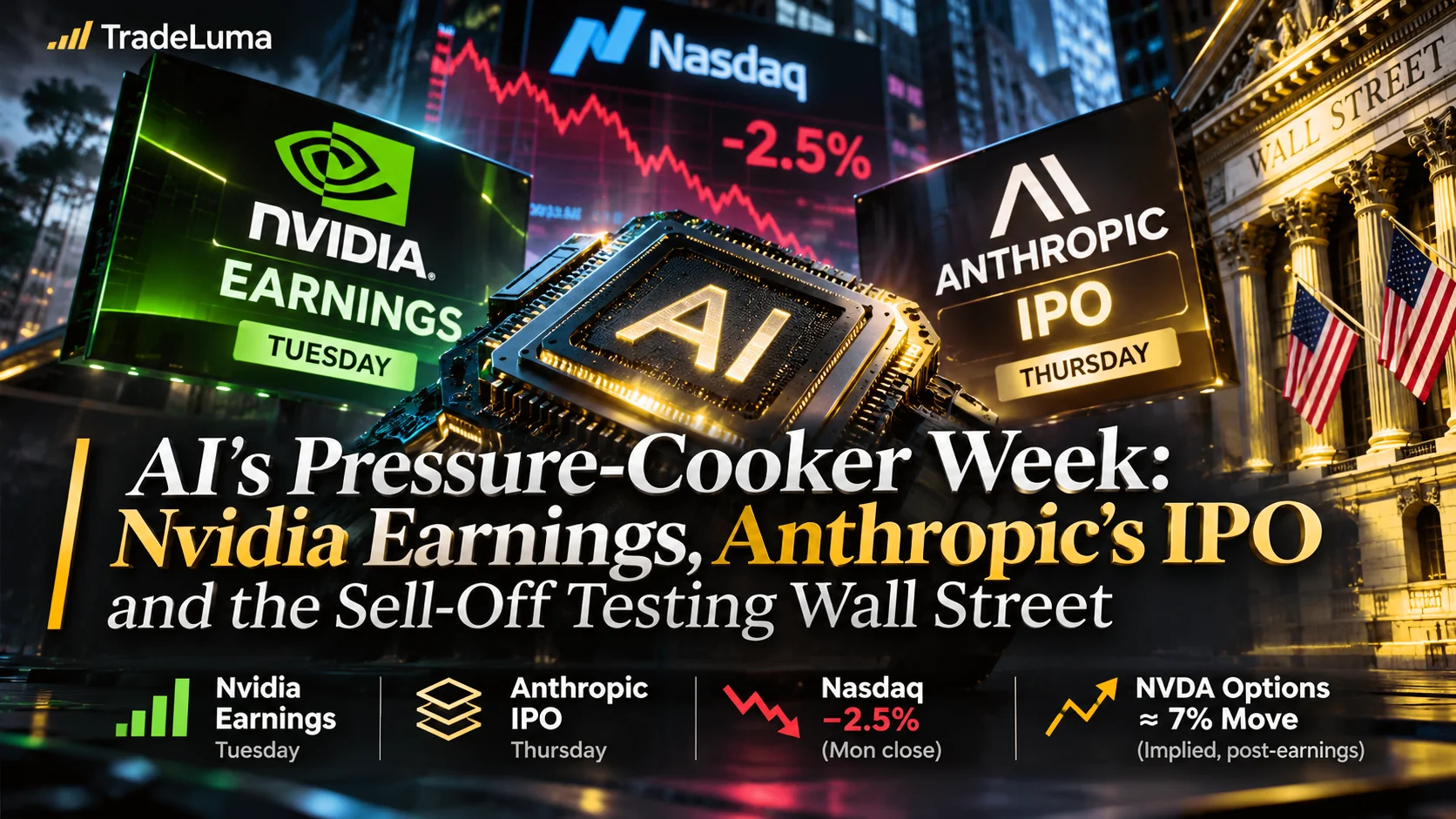
AI’s Pressure-Cooker Week: Nvidia Earnings, Anthropic’s IPO and the Sell-Off Testing Wall Street
Nvidia reports on Nov 17 as Anthropic targets a Nov 19 IPO amid a Nasdaq sell-off. Explore NVDA earnings, ANT valuation, options risk and AI-stock scenarios.
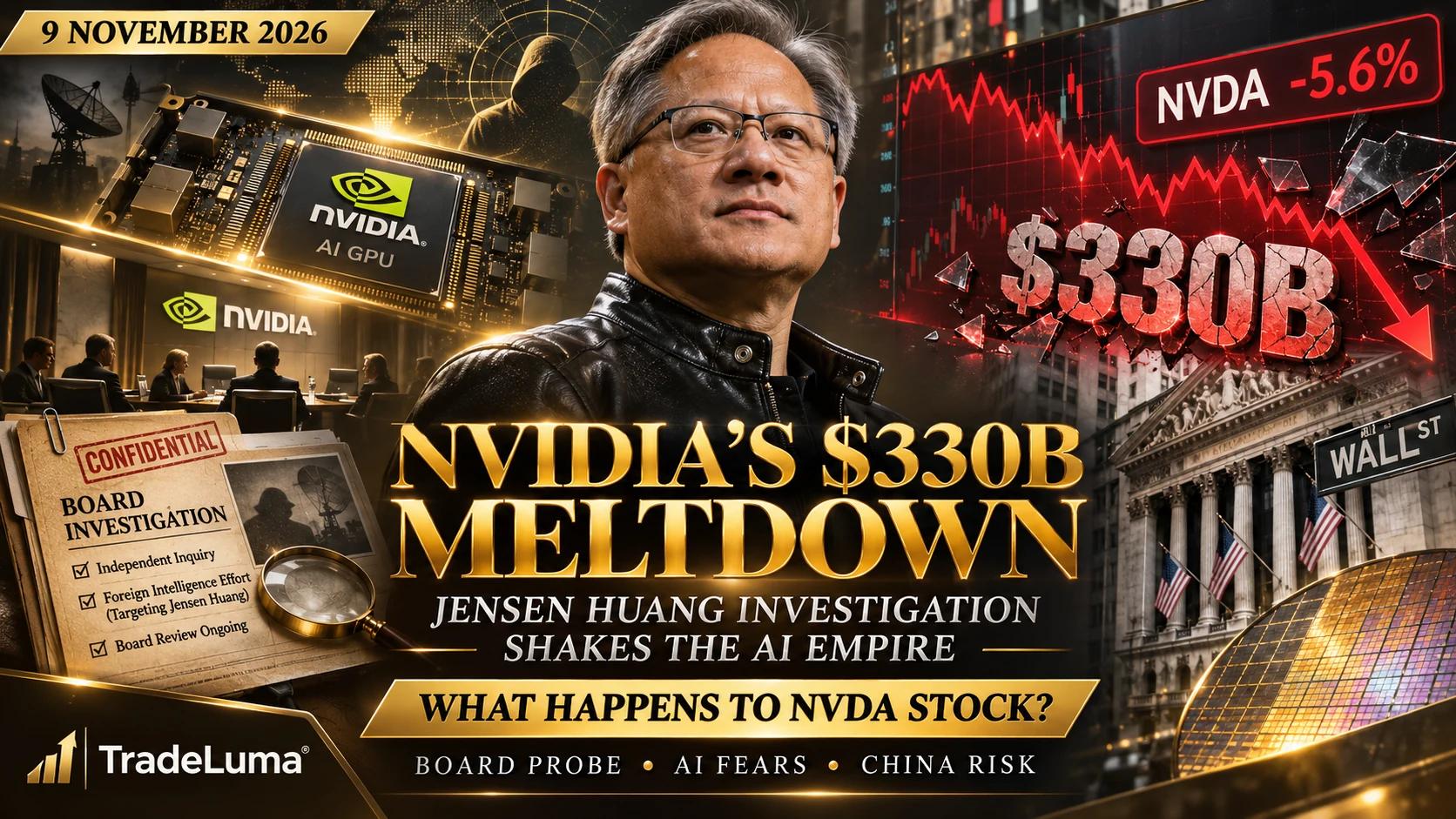
Nvidia's $330 Billion Intraday Meltdown: Jensen Huang Board Probe Shakes the AI Trade
Historical November 9 Nvidia selloff and board review, updated November 24 following Jensen Huang's confirmed reinstatement as CEO.