
Technical Analysis
Swing highs and swing lows: the building blocks of market structure
Understand swing highs and swing lows, why they matter for market structure, and how traders use them to frame trend, entries, and invalidation.
On this page+
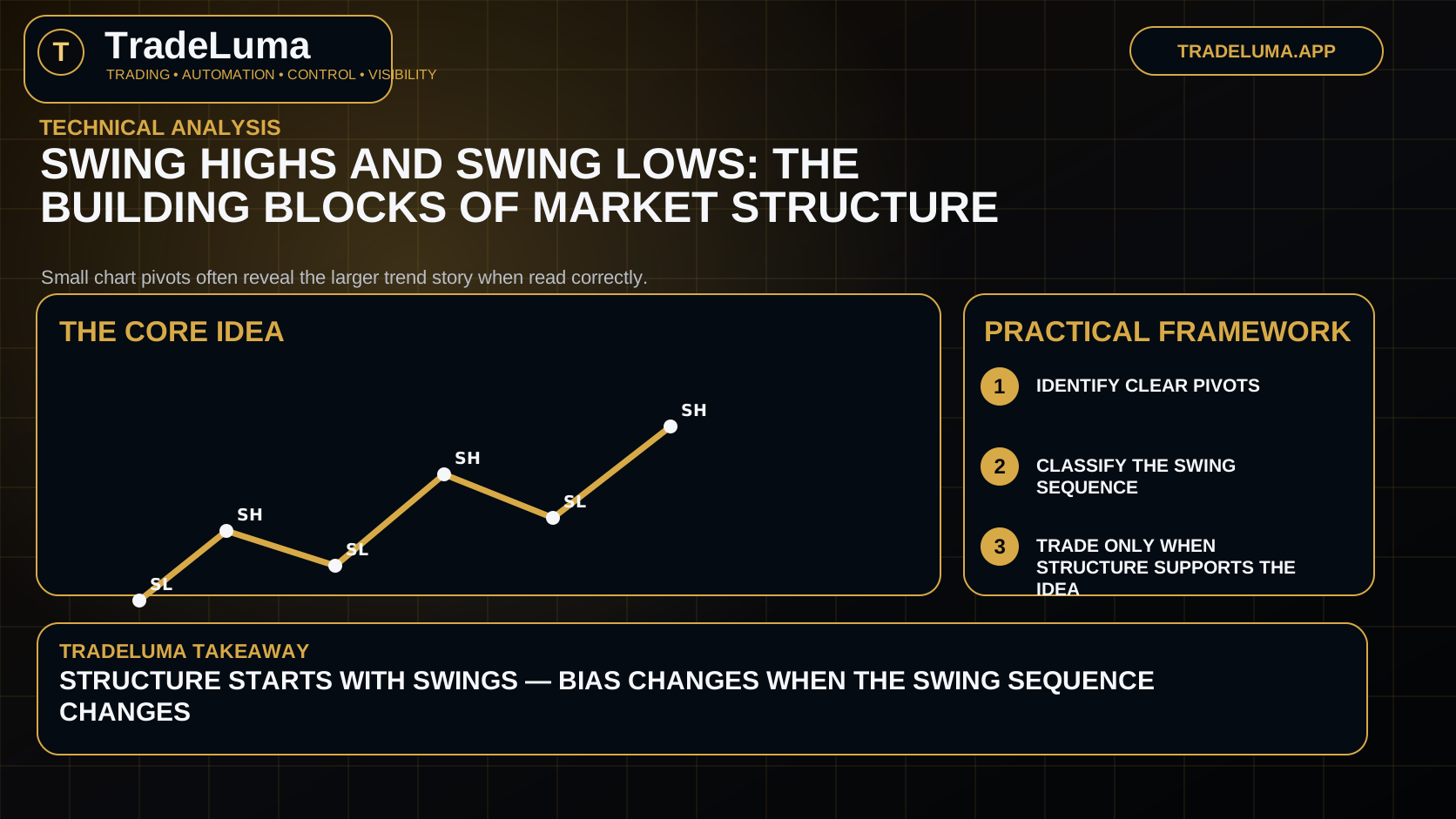
Understand swing highs and swing lows, why they matter for market structure, and how traders use them to frame trend, entries, and invalidation. Small chart pivots often reveal the larger trend story when read correctly.
What swing highs and lows are
A swing high is a local peak where price stops rising and turns lower, while a swing low is a local trough where price stops falling and turns higher.
These pivots help traders break a chart into readable structure rather than treating every bar as equally important.
Why swings matter
Trend direction is often described through the sequence of swing highs and lows. Higher highs and higher lows suggest one structure; lower highs and lower lows suggest the opposite.
Because of that, swing points are central to how many traders define directional bias and invalidation.
How traders use swings
Swings can help identify support and resistance, place stops, define breakouts, and decide whether a pullback remains healthy or has become a structural failure.
They also help traders separate trending conditions from markets that are still rotating inside a range.
Not every pivot is equal
Lower timeframes produce many minor turns that may not matter in the broader picture. Traders usually focus on swings that are visually meaningful for the timeframe being traded.
Choosing the right level of structure is part of the analysis rather than a fixed universal rule.
Common mistakes
A common mistake is reacting to every minor high or low as if it changed the whole market story.
Another is mixing major and minor swing structures from different timeframes without deciding which timeframe controls the trade.
Frequently asked questions
What are swing highs and swing lows?+
They are local turning points that traders use to read market structure.
How do swings help identify trend?+
The sequence of highs and lows helps show whether the market is making higher highs and higher lows or the opposite.
Can swings be used for stop placement?+
Yes. Many traders place stops beyond a swing that would invalidate the setup.
Technical analysis
Continue with the topic hub.
Browse the related TradeLuma guides and build the topic from foundations through practical application.
Explore Technical analysis guides →Continue learning
Related guides.
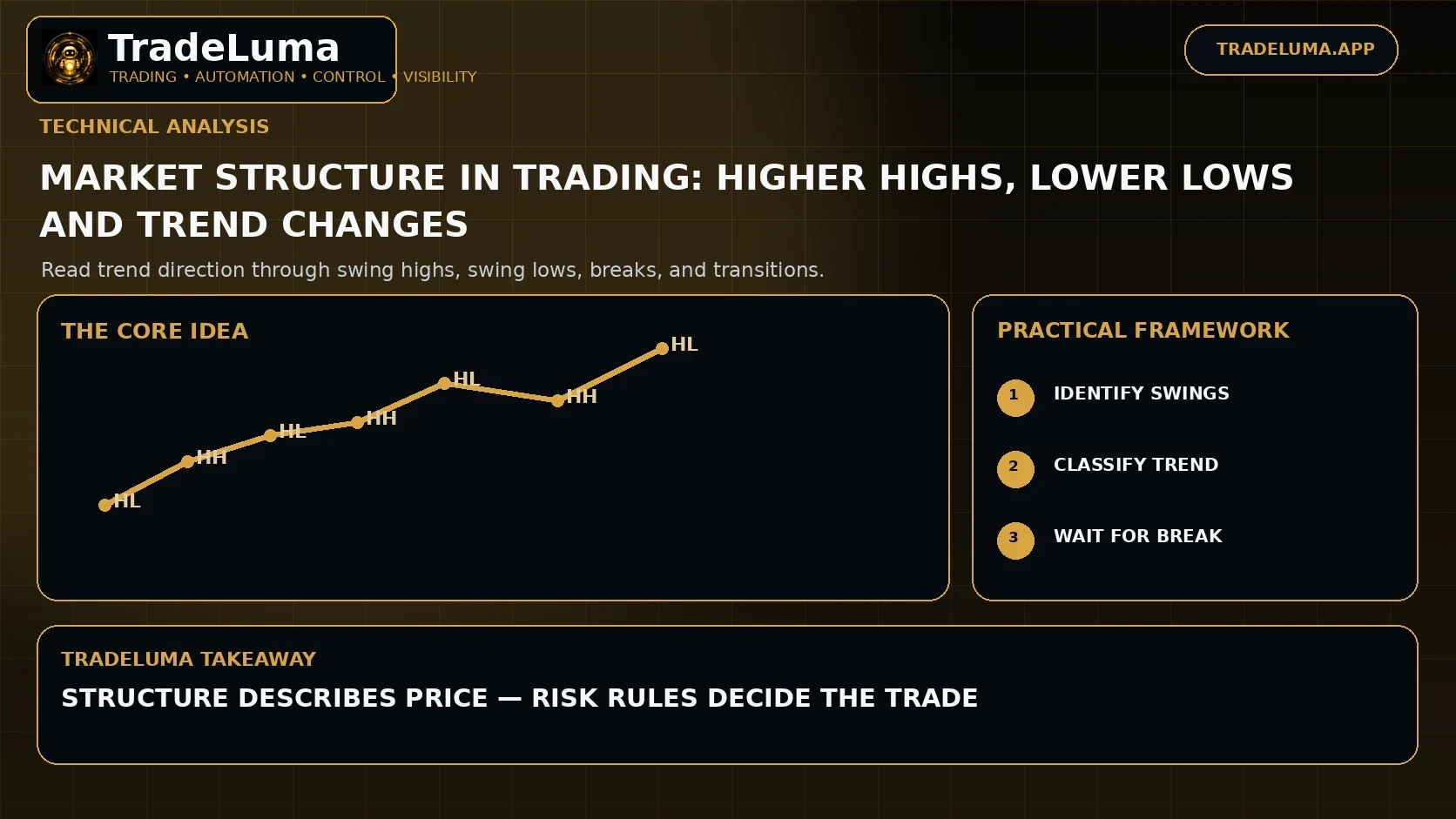
Market Structure in Trading: Higher Highs, Lower Lows and Trend Changes
Learn how market structure uses swing highs and lows to describe trends, ranges, breakouts, and possible trend changes without relying on prediction.
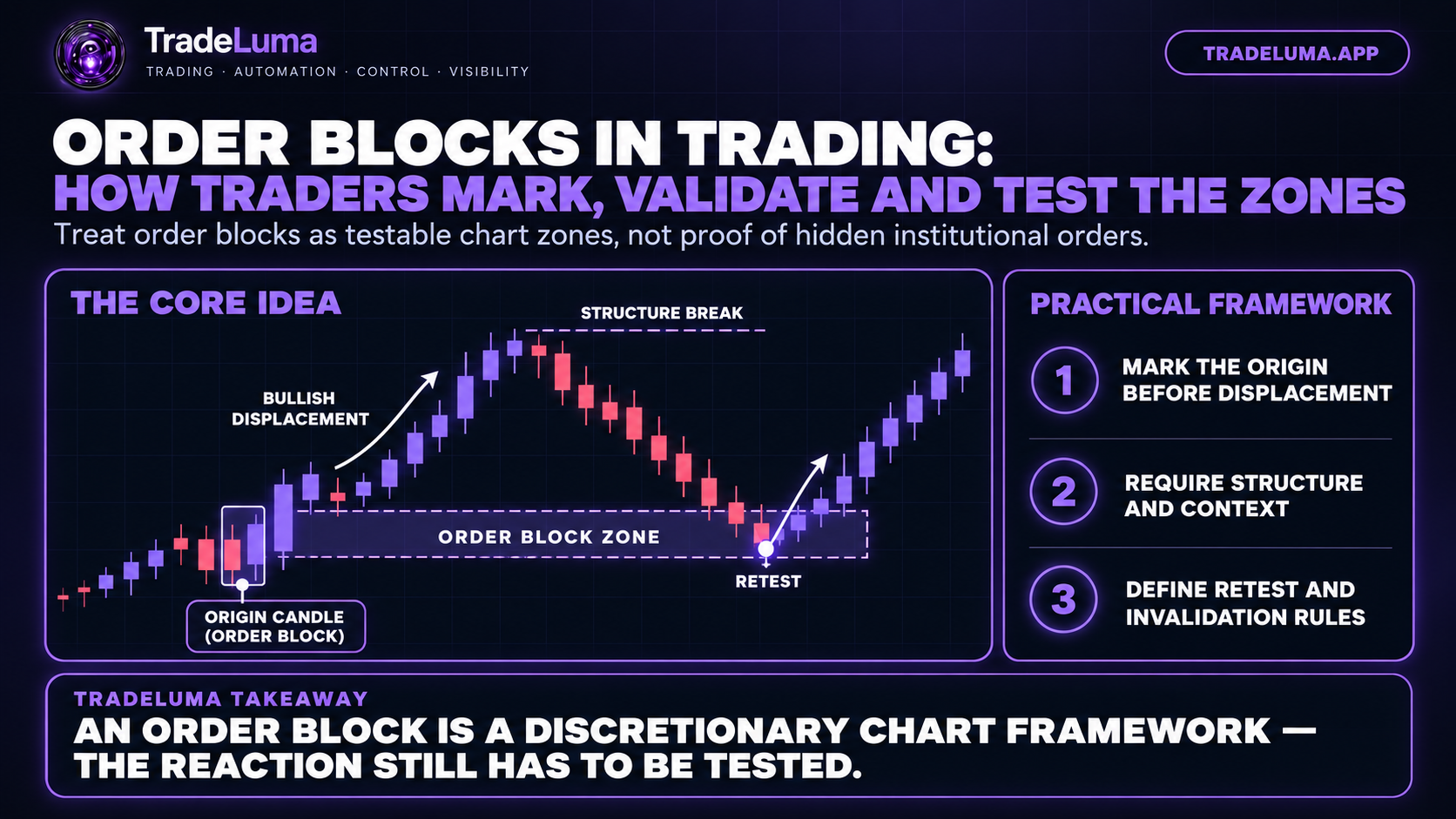
Order Blocks in Trading: How Traders Mark, Validate and Test the Zones
Learn what order blocks mean in technical analysis, how bullish and bearish zones are marked, and how traders test displacement, retests, and invalidation.
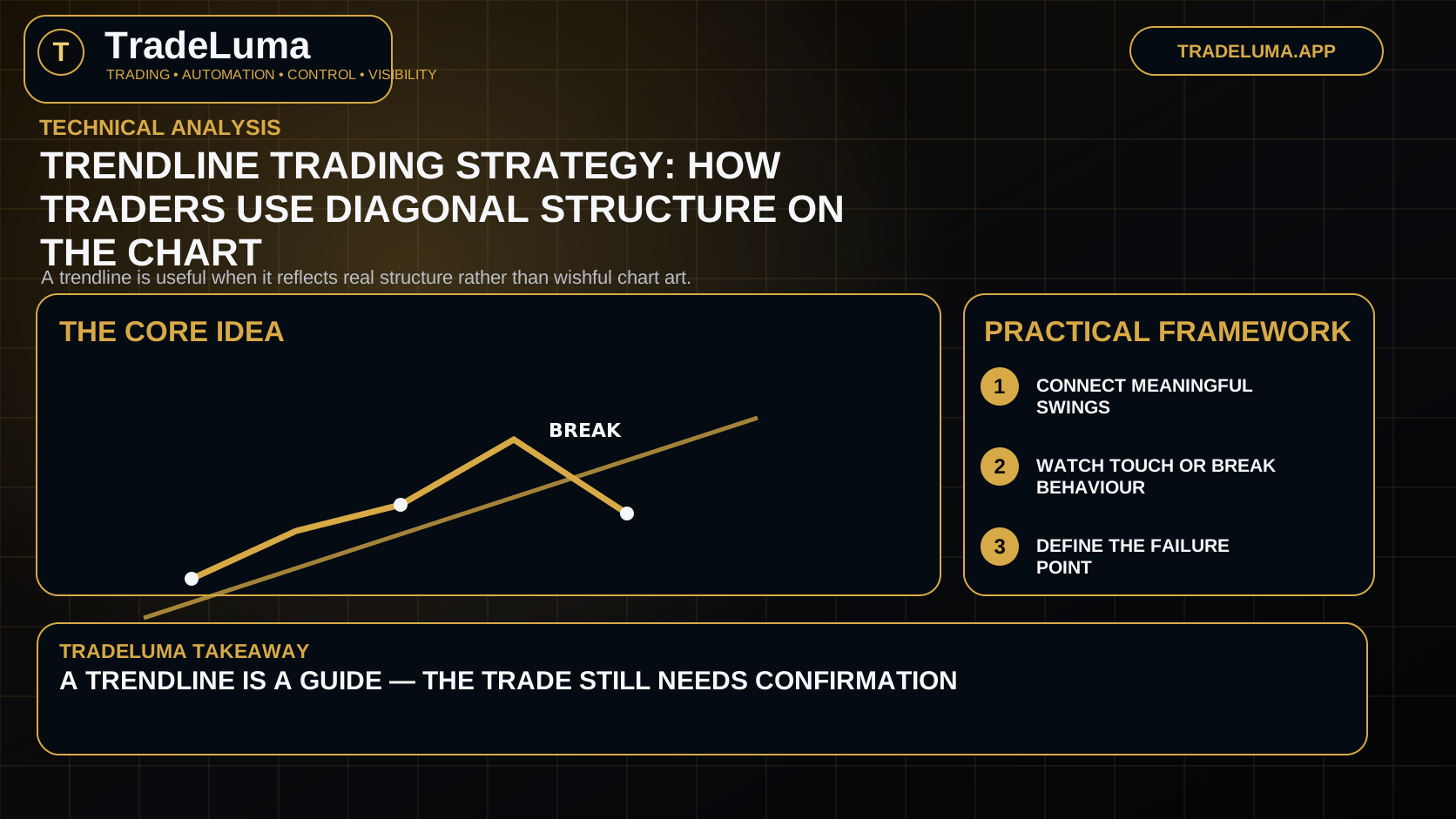
Trendline trading strategy: how traders use diagonal structure on the chart
Learn how trendlines are drawn, what they can and cannot do, and how to use them with structure, entries, and invalidation.