
Technical Analysis
Supply and demand in trading: how traders identify zones of imbalance
Learn what supply and demand zones are, how traders identify them, and how to use them alongside structure, timing, and risk control.
On this page+
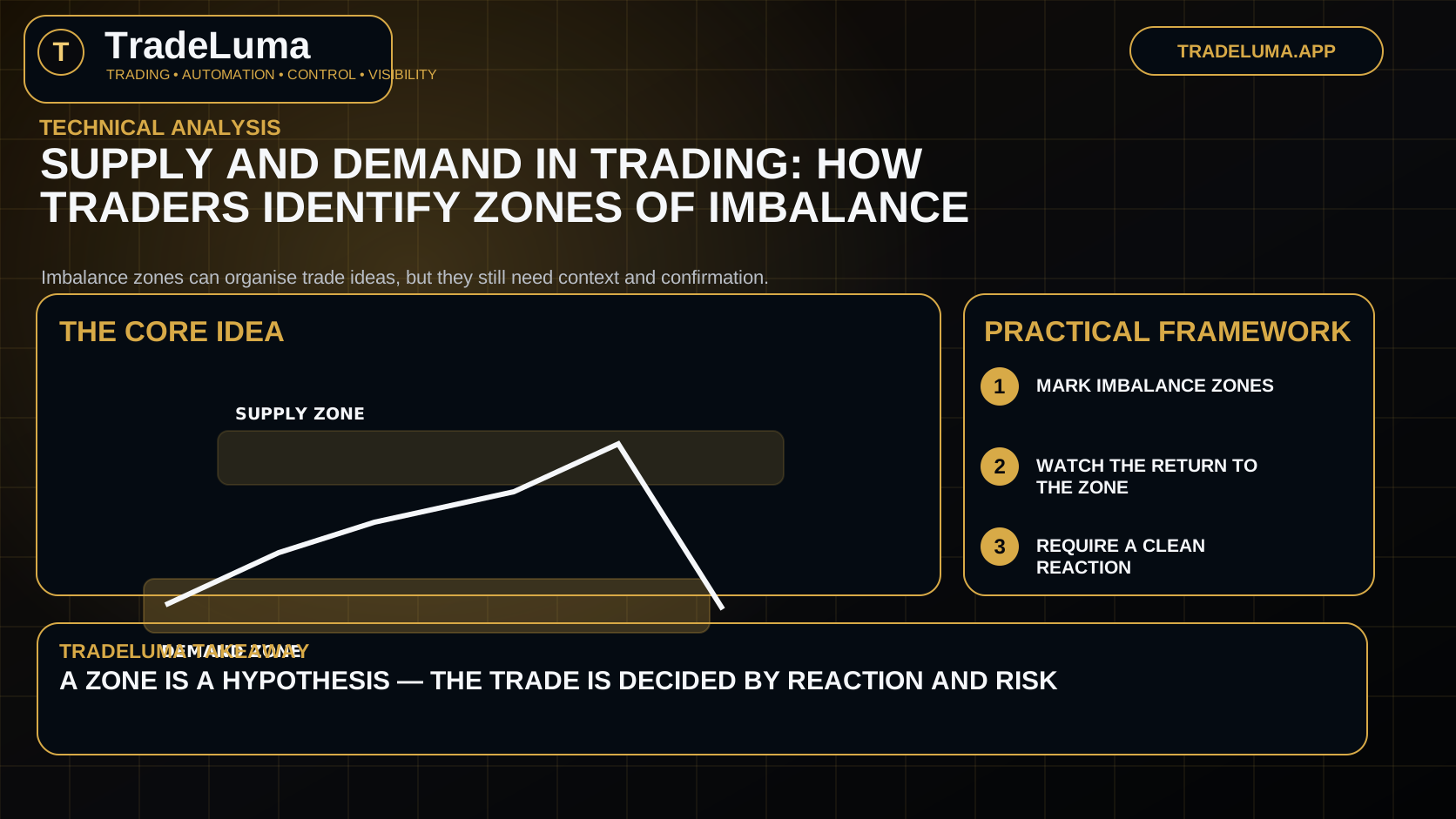
Learn what supply and demand zones are, how traders identify them, and how to use them alongside structure, timing, and risk control. Imbalance zones can organise trade ideas, but they still need context and confirmation.
What supply and demand zones are
Supply and demand analysis looks for areas where price moved away strongly, suggesting an imbalance between buyers and sellers.
A demand zone represents an area from which price rallied sharply, while a supply zone represents an area from which price declined sharply.
How traders identify zones
Traders often look for a short base or consolidation followed by an impulsive move away, then mark the origin area as a possible future reaction zone.
The clearer and more forceful the departure, the more attention the area tends to receive on a later retest.
Why retests matter
Many supply and demand traders focus less on the original impulse and more on whether price later returns to the zone and reacts again.
The retest can offer a structured opportunity because entry logic and the point of invalidation can be defined more clearly.
Combining zones with structure
Zones usually become more useful when they align with higher-timeframe trend, support and resistance, liquidity areas, or a clear price-action trigger.
A zone in the middle of unrelated chart noise is generally less useful than one that aligns with an obvious market story.
Common mistakes
A common mistake is marking too many zones and treating each one as equally important. Another is entering blindly without watching how price behaves on return.
Good zone trading is selective and risk-defined rather than based on the assumption that every old imbalance must hold.
Frequently asked questions
What is the difference between support and demand?+
Support is often a broader reaction area identified from prior lows, while demand usually refers more specifically to an imbalance zone from which price left strongly.
Do supply and demand zones always hold?+
No. They are areas of interest, not guarantees, so confirmation and risk management are still essential.
Can supply and demand be used with indicators?+
Yes. Many traders combine zones with trend, volume, or momentum tools for added context.
Technical analysis
Continue with the topic hub.
Browse the related TradeLuma guides and build the topic from foundations through practical application.
Explore Technical analysis guides →Continue learning
Related guides.
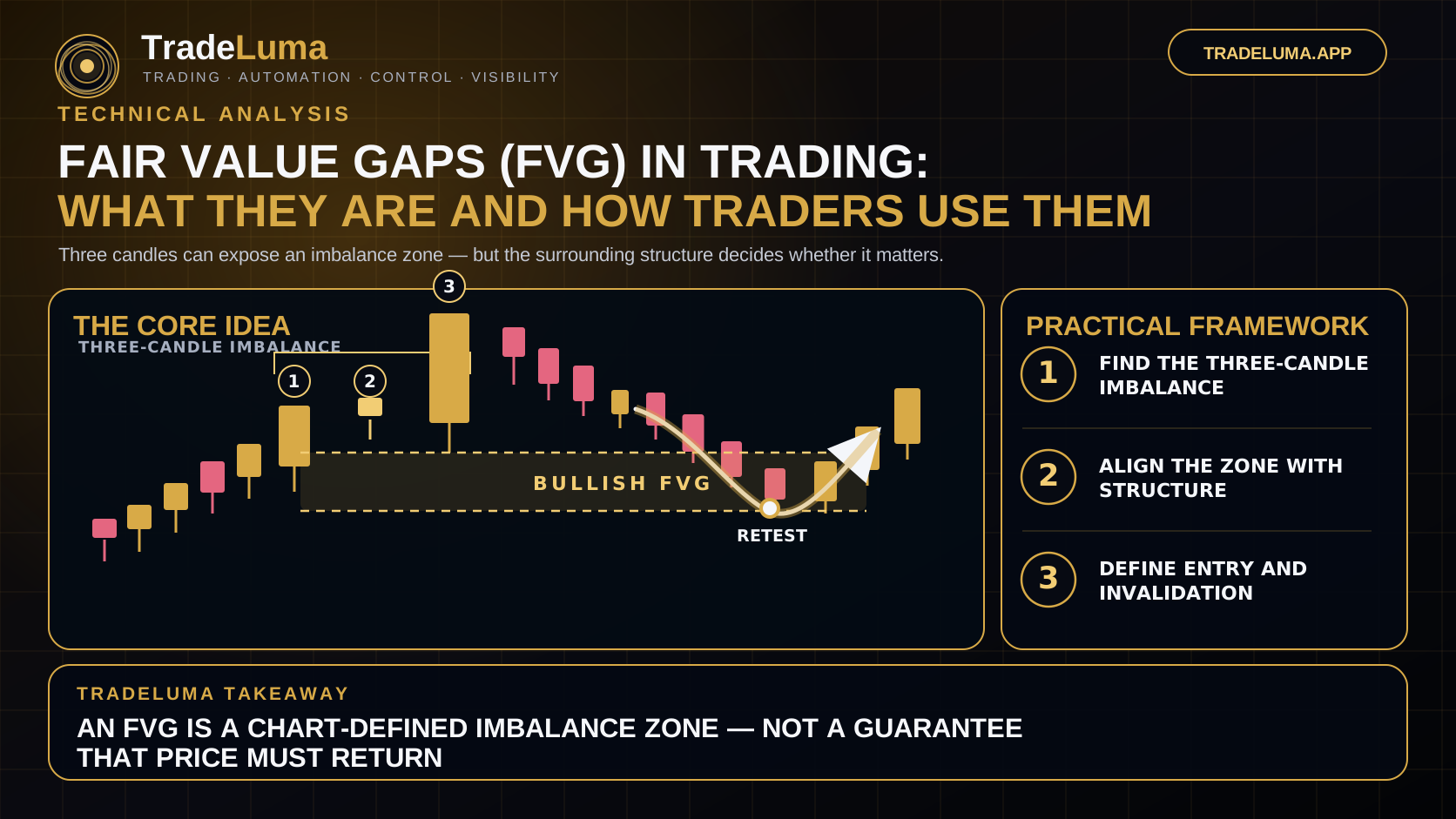
Fair Value Gaps (FVG) in Trading: What They Are and How Traders Use Them
Learn what fair value gaps are, how traders identify bullish and bearish FVGs, and how imbalance zones are combined with structure and risk.
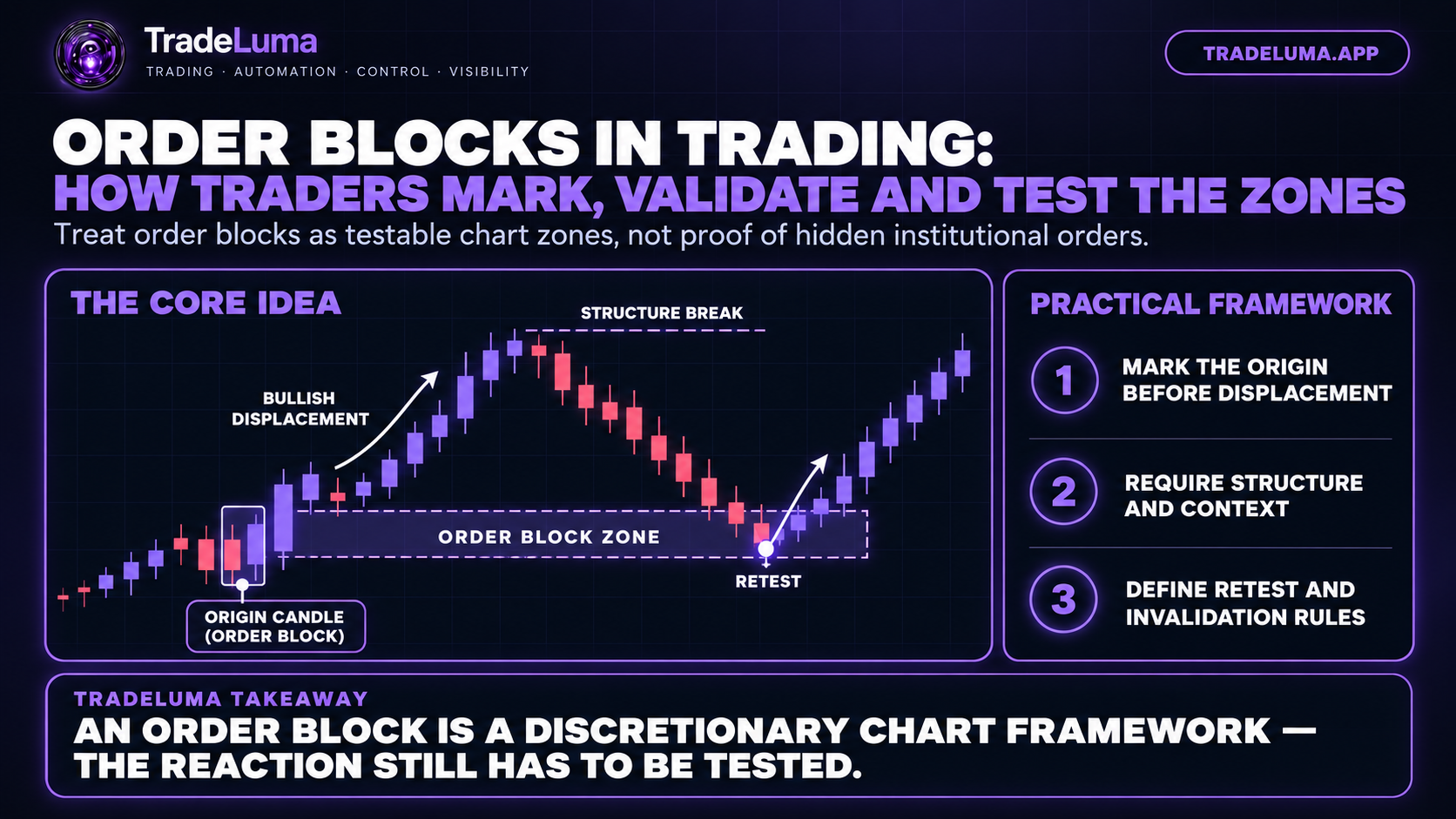
Order Blocks in Trading: How Traders Mark, Validate and Test the Zones
Learn what order blocks mean in technical analysis, how bullish and bearish zones are marked, and how traders test displacement, retests, and invalidation.
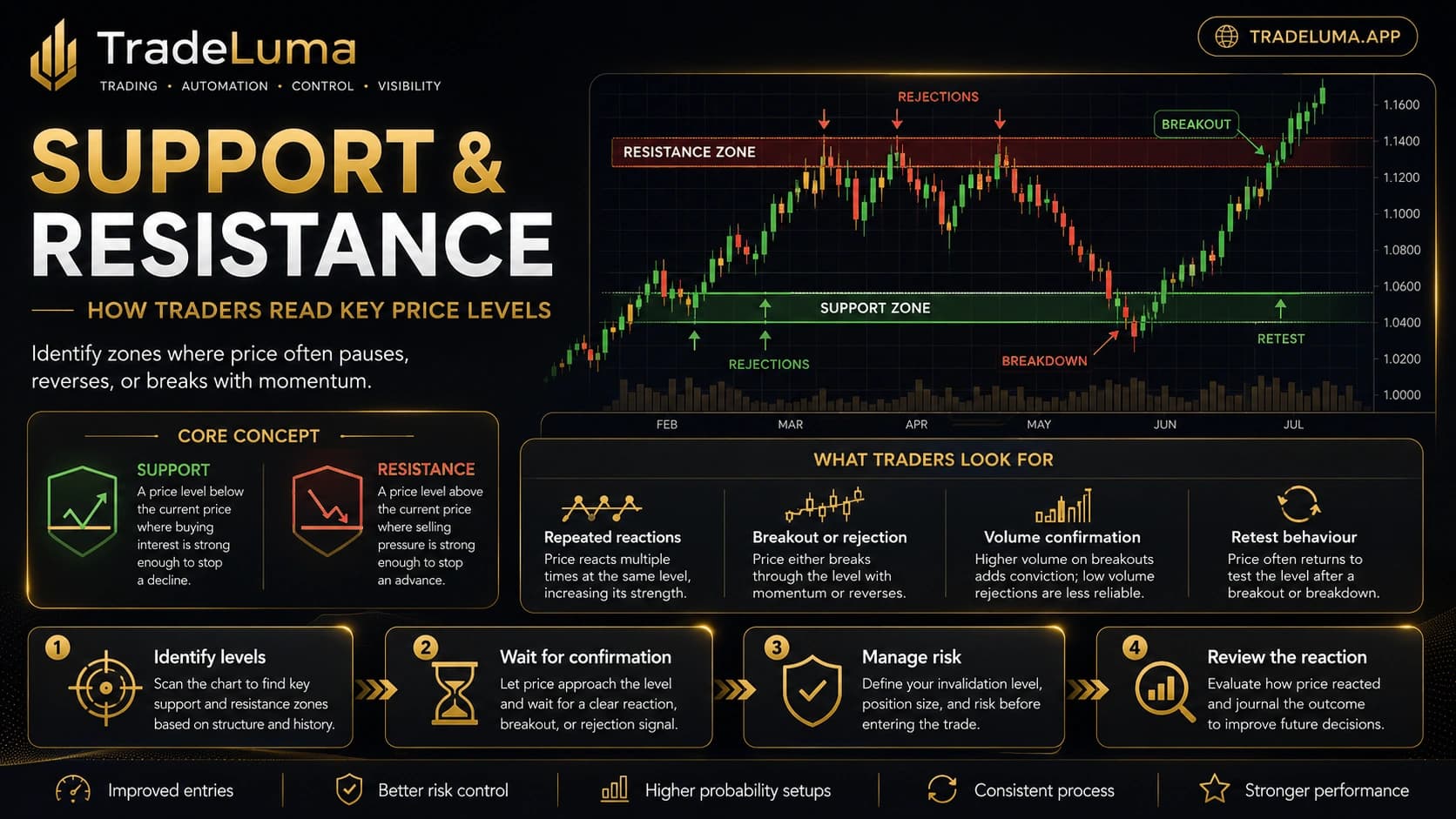
Support and resistance trading: how to identify key price levels
Learn what support and resistance mean, how traders identify key price levels, and how breakouts, rejections, and retests can shape better trade decisions.