
Technical Analysis
Fair Value Gaps (FVG) in Trading: What They Are and How Traders Use Them
Learn what fair value gaps are, how traders identify bullish and bearish FVGs, and how imbalance zones are combined with structure and risk.
On this page+
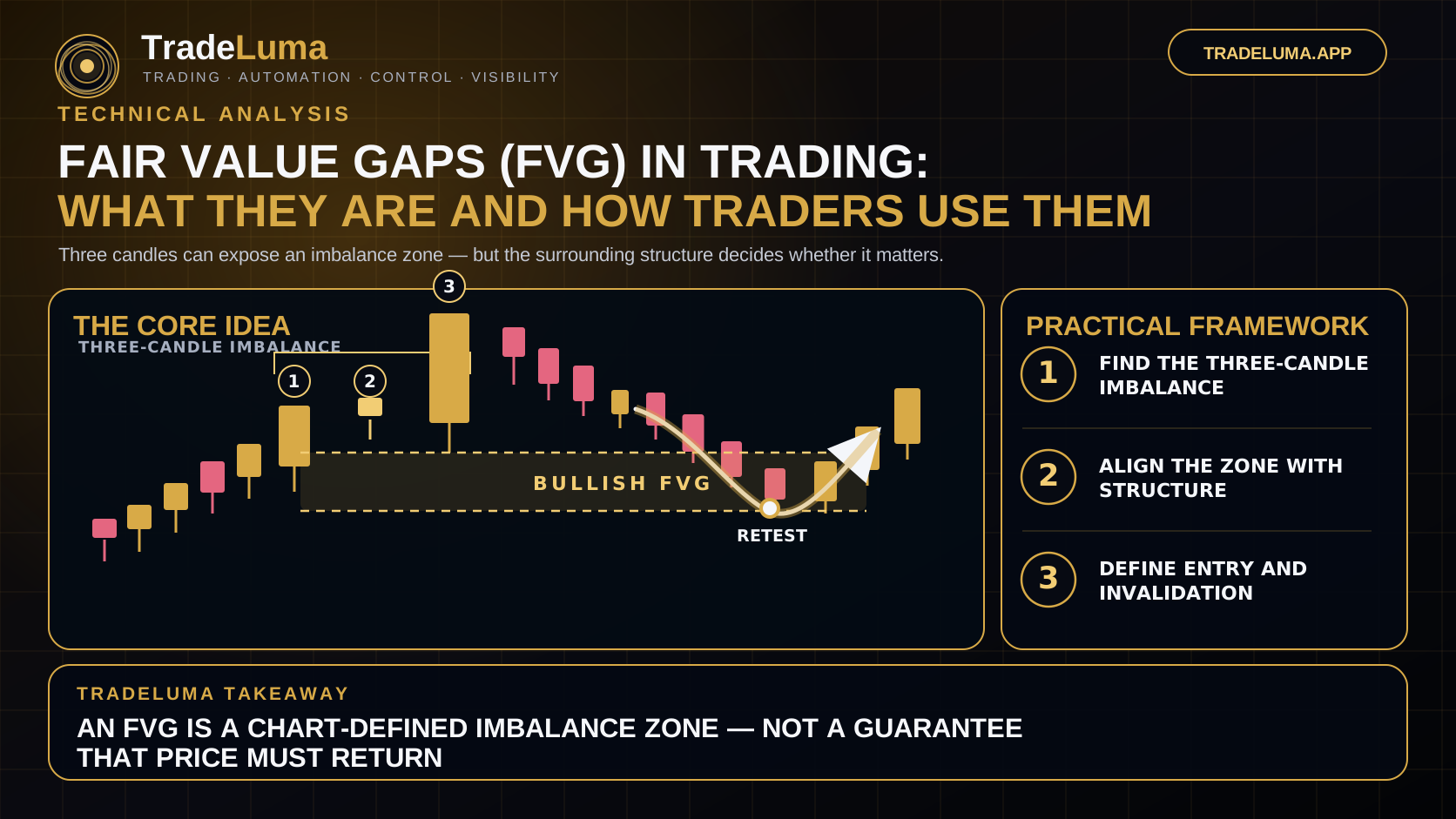
Fair value gaps, usually shortened to FVGs, are a popular way of marking fast price movement that leaves little overlap between three consecutive candles. Traders use the resulting zone as a possible area of future interest, often alongside trend, market structure, liquidity, and risk rules. The concept is useful as a chart framework, but the gap itself does not prove that unfilled institutional orders are waiting there or that price must revisit it.
What is a fair value gap in trading?
A fair value gap is a chart-defined imbalance created by a fast directional move across three candles. In the common definition, a bullish FVG exists when the high of the first candle is below the low of the third candle, leaving a price zone with no wick overlap between those two candles. A bearish FVG is the opposite: the low of the first candle remains above the high of the third candle.
The name can sound more precise than the underlying idea. An FVG does not reveal a hidden order book or prove that the market is objectively mispriced. It is a visual way to identify an area where price moved quickly enough that little two-way trading is visible on the chosen timeframe.
Bullish versus bearish FVGs
A bullish FVG usually appears during a strong upward displacement. Traders mark the space between candle one’s high and candle three’s low, then watch whether a later pullback interacts with that zone. A bearish FVG forms during strong downward displacement and is marked between candle one’s low and candle three’s high.
Direction alone is not enough to make the zone useful. A bullish FVG inside a strong downtrend may behave differently from one that appears after a structural breakout, and a bearish FVG directly above major support may have less room to develop than the same pattern in open space.
How traders mark an FVG
The cleanest process starts with an objective three-candle rule. Identify the first candle, the displacement candle in the middle, and the third candle. If the first and third candles do not overlap across the relevant wick boundaries, the space between them becomes the candidate FVG.
Some traders refine the zone to its midpoint, body overlap, or a smaller execution area. Those refinements can be tested, but changing the definition after seeing the result makes the pattern difficult to evaluate honestly. A consistent marking rule is more valuable than a perfect-looking rectangle.
Why price may revisit an imbalance zone
Fast price expansion often creates areas where the market spent very little time. A later retracement can pass back through those areas as participants reassess price, take profit, enter late, or respond to new information. This is one reason traders pay attention to imbalance zones.
However, there is no rule that an FVG must be filled. Strong trends can continue without returning for a long time, and some zones are crossed with little reaction. The idea should therefore be treated as a hypothesis about where interaction may occur, not a magnet that guarantees a future move.
FVGs and market structure
FVGs become easier to interpret when the market structure is already clear. In an uptrend, traders may prioritise bullish gaps that form during a breakout or continuation leg and ignore bearish gaps that appear inside a minor pullback. In a downtrend, the logic can be reversed.
Higher-timeframe support and resistance, swing highs and lows, breakout levels, volume behaviour, and volatility can all change the meaning of the same FVG. The zone is usually most useful as one layer of context rather than the entire reason for a trade.
Entries, stops, and invalidation
Some traders wait for price to return into the FVG and then require evidence of rejection, such as a reclaim of a smaller structure level or a strong close away from the zone. Others use predetermined limit orders. The first method may provide more confirmation, while the second accepts more uncertainty in exchange for earlier execution.
Invalidation should be decided before entry. Depending on the strategy, it might sit beyond the FVG, beyond the swing that created the setup, or beyond a higher-timeframe level. A stop should represent where the trade idea is wrong, not simply the smallest distance that creates an attractive risk-reward ratio.
Common fair value gap mistakes
One common mistake is marking every small three-candle gap and treating all of them as equally important. Lower timeframes can generate many minor imbalances that have little meaning outside the surrounding structure. Another mistake is assuming that a partial fill or midpoint touch must trigger an immediate reversal.
Traders can also become inconsistent by redrawing the zone after price reacts. If the definition changes from trade to trade, the concept becomes impossible to measure. The same marking rule should be applied to winners, losers, and zones that never attract a trade.
How to backtest an FVG strategy
A testable FVG strategy needs exact rules for timeframe, direction, gap definition, minimum displacement, market structure, entry trigger, invalidation, target, and any time-based filters. Record zones that fail as well as those that produce attractive examples.
Useful review metrics include win rate, average reward-to-risk, maximum adverse excursion, how deeply price retraces into the gap, time until retest, and performance by market regime. The goal is not to prove that FVGs work universally; it is to learn whether a specific definition adds value to a specific trading process.
Frequently asked questions
What is an FVG in trading?+
An FVG, or fair value gap, is usually a three-candle price imbalance where the first and third candles leave a visible wick-to-wick zone around a strong directional middle candle.
Does price always return to a fair value gap?+
No. Some gaps are revisited quickly, some much later, and some are never meaningfully retested on the timeframe being traded.
Is an FVG the same as a normal price gap?+
Not necessarily. A traditional gap often refers to a jump between trading periods, while an FVG is usually defined inside a three-candle sequence using non-overlapping price ranges.
Can fair value gaps be backtested?+
Yes, if the trader defines the gap, context, entry, stop, and target rules consistently enough to apply them without hindsight.
Technical analysis
Continue with the topic hub.
Browse the related TradeLuma guides and build the topic from foundations through practical application.
Explore Technical analysis guides →Continue learning
Related guides.
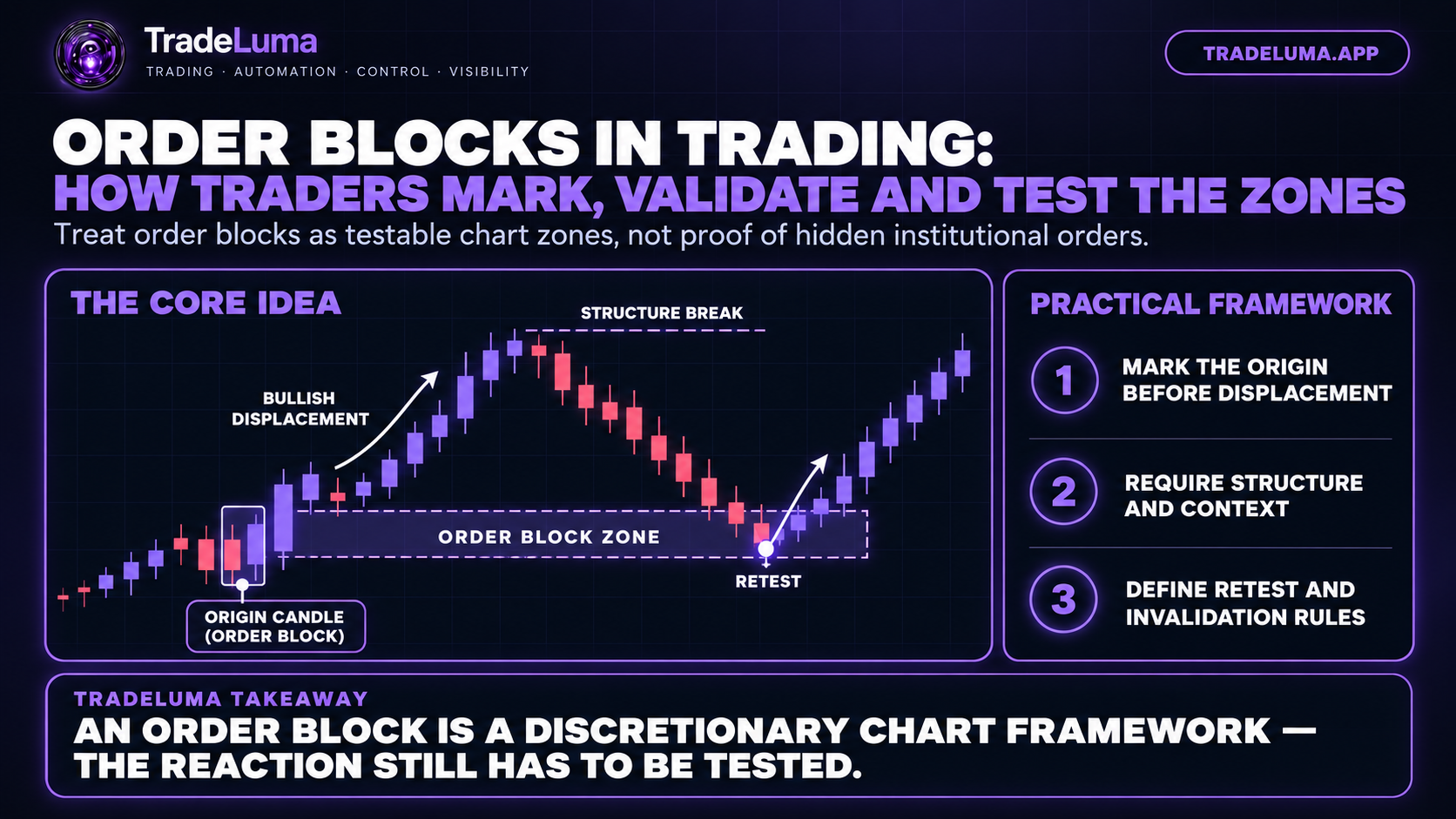
Order Blocks in Trading: How Traders Mark, Validate and Test the Zones
Learn what order blocks mean in technical analysis, how bullish and bearish zones are marked, and how traders test displacement, retests, and invalidation.
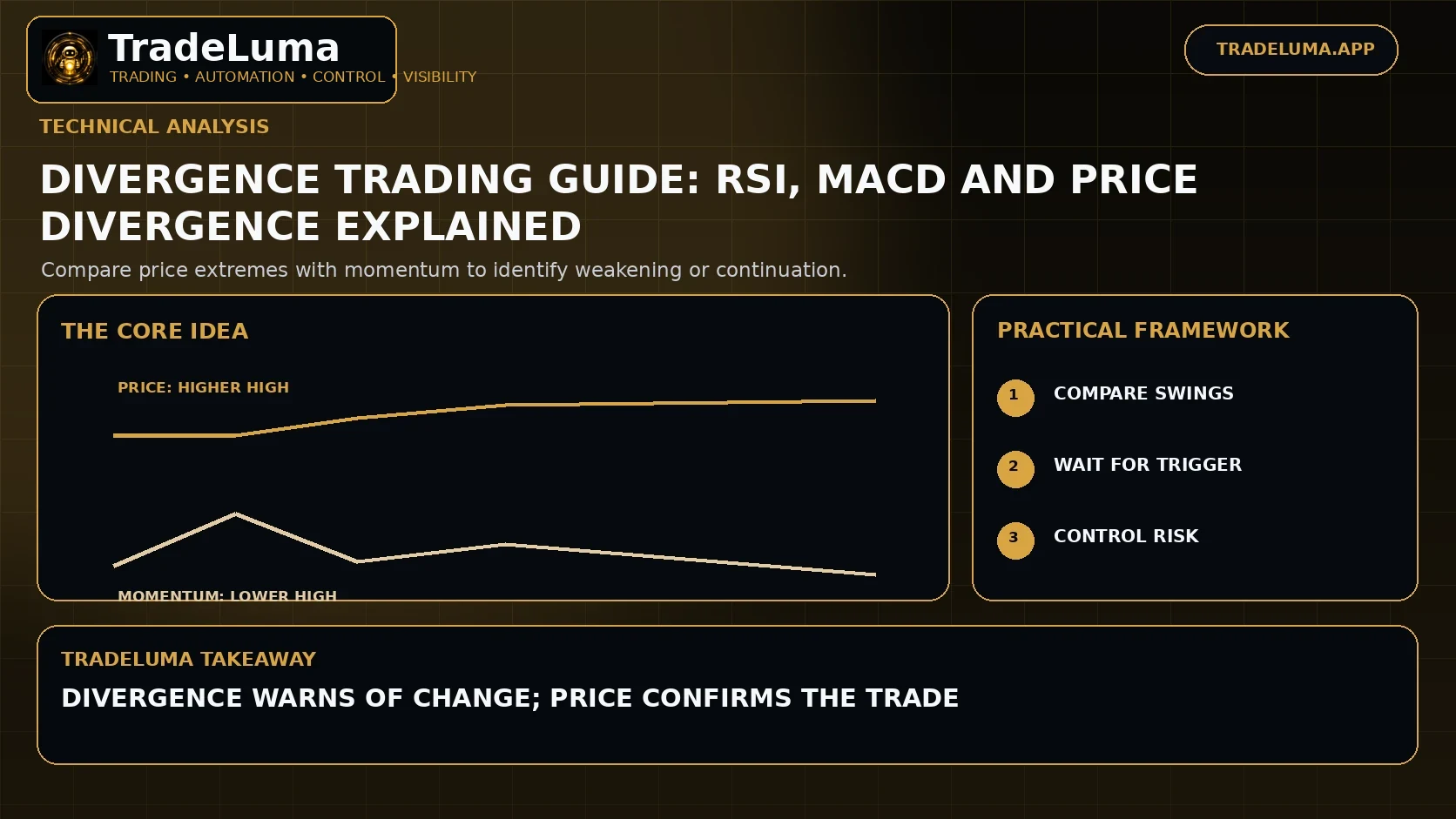
Divergence Trading Guide: RSI, MACD and Price Divergence Explained
Learn bullish and bearish divergence, hidden divergence, why momentum can diverge from price, and how to use confirmation instead of predicting reversals too early.
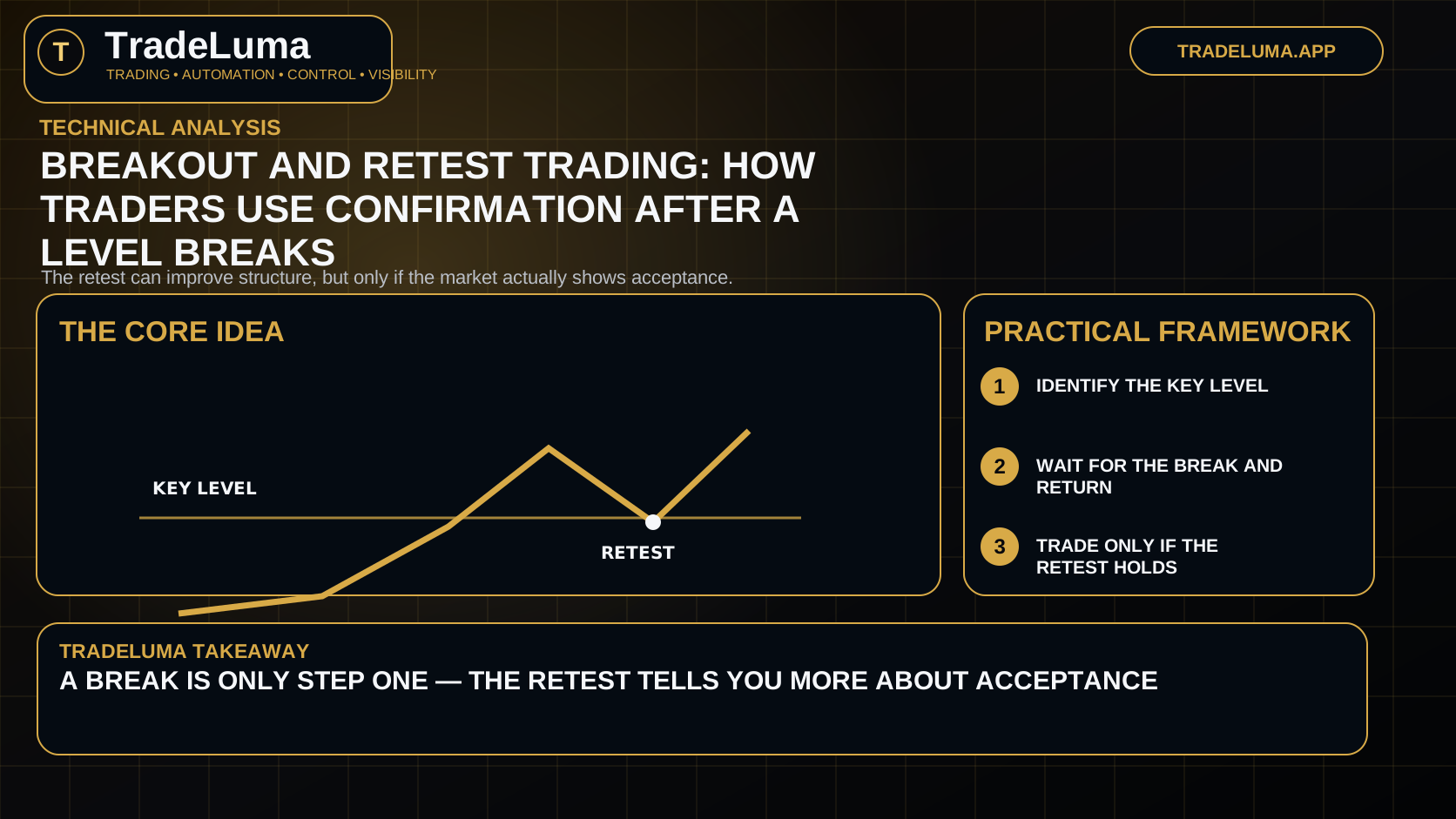
Breakout and retest trading: how traders use confirmation after a level breaks
Learn what a breakout and retest setup is, why many traders prefer it, and how to avoid confusing every pullback with confirmation.