
Technical Analysis
Breakout and retest trading: how traders use confirmation after a level breaks
Learn what a breakout and retest setup is, why many traders prefer it, and how to avoid confusing every pullback with confirmation.
On this page+
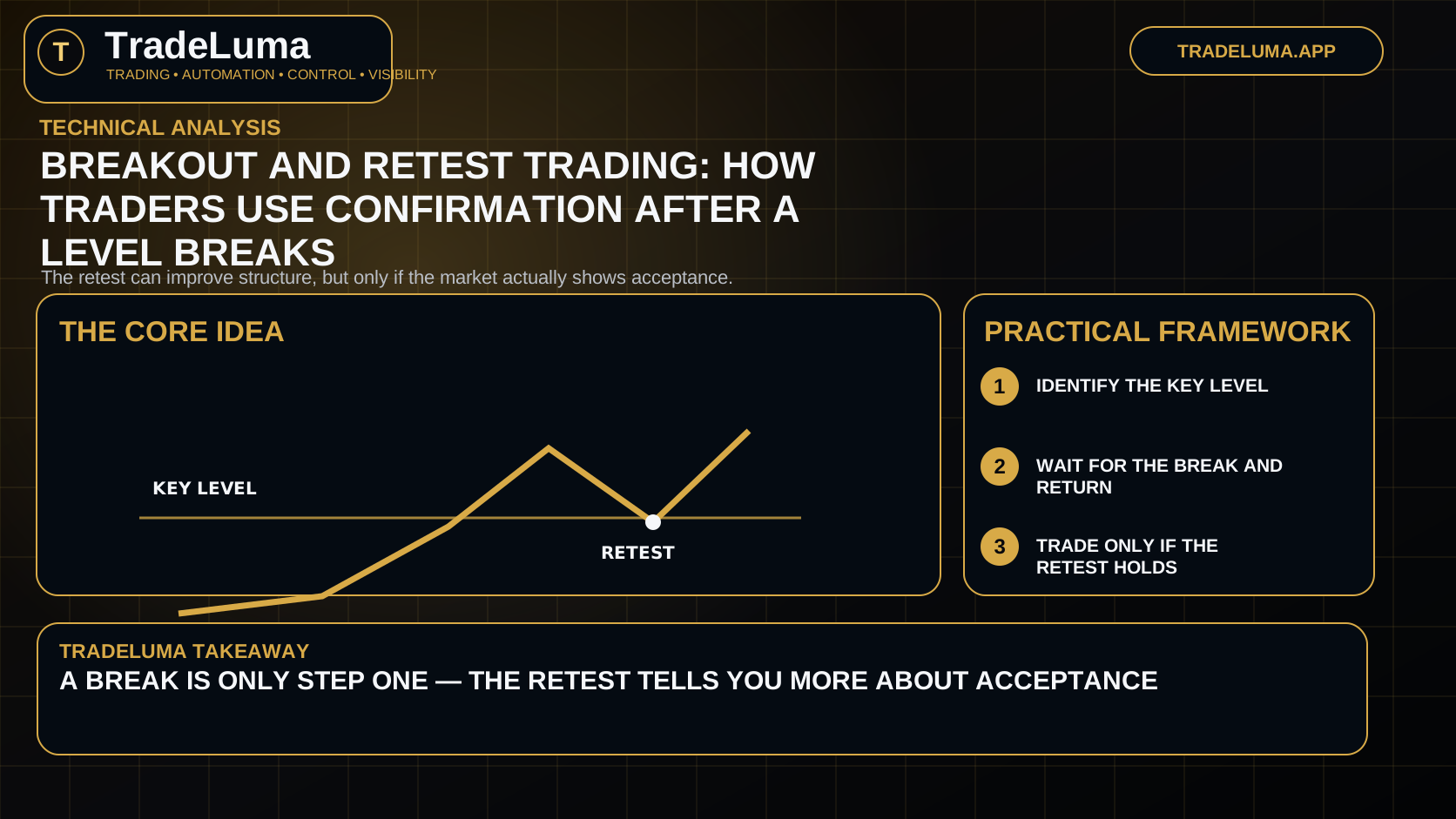
Learn what a breakout and retest setup is, why many traders prefer it, and how to avoid confusing every pullback with confirmation. The retest can improve structure, but only if the market actually shows acceptance.
What a breakout and retest setup is
A breakout and retest setup begins when price moves through an important level and then later returns to test that area from the other side.
Traders watch the retest to judge whether the market is accepting the new territory or rejecting the breakout.
Why traders like the retest
The retest can offer clearer structure than the initial break because it may provide a better-defined invalidation point and less need to chase momentum.
It can also filter some false breakouts when price immediately snaps back through the level.
What a useful retest looks like
A useful retest often shows price holding above former resistance or below former support, with rejection or continuation behaviour developing around the level.
The setup generally improves when the original break occurred with clear momentum, range expansion, or supporting market context.
False breaks and failed retests
Not every return to a broken level is confirmation. Some retests fail quickly, and some breakouts were never genuine in the first place.
A clear trigger, stop, and invalidation rule is still required rather than assuming the level must hold.
Where the setup fits best
Breakout-and-retest logic can be used in trends, ranges, and chart-pattern breaks, but it tends to be more useful when the higher-timeframe story already supports the direction.
A random intraday poke through a level with no follow-through or context is generally lower quality.
Frequently asked questions
What is a breakout retest?+
It is a setup where price breaks a key level and then returns to test that level before potentially continuing.
Is a retest always necessary?+
No, but many traders prefer it because it can improve structure and reduce impulsive chasing.
How do I know a retest has failed?+
If price cannot hold the broken level and the setup’s invalidation point is breached, the retest has failed by that trade plan.
Technical analysis
Continue with the topic hub.
Browse the related TradeLuma guides and build the topic from foundations through practical application.
Explore Technical analysis guides →Continue learning
Related guides.
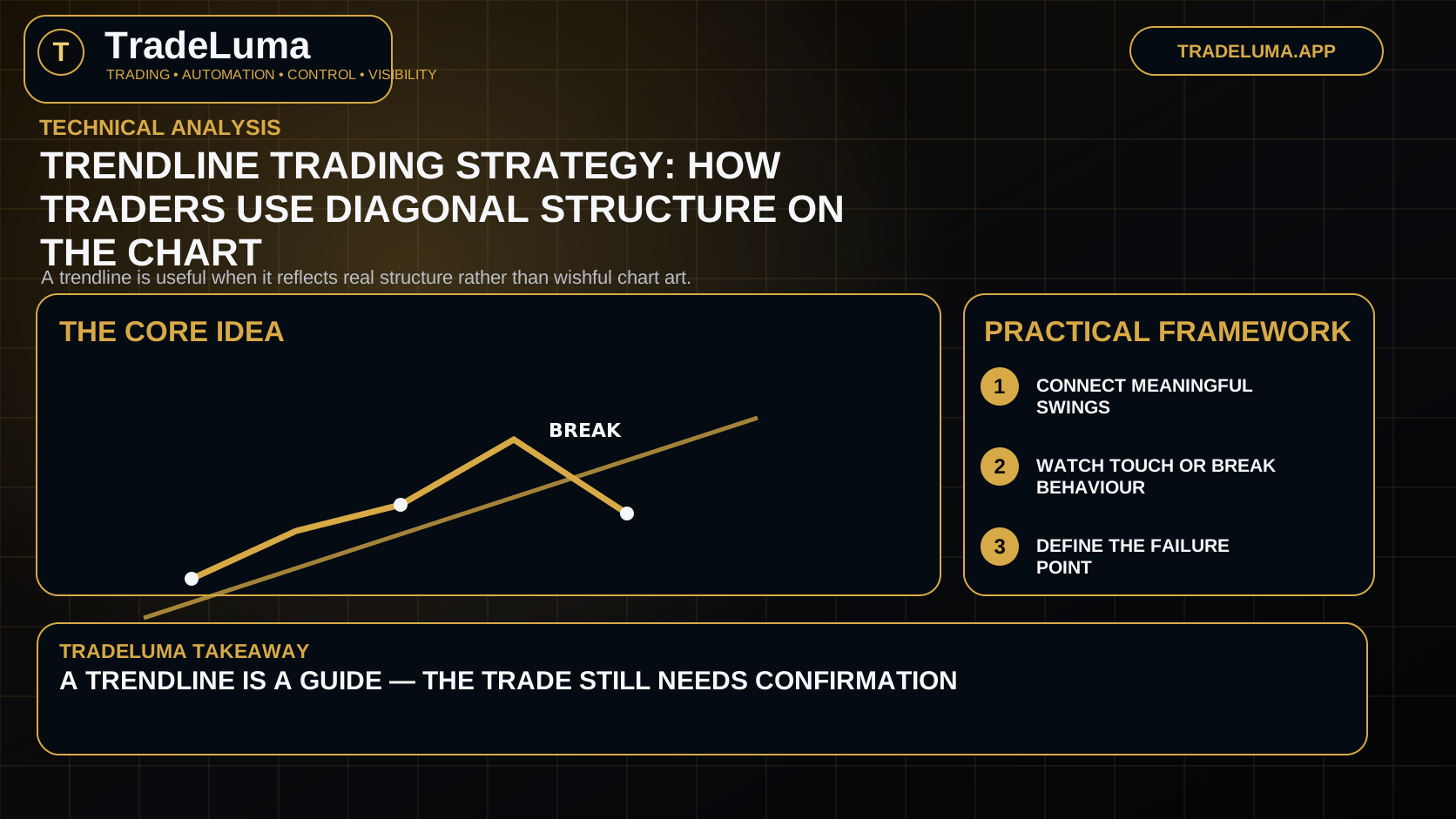
Trendline trading strategy: how traders use diagonal structure on the chart
Learn how trendlines are drawn, what they can and cannot do, and how to use them with structure, entries, and invalidation.
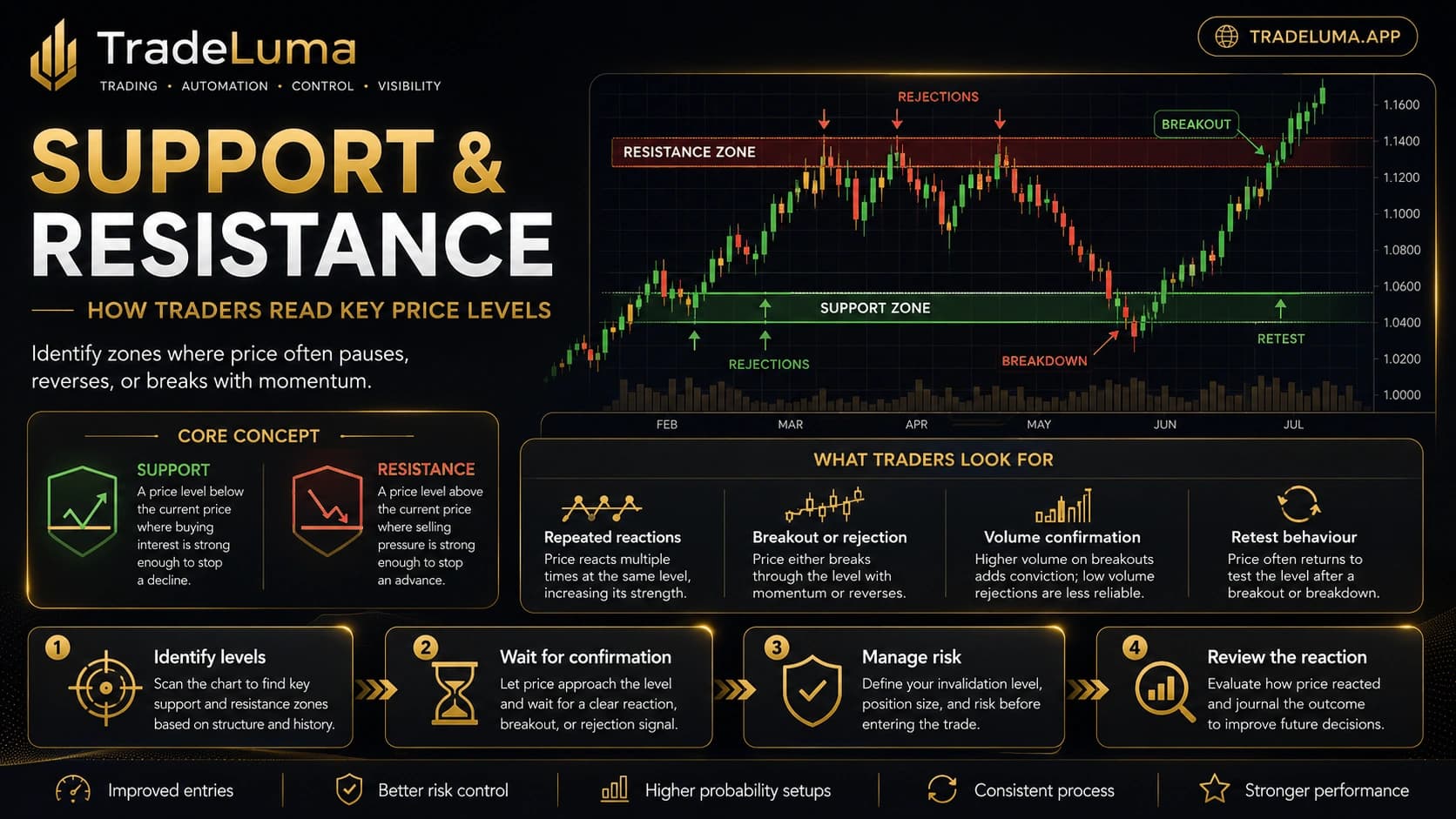
Support and resistance trading: how to identify key price levels
Learn what support and resistance mean, how traders identify key price levels, and how breakouts, rejections, and retests can shape better trade decisions.
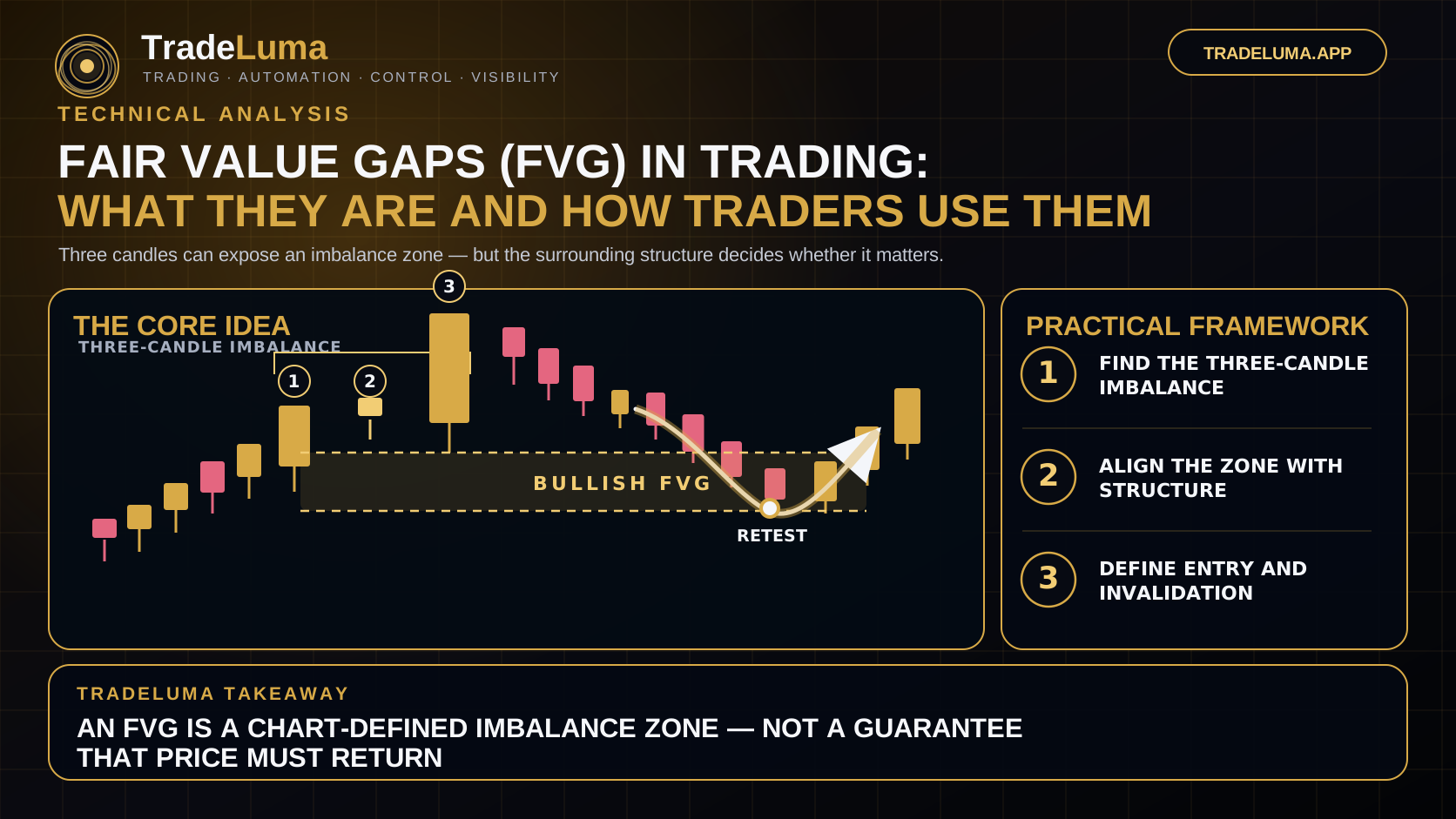
Fair Value Gaps (FVG) in Trading: What They Are and How Traders Use Them
Learn what fair value gaps are, how traders identify bullish and bearish FVGs, and how imbalance zones are combined with structure and risk.