
Strategy Controls
Strategy conflicts and simultaneous signals: preventing automation from fighting itself
Learn how account-wide rules can manage opposing strategies, duplicate exposure, reversals, and simultaneous signals across one broker account.
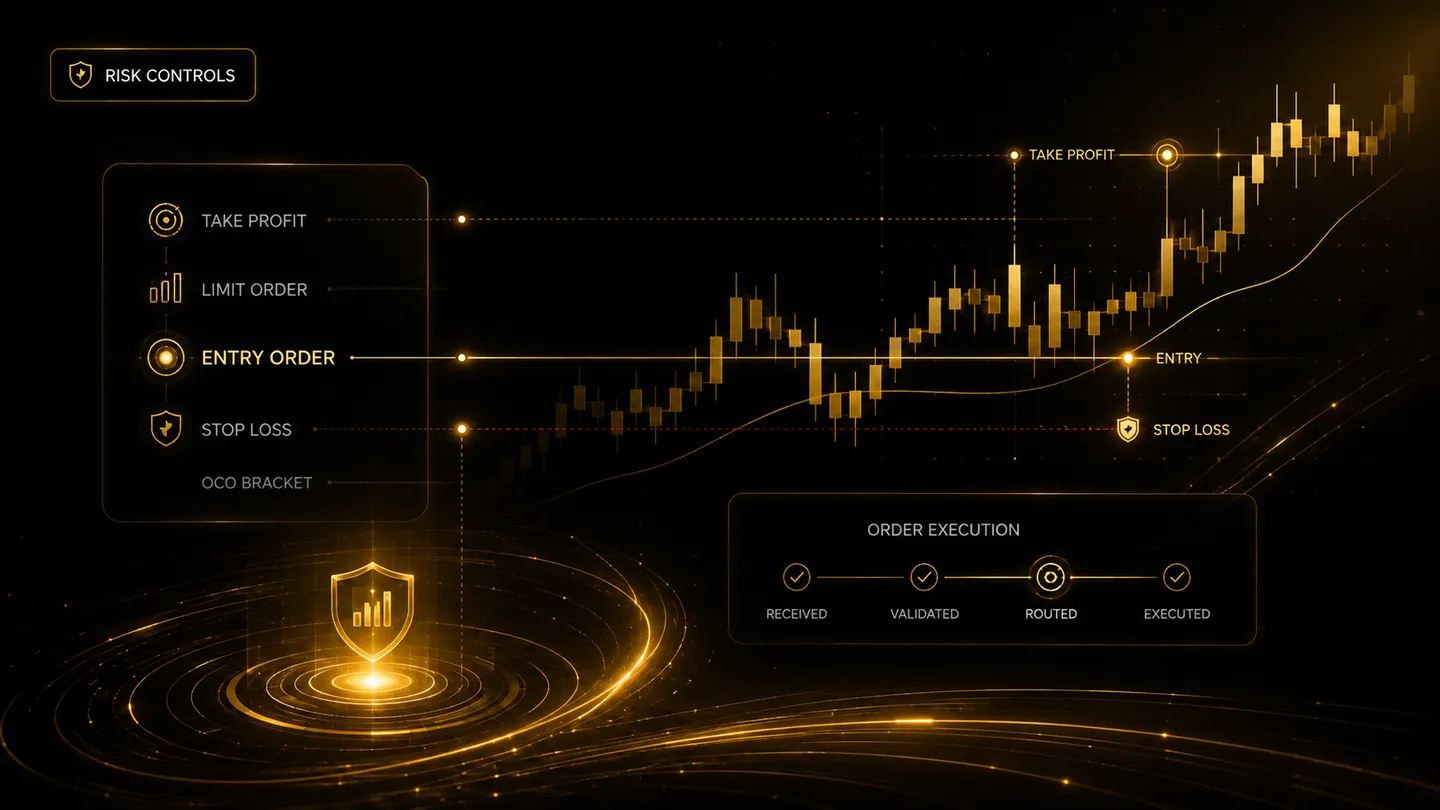
Two strategies can be valid independently and still create a dangerous combined workflow. One may enter long while another enters short, several strategies may add exposure to the same market, or an exit alert may arrive while a new entry is being processed. Conflict rules decide which instruction has priority.
Define ownership of positions
An account position may be shared at the broker even when the platform tracks several strategies separately. Traders need to decide whether each strategy owns a virtual portion, whether only one strategy may control a symbol, or whether positions are intentionally netted.
Without a clear model, one strategy can close another strategy's position or interpret a manually held position as its own.
Set priorities before signals collide
Common rules include block opposite entries, close before reverse, allow exits before entries, limit one active strategy per symbol, or use one strategy as a conflict filter that never places orders itself.
The rule should be deterministic. When signals arrive close together, the platform should record which instruction won, which was blocked, and why.
Test race conditions in paper mode
Send opposing alerts seconds apart and at the same timestamp. Test duplicate entries, partial fills, manual closes, and stale broker positions. Confirm that account exposure never briefly exceeds the intended limit during a reversal.
Conflict control belongs at the account and execution layer as well as inside strategy code. A chart script may not know what another strategy or a manual trader is doing.
Frequently asked questions
Can long and short strategies run on the same symbol?
They can only do so safely with a clearly defined position-ownership and conflict model. Broker accounts often show a net position, so independent strategy assumptions can break.
Should exit signals have priority?
Risk-reducing instructions commonly receive priority, but the exact rule depends on the platform, broker, order state, and user's approved configuration.
Continue learning
Related TradeLuma guides
Strategy Research
How to Backtest a Trading Strategy: A Practical Step-by-Step Guide
14 Sept 2026 · 14 min read
Technical Analysis
Volume Profile Explained: Value Areas, Point of Control and Market Context
11 Sept 2026 · 12 min read
Trading Foundations
How to Create a Trading Plan: Rules, Risk and Process
15 Aug 2026 · 12 min read
Build a controlled automation workflow with TradeLuma
Configure alerts, test in paper mode, apply execution controls, and follow broker outcomes from one workspace.