
Trading Styles
Forex trading strategies: common approaches for trend, range, and breakout setups
A practical guide to forex trading strategies, including trend following, range trading, breakouts, and the role of sessions, volatility, and risk control.
On this page+
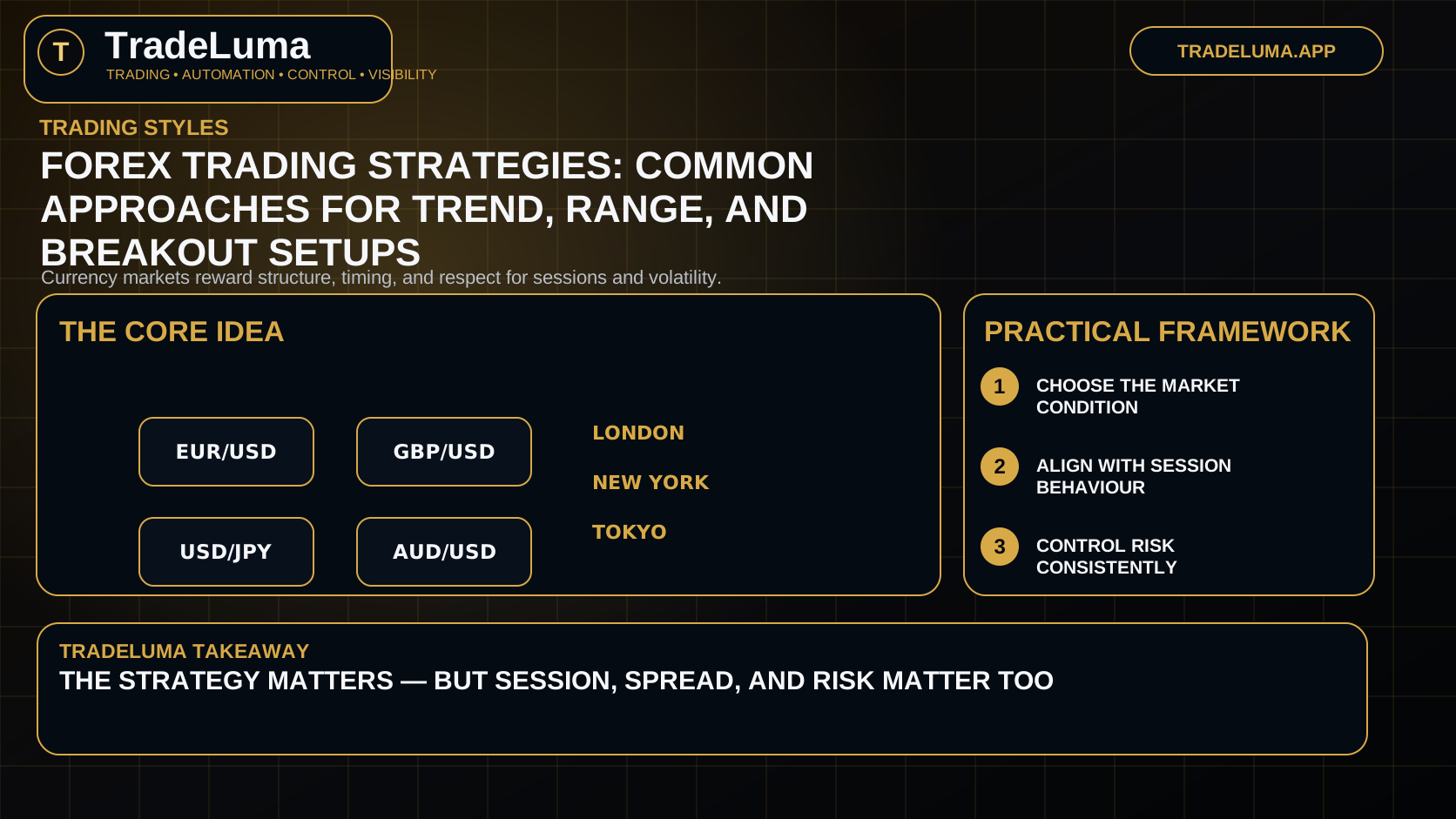
A practical guide to forex trading strategies, including trend following, range trading, breakouts, and the role of sessions, volatility, and risk control. Currency markets reward structure, timing, and respect for sessions and volatility.
Why forex requires context
Forex trading is shaped by macro themes, relative strength between currencies, and strong differences in behaviour across major sessions.
A strategy that performs well during the London or New York overlap may behave very differently during quieter periods.
Common forex strategy types
Trend-following strategies aim to join directional moves when one currency is persistently stronger or weaker. Range strategies focus on contained price action between clear boundaries.
Breakout strategies attempt to capture expansion after consolidation, while pullback strategies wait for better pricing inside the existing directional move.
Sessions and volatility matter
Forex liquidity and volatility change through the day. Major economic releases and session overlaps can create opportunity, but they can also increase slippage and noise.
That is why many forex traders restrict activity to selected pairs and time windows rather than treating every hour equally.
Risk and position sizing
Pips, spread, and leverage can make small movements feel deceptively manageable, so consistent position sizing is essential.
Stops and targets should be based on the structure of the setup rather than chosen purely to make a ratio look attractive.
Building a repeatable forex plan
A good forex plan defines the pair, session, setup, confirmation, invalidation, and maximum risk before the trader worries about scaling up.
The most useful strategy is one that can be executed consistently and reviewed honestly across enough trades.
Frequently asked questions
What is the best forex trading strategy?+
There is no single best strategy. The better choice depends on the trader’s market, session, experience, and risk model.
Do forex strategies need different rules for different pairs?+
Often yes, because volatility, spread, and behaviour can differ significantly across currency pairs.
Why are trading sessions important in forex?+
Because liquidity and volatility shift across sessions, affecting spread, follow-through, and the quality of setups.
Technical analysis
Continue with the topic hub.
Browse the related TradeLuma guides and build the topic from foundations through practical application.
Explore Technical analysis guides →Continue learning
Related guides.
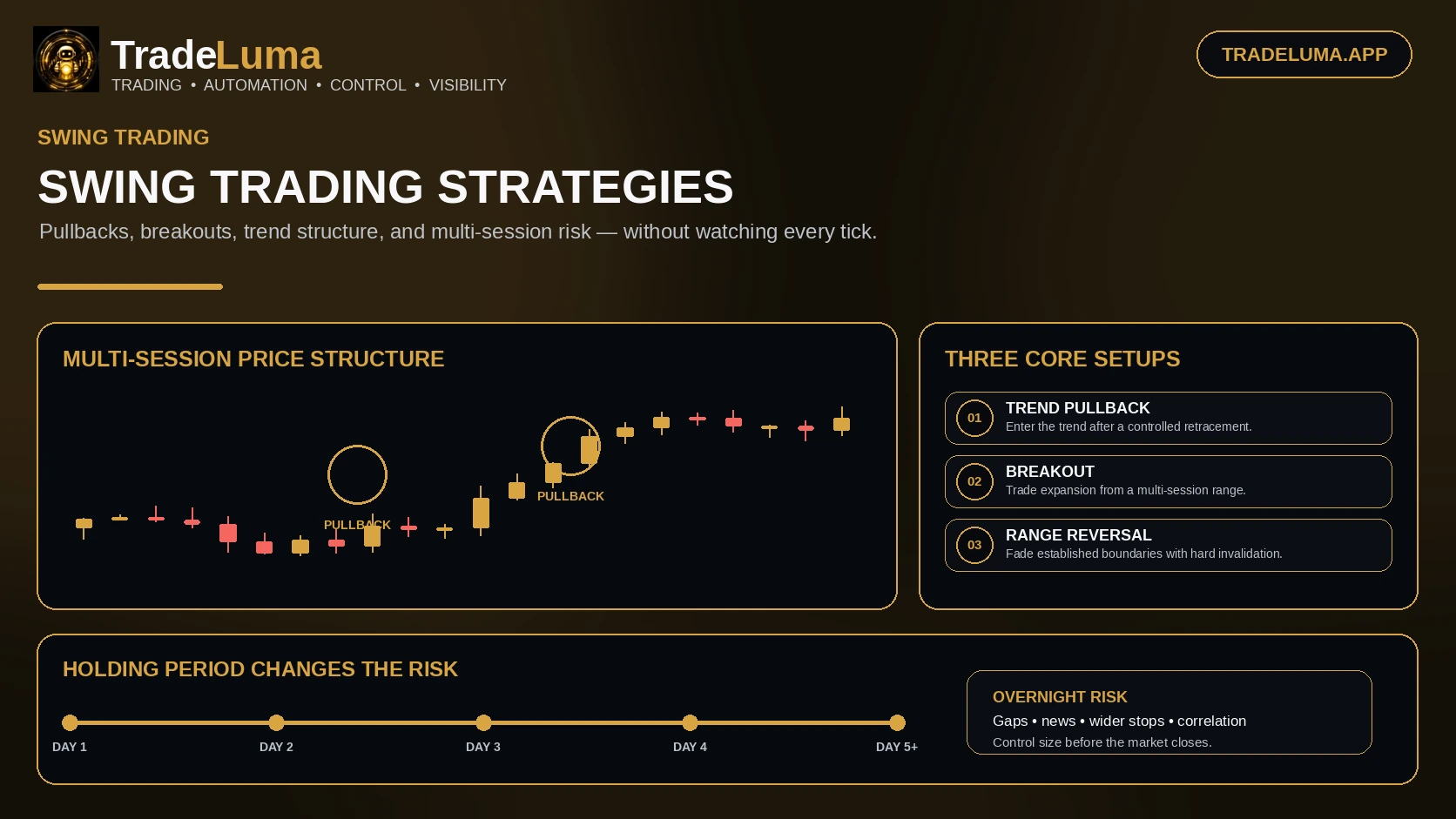
Swing Trading Strategies: Pullbacks, Breakouts and Trend Setups
A practical guide to swing trading strategies, including trend pullbacks, breakouts, moving-average setups, range trades, stops, targets, and overnight risk.
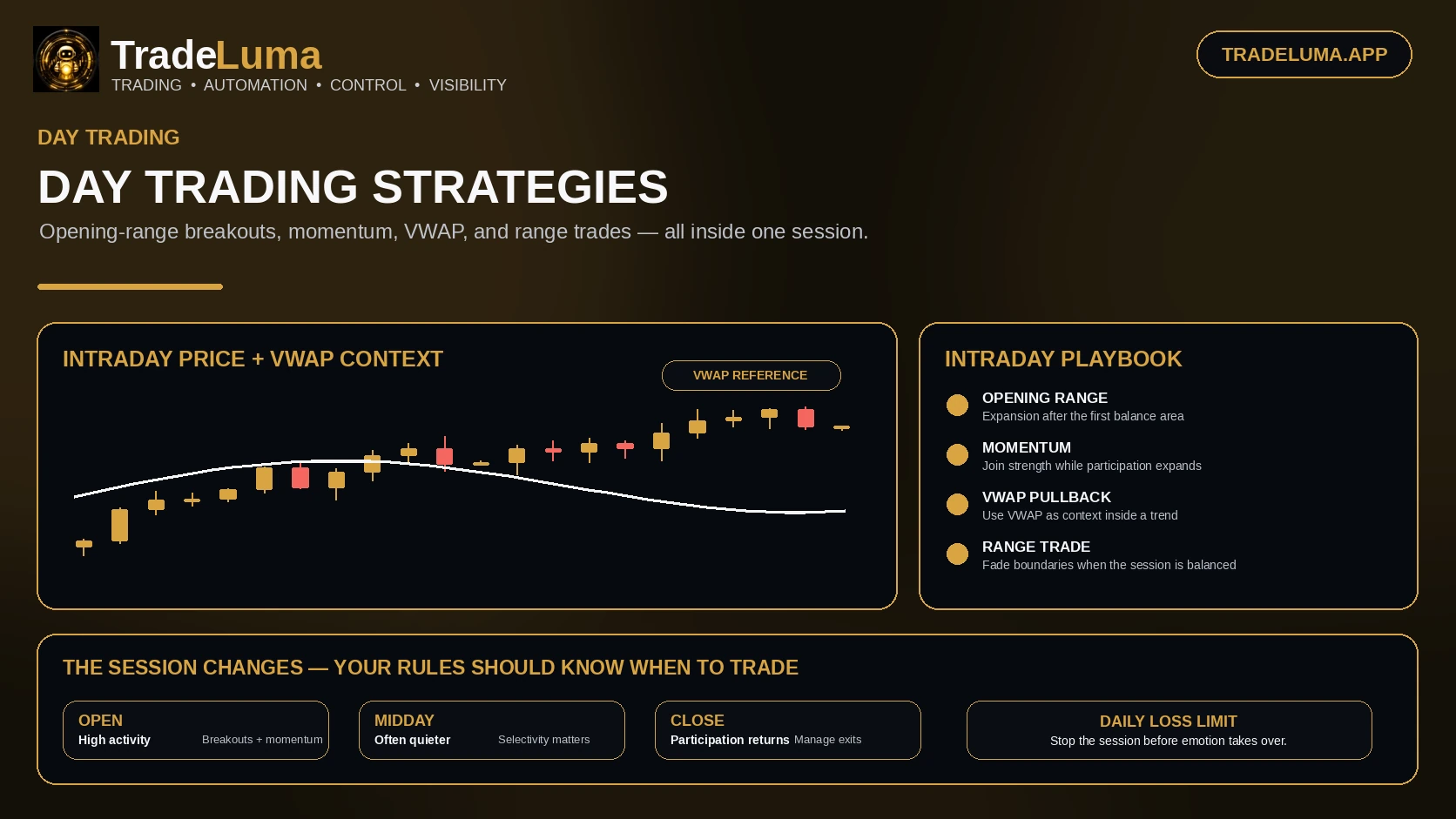
Day Trading Strategies: Breakouts, Momentum, VWAP and Range Trades
Explore practical day trading strategies including opening-range breakouts, momentum, VWAP pullbacks, range trades, risk controls, and intraday execution costs.
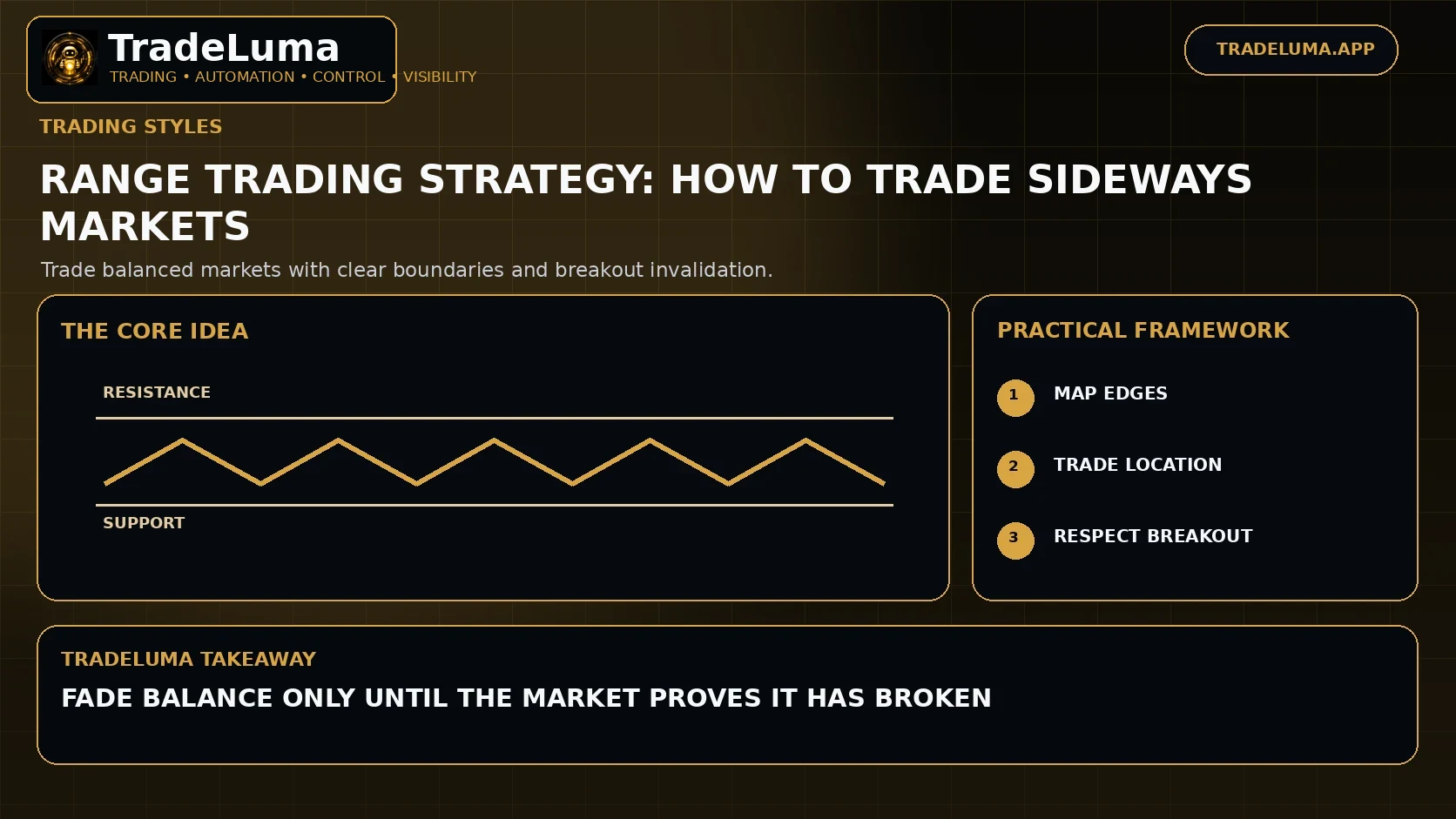
Range Trading Strategy: How to Trade Sideways Markets
Learn how range trading identifies support, resistance, failed breakouts, and mean reversion when markets move sideways instead of trending.