
Technical Analysis
Pivot points in trading: how traders use intraday reference levels
Learn what pivot points are, how they are calculated, and how day traders use them as reference levels for bias, reactions, and trade planning.
On this page+
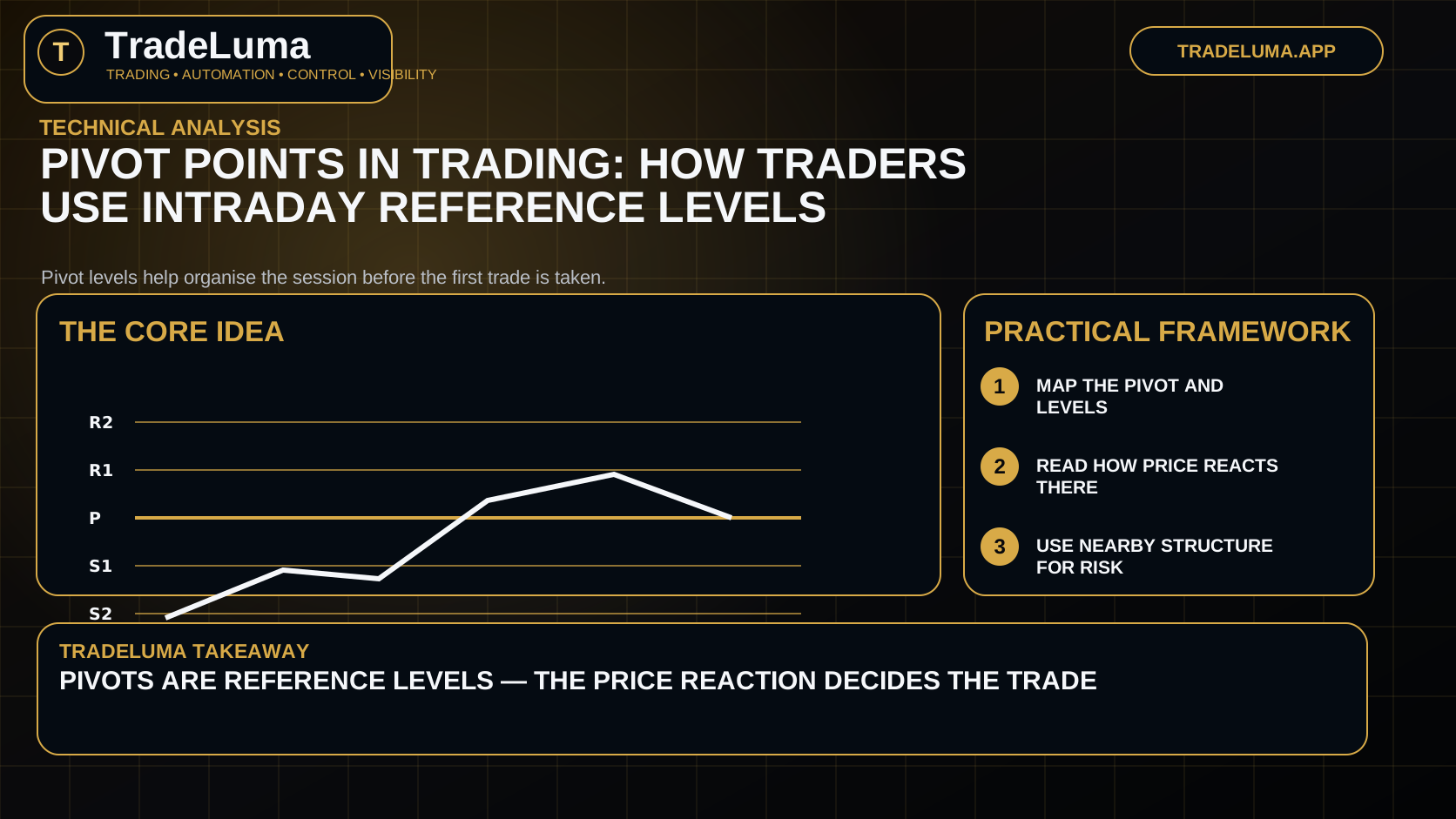
Learn what pivot points are, how they are calculated, and how day traders use them as reference levels for bias, reactions, and trade planning. Pivot levels help organise the session before the first trade is taken.
What pivot points are
Pivot points are reference levels derived from the prior session’s price data. Traders commonly watch the main pivot together with support and resistance levels such as S1, S2, R1, and R2.
They are popular because they create a structured map for the coming session before price begins moving.
Why day traders watch them
Pivot points can help frame intraday bias, identify likely reaction areas, and organise trade expectations early in the day.
Most experienced traders do not treat them as precise predictions. They are decision zones where price behaviour can be assessed.
How traders use the levels
Price holding above the main pivot can suggest relative intraday strength, while sustained trading below it can suggest weakness.
Some traders look for continuation through R1 or S1, while others wait for rejection, failed breaks, or a retest before committing to a trade.
Context still matters
Pivot points work better when combined with the opening drive, market structure, session trend, volume, or major higher-timeframe levels.
A pivot line by itself does not explain whether the market is balanced, trending, or reacting to news.
Common mistakes
A common mistake is treating every pivot touch as a trade signal. Another is forcing mean reversion simply because price reaches a resistance or support pivot.
Pivot points are most useful as planning tools inside a broader risk-managed process.
Frequently asked questions
What are pivot points in trading?+
They are calculated reference levels based on previous price data that traders use to structure the current session.
Are pivot points good for day trading?+
They are especially popular with day traders because they provide fixed intraday reference levels.
Do pivot points work on their own?+
Usually they work best when combined with price action, trend context, and risk management.
Technical analysis
Continue with the topic hub.
Browse the related TradeLuma guides and build the topic from foundations through practical application.
Explore Technical analysis guides →Continue learning
Related guides.
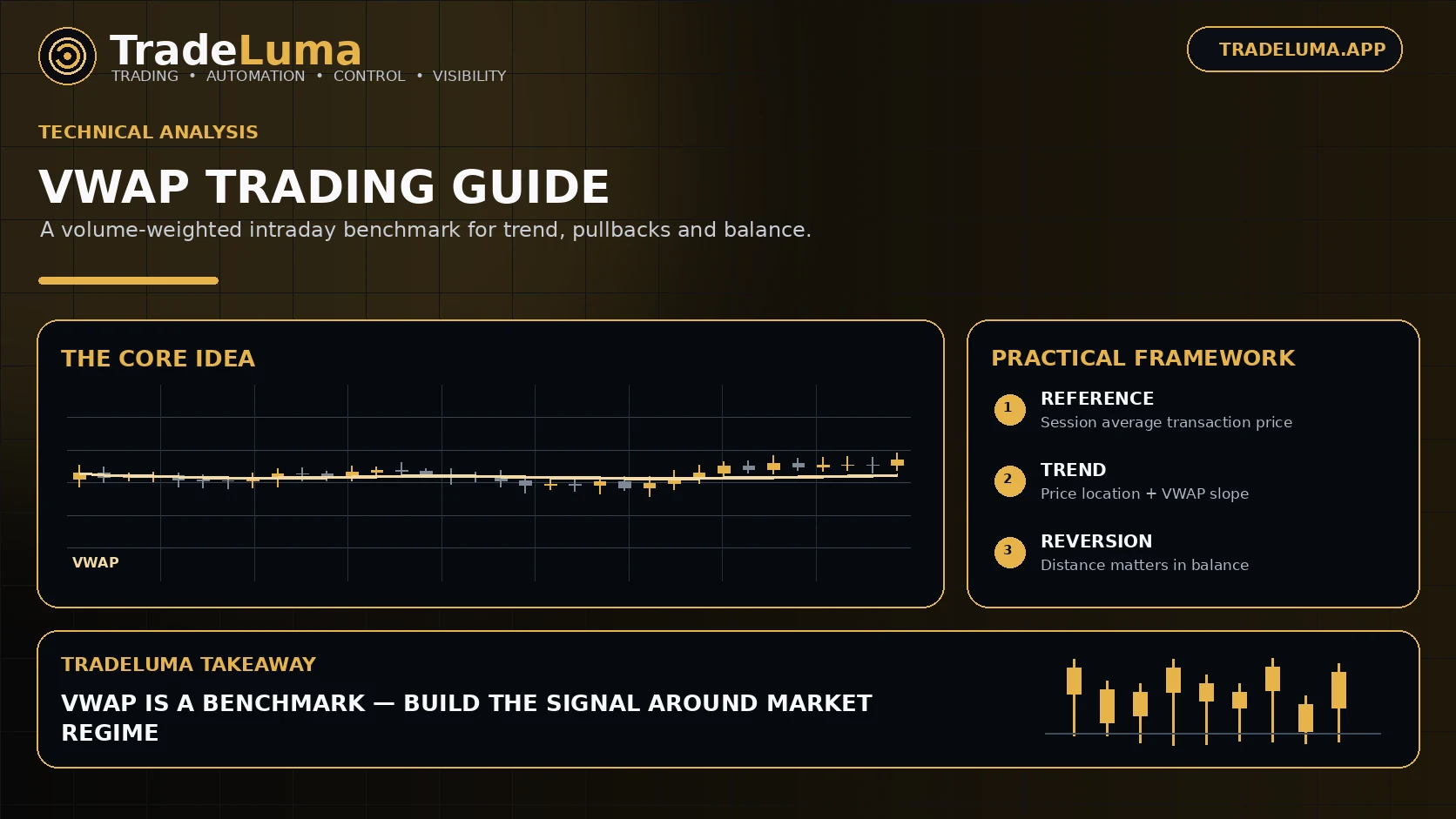
VWAP Trading Guide: Using Volume-Weighted Average Price Intraday
Learn how VWAP works, why intraday traders watch it, and how it can provide context for trend, pullbacks, mean reversion, and execution quality.
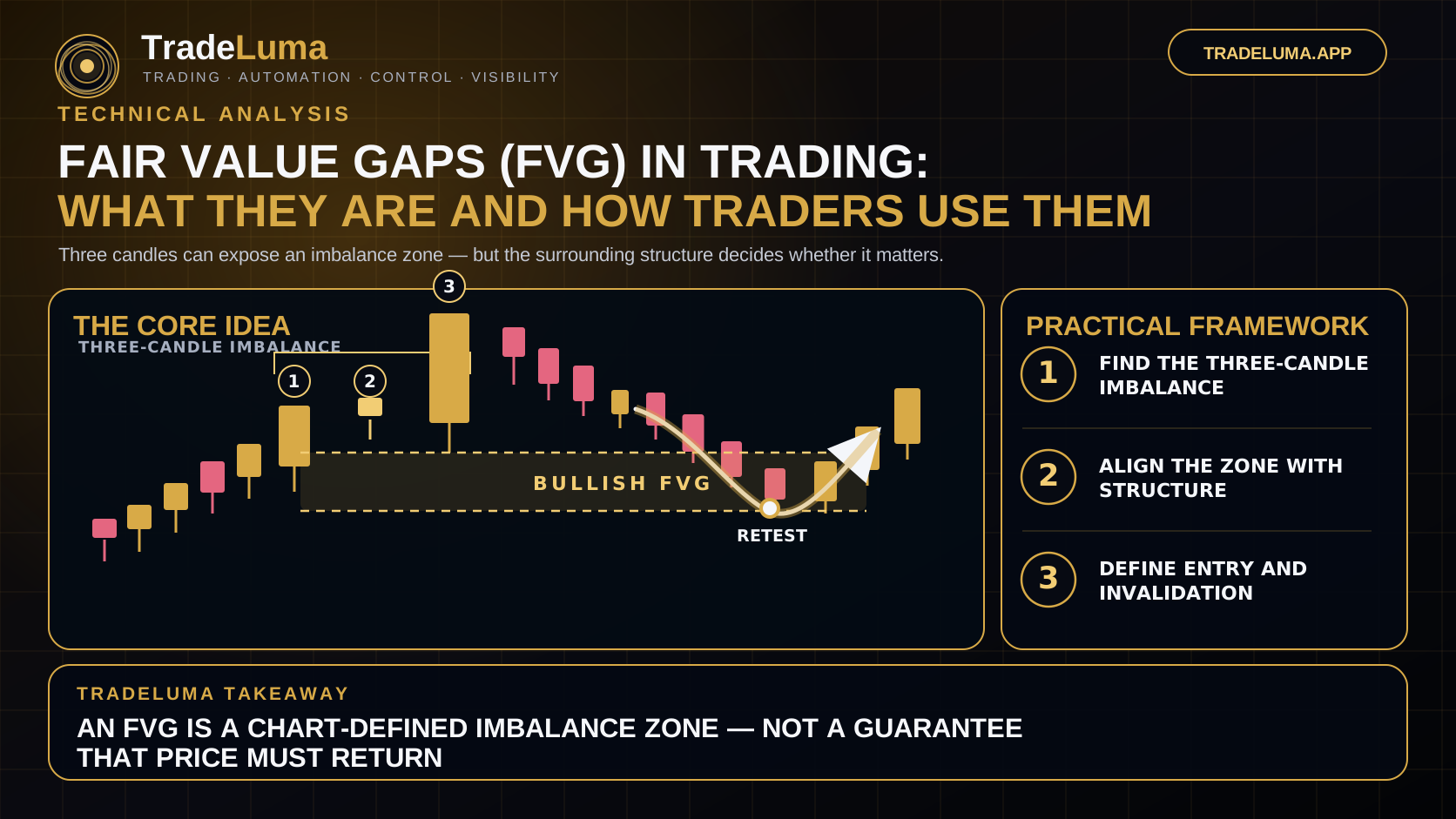
Fair Value Gaps (FVG) in Trading: What They Are and How Traders Use Them
Learn what fair value gaps are, how traders identify bullish and bearish FVGs, and how imbalance zones are combined with structure and risk.
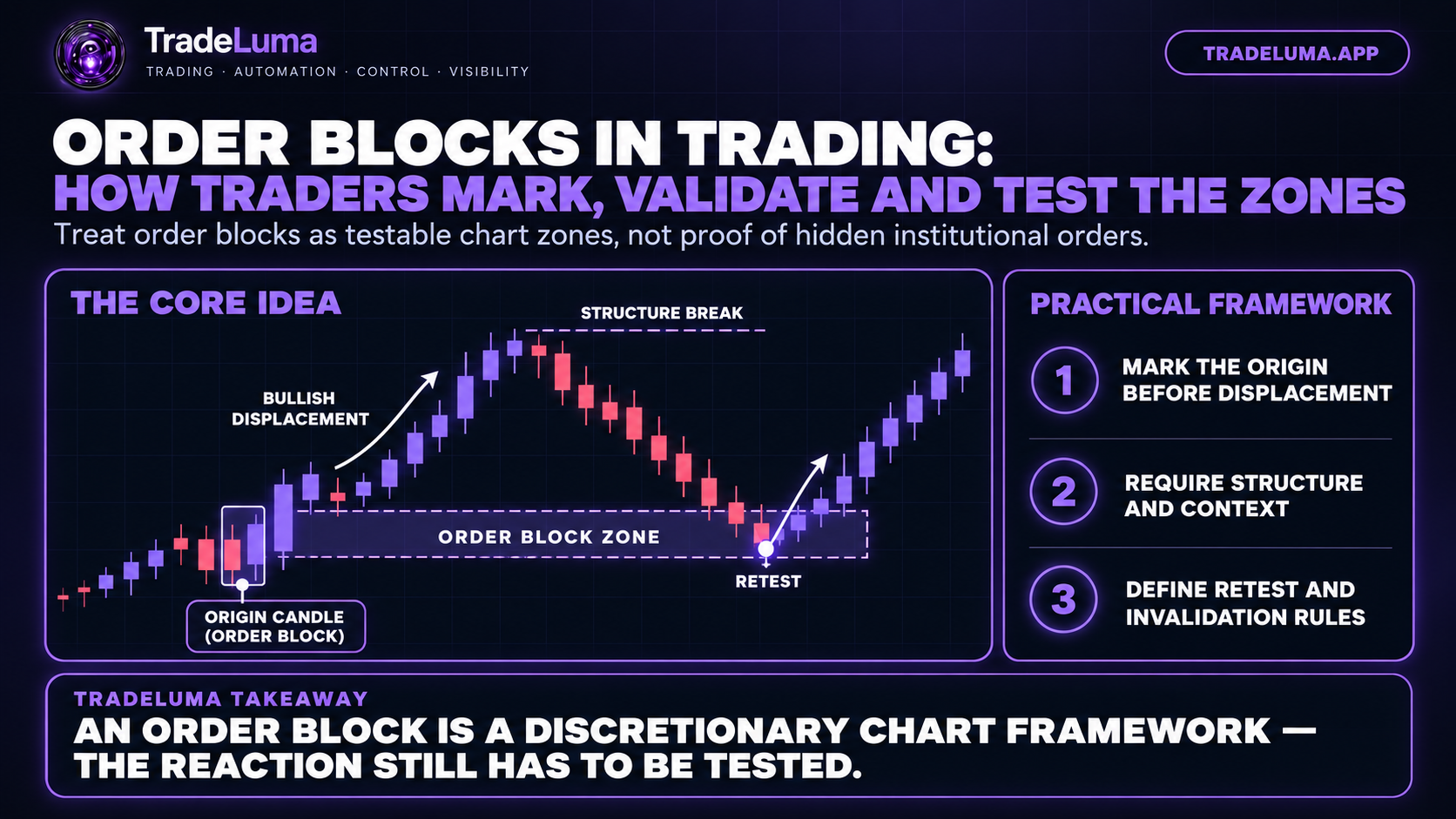
Order Blocks in Trading: How Traders Mark, Validate and Test the Zones
Learn what order blocks mean in technical analysis, how bullish and bearish zones are marked, and how traders test displacement, retests, and invalidation.