
Technical Analysis
VWAP Trading Guide: Using Volume-Weighted Average Price Intraday
Learn how VWAP works, why intraday traders watch it, and how it can provide context for trend, pullbacks, mean reversion, and execution quality.
On this page+
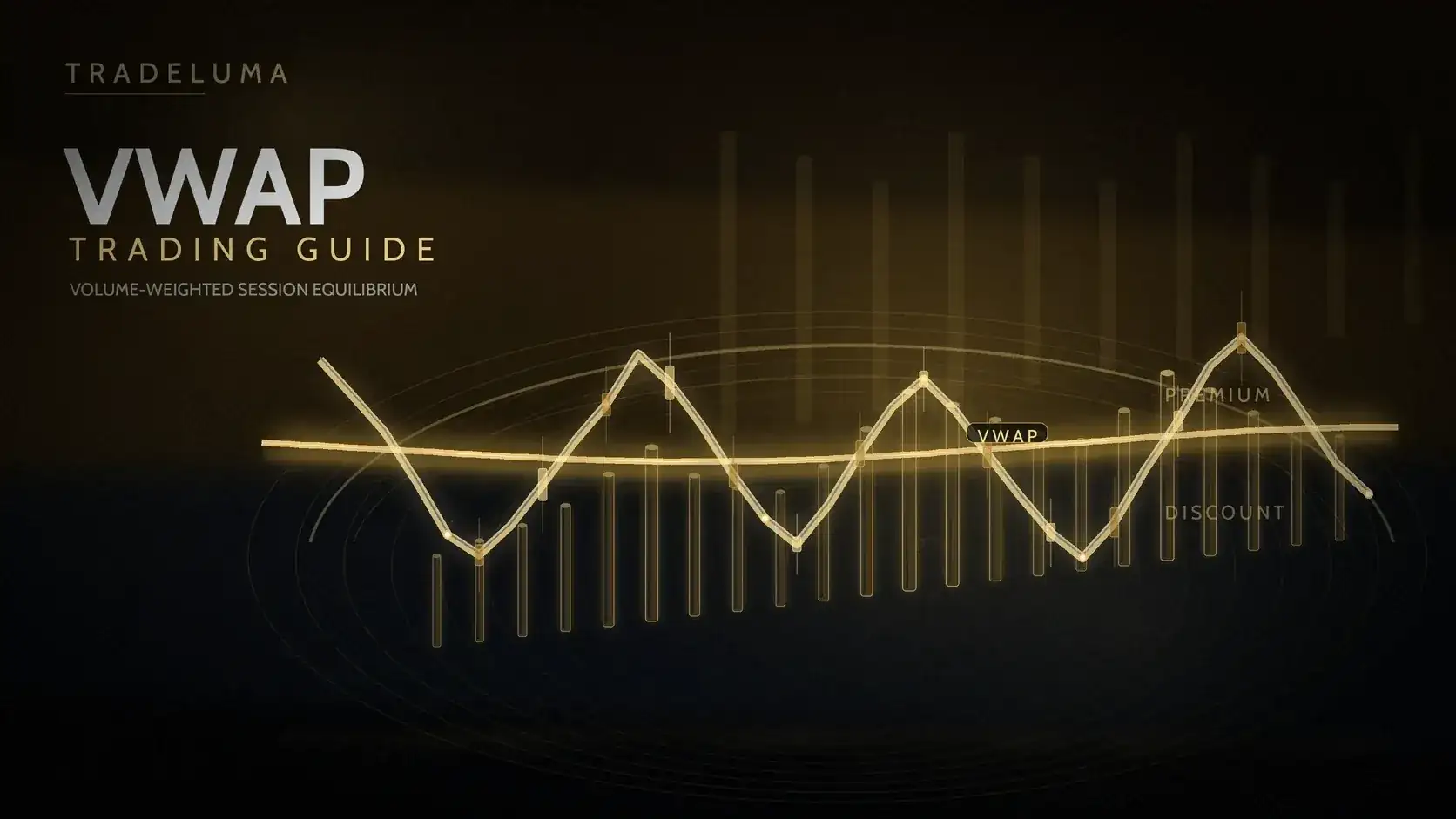
VWAP, or volume-weighted average price, estimates the average price traded during a session while giving more weight to prices where more volume occurred. Intraday traders use it as a reference for where the market has transacted on average, whether current price is trading above or below that reference, and how price behaves when it returns toward it. VWAP is not a prediction tool; it is a dynamic benchmark that can support trend, pullback, mean-reversion, and execution analysis.
How VWAP is calculated
VWAP accumulates price multiplied by volume and divides that total by cumulative volume. As the session progresses, every new bar updates the benchmark. High-volume periods influence the value more than low-volume periods.
Most charting platforms calculate session VWAP automatically. The exact session reset can matter for futures, extended-hours equities, and instruments that trade nearly around the clock.
Why traders watch VWAP
VWAP offers a simple reference for whether price is trading above or below the session's volume-weighted average. It is widely watched by intraday participants and can also be used as an execution benchmark.
Because many participants monitor it, price can react around VWAP. That does not mean it acts as guaranteed support or resistance; the broader trend and order flow still matter.
VWAP in trending sessions
During a strong uptrend, price may stay above a rising VWAP and use pullbacks toward it as continuation opportunities. A downtrend can show the opposite behaviour, with rallies failing below a falling VWAP.
A strategy can require both price location and VWAP slope so it avoids treating every cross as a trend change. Repeated crossings often indicate a more balanced session.
VWAP pullback strategies
A pullback setup waits for an established directional move and then watches price return toward VWAP or a nearby band. The trader may require rejection, a higher low or lower high, or a break of short-term structure before entering.
The invalidation point should come from the setup, not the VWAP line itself. Price can cross the benchmark briefly and still resume the trend.
VWAP mean reversion
In balanced conditions, price may repeatedly stretch away from VWAP and rotate back toward it. Mean-reversion traders sometimes use distance from VWAP, standard-deviation bands, or percentage extensions to define an extreme.
Strong trend days are the major risk. Price can remain far from VWAP for a long time, so a mean-reversion strategy needs a regime filter and a hard loss limit.
Anchored VWAP
Anchored VWAP starts the calculation from a chosen event rather than the beginning of the current session. Traders may anchor it to a major swing, earnings release, breakout, gap, or other meaningful event.
The anchor choice introduces judgement. For systematic use, define exactly what event starts the calculation and test whether the anchored benchmark adds information beyond simpler structure.
Common VWAP mistakes
A frequent mistake is buying every touch below VWAP or selling every touch above it. In a trend, that can mean repeatedly trading against strong directional pressure.
Another mistake is ignoring session boundaries. If the platform resets VWAP differently from the strategy's intended session, backtest and live behaviour may not match.
How to test a VWAP strategy
Specify the session, reset time, whether extended hours are included, the required VWAP slope or price location, entry trigger, stop, and exit. Intraday costs and slippage should be included because many VWAP strategies trade frequently.
Separate trend and range days when reviewing results. The same VWAP interaction can behave very differently across those regimes.
Frequently asked questions
What does VWAP mean in trading?+
VWAP stands for volume-weighted average price. It estimates the average price traded during a period while weighting prices by volume.
Is price above VWAP bullish?+
It can support a bullish intraday context, especially with an upward-sloping VWAP, but it is not a complete buy signal by itself.
Does VWAP reset every day?+
Standard session VWAP usually resets at the start of each trading session, though the exact session definition depends on the instrument and platform.
What is anchored VWAP?+
Anchored VWAP starts the volume-weighted calculation from a chosen historical event or swing instead of the regular session open.
Technical analysis
Continue with the topic hub.
Browse the related TradeLuma guides and build the topic from foundations through practical application.
Explore Technical analysis guides →Continue learning
Related guides.
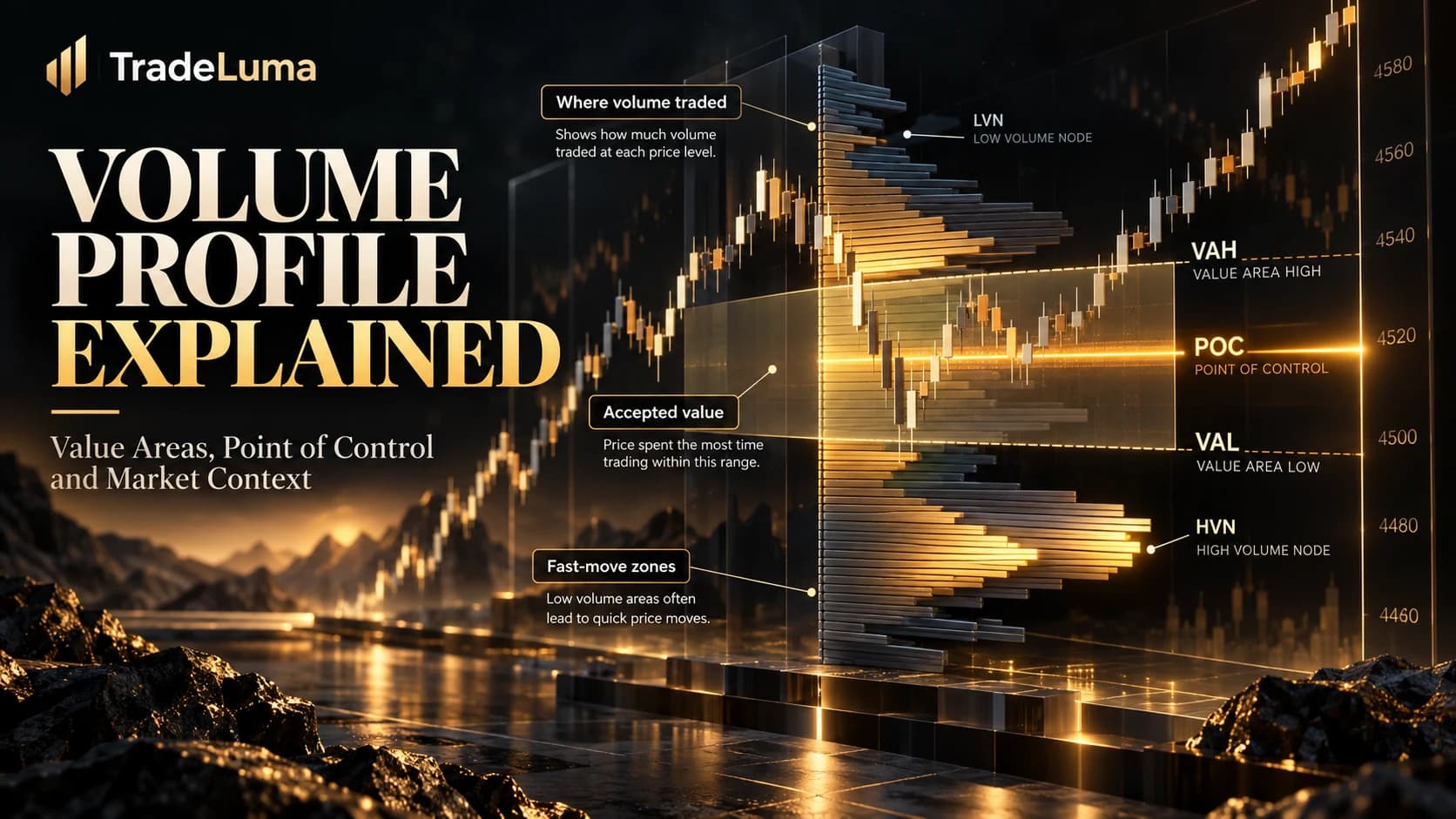
Volume Profile Explained: Value Areas, Point of Control and Market Context
Learn how volume profile distributes traded volume by price, what the point of control and value area mean, and how traders use high- and low-volume nodes.
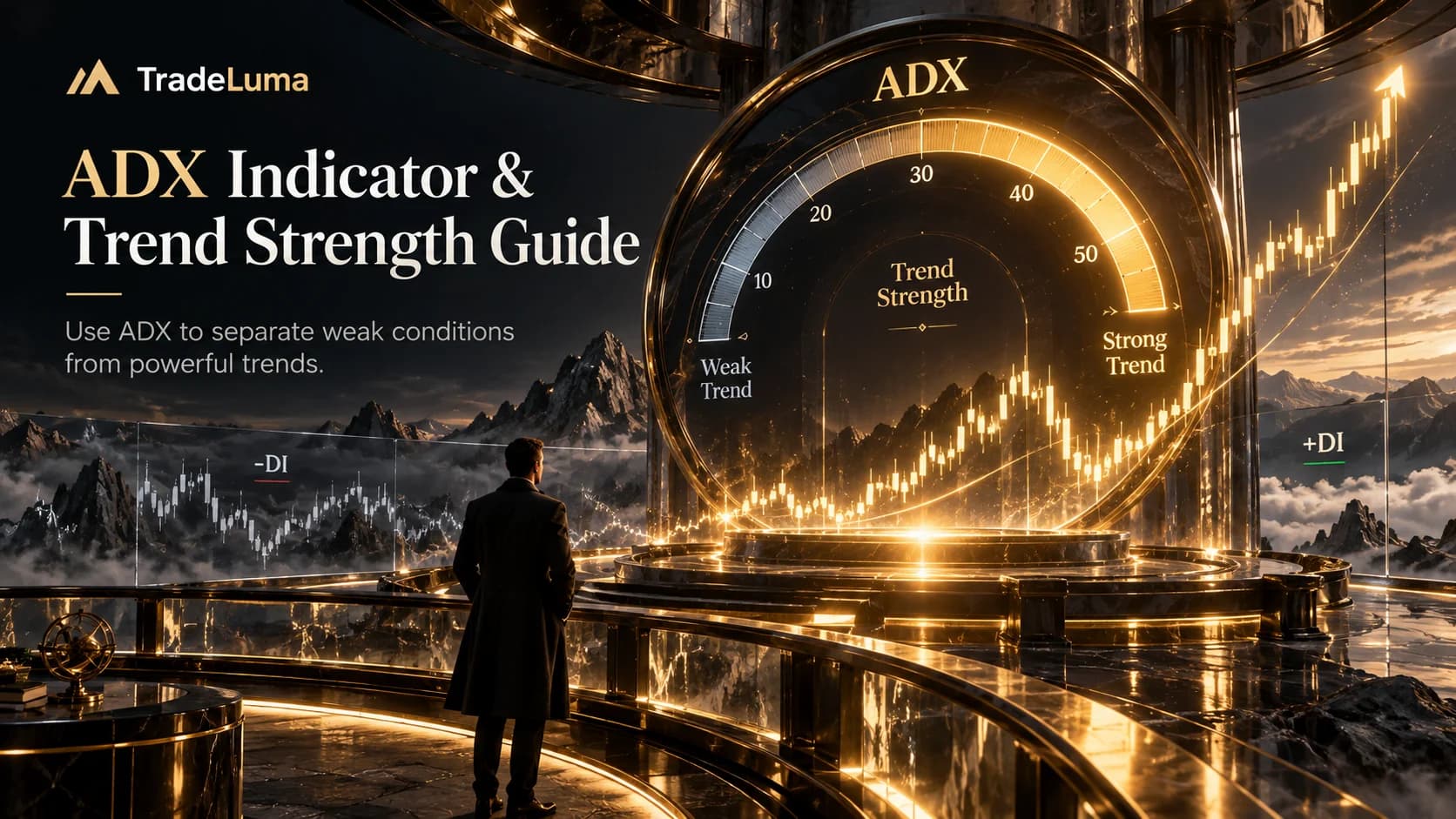
ADX Indicator Explained: How to Measure Trend Strength
Learn how the Average Directional Index (ADX) measures trend strength, how +DI and -DI add directional context, and how traders use ADX as a filter.

Bollinger Bands Trading Guide: Squeezes, Breakouts and Mean Reversion
Learn how Bollinger Bands measure relative price and volatility, what a squeeze can indicate, and how traders use the bands for breakouts and mean-reversion setups.