
Strategy Research
Walk-forward and out-of-sample testing for automated strategies
Learn how in-sample, out-of-sample, forward, and walk-forward tests can reduce overfitting and reveal strategy instability.
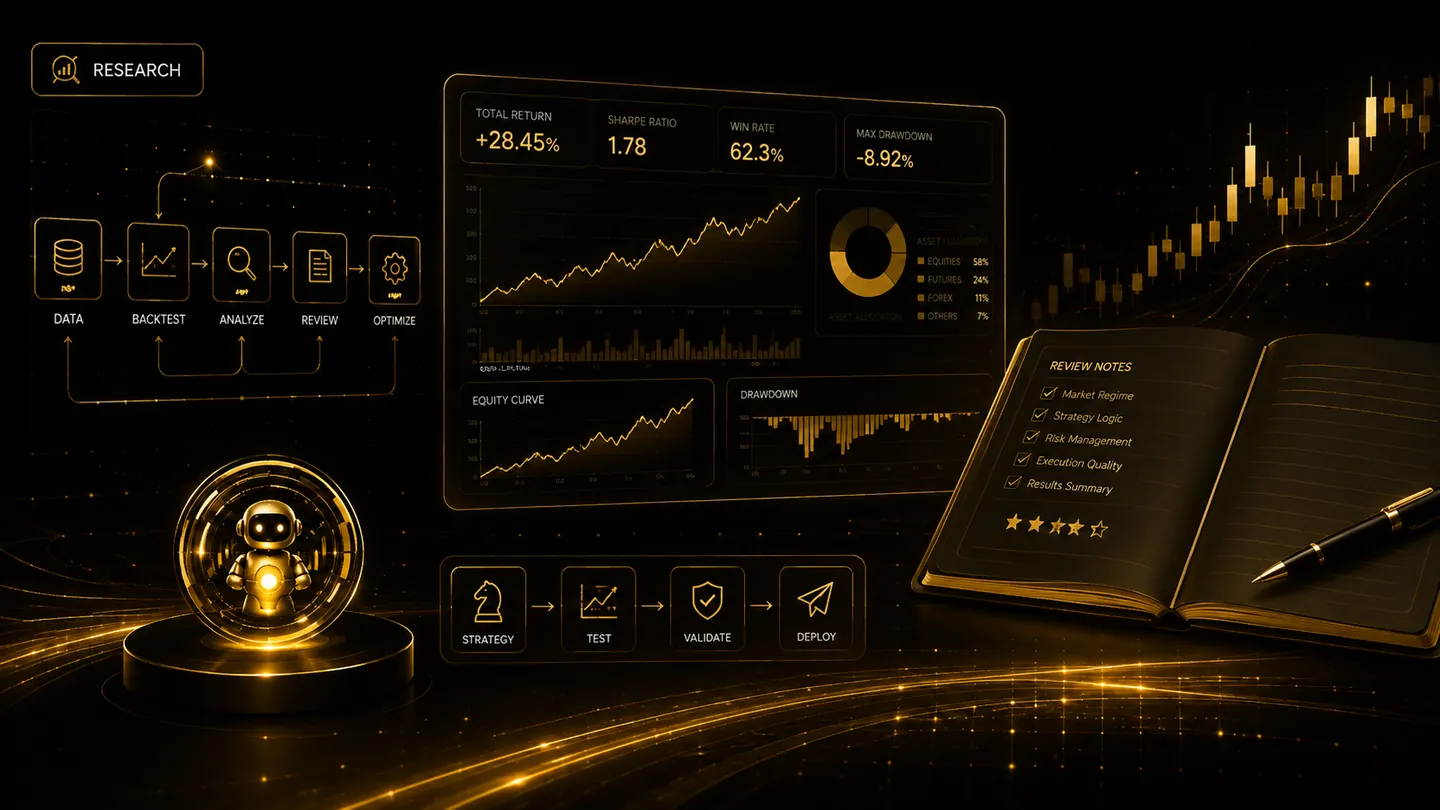
A strategy can look excellent on the same data used to design it. Out-of-sample and forward testing ask a harder question: does the method continue to behave reasonably on data that did not influence the rules? These tests do not guarantee success, but they can expose fragile ideas before live deployment.
Separate development from evaluation
In-sample data is used to create or tune the strategy. Out-of-sample data is held back and examined only after the rules are largely fixed. Repeatedly checking the test set and changing the strategy to improve it gradually turns that data into another training set.
A clear research log should record when rules were frozen, which period was reserved, and whether any changes were made after seeing the result.
Forward testing adds operational reality
Forward testing runs the strategy on new incoming data, ideally in paper mode through the same alert and broker workflow intended for live trading. This reveals timing, symbol mapping, session, and order-lifecycle problems that a chart backtest may miss.
Compare the signal timestamps and theoretical prices with the actual paper orders. Differences should be explained rather than ignored.
Walk-forward testing repeats the process
Walk-forward analysis trains or calibrates on one historical window, tests on the next window, then moves both windows forward. It can show whether a strategy remains stable as market regimes change.
Be cautious when the process constantly retunes parameters. Frequent optimisation can add complexity and operational risk. A simpler rule that remains acceptable across windows may be more practical.
Frequently asked questions
How large should an out-of-sample period be?
It should contain enough trades and varied market conditions to provide a meaningful challenge. The appropriate length depends on strategy frequency and market behaviour.
Is paper forward testing enough for live readiness?
It is an important step, but live markets can still differ. Live access should begin only after operational tests and within conservative limits chosen by the user.
Continue learning
Related TradeLuma guides
Strategy Research
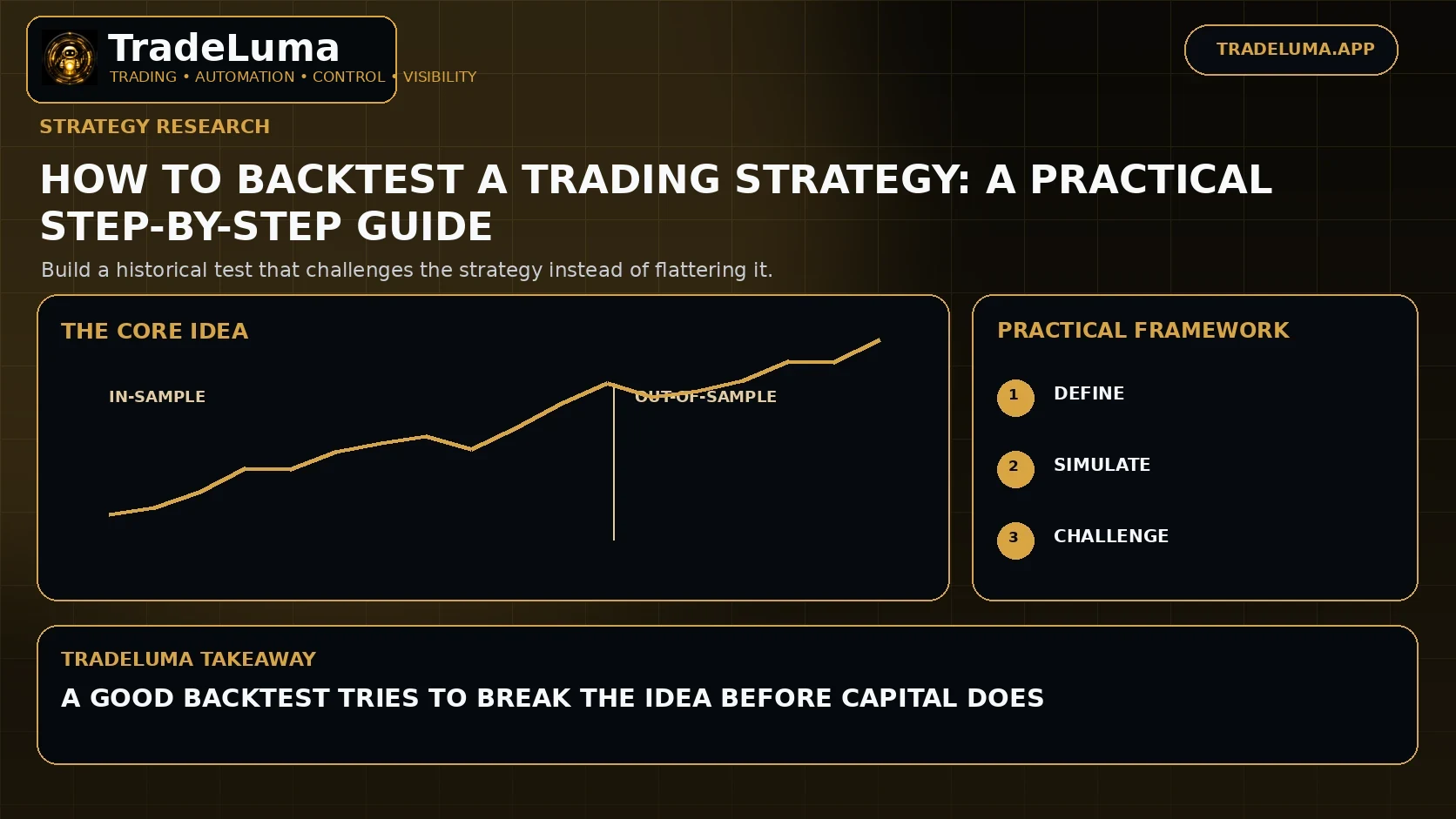
How to Backtest a Trading Strategy: A Practical Step-by-Step Guide
14 Sept 2026 · 14 min read
Strategy Research
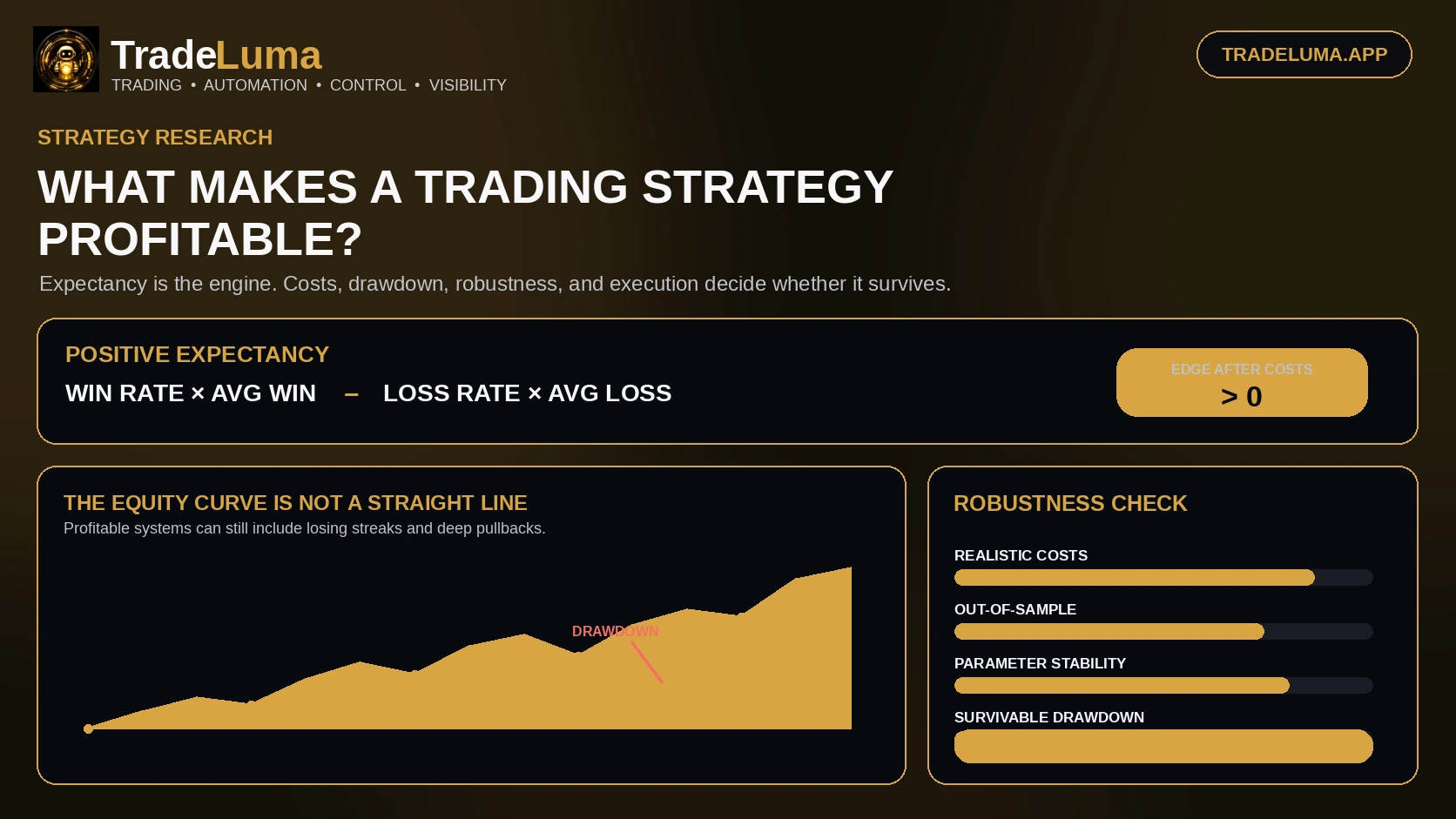
What Makes a Trading Strategy Profitable? Edge, Expectancy and Risk
13 Aug 2026 · 12 min read
Strategy Research
Backtesting mistakes to avoid before automating a trading strategy
23 July 2026 · 10 min read
Build a controlled automation workflow with TradeLuma
Configure alerts, test in paper mode, apply execution controls, and follow broker outcomes from one workspace.