
Market Insights
The Santa Claus Rally 2026: What Could It Mean for Nasdaq and Gold?
Understand the seven-session Santa Claus rally window, the difference between equity and gold seasonality, year-end liquidity and scenario planning.
On this page+
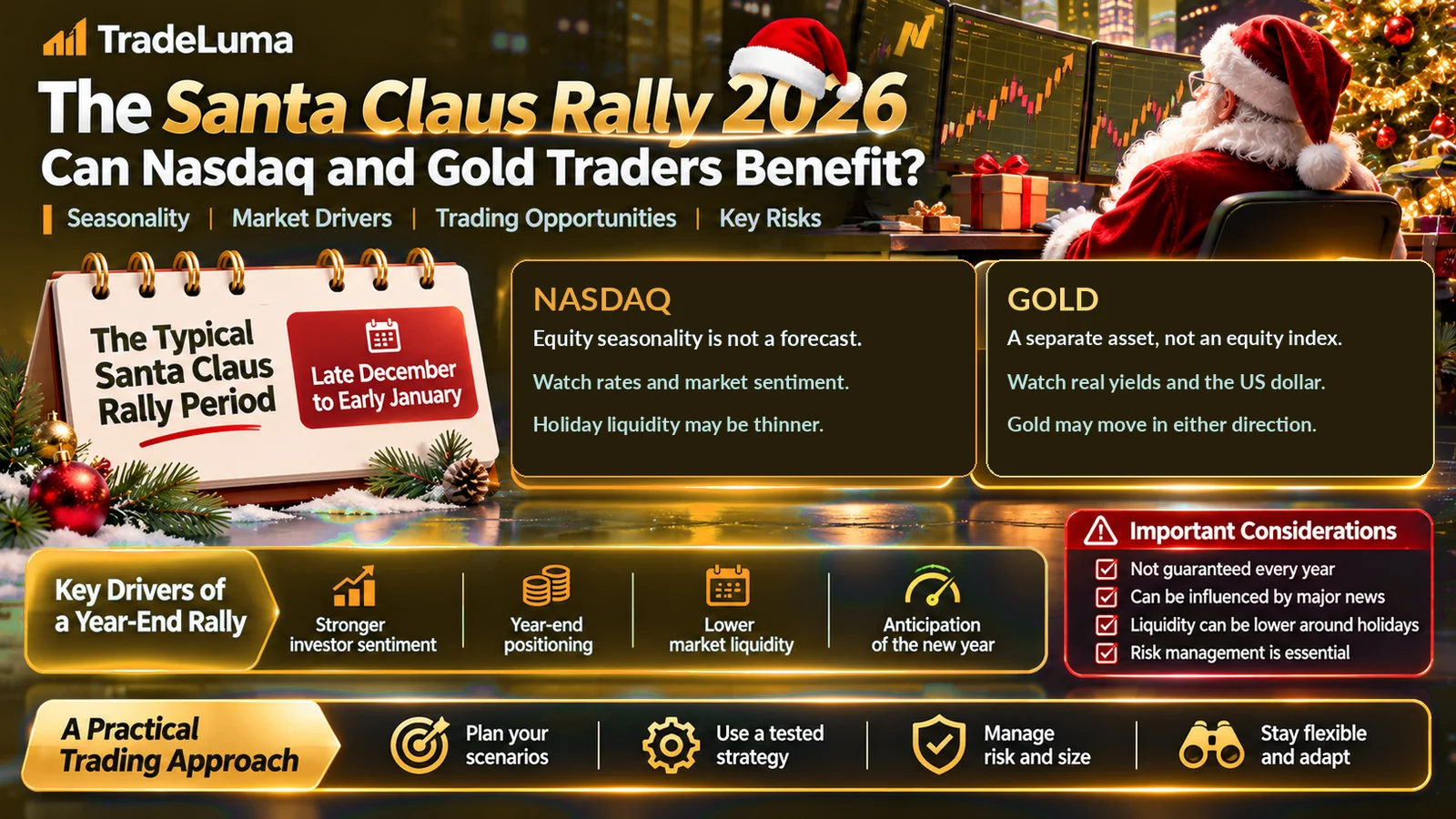
The Santa Claus rally is a historical US equity-market tendency over the final five trading sessions of December and the first two sessions of January. It is not a forecast for 2026, and it does not automatically extend to Nasdaq futures or gold. The relevant question is how to test the pattern and control risk if it fails. This educational guide is not personalised investment advice; trading can result in losses.
The conventional seven-session window
For the scheduled 2026 US cash-equity calendar, the last five trading sessions are December 24, 28, 29, 30 and 31. The first two 2027 sessions are January 4 and 5. Christmas Eve has a scheduled early close, so it counts as a session but has fewer trading hours.
Measure the conventional period from the close before the first session to the close of the final session. Futures trade dates and holiday hours may not match cash equities. Confirm the published schedules before using the dates in a strategy.
Why seasonality is not a trade signal
Possible explanations include portfolio rebalancing, holiday sentiment and thin liquidity. These explanations do not establish causation, and the sample is only one observation per year. A small number of unusual years can change the historical average.
Backtesting should use a fixed definition, include losing years, account for costs and test whether the pattern remains useful out of sample. Avoid selecting a different window after seeing the result.
Nasdaq and gold are different markets
Nasdaq can respond to changes in growth expectations, earnings and Treasury yields. Gold can respond to real yields, the dollar, central-bank demand and safe-haven flows. A risk-on equity rally does not mean gold must rise or fall.
Test each market separately. A December news surprise can overwhelm calendar effects, while a holiday session may amplify price changes because liquidity is reduced.
Plan for three outcomes
Prepare for a rising market, a falling market and a sideways market. Define the maximum permitted exposure and loss before selecting a strategy, and check trading hours and rollover dates.
TradeLuma's published gold and Nasdaq strategy collections are research products, not a guarantee of year-end returns. Review actual strategy assumptions and validate execution separately.
Frequently asked questions
When is the Santa Claus rally in 2026?+
The conventional US equity window spans December 24–31, 2026 and January 4–5, 2027, counting scheduled trading sessions only.
Does gold have to rise during the rally?+
No. The historical definition relates to equities, not gold.
Is the rally guaranteed?+
No. Seasonal tendencies can fail and trading costs can erase an apparent edge.
Keep learning
Continue through the TradeLuma research library.
Browse practical guides across trading, automation, execution, futures, technical analysis, and risk management.
Browse all guides →Continue learning
Related guides.
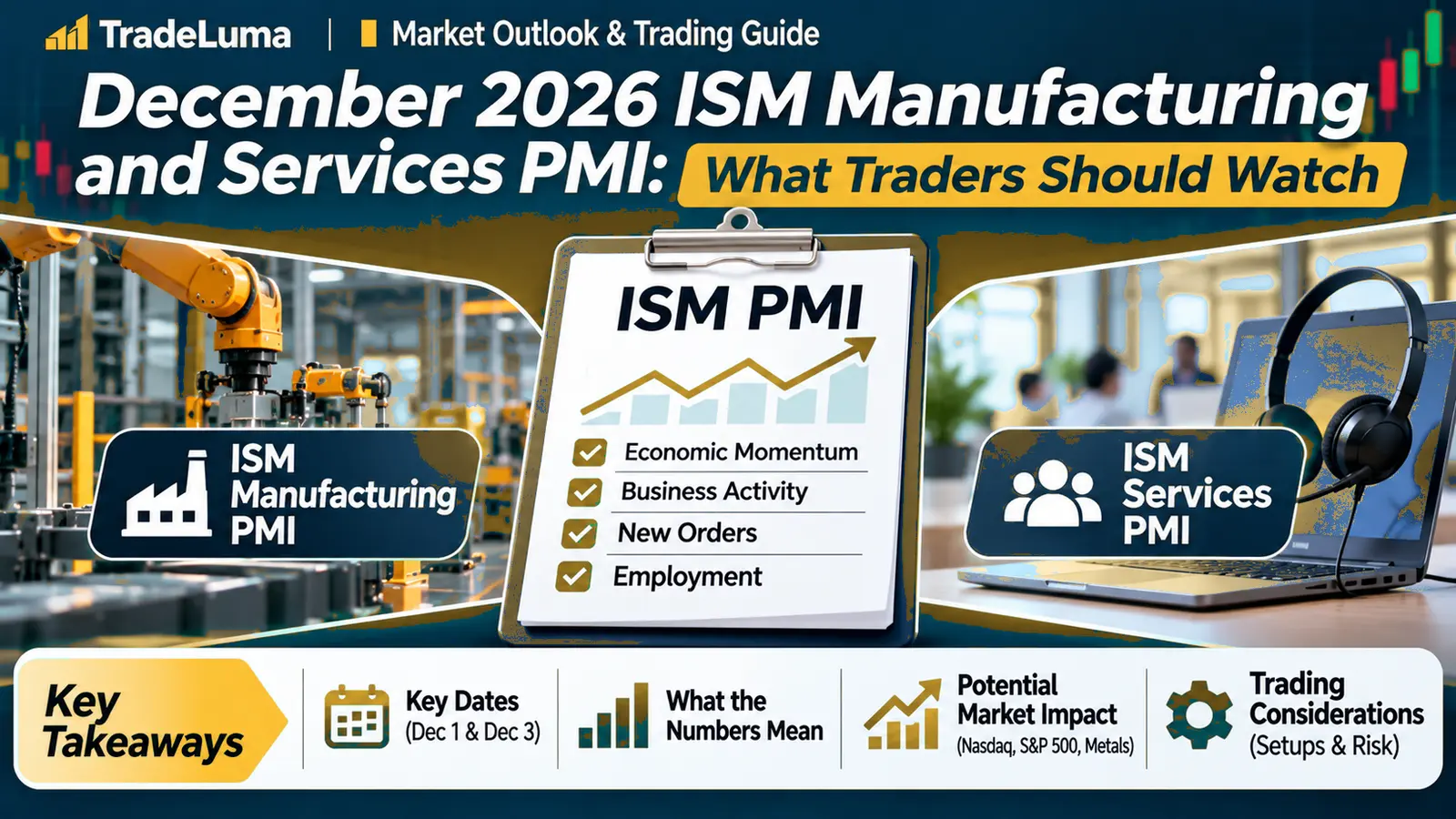
December 2026 ISM Manufacturing and Services PMI: What Traders Should Watch
The December 1 and 3 US ISM reports cover November activity. Learn what new orders, employment and prices may mean for gold, yields and Nasdaq.
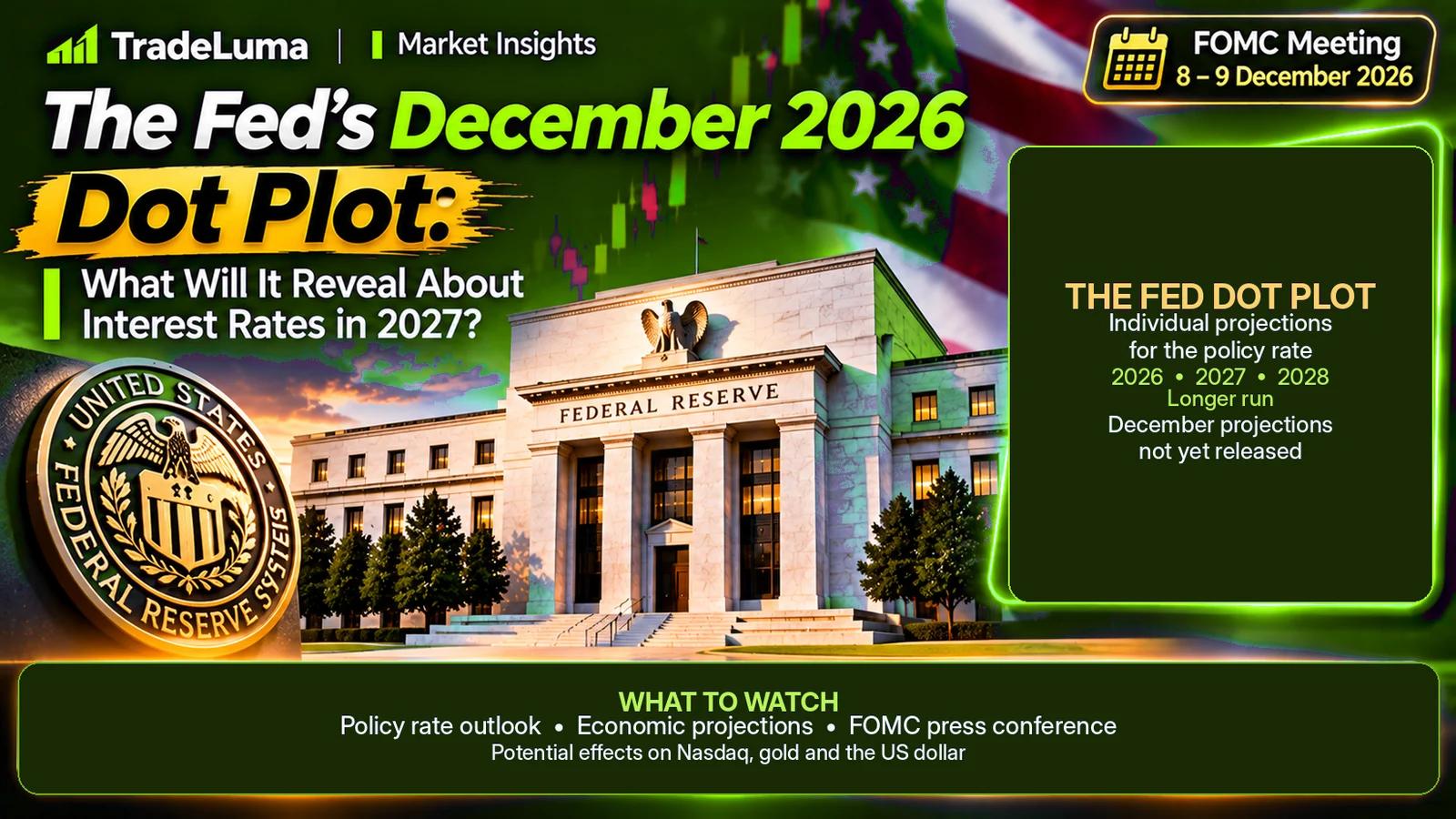
The Fed's December 2026 Dot Plot: What Will It Reveal About Interest Rates in 2027?
How to read the December 8–9 FOMC economic projections, median rate dots, dispersion and the difference between FedWatch and the Fed's own outlook.

OPEC+ Showdown: Will the November 29 Meeting Trigger an Oil Price Shock?
What to watch at the November 29, 2026 OPEC+ meeting: output policy, compliance, spare capacity, oil inventories and WTI futures risks.