
Foundations
What is automated trading? A practical introduction for self-directed traders
Understand what automated trading does, what it does not do, and the components needed to turn a trading rule into a controlled execution workflow.
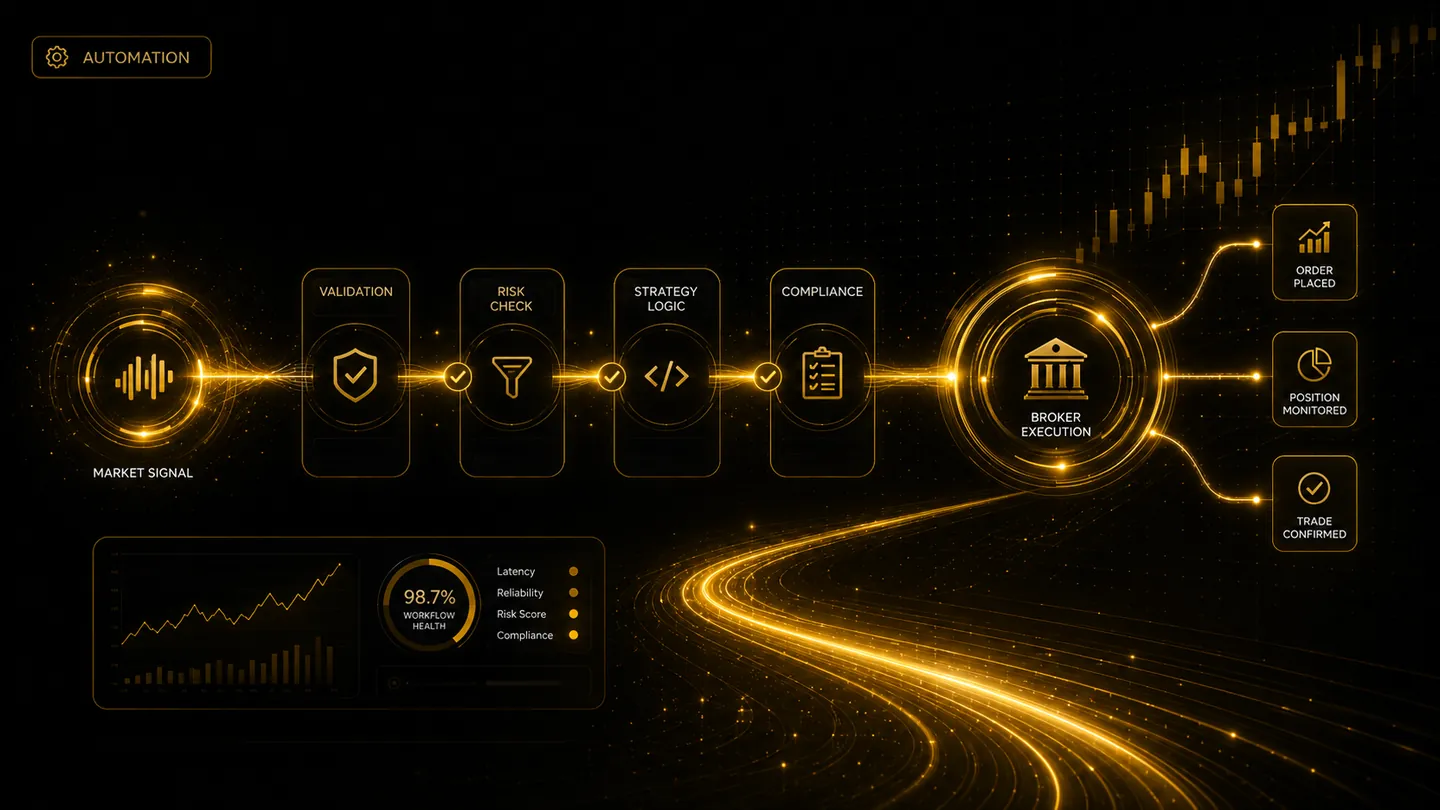
Automated trading is the use of software to perform defined trading tasks without requiring a person to click every button manually. The software may detect a condition, receive an alert, validate an instruction, submit an order, or monitor the result. Automation can improve consistency, but it cannot turn an untested idea into a reliable strategy and it cannot remove market risk.
Automation can begin at different points
A trader may automate only the final order entry, or automate a longer chain that begins with a chart condition and ends with broker reconciliation. One workflow might send a TradingView alert to an execution platform, while another might run a strategy directly through a broker API. Both are forms of automation, but their controls, visibility, and failure modes are different.
The safest way to think about autotrading is as a sequence of small responsibilities: create the signal, identify the account and instrument, confirm permissions, apply limits, send the order, receive broker status, and compare the final broker state with the platform record.
What automated trading does not provide
Automation does not decide whether a strategy has an edge unless the trader has designed and tested a method for evaluating it. It does not guarantee a fill, a particular price, or a profitable result. It also does not remove the need to understand margin, order types, contract specifications, market sessions, and broker rules.
A responsible platform should make these boundaries clear. TradeLuma is execution and workflow technology for user-directed trading instructions; it is not a financial adviser, fund manager, or promise of returns.
The minimum building blocks
A practical automated workflow needs a signal source, a secure delivery method, a rules layer, a broker connection, order-status tracking, and an audit trail. Safety controls such as paper mode, duplicate protection, symbol mapping, quantity limits, and live-account approval should sit between the signal and the broker.
Traders should be able to explain every stage in plain language. If an order appears unexpectedly, the platform should show which alert arrived, which checks ran, which account was selected, and what the broker reported.
Frequently asked questions
Is automated trading the same as artificial intelligence?
No. Many automated systems follow explicit rules and do not use artificial intelligence. AI may be used in some research or signal-generation systems, but automation itself simply means software performs predefined tasks.
Can a beginner start with automation?
Yes, but the safest starting point is a small, understandable workflow in paper mode. The trader should learn the order lifecycle and test failure scenarios before considering live execution.
Continue learning
Related TradeLuma guides
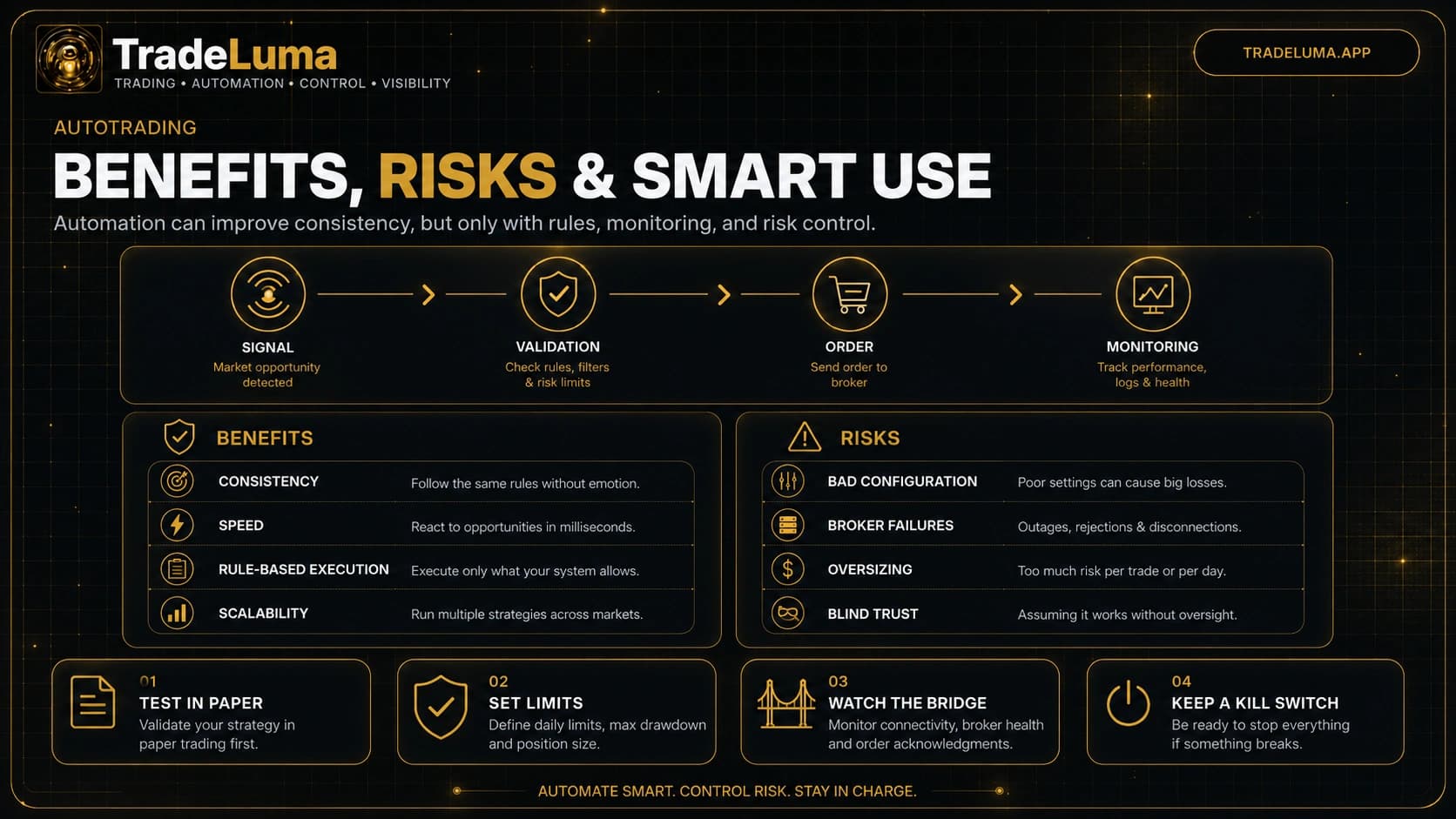
Build a controlled automation workflow with TradeLuma
Configure alerts, test in paper mode, apply execution controls, and follow broker outcomes from one workspace.