
Trading Styles
Position Trading Strategy: How Longer-Term Trading Works
Learn how position trading uses daily and weekly trends, technical or fundamental context, wider stops, gap risk, and longer holding periods.
On this page+

Position trading targets moves that can develop over weeks or months rather than minutes or days. Because the expected move is larger, position traders usually care less about small intraday fluctuations and more about major trend structure, macro or fundamental context, and whether the original thesis remains intact. The slower pace can reduce trade frequency, but it introduces wider stops, overnight gaps, event exposure, financing or rollover considerations, and the need to remain disciplined through normal counter-trend movement.
What position trading means
Position trading sits at the longer end of active trading. The aim is to participate in a substantial portion of a major move rather than capture every short-term fluctuation inside it.
Holding periods can range from several weeks to months depending on the instrument and strategy. The approach therefore demands patience and a willingness to let ordinary daily volatility occur without constantly changing the thesis.
How position traders identify direction
Price structure, long moving averages, channel breakouts, and weekly trend filters are common technical tools. Fundamental traders may also consider economic cycles, earnings trends, interest rates, commodity supply and demand, or sector conditions.
The direction rule should still be explicit. A broad belief that a market is attractive is not enough to define when a position should be opened or when the thesis has failed.
Daily and weekly chart structure
Higher timeframes compress short-term noise and make major swing highs, lows, support, resistance, and trend changes easier to see. They also produce fewer signals, which can reduce the temptation to react to every intraday movement.
The slower pace means a strategy needs enough history to evaluate. A few trades per year may require many years of data before the distribution of outcomes becomes clear.
Entry methods for position trades
Common entries include breakouts from long consolidations, pullbacks within an established trend, moving-average confirmation, or a fundamental catalyst combined with technical structure.
Trying to achieve a perfect entry is often less important than managing the total risk. A position trade expects larger movement, so the stop and size should allow normal volatility without exposing the account to an unacceptable loss.
Wider stops and smaller size
Higher-timeframe invalidation points are usually farther from entry in price terms. If the same position size used for a day trade is applied to a much wider stop, the monetary risk can become disproportionately large.
Risk-based sizing solves this by reducing quantity as stop distance increases. This allows a trader to use the market structure that fits the strategy while keeping account risk within the plan.
Overnight, weekend, and event risk
Position trades remain open through periods when the trader cannot react instantly. Markets can gap after earnings, economic announcements, geopolitical events, or weekend developments, and a stop order may fill beyond its requested level.
The plan should specify whether positions are held through major scheduled events and whether size is reduced around them. Unscheduled events cannot be removed, so leverage should leave room for outcomes worse than a normal stop.
Futures rollover, dividends, and financing
Long holding periods introduce instrument-specific mechanics. Futures positions may need to roll into a later contract, leveraged products may incur financing, and equity positions can be affected by dividends or corporate actions.
These factors should be included in backtests and operational planning where relevant. Ignoring them can make a long-term strategy look cleaner in historical charts than it is in actual execution.
Position trading versus swing trading
Swing trading often targets moves lasting days to a few weeks, while position trading generally works with broader trends and longer holding periods. The boundary is not fixed, but the operational demands differ.
Position traders usually accept larger short-term fluctuations and fewer entries. Swing traders may react more quickly to intermediate support, resistance, and momentum changes.
How to test a position trading strategy
Use enough historical data to include multiple bull, bear, sideways, high-volatility, and low-volatility regimes. Include realistic gaps, financing or rollover effects, and corporate actions where relevant to the instrument.
Review not only return but also maximum drawdown, time underwater, average holding period, exposure, gap losses, and dependence on a small number of major trends. A strategy that trades rarely needs especially careful robustness testing.
Frequently asked questions
What is position trading?+
Position trading is a longer-term trading style that aims to capture major market moves over weeks or months rather than short intraday fluctuations.
Which timeframes do position traders use?+
Daily and weekly charts are common, although the exact timeframe depends on the strategy and market.
Is position trading safer than day trading?+
Not automatically. Position trading has fewer trades but can involve wider stops, overnight gaps, event risk, and longer exposure. Position size and leverage remain important.
What is the difference between position trading and swing trading?+
Position trading generally targets broader trends over longer periods, while swing trading usually focuses on intermediate moves lasting days to weeks.
Put it into practice
Use the risk maths next to the guide.
Open TradeLuma's free position-size, risk/reward, expectancy, and drawdown tools to test the numbers behind a risk-management decision.
Open free trading calculators →Continue learning
Related guides.

Scalping Trading Strategy: How Short-Term Trading Works
Learn how scalping works, including liquidity, spread, slippage, latency, momentum and mean-reversion setups, plus short-term risk controls.
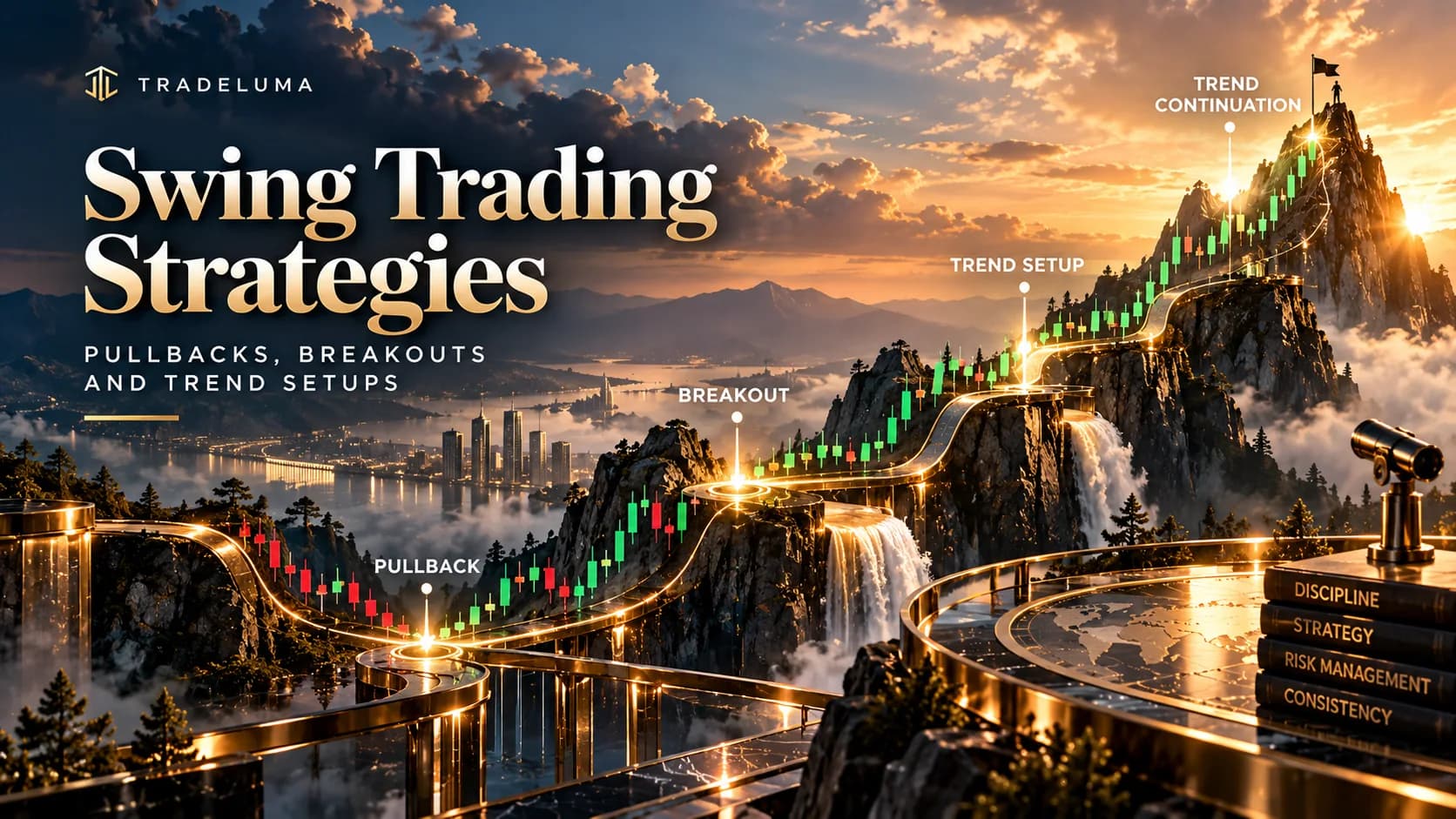
Swing Trading Strategies: Pullbacks, Breakouts and Trend Setups
A practical guide to swing trading strategies, including trend pullbacks, breakouts, moving-average setups, range trades, stops, targets, and overnight risk.
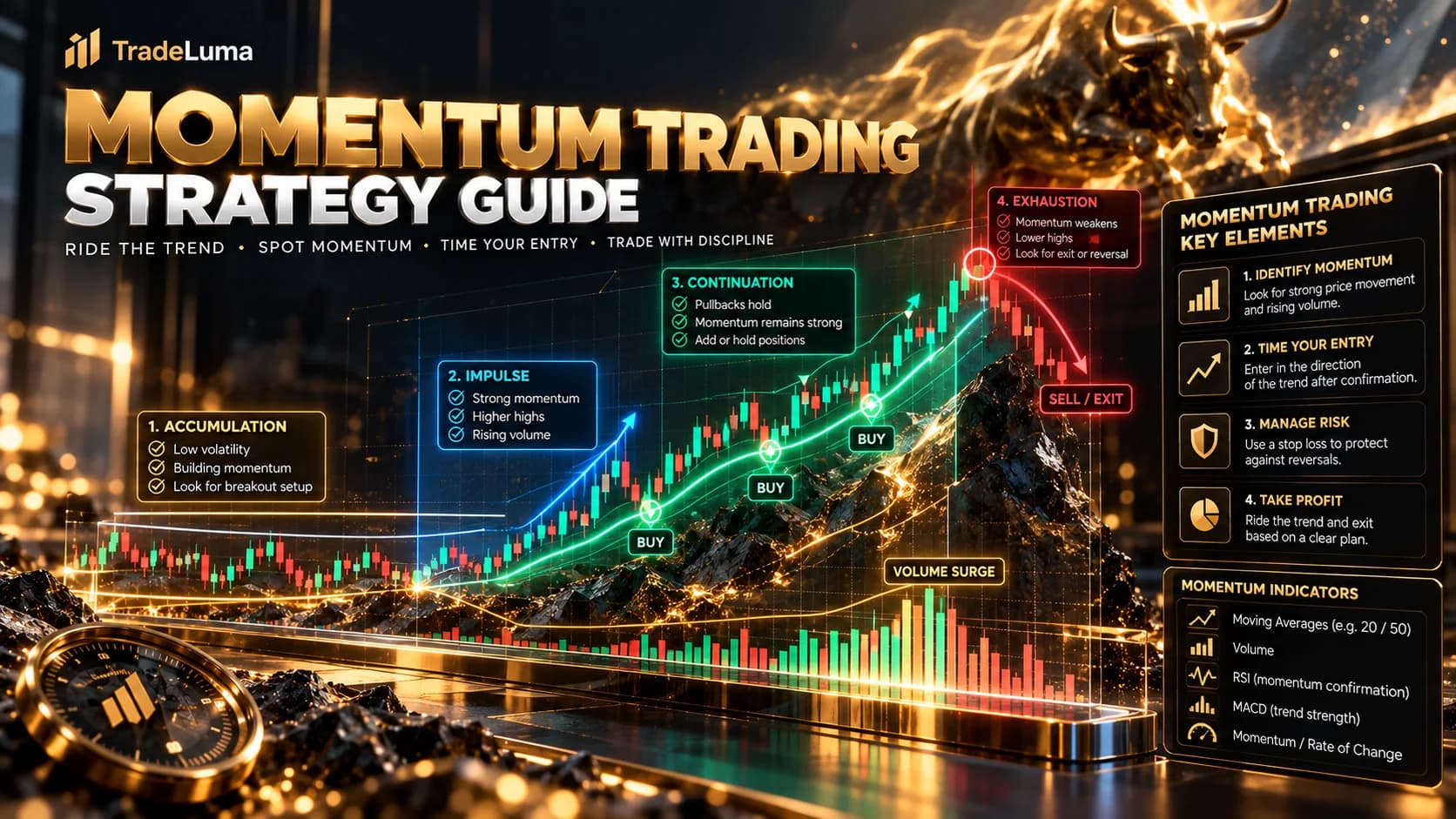
Momentum Trading Strategy: How to Identify Strong Price Moves
Learn how momentum trading works, how traders identify acceleration and continuation, and how to manage the risk of entering fast-moving markets.